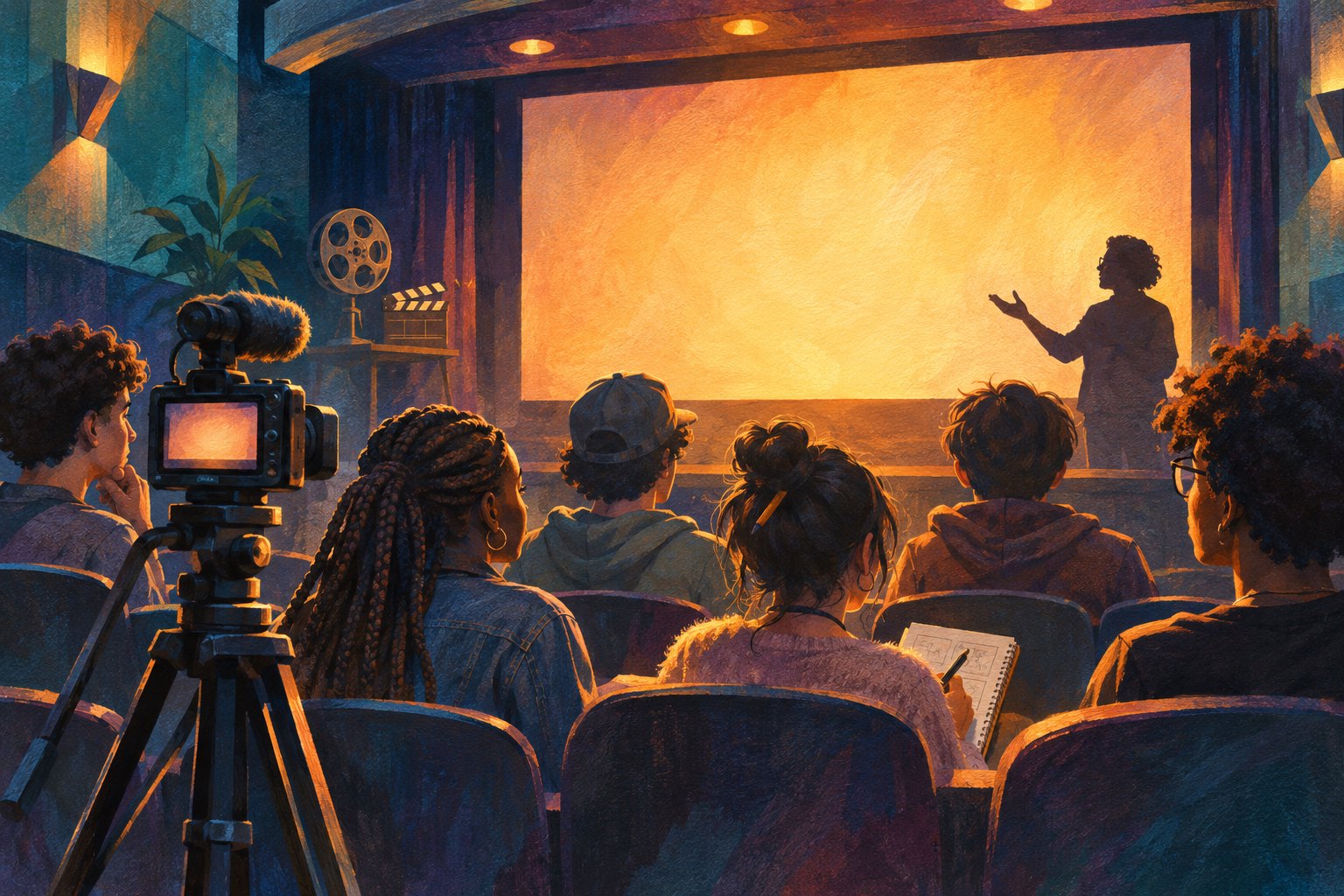
M3 Youth Film Festival brings entertainment education to Georgia State University, connecting a youth-focused film event with the possibilities of learning how screen stories work. The immediate subject is filmmaking education. For movie lovers, the larger question is equally compelling: what happens when someone who enjoys watching stories starts taking responsibility for how a story is told?
The festival’s educational focus provides a useful occasion to examine that transition. This is a critical commentary on what meaningful film education can offer, rather than an assessment of particular festival films, instructors, or participant outcomes. Its central argument is simple: the most valuable lesson begins when a young filmmaker can explain why a creative choice changes our understanding of a person.
Entertainment Education Starts With Decisions
Making a film involves a succession of decisions that viewers may barely notice. Where should the camera stand? Whose reaction deserves a close-up? How long should a silence last? When does music deepen an emotion, and when does it tell us what to feel before the performance has earned it?
Those questions turn entertainment into something students can investigate. A compelling scene becomes more than an impressive finished object. It becomes a set of choices that can be tested, discussed, and revised.
For an event such as M3 at Georgia State, that is a useful educational standard. Inspiration matters, but students also need ways to move from admiration to practice. Being excited about filmmaking and understanding how to improve a scene are different achievements. Strong instruction should help connect them.
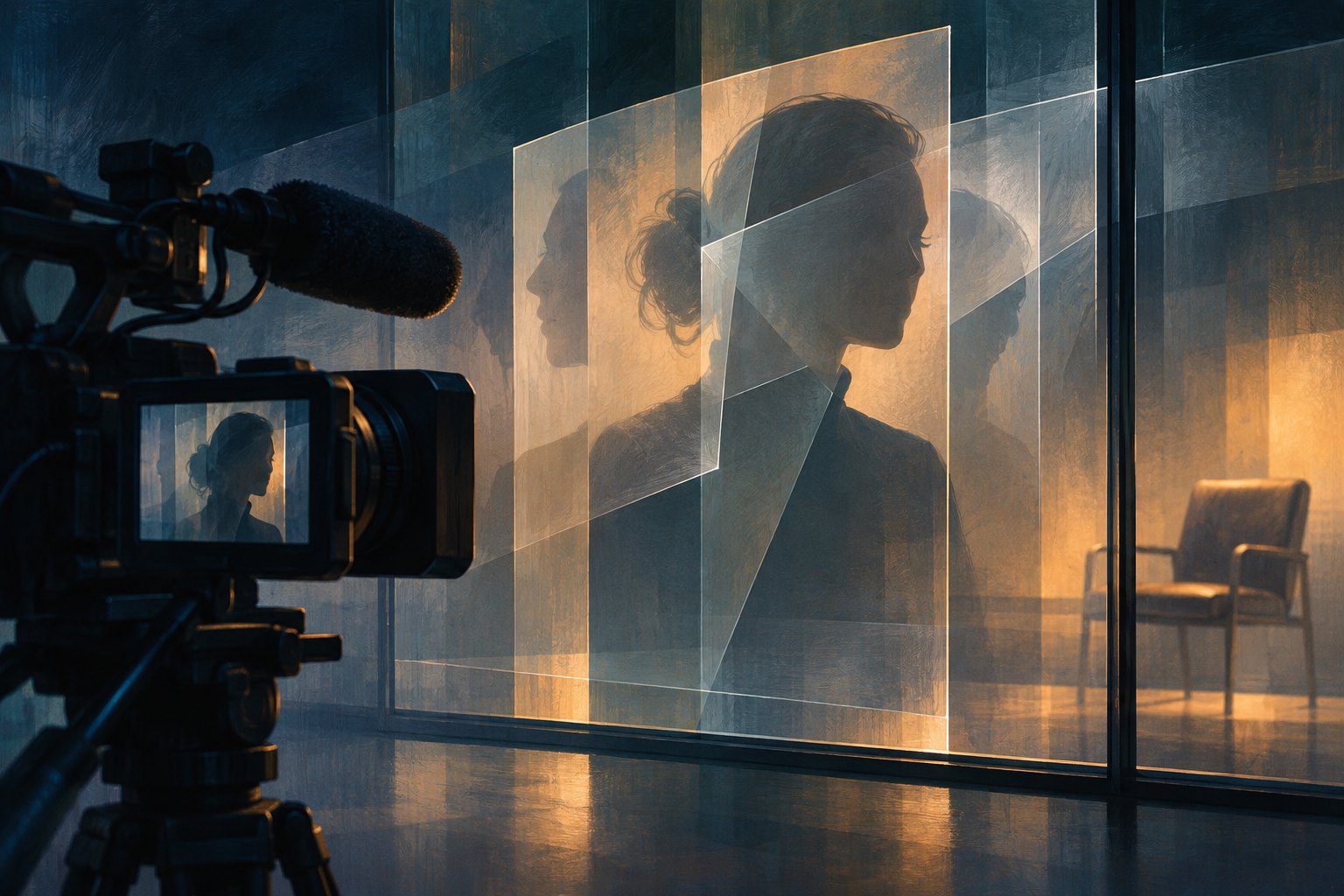
Consider a hypothetical exercise: film someone entering a room where another person is waiting. No elaborate location or complicated backstory is necessary. A shot from behind the arriving person can make the room feel uncertain. A close-up of the waiting person can make the arrival feel threatening, welcome, or overdue. The action remains the same; the audience’s relationship to it changes.
Character Is More Than a Backstory
A character-centered approach gives young filmmakers a practical starting point. Before discussing lenses or visual style, ask what the person in the scene wants, what prevents them from getting it, and what they are unwilling to reveal.
These questions are useful because they connect writing to behavior. A character described as lonely might simply stand alone. A character who wants someone to stay but refuses to ask has a playable conflict. A glance toward the door, an unfinished task, or an unnecessary question can carry that conflict without explanatory dialogue.
The distinction also improves film criticism. Instead of praising a performance as convincing without explaining why, a viewer can identify the moment when outward behavior and private desire pull in different directions. Instead of calling a character inconsistent, the viewer can ask whether the film establishes a pressure strong enough to explain the change.
Our character-focused discussion of The Princess Bride approaches familiar entertainment through the people who give it emotional shape. The same attention is valuable in a first short film: spectacle becomes more engaging when we understand what someone stands to lose.
Editing Teaches Us Whose Experience Counts
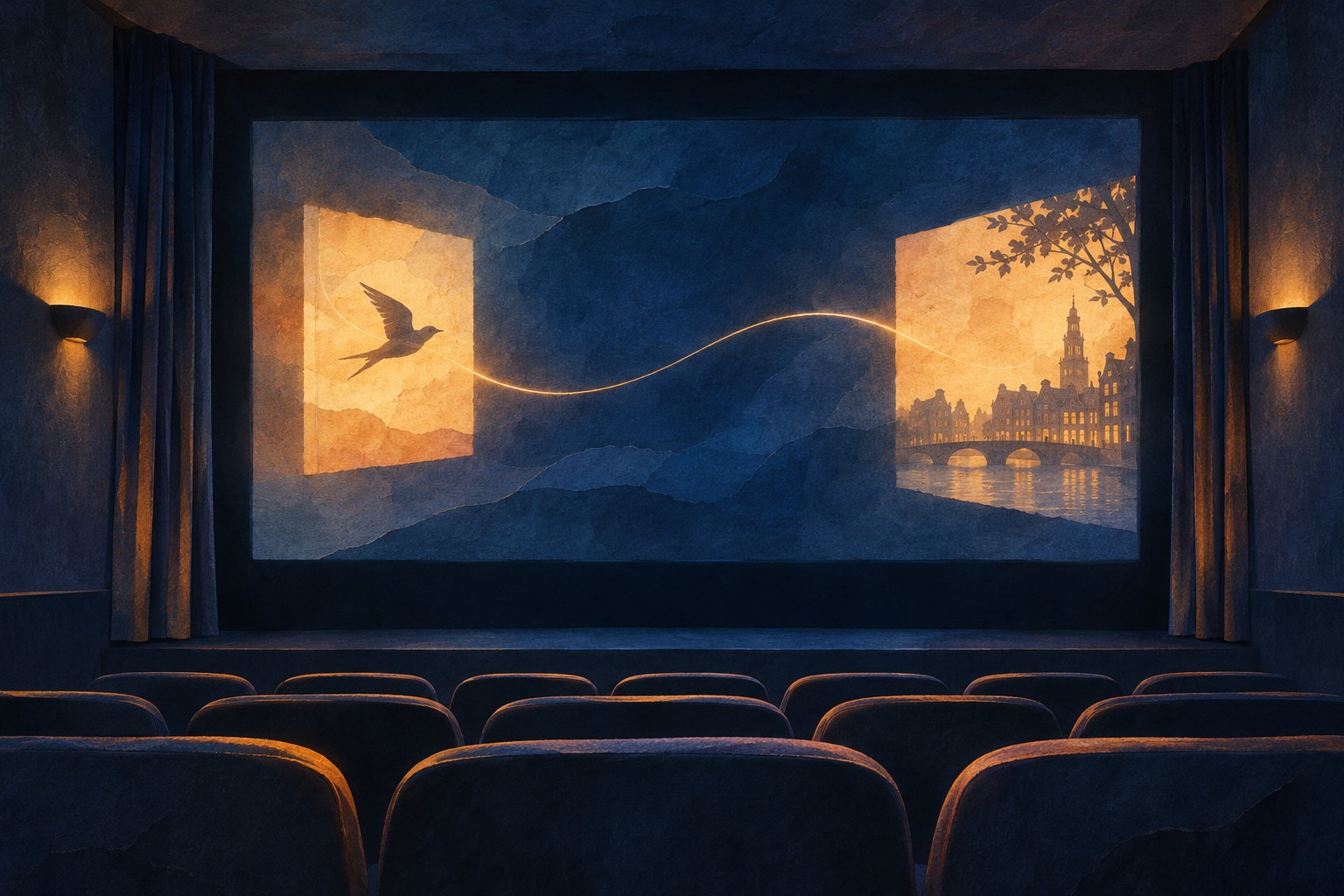
Character perspective continues after the camera stops recording. Editing determines which experiences become central and which remain outside the audience’s attention.
Return to the imagined doorway scene. Show the waiting person’s reaction before the newcomer speaks, and the audience may begin interpreting the encounter through anticipation. Hold on the newcomer instead, and uncertainty may belong to the person entering. Neither choice automatically produces a better scene. Each establishes a different relationship between the audience and the characters.
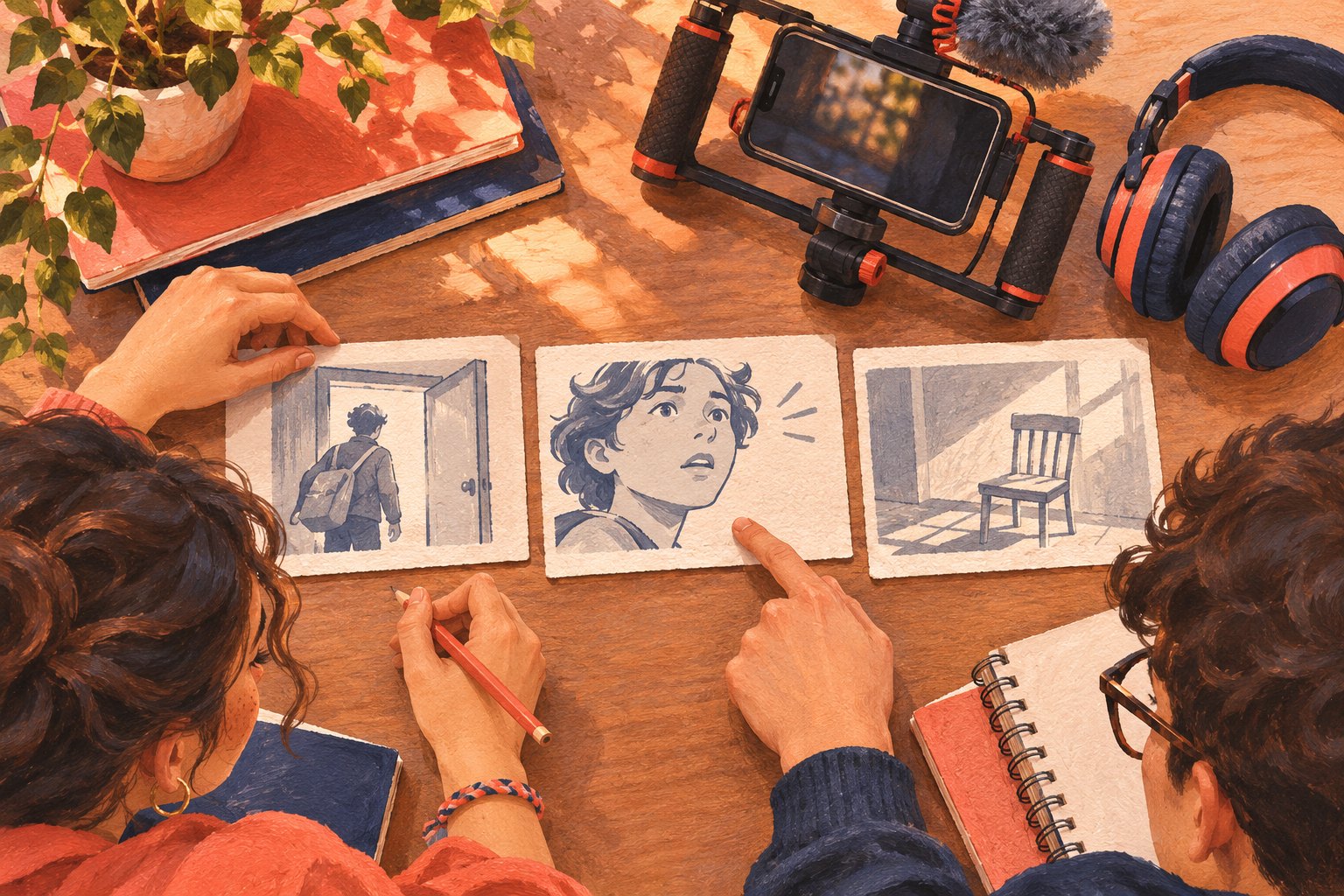
A useful learning exercise would be to assemble the same material twice, shifting emphasis between the two people. Then ask viewers to describe who seemed vulnerable, who seemed powerful, and what evidence shaped those impressions. Differences in the answers reveal how much storytelling happens through selection and timing.
This is also an ethical lesson. A reaction shot can make someone appear dismissive. Removing hesitation can make an uncertain statement sound decisive. Understanding those possibilities helps students evaluate nonfiction images as well as fictional scenes. Our essay on documentary access and evidence examines a related problem: seeing more of a person does not automatically mean understanding them more accurately.
Collaboration Makes Creative Intent Visible
Film education should also make room for the work of communicating an idea to other people. A director may know that a scene ought to feel uncomfortable, but that description leaves many practical questions unanswered. Is the discomfort in the physical distance between actors, an interruption, an intrusive sound, or a pause nobody fills?
Translating intention into specific choices gives collaborators something they can contribute to. An actor can propose a behavior. A sound recordist can identify a distracting noise. An editor can discover that a reaction carries more weight than an explanation.
For young creators, learning to recognize those contributions may be as important as mastering an individual tool. Authorship does not require having every useful idea. It requires listening carefully enough to recognize which ideas serve the story.
That provides another fair standard for evaluating educational opportunities around M3: look for learning that helps participants articulate decisions and respond to other people’s observations. Confidence becomes more useful when it includes the ability to revise.
Feedback Should Lead to a Next Step
Encouragement can help a beginner continue, but specific feedback helps them improve. The most productive discussion starts by establishing what viewers actually understood before debating what they liked.
- Ask about desire: What did the central character seem to want?
- Locate the turning point: When did the audience’s understanding change?
- Identify evidence: Which image, sound, or performance detail created that impression?
- Choose a revision: What single adjustment would make the intended effect clearer?
These questions keep criticism attached to the work. They also leave space for disagreement. If viewers interpret a moment differently, the filmmaker can decide whether that ambiguity enriches the scene or obscures something essential.
A practical next step might be shortening an opening, recording cleaner dialogue, or replacing an explanatory line with an action. Improvement becomes manageable when the response points toward a decision the filmmaker can make.
What M3’s Educational Focus Makes Worth Asking
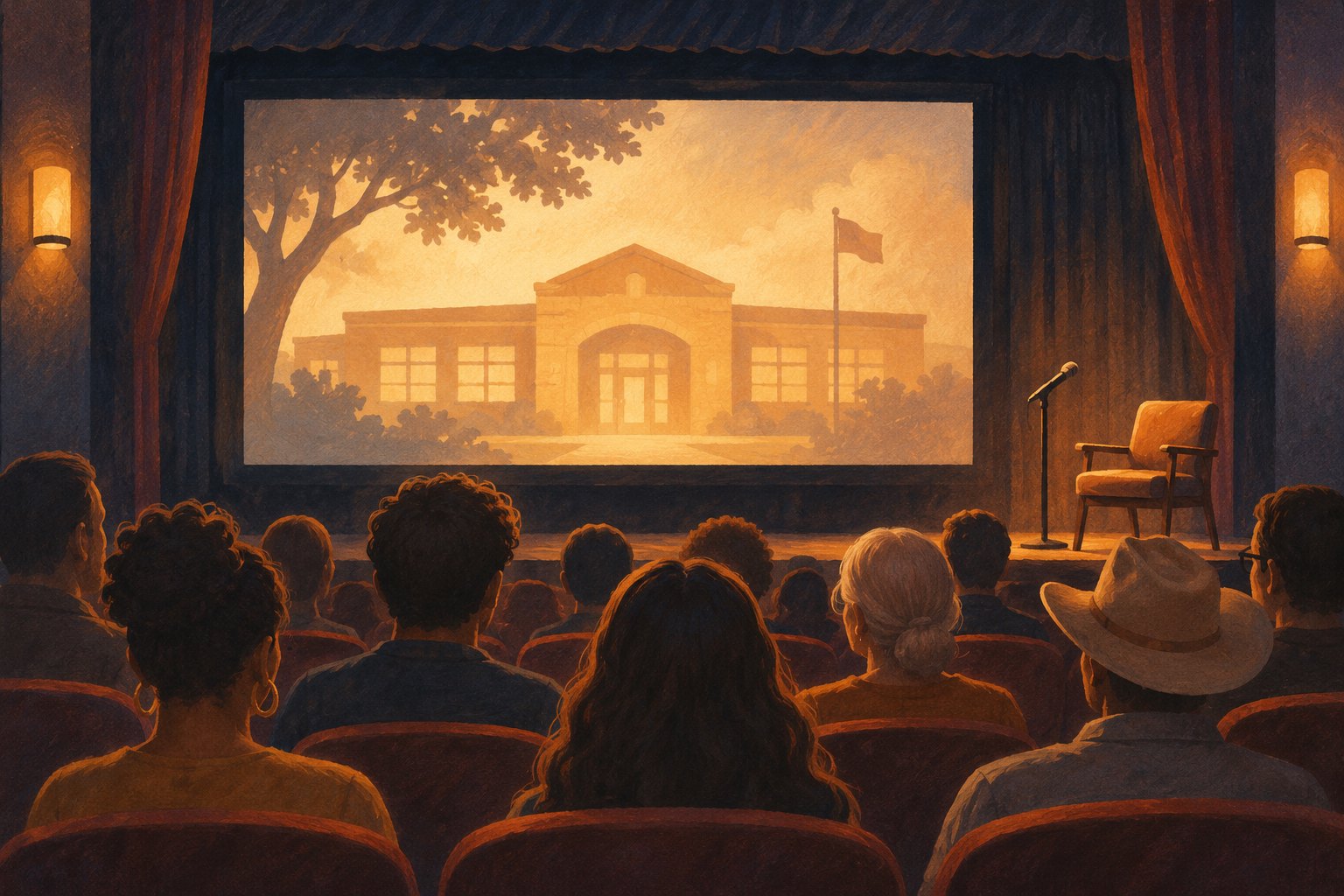
The M3 Youth Film Festival’s connection with Georgia State University puts youth filmmaking education in view. Its deeper significance deserves to be judged through what participants can carry into their next creative attempt: sharper observation, clearer intentions, and a stronger ability to work with others.
For this critic, the most promising outcome of film education is a viewer who becomes harder to manipulate and a filmmaker who becomes more deliberate. Both learn to ask whose perspective a scene privileges, what its images establish, and where emotion comes from.
A young person does not have to produce a masterpiece for that learning to matter. Understanding why one cut changes a character’s meaning is already a substantial discovery. It is the point at which watching movies becomes a more attentive pleasure—and making them becomes a practice that can grow.
Original content by this site's editorial team. Published: November 12, 2026 at 20:27:36 PST (Los Angeles time)