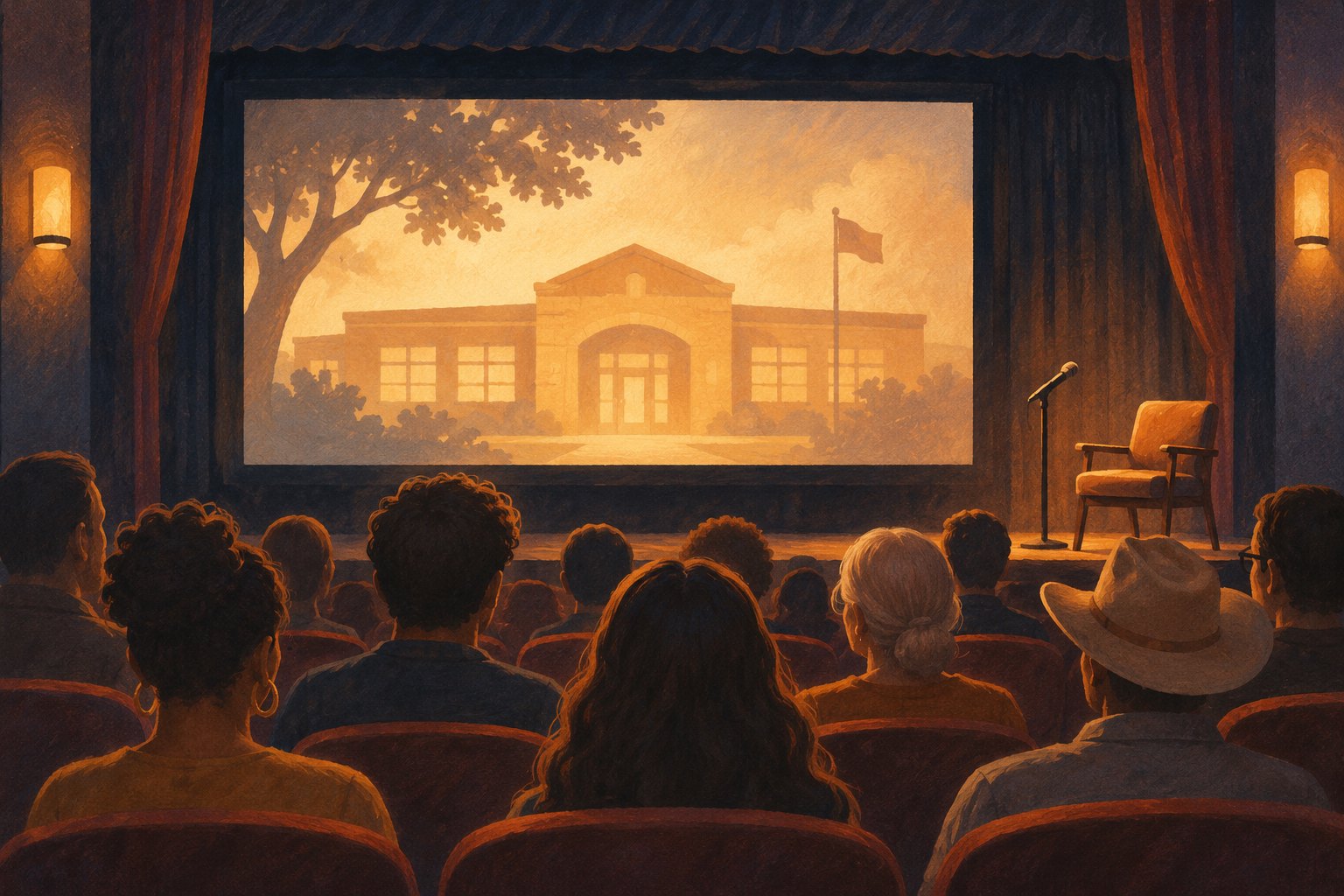
A good Friday night movie gives the evening a shape: choose a story, settle in, and stay long enough to experience its ending. That modest commitment deserves defending. The pleasure comes from letting a film establish its own rhythm, whether you are watching with friends, sharing a couch with family, or enjoying the quiet by yourself.
For my money, The Princess Bride makes an unusually persuasive case for the ritual. Its adventure moves briskly, its jokes reward company, and its characters give familiar fairy-tale promises an emotional weight. More revealingly, it begins with someone who would rather be doing something else. The movie understands that attention must be earned.
Spoiler warning: This review discusses major character developments and the ending of The Princess Bride.
The Reluctant Listener Is the Perfect Movie-Night Guest
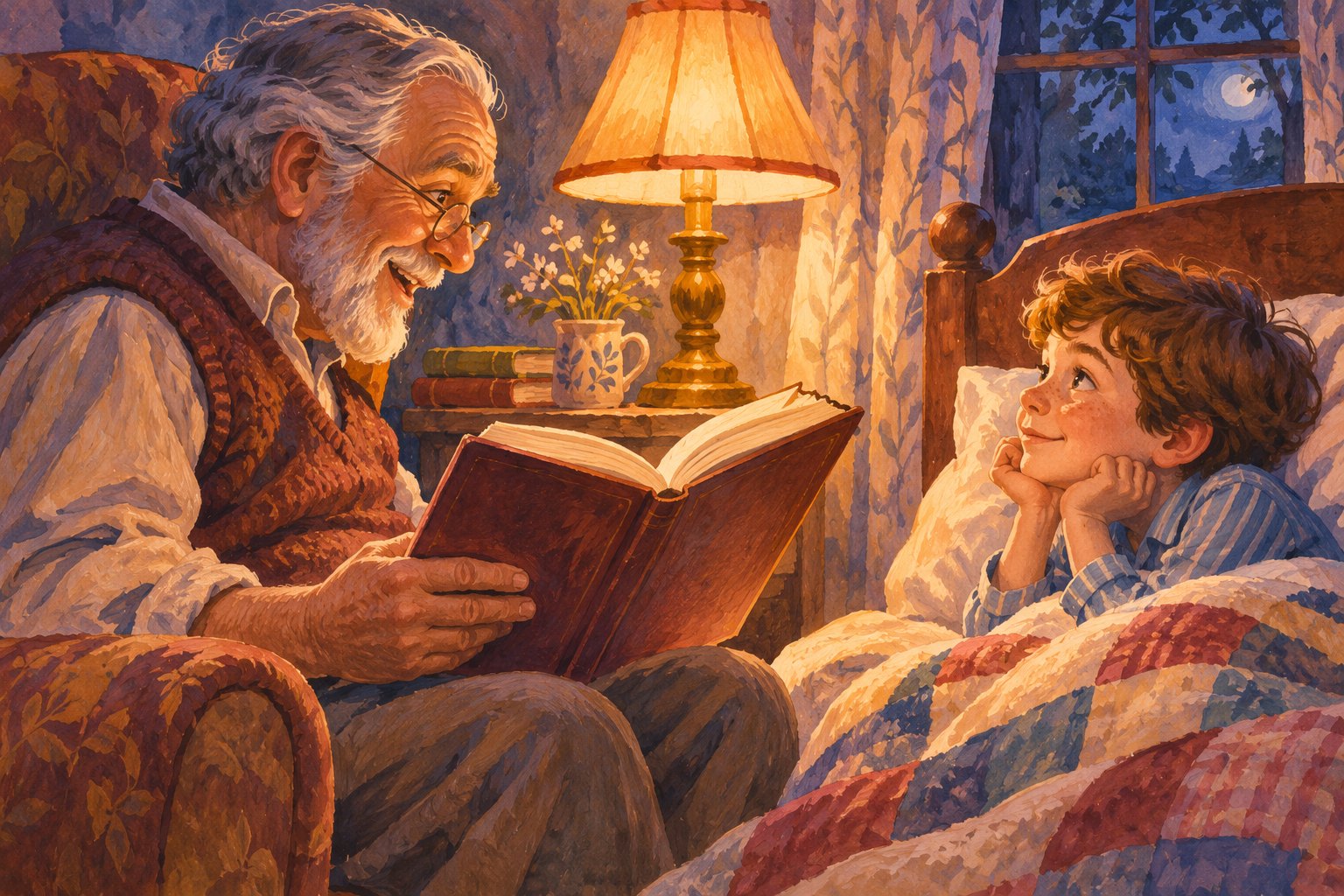
Rob Reiner’s 1987 film, written for the screen by William Goldman, runs 98 minutes. Its framing story places a grandfather beside his sick grandson, reading an adventure the boy initially receives without enthusiasm. Those basic details appear in [Criterion’s film overview](https://www.criterion.com/films/29368-the-princess-bride).
The boy is an excellent audience surrogate because his resistance feels ordinary. He has preferences, suspects that someone else’s favorite entertainment might bore him, and wants reassurance about what he is getting into. Anyone who has suggested a beloved movie to a skeptical room knows the feeling from the grandfather’s side.
What makes their interaction work is the space allowed for disagreement. The grandson interrupts. The grandfather adjusts, teases, and continues. Enjoyment develops through a relationship, rather than arriving because an authority figure has declared the story important.
That is a useful distinction when choosing a Friday night film. Enthusiasm makes a better invitation than obligation. Telling someone that a movie has a wonderful sword fight gives them a possible way in; insisting that they must appreciate a classic hands them an assignment.
Westley and Buttercup Make Repetition Matter
Westley’s “As you wish” is the film’s most economical demonstration of how repetition gains meaning. Initially an answer to Buttercup’s requests, it becomes a declaration she learns to recognize. Later, the same words reveal the identity behind his disguise.
For Westley, language becomes a promise that survives a change in appearance. For Buttercup, recognition depends on remembering how someone spoke to her. The romance therefore asks the audience to listen closely to something deceptively simple.
This is also why a familiar movie can remain absorbing. Once surprise is gone, anticipation takes over. You notice the distance between hearing a line for the first time and understanding what it will eventually carry. Rewatching offers another kind of discovery: seeing how carefully an emotional payoff has been prepared.
Still, the romance has limitations. Buttercup receives fewer opportunities than the men to demonstrate ingenuity through sustained action. Her emotional certainty matters to the story, but the script often leaves others to perform the rescue. Wright gives her conviction; the distribution of dramatic opportunity remains uneven.
A comfort favorite can withstand that criticism. Affection becomes more interesting when it includes judgment. The question of how an idealized figure becomes dramatically engaging also runs through our discussion of reverence and character in Ramayana. Here, the strongest moments make devotion recognizable through small exchanges.
Inigo and Fezzik Give the Adventure Its Human Scale
Inigo Montoya’s pursuit of the man who killed his father supplies a different emotional engine. His repeated challenge—“You killed my father. Prepare to die.”—compresses his identity into an introduction and a task. The line and his revenge quest are documented in [the BFI’s retrospective](https://www.bfi.org.uk/features/princess-bride-flop-classic-vhs-era).
My reading is that its power comes from the tension between rehearsal and feeling. Inigo has words ready for the defining encounter of his life. When that encounter arrives, the familiar language must bear an experience larger than the formula.
Patinkin makes that pressure legible. The character can be funny, courteous, and intensely wounded without those qualities canceling one another. His grief gives the adventure consequences, while his capacity for friendship keeps grief from becoming his only available emotion.
Fezzik matters enormously to that balance. His gentleness changes the temperature around him. Physical size could have made him a simple obstacle or visual joke; instead, his presence makes companionship feel practical. Someone must help, carry, notice, and remain nearby.
The pleasure of this ensemble is that the central romance does not have to supply every reason to care. Different viewers can attach themselves to different relationships while sharing the same adventure. That makes the film especially hospitable to a room whose tastes do not perfectly match.
Why the Swordplay Works Beyond the Spectacle
The encounter between Westley and Inigo is my clearest example of entertainment that rewards attention without demanding laborious interpretation. The duel offers movement, comic reversals, and a developing sense of mutual regard. Their behavior tells us how to watch them.
Competition becomes a form of recognition. Each man discovers that the other deserves more consideration than his assigned role as an enemy suggests. The scene earns excitement through changing relationships as well as physical skill.
That is a useful test for an enjoyable action sequence: what do we understand about the people afterward that we did not understand before? Spectacle becomes richer when it reveals temperament. Our analysis of performance and motive in How to Rob a Bank approaches a related question about the relationship between an arresting image and a persuasive character.
How to Give Friday Night a Better Chance
The practical lesson is to make room for the experience the film is offering. A few small decisions can help:
- Choose for the actual company. Ask whether people want romance, suspense, laughter, or something unfamiliar. A shared mood is a useful starting point.
- Make a short list. Two or three credible options are easier to discuss than an endless succession of thumbnails.
- Allow room for the ending. A film’s final minutes often change the meaning of everything before them.
- Let reactions arrive naturally. Laughter, disagreement, and silence can all belong to a good evening. Nobody needs to deliver an instant verdict.
With The Princess Bride, warmth should not be mistaken for an absence of frightening material. Its adventure includes torture, threats of death, and revenge. That tonal mixture is part of its force, and something to consider when choosing it for younger viewers.
The Ending Explains What the Ritual Preserves
By the conclusion, the grandson wants another reading. His grandfather answers with the same phrase that has carried the romance: “As you wish.” The final exchange is recorded in [the film’s plot synopsis](https://en.wikipedia.org/wiki/The_Princess_Bride).
To me, this is the movie’s deepest move. Words associated with romantic devotion become an expression of familial care. The adventure has given two people a language for enjoying each other’s company. Repetition now promises another visit.
A Friday night movie can offer that same modest continuity. A shared joke acquires a history. A favorite scene becomes something you remember another person laughing at. Even a solitary viewing can mark a deliberate return to a story whose meanings have changed as you have.
The Princess Bride earns its place in that ritual because its pleasures lead back to attention: recognizing a voice, noticing kindness, allowing a reluctant listener time to become involved. When the grandfather closes the book, the important thing is that someone wants him to open it again.
Original content by this site's editorial team. Published: November 12, 2026 at 19:17:31 PST (Los Angeles time)