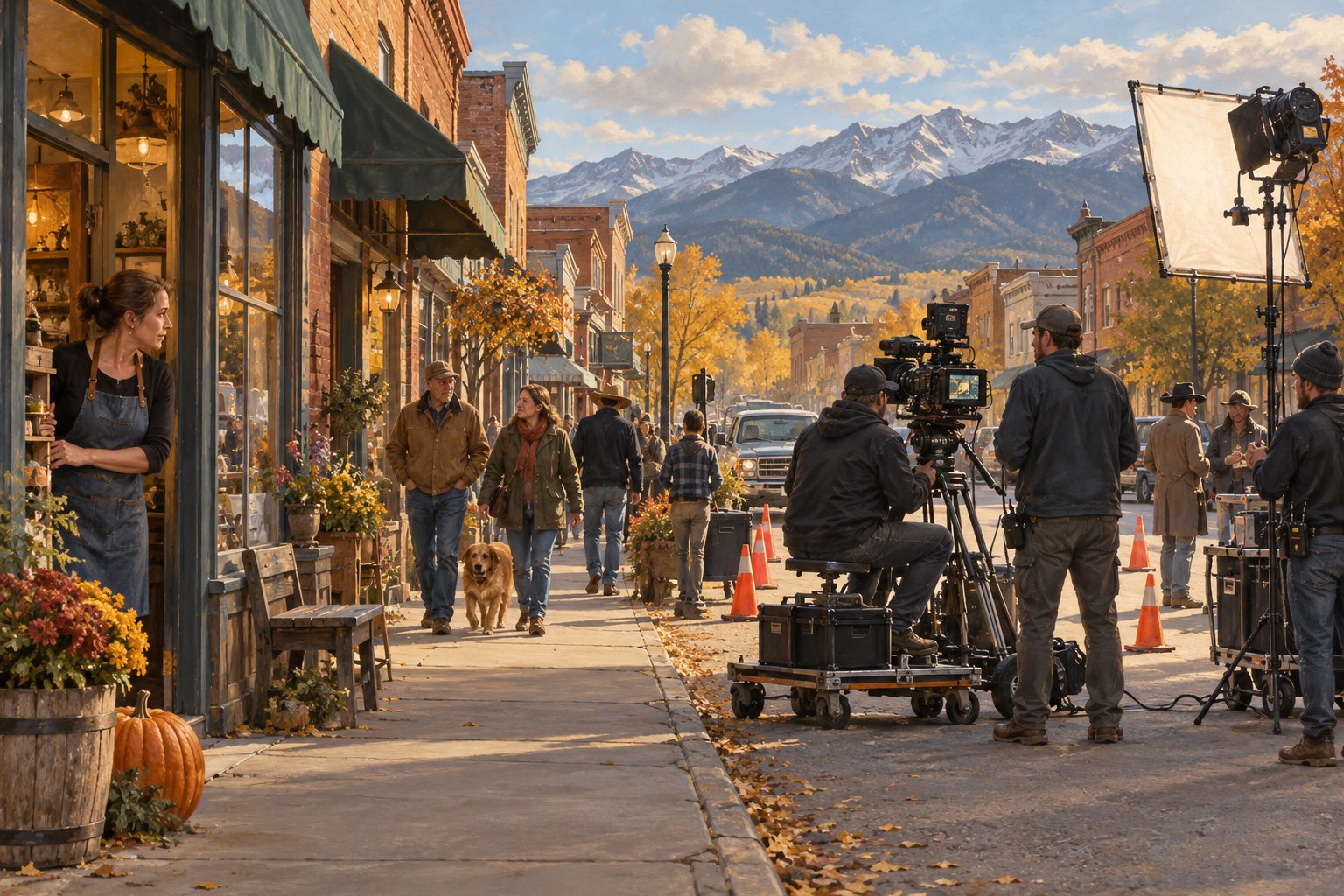
Livingston residents and a local business are raising concerns about disruptions associated with film production, according to NBC Montana. Their concerns put a practical question at the center of the movie business: how should a production share a place with the people whose lives and livelihoods continue while cameras roll?
The reported concerns deserve attention without turning them into a verdict on every aspect of the production. They establish that some people are speaking up about disruption. They do not, by themselves, establish the extent of any financial loss, a violation of filming conditions, or the position of the entire community.
This is commentary on location filmmaking and community responsibility. The central issue is what residents and businesses should reasonably be able to expect when a working neighborhood becomes part of a film set.
What the Livingston concerns put at stake
A film crew and a neighborhood can occupy the same physical space while experiencing it very differently. For a production, a street may be a location with a shooting window, a camera position, and a sequence to complete. For someone living or working there, it remains the route home, the entrance to a business, or the place where a delivery needs to arrive.
That difference helps explain why the word disruption needs specificity. A short delay, a repeated interruption, and an inaccessible entrance create different problems. Understanding a complaint requires knowing what changed, how long it lasted, who experienced it, and whether a workable alternative existed.
Those are questions to investigate in Livingston, not details to assume. Treating the concerns seriously means resisting both easy dismissals and sweeping accusations. Residents should not have to prove that filmmaking is inherently unwelcome to explain that a particular arrangement is difficult to live with.
A business can welcome filming and still need customers
For a business owner, enthusiasm about a movie does not resolve the practical demands of keeping the doors open. A production might create opportunities for some businesses while placing pressure on others. The important distinction is between a possible benefit to an area and the actual experience of an individual storefront.
Consider a hypothetical example: a crew buys meals nearby, while customers of a different business have trouble determining whether its entrance is accessible. Both experiences could occur during the same shoot. Spending at the first business would not answer the second business’s concern.
No such financial pattern should be attributed to Livingston without evidence. The example explains why broad claims about economic benefits cannot settle a specific access complaint. A useful response would address the affected business directly: what obstacle exists, when can it be removed, and what arrangement would let customers return?
My view is that the fairest measure of cooperation is practical. Can an ordinary customer understand how to reach the business without knowing anything about the production?
Communication has to support real decisions
Advance information matters because people organize their lives around times and routes. A general announcement that filming will occur is less useful than an explanation of the hours, affected areas, available access, and person responsible for answering questions.
The distinction is between awareness and the ability to plan. Someone may know that a film crew is coming and still lack the information needed to schedule a delivery or help a customer with limited mobility. When arrangements change, information needs to change with them.
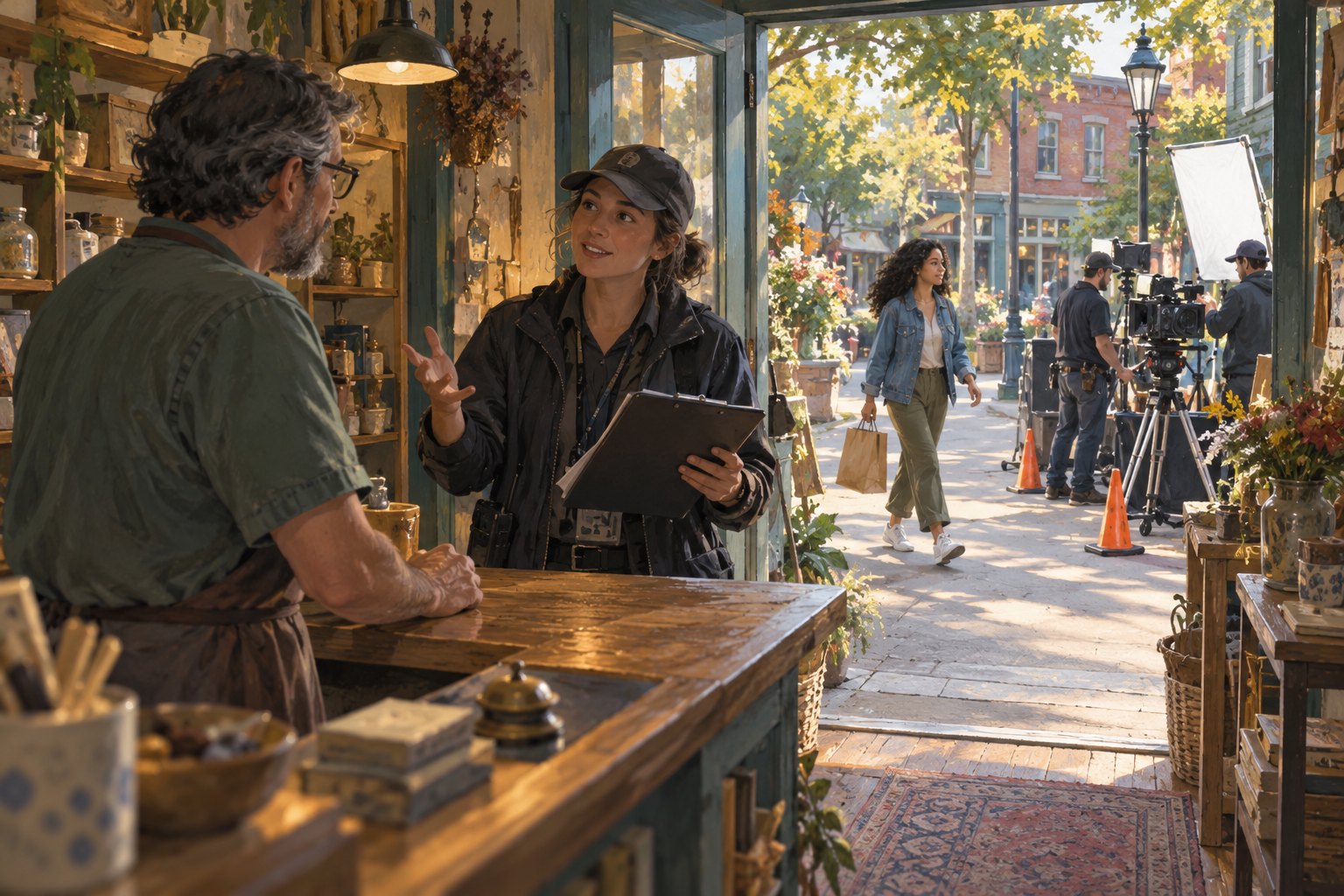
For a situation like the concerns raised in Livingston, a constructive response would make several points clear:
- Which activities or access routes are affected, and during what hours?
- How can residents, customers, and deliveries reach their destinations?
- Who can resolve an immediate problem during filming?
- How will schedule changes reach the people affected?
- How will unresolved complaints be documented and followed up?
These are proposed standards for a useful response, not claims about measures already taken or omitted in Livingston. Their value is that they turn an argument about whether filming is good or bad into specific problems that can be addressed.
Why authentic locations matter to movie audiences
Film viewers have a stake in this conversation because locations contribute to storytelling. A worn doorway, the spacing between buildings, or the depth of a street can give a scene texture. A character’s surroundings can suggest familiarity, isolation, belonging, or unease before the dialogue explains anything.
Our discussion of how a recognizable setting must serve a film’s story considers the creative side of that relationship. The Livingston concerns bring its everyday obligations into view: places that offer visual character also have people who need to use them.
It would be premature to judge an unidentified film’s artistic achievement from this dispute. Production conduct and the quality of a finished movie require different evidence. Still, appreciating location filmmaking can reasonably include caring about the conditions under which locations are used.
Residents deserve to remain people in the story
Entertainment coverage can make a production the central character almost automatically. The shoot has a goal, the schedule supplies urgency, and anyone who complicates that schedule risks being cast as an obstacle. That framing is convenient, but it is a poor way to understand a community concern.
A resident asking for predictable access is pursuing a goal, too. So is a shopkeeper trying to keep a business functioning. Recognizing those perspectives does not require assigning malicious motives to the crew. It requires giving everyday needs the same narrative weight as the demands of getting a scene finished.
A related question runs through our analysis of how filming access shapes the story audiences receive: what the camera can show is only part of what viewers need to understand. In Livingston, the relevant perspective includes people experiencing the production from outside its frame.
What a meaningful resolution would look like
The most useful next development would be a response tied to the concerns themselves. If a complaint concerns access, the relevant evidence is a workable route. If it concerns uncertainty, the answer is dependable information. If someone alleges a business impact, assessing it requires documentation rather than an assumption that either side must be right.
A production’s willingness to adjust would matter more than a general declaration of goodwill. Equally, identifying which measures actually help residents would make the discussion more productive than treating every inconvenience as equally serious.
Livingston’s concerns point to a deeper obligation behind the appeal of filming on location. A town’s character comes partly from the ordinary activity that makes it worth photographing. Respecting that activity should be part of the work of bringing the place to the screen. The strongest outcome would let filmmaking proceed with arrangements that residents and businesses can understand, use, and question when they fail.
Original content by this site's editorial team. Published: October 3, 2026 at 15:48:53 PDT (Los Angeles time)