Elizabeth Holmes was filmed for You Can See Everything with her knowledge: she invited the filmmakers into her life. The production’s secrecy should not be confused with secretly recording an unsuspecting subject. That distinction changes the central question. Instead of asking how cameras caught Holmes unaware, we should ask what happens when someone welcomes observation but cannot determine what observers will conclude.
A24 identifies Nathan Fielder and Lance Oppenheim as the directors and places the starting point 34 days before Holmes enters prison. Its synopsis describes a story extending across three years, and its release listing specifies October 16, 2026. [A24’s film description](https://a24films.com/films/you-can-see-everything?pubDate=20260925)
This is an analysis of the documented filming approach and publicly released exchanges, rather than a review based on a screening of the complete film. It discusses the premise and teaser without revealing later developments.
How the production captured Holmes’s everyday life
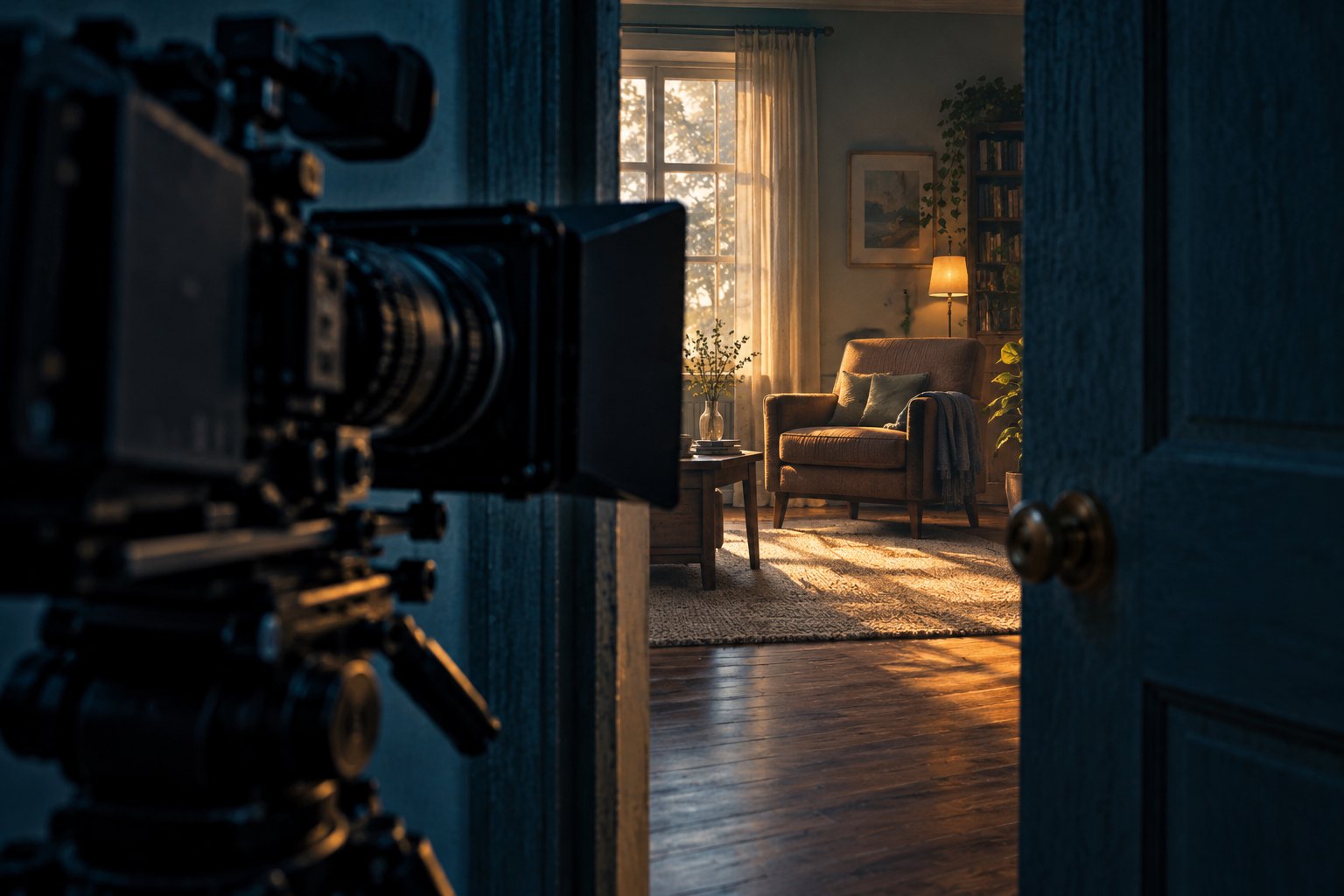
According to Variety’s account of the filmmakers’ New York Film Festival discussion, the production used a seven-person crew, with only four inside the home at a time. An initially cumbersome single-camera approach gave way to three cameras, including wide coverage and long zoom lenses. Shooting could last 16 hours a day. Fielder had intended to remain offscreen, but conversations kept drawing him into the frame. The filmmakers also described choosing a 4:3 image to concentrate attention on faces and preserve immediate reactions. [Variety’s production report](https://au.variety.com/2026/film/global/elizabeth-holmes-you-can-see-everything-secret-filming-40954/)
These choices help explain how observation can become drama without an elaborate physical setup. A conversation contains several events at once: someone speaks, someone listens, and someone decides whether to answer. A camera pointed only at the speaker records the words while potentially losing the moment when those words land.
My reading of this approach is that its most valuable resource is simultaneity. Keeping different participants visible allows an editor to work with both a statement and its reception. It also raises the standard for the editing: the audience needs a trustworthy relationship between the remark and the reaction placed beside it.
Holmes’s perspective: being seen is an opportunity
For Holmes, agreeing to a camera’s presence creates the possibility of addressing viewers directly. An interview subject can choose a phrase, explain a position, or appeal to the person across the room. None of that tells us her private reasons for participating. It does establish a situation in which she has an active role in presenting herself.
In the teaser exchange reported by Variety, Fielder asks, “You’re being real right now?” Holmes answers, “I’m always being real.” Those brief lines capture an unusually difficult interview problem: a request for reassurance produces another reassurance. [Variety’s teaser coverage](https://au.variety.com/2026/film/news/nathan-fielder-secret-elizabeth-holmes-doc-you-can-see-everything-a24-telluride-40033/)
The word “always” is what makes her answer interesting as language. It expands beyond the immediate conversation into a claim about consistency. Rather than addressing a specific discrepancy, it asks the listener to accept a stable identity. That is an interpretation of her wording, not proof of what she believes or intends.
From the subject’s position, the encounter can be understood as a struggle to make personal contact count. From the viewer’s position, the danger is treating that contact as verification. Someone can seem approachable, vulnerable, or persuasive while leaving the factual question untouched. A humane portrayal should allow those qualities to register without requiring them to settle anything.
Fielder’s perspective: skepticism becomes visible
Fielder’s question has its own limitation. What answer could conclusively establish that another person is being genuine? Asking directly can expose the difficulty of the encounter, but it cannot solve it. The exchange becomes compelling because both participants are negotiating something that ordinary conversation usually leaves implicit: whether one person accepts the other’s presentation of reality.
Putting the questioner onscreen also gives viewers another person to scrutinize. We can consider whether a question is precise, whether a pause encourages an answer, and whether disbelief arrives before the evidence. The interviewer’s expression becomes part of the argument, even when he says very little.
That is where an apparently straightforward confrontation can acquire a second layer. Viewers may begin by evaluating Holmes, then find themselves evaluating Fielder’s evaluation. A skeptical expression can feel like permission to dismiss an answer. Yet the expression remains a response, not independent corroboration.
This concern connects with our discussion of how narrative choices shape judgments about motive in Verity. Fiction and documentary carry different responsibilities, but both require viewers to distinguish an interpretation from the material supporting it.
Why a close-up can feel more conclusive than it is
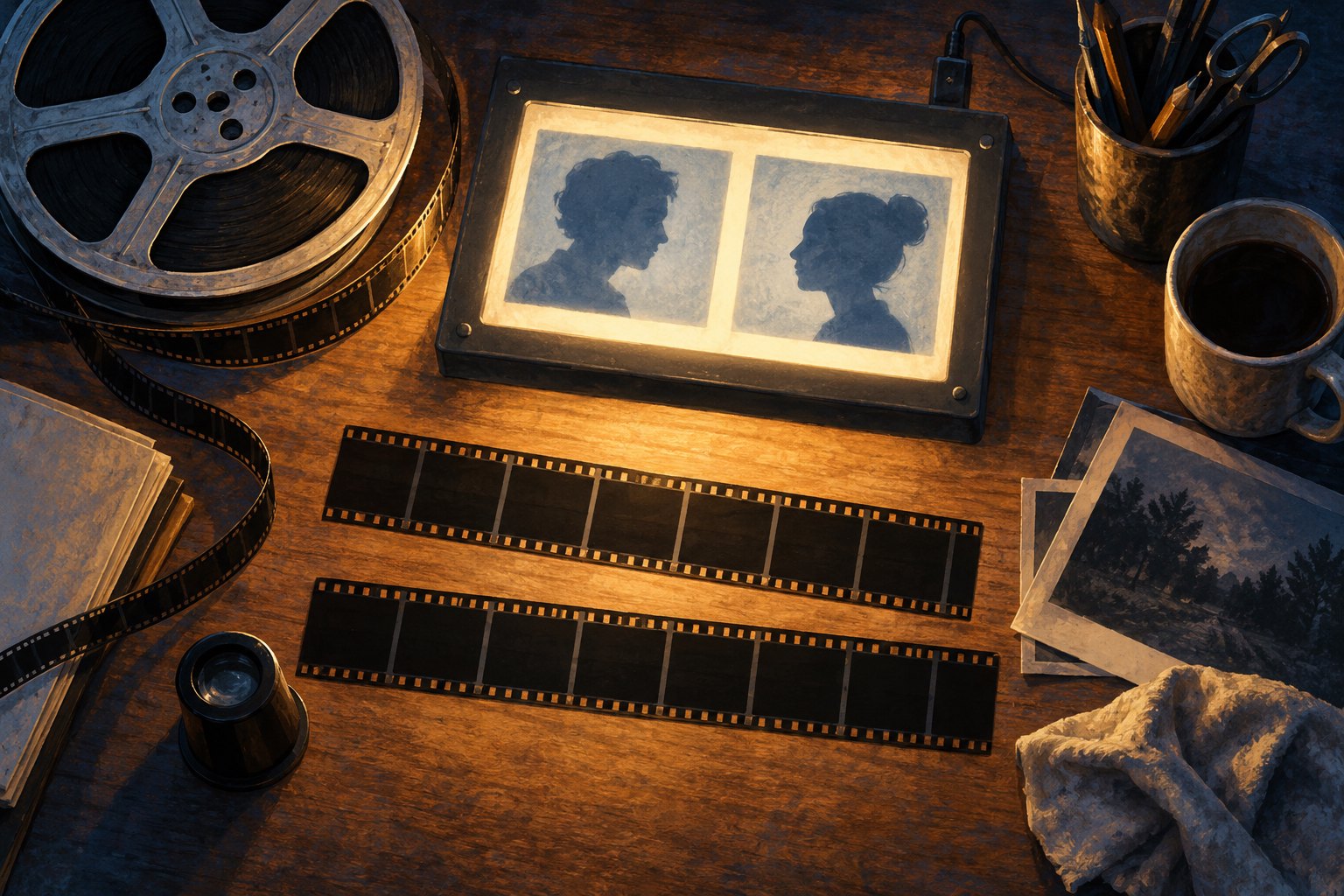
A close-up offers detail while removing surroundings. That trade can sharpen an exchange, but it can also encourage us to overread it. A smile might appear reassuring in one sequence and evasive in another. Holding a shot longer can make silence uncomfortable even when the underlying silence has several possible explanations.
The useful critical question is therefore specific: what does this image establish? It may show that someone hesitated before answering. It does not, by itself, establish why. Treating every movement as a confession would turn the viewer’s suspicion into a substitute for evidence.
Three viewing habits can help:
- Separate statements from impressions. Record what someone actually claims before deciding how convincing the delivery feels.
- Notice the question. An answer’s meaning depends partly on what was asked and what alternatives the question allowed.
- Watch the transition. A cut can invite an association; consider whether the surrounding material supports it.
These habits preserve the pleasure of close observation while keeping its conclusions proportionate. They also make room for a more interesting response than immediately deciding who has won an exchange.
Access is the beginning of the film’s argument
The appeal of the secret production story is understandable: cameras entered a private setting, and the resulting material became a public film. But access describes an opportunity. It does not tell us whether the finished work uses that opportunity to clarify events, complicate a portrait, or merely sustain fascination.
That distinction also matters when publicity starts defining a movie before viewers encounter it, a problem explored in our commentary on the distance between a film and its online conversation. Here, the phrase “secretly filmed” can establish the wrong expectations before the first scene begins.
My deeper reading of the premise is that You Can See Everything poses a challenge to the promise in its title. Visibility can multiply questions. A camera can preserve a conversation with extraordinary patience while leaving motive unresolved. The meaningful test is whether the film helps us recognize that boundary—or encourages us to mistake the sensation of intimacy for understanding.
Holmes’s assurances and Fielder’s question give that boundary a human form. One person offers certainty about herself; another asks for grounds to accept it. Between them sits the viewer, who has more to watch than a headline could convey, and still has to decide what the images actually prove.
Original content by this site's editorial team. Published: October 3, 2026 at 13:27:39 PDT (Los Angeles time)