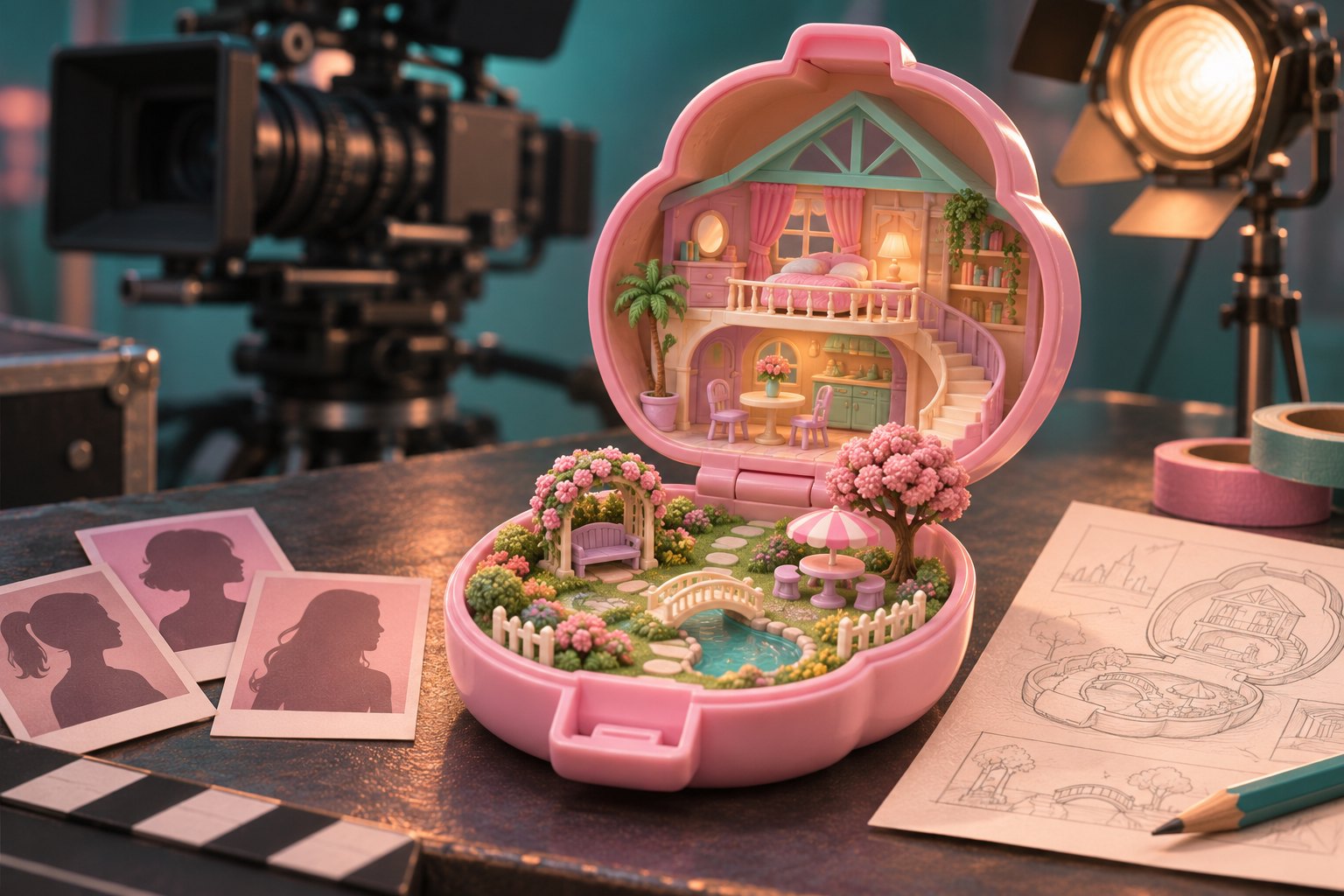
Lili Reinhart is circling Amazon MGM Studios and Mattel’s Polly Pocket following Lily Collins’ exit, according to Deadline. The distinction in that wording matters: Reinhart’s potential involvement is the news, rather than a confirmed performance audiences can already evaluate. For anyone wondering whether she has officially taken over, the report’s description leaves that question open.
The development also raises a more interesting creative question than whether one recognizable actress can replace another. What would make Polly compelling as a movie character? A miniature world supplies an immediate visual attraction. A feature film needs someone whose desires, decisions, and relationships make that world worth spending time in.
This is spoiler-free casting and adaptation commentary, not a review of a completed film. There are no verified scenes or lines of dialogue to assess here. The useful discussion is about what this reported casting possibility means—and what it cannot tell us about the movie.
What Reinhart’s Reported Involvement Establishes
The central development has three parts: Reinhart is circling the project, Collins has exited, and the film is associated with Amazon MGM Studios and Mattel. Those details establish a possible change in its leading screen presence. They do not, by themselves, establish how the character has been written, what the finished movie will look like, or whether its creative direction has changed.
It would be premature to interpret Collins’ departure as evidence of creative trouble or Reinhart’s potential arrival as proof of a turnaround. Neither conclusion follows from the casting headline. An actor’s exit and another actor’s interest can become the public face of a project without explaining the decisions happening behind it.
For readers following the film, the practical takeaway is straightforward: treat Reinhart as a prospective participant until her involvement is confirmed. Likewise, this development should not be mistaken for an announcement of a release date, production start, or completed screenplay.
A Casting Change Cannot Tell Us Who Polly Is
Recasting invites a familiar shortcut: imagine the same movie with a different face. That is rarely a useful way to think about a performance before the role itself has become clear. Costume, dialogue, scene partners, editing, and the opportunities a screenplay gives its protagonist all influence what an actor can accomplish.
My interest in Reinhart’s possible involvement therefore rests less on whether she resembles an imagined Polly than on what the role might ask her to do. Would the character lead through confidence, curiosity, stubbornness, or some unstable combination? Would her humor come from understanding a situation better than everyone else, or from discovering that she has misunderstood it?
These are possibilities, not reported character details. They matter because each would require different choices in timing, expression, and emotional emphasis. An appealing lead performance needs room for contradictions; an endlessly agreeable character can become surprisingly difficult to care about.
Our discussion of casting and character agency in The Signalers considers a related issue: a cast announcement starts a conversation about dramatic possibilities, while the actual relationships must earn the audience’s investment.
The Most Interesting View Is From Inside the Miniature World
As an adaptation concept, Polly Pocket offers a compelling tension between how a small world looks from outside and how it might feel to someone living within it. Viewed from above, a miniature room is an arrangement of attractive objects. Viewed at its inhabitant’s eye level, that room becomes a place with boundaries, routes, comforts, and obstacles.
That difference could provide a meaningful cinematic perspective. A camera positioned to admire a tiny setting invites recognition and delight. A camera positioned to share a character’s experience can turn the same setting into something emotionally significant. The strongest approach, in my view, would make those perspectives work together.

The illustration above explores that difference in scale; it does not depict a scene from the film. Its ordinary button becomes imposing because of the viewpoint. A movie could find comedy, wonder, or vulnerability in that kind of visual relationship, but those effects would carry more weight if they expressed what Polly wanted or feared.
Scale alone is a visual premise. Scale experienced by a particular personality can become storytelling. The distinction is especially important for a film whose surroundings might otherwise attract more attention than its protagonist.
Give the Lead Choices That Change Something
A useful standard for any eventual Polly characterization is whether her decisions alter the story. Does she initiate action? Can she make a mistake that matters? Does another character have a legitimate reason to disagree with her? Those questions reveal more about a role’s substance than how closely its wardrobe matches an audience’s expectations.
Consider the difference between a heroine who is repeatedly shown wonderful things and one who must decide what to do with them. Both can anchor colorful scenes. The second creates anticipation because the audience has something to interpret: judgment, hesitation, appetite, or responsibility.
This does not require a heavy or cynical treatment. A playful film can give its central character specific wants and allow those wants to collide with someone else’s. Friendship, embarrassment, pride, and the wish to be taken seriously can support accessible storytelling without turning every exchange into a statement of theme.
It also gives the prospective lead something concrete to play. Our commentary on the relationship between a strong performance and its surrounding film addresses why acting and dramatic construction must be considered together. A recognizable performer cannot supply every missing connection in a story.
What Would Make the Next Reveal Worth Watching?
Beyond confirmation of Reinhart’s involvement, the most revealing material would establish a specific character dynamic. A short exchange showing what Polly wants from another person could communicate more than a succession of polished settings. It would offer evidence of voice, conflict, and the kind of humor the movie intends to sustain.
Visual material would be useful for a different reason: it could show whether the miniature environment shapes the action or mainly decorates it. The strongest images would let viewers understand both the physical space and the character’s relationship to it.
For now, Reinhart circling Polly Pocket is a reason to follow the project, not a reason to pronounce it successful. The deeper promise of this adaptation lies in the possibility of taking a small life seriously. A world that fits in someone else’s hand could still feel enormous to the person living there. If the eventual film makes that perspective vivid, its leading actress will have something more durable than a familiar brand to bring to life.
Original content by this site's editorial team. Published: November 20, 2026 at 11:02:23 PST (Los Angeles time)