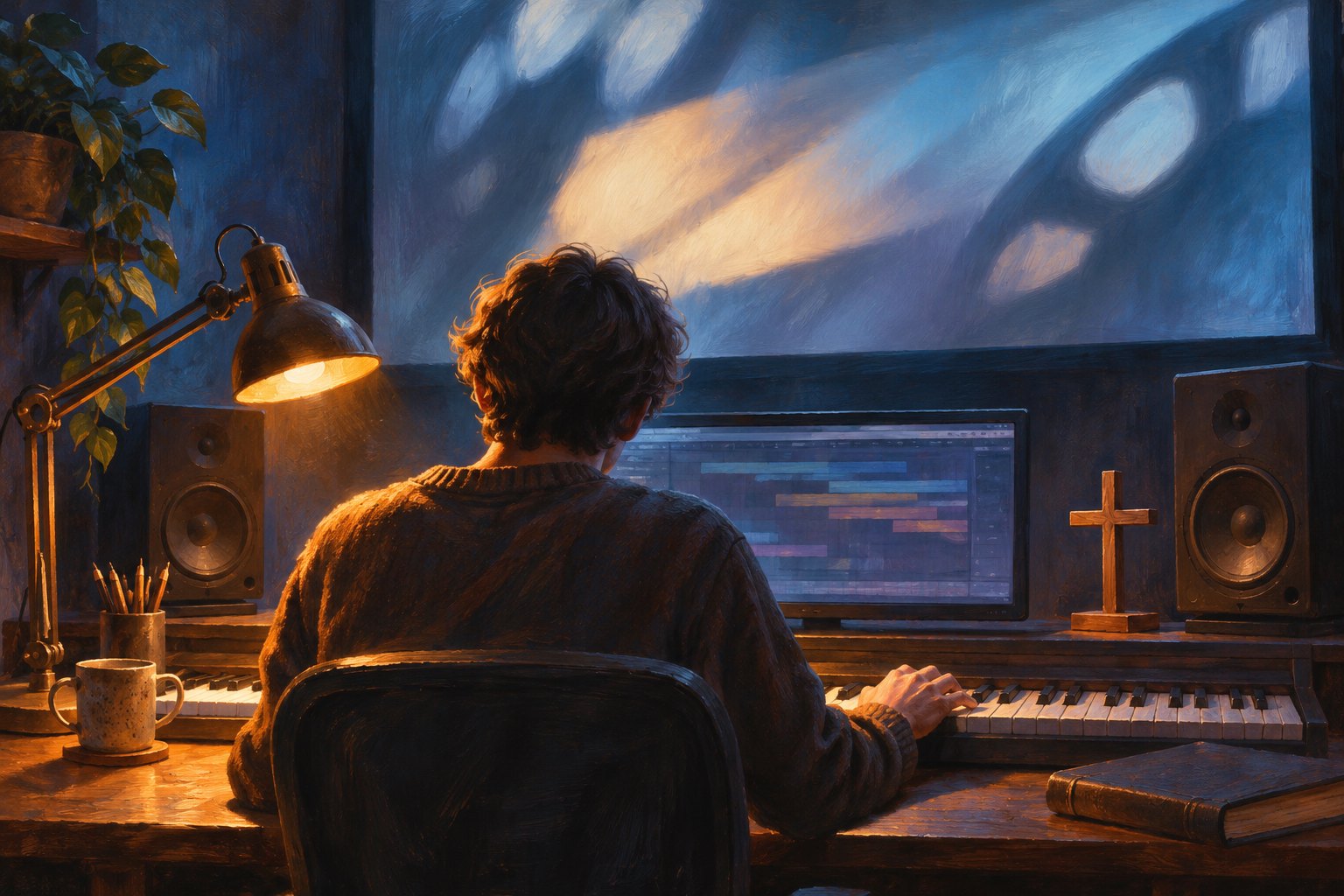
Liberty University is highlighting music alumni who connect their Christian faith with careers in film scoring. For movie lovers, that connection opens an interesting question: how can a composer’s convictions shape music that serves characters whose experiences may be very different from the composer’s own?
The university frames these careers around honoring Christ through musical work. That establishes the subject of its coverage; it does not, by itself, establish how any particular score sounds or whether a film succeeds. The critical question begins where the career story meets the screen: what does the music help us understand about the people we are watching?
This is commentary on faith and film scoring, rather than a review of a specific movie. Its central judgment is straightforward: personal conviction becomes artistically persuasive when it produces careful attention to the story. A score can express hope, compassion, or spiritual searching while allowing a character’s fear and uncertainty to remain unresolved.
Faith Is a Creative Starting Point, Not a Musical Genre
The connection between Liberty’s alumni, Christianity, and film scoring should not lead viewers to assume a particular sound. Religious belief does not automatically imply a choir, a hymn melody, or an orchestral climax. Those are musical choices whose meaning depends on context. A choir can suggest comfort in one scene and overwhelming power in another.
It is also useful to distinguish a musician’s faith from a movie’s subject. A Christian artist’s professional identity does not tell us whether every project concerns religion. Nor does an artist’s intention determine how every viewer will interpret the finished work. Music reaches people with different beliefs, associations, and expectations.
My view is that the most revealing connection between belief and craft may be an ethic of attention. Does the music take a vulnerable character seriously? Does it allow someone unfamiliar to become understandable? Does it leave space for pain that the screenplay has not yet resolved? These questions offer a stronger basis for criticism than trying to identify a supposedly Christian chord progression.
A Score Can Tell Us Whose Experience Matters
Film analysis often concentrates on dialogue and performance, but music can quietly establish a scene’s emotional point of view. The camera may show a group while the score draws us toward one person’s apprehension. A public celebration can feel privately lonely; an apparently calm exchange can become difficult to endure.
Consider a hypothetical reconciliation scene. One character offers an apology, while another hesitates. A broad, reassuring musical resolution could encourage us to experience the apology as sufficient. An unsettled phrase might preserve the injured person’s uncertainty. Silence might place the burden on the actors’ pauses and expressions. None of these choices is automatically correct; each makes a different claim about the encounter.
For a composer interested in communicating Christian ideas such as forgiveness, that distinction matters. Forgiveness has little dramatic weight if the music treats injury as a problem already solved. A score can make room for reconciliation without announcing that trust has been restored before the characters demonstrate it.
This attention to interior experience also connects with our discussion of how screen presence and character choices earn audience trust. Performance and music are most interesting together when each gives us something to notice.
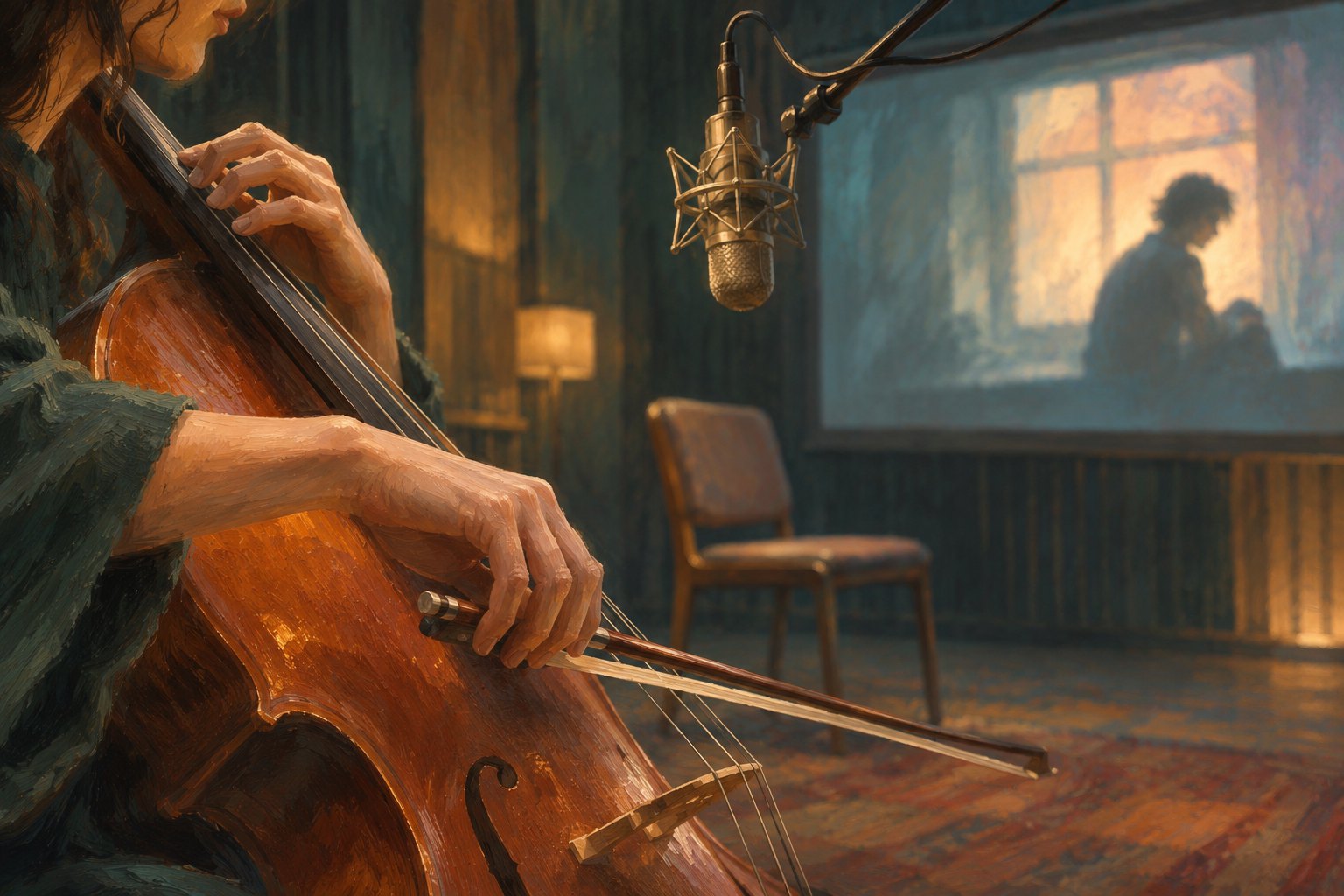
Hope Has More Weight When the Music Allows Doubt
Hope is not simply a bright sound. In dramatic terms, it involves the possibility of change under conditions that make change difficult. Music that declares victory too early can shrink that difficulty, turning a character’s struggle into a brief interruption before an expected reward.
A more patient approach might let a musical idea remain incomplete, return in a different texture, or acquire a new meaning after a consequential decision. These are possibilities within scoring, not claims about the work of the alumni in Liberty’s coverage. Their value lies in the relationship between musical development and character development.
Restraint deserves the same scrutiny as grandeur. A quiet cue is not inherently profound, and a large orchestral passage is not inherently manipulative. The useful question is whether the scale of the music fits the emotional event. An exuberant ending can feel earned when the story has made its cost visible.
For faith-informed filmmaking, patience can be especially powerful. A character who doubts, grieves, or resists consolation need not be treated as an obstacle to the film’s message. Allowing that experience its full duration can give the eventual expression of hope greater credibility.
The Career Story Also Points Toward Collaboration
The phrase film scoring career directs attention beyond the memorable theme. Screen music exists within a larger arrangement of performances, images, dialogue, editing, and sound. Even a striking composition must find its place among those elements.
From a critical standpoint, successful collaboration becomes audible when music leaves room for another contribution to matter. A breath before an answer, an awkward pause, or an environmental sound may carry information that sustained musical emphasis would obscure. Sometimes the score’s most useful contribution is its withdrawal.
This is why an artist’s background should inform our curiosity without predetermining our verdict. As our commentary on artistic development and distinctive filmmaking explores, the conditions that support creative work matter. Audiences still encounter the result as a particular story, with particular strengths and limitations.
Four Questions for Listening More Closely
The Liberty alumni story offers a reason to pay closer attention to the next film’s score. You do not need musical training to ask useful questions:
- Whose feelings does the music follow? Notice whether it supports the speaker, the listener, or a perspective neither character shares.
- When does a recurring idea change? Listen for a familiar musical phrase becoming warmer, harsher, thinner, or less certain as relationships develop.
- What happens when the music stops? Ask whether silence exposes a performance detail or makes an action harder to dismiss.
- Has the story earned the emotional resolution? Consider whether the characters’ decisions support the reassurance or triumph supplied by the score.
These questions also help distinguish enjoyment from evaluation. You can love a soundtrack on its own while finding it overbearing in a scene. You can barely remember a melody yet recognize that the music helped a difficult performance register.
The Deeper Issue: Conviction Expressed Through Attention
Liberty’s focus on faith and film scoring invites a broader understanding of artistic expression. Conviction can shape more than the themes an artist chooses to announce. It can shape the patience extended to a character, the seriousness given to suffering, and the willingness to let another person’s experience occupy the foreground.
That is the standard I would bring to this subject as a film critic. The meaningful test is whether the music helps us encounter a character with greater clarity and feeling. When hope arrives through that kind of attention, it becomes something the audience can experience within the drama, rather than merely an intention attached to the artist’s biography.
Original content by this site's editorial team. Published: November 13, 2026 at 19:18:43 PST (Los Angeles time)