
Les Misérables has a problem that expensive filmmaking cannot automatically solve: its greatest events matter because of what they demand from individual people. A city in turmoil supplies scale. A frightened man deciding whether to sacrifice his freedom supplies the moral pressure. An adaptation needs a convincing relationship between the two.
Variety’s negative assessment of the new French-language version presents it as an impressive-looking production with insufficient emotional substance. That is the publication’s judgment, not an independently established verdict here. But it raises a useful question: what would emotional substance actually mean in an adaptation of Victor Hugo’s epic?
Scope and spoilers: This is commentary on that adaptation question, not a firsthand review of the new film. The character developments below belong to Hugo’s novel and include major spoilers; they should not be read as confirmation of scenes, dialogue, or changes in this screen version.
Valjean: Redemption Must Remain Difficult
Jean Valjean’s story is often remembered as a transformation from convicted thief to compassionate protector. That outline can make his goodness seem like a destination reached early and maintained afterward. Hugo gives him a much less comfortable existence: doing good repeatedly threatens the security he has painstakingly built.
The bishop’s mercy establishes this tension. After Valjean steals silver, the bishop protects him and gives him the candlesticks as well. The encounter unsettles the expectation that every relationship is another contest between humiliation and survival. Someone has treated him as capable of becoming different.
My reading is that the episode matters most as a challenge to Valjean’s understanding of himself. Receiving generosity does not instantly erase his habits or resentment. It makes continuing to live entirely by those habits harder to justify. A screen adaptation has an opportunity here to let discomfort coexist with gratitude.
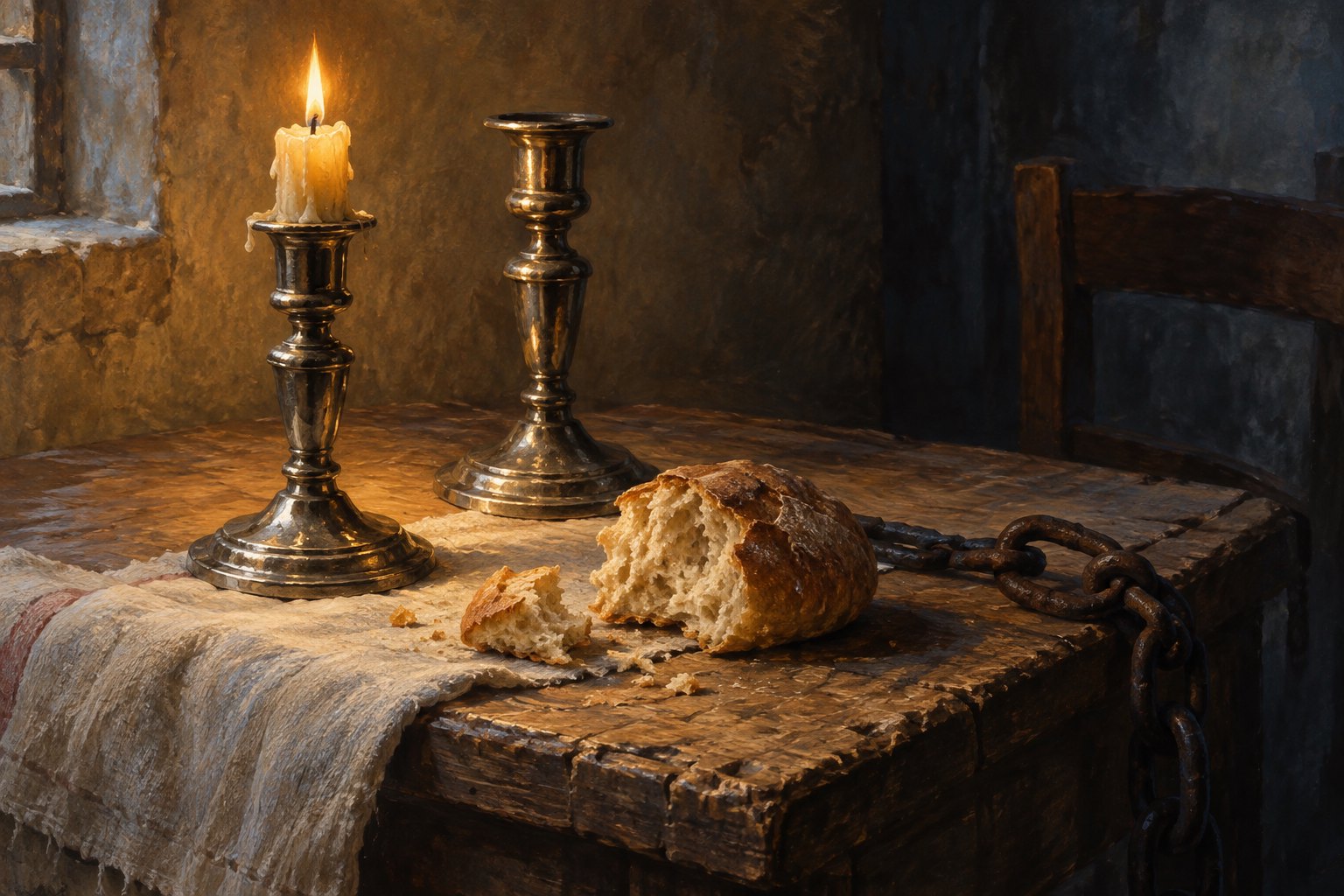
The novel later makes the cost of conscience explicit when another man is mistaken for Valjean. Remaining silent would protect his new identity and the people who depend on him. Revealing himself would prevent an injustice while endangering the useful life he has created.
This is where cinematic grandeur should become intimate. The essential dramatic material is a person finding increasingly persuasive reasons to avoid doing something he knows he must do. If the audience never feels the attraction of silence, the eventual sacrifice loses much of its force.
Javert: Certainty Is More Frightening Than Anger
Inspector Javert gives Valjean’s transformation its strongest opposition. In the novel, his pursuit expresses a worldview in which legal identity and moral identity are tightly bound. A convict remains a convict; authority deserves obedience. Valjean’s capacity for goodness threatens the categories that organize Javert’s life.
For me, this makes Javert most compelling when his certainty has an intelligible internal structure. An adaptation can make him intimidating through harshness alone, but anger is a narrower dramatic resource than conviction. The deeper tension comes from watching someone encounter evidence that his principles cannot accommodate.
When Valjean spares Javert in Hugo’s story, mercy becomes an existential problem for the inspector. The person he has pursued behaves with a generosity his system cannot adequately explain. Javert must confront the possibility that following the rules has failed to make him just.
The distinction matters when assessing an ensemble. Recognizable performers can draw attention to the central opposition, but its strength depends on how their characters alter one another’s understanding. As our discussion of why an ensemble needs more than recognizable names argues, casting becomes meaningful through relationships.
Fantine: Tragedy Has a Chain of Causes
Fantine is especially vulnerable to compression. Her suffering is memorable enough that an adaptation can preserve the broad tragedy while losing the sequence of pressures that makes it socially revealing.
In Hugo’s novel, she struggles to support Cosette while separated from her. Losing employment and facing escalating financial demands drive increasingly desperate decisions. Her decline connects money, reputation, work, and the unequal penalties imposed on women.
Those connections change what an audience is being asked to feel. Pity recognizes that a person is suffering. Understanding recognizes how that suffering becomes possible, who benefits, and where someone could have intervened. A moving performance can invite the first response; the surrounding storytelling must support the second.
This offers a concrete way to examine the complaint that an adaptation feels empty. Does suffering emerge from legible decisions and constraints, or arrive as a succession of already tragic images? Beautifully composed misery can still leave its causes obscure.
Cosette: Safety Should Open a Life
Cosette presents a different challenge. Readers and viewers can become so invested in Valjean’s protection of her that her independence feels like an interruption of his story. Yet the possibility of her having a life beyond him gives that protection its purpose.
In the novel, his love contains both generosity and fear. He rescues and raises her, but her attachment to Marius threatens the private world that has sustained him. The difficulty is painfully ordinary beneath the extraordinary circumstances: caring for someone does not grant permanent control over the shape of their happiness.
A persuasive adaptation therefore needs room for Cosette’s perspective. She should be more than proof that Valjean is good or a prize around which other characters organize themselves. Her desires test whether his love can survive a loss of centrality.
That connection between care and personal growth also informs our analysis of the household relationships in Howl’s Moving Castle. Emotional weight often accumulates through the ordinary experience of living together before a large dramatic gesture makes it visible.
What the Epic Scale Should Reveal
Hugo’s larger world prevents these relationships from becoming isolated moral anecdotes. Poverty, policing, status, and collective resistance shape what choices are available. The public and private dimensions of the story need each other: individual kindness matters enormously, but the need for repeated rescue exposes failures beyond any single household.
Lavish production is compatible with that argument. A crowded street can show exclusion; a comfortable interior can reveal insulation from hardship. The decisive issue is where the film directs attention and whether its environments help explain how people live.
The deepest interpretation of Les Misérables, to my mind, concerns the gap between being classified and being known. Javert relies on categories. Valjean’s experience repeatedly demonstrates their inadequacy. Fantine suffers under judgments that overlook her circumstances. Cosette needs the freedom to become more than someone else’s responsibility.
That is the demanding standard behind the debate over this French-language adaptation. Preserving Hugo’s recognizable events is only part of the task. The essential achievement would be to make viewers feel how difficult it is to recognize another person fully—and how much can change when someone finally does.
Original content by this site's editorial team. Published: September 29, 2026 at 07:29:24 PDT (Los Angeles time)