Langley, British Columbia, is the focus of a Cascadia Daily News feature about finding festive movie nostalgia. For film lovers, that invitation has an appeal beyond recognizing a location: it promises proximity to the comforting world holiday movies create. The interesting question is why that world can feel familiar even when we have never visited the place—or cannot name the movie it brings to mind.
The answer begins with atmosphere, but it should not end there. A decorated street becomes emotionally meaningful through the people we imagine walking down it. Holiday cinema teaches us to read windows, doorways, gathering places, and empty chairs as clues about belonging. Approaching Langley through that lens can turn a search for seasonal scenery into a closer look at how movies work.
This is a spoiler-free commentary on festive screen nostalgia, rather than a review of a particular film or a confirmed itinerary of local attractions.
Why a place can feel like a movie you remember
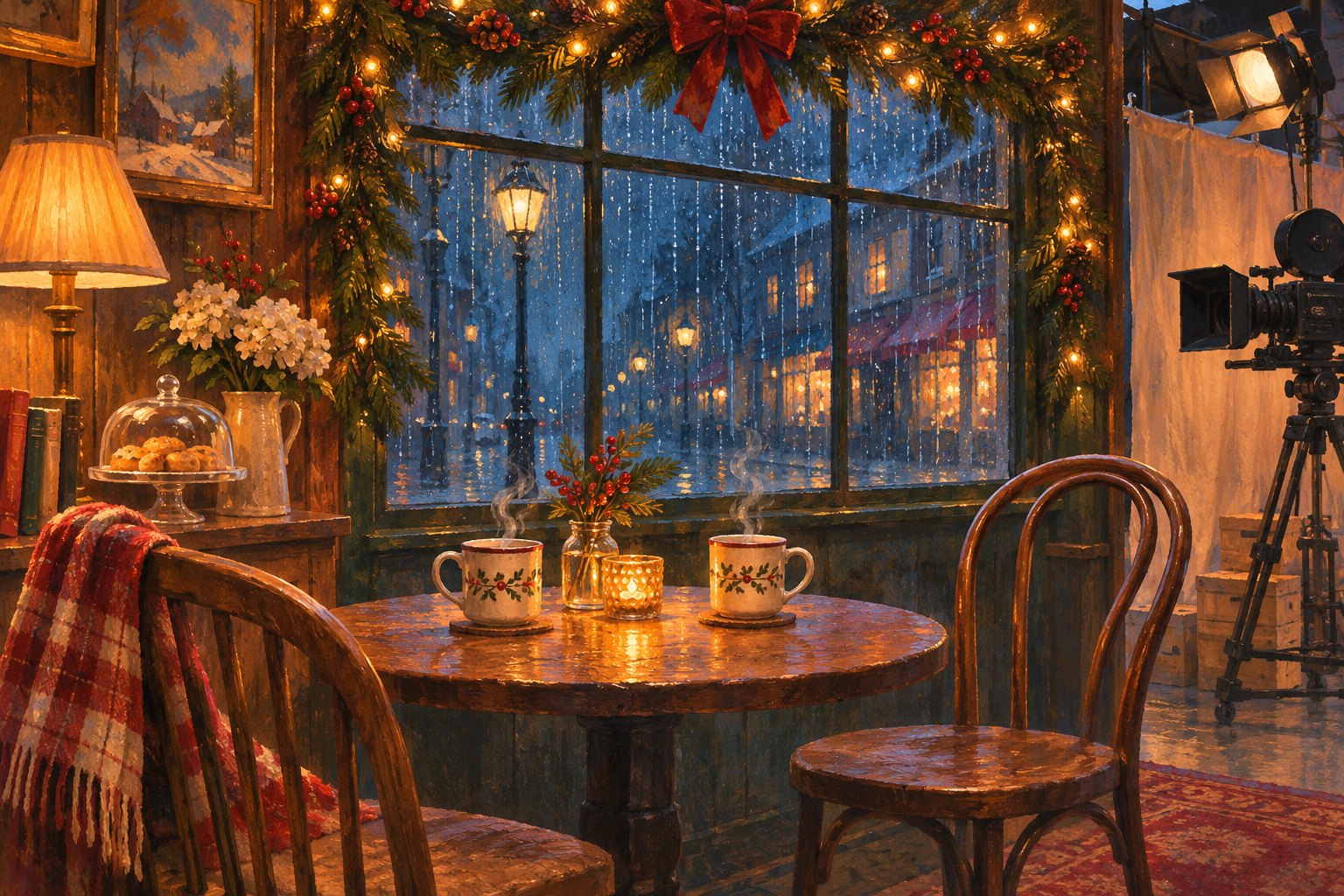
Movie nostalgia has at least two forms. One is precise: you recognize a building, remember a scene, and mentally put the actors back into the frame. The other is associative. A window glowing against a dark afternoon recalls the emotional texture of several films without reproducing any one of them.
That second response is especially useful when thinking about the appeal of Langley as a festive destination. Recognition does not always require a verified filming address. Sometimes we recognize a visual arrangement: an inviting interior beyond a cold exterior, a street that seems to encourage chance encounters, or a gathering place where an isolated person might finally be noticed.
My reading is that these arrangements make belonging appear physically accessible. You can see the door. You can imagine crossing the street. A complicated emotional problem briefly acquires a simple geography.
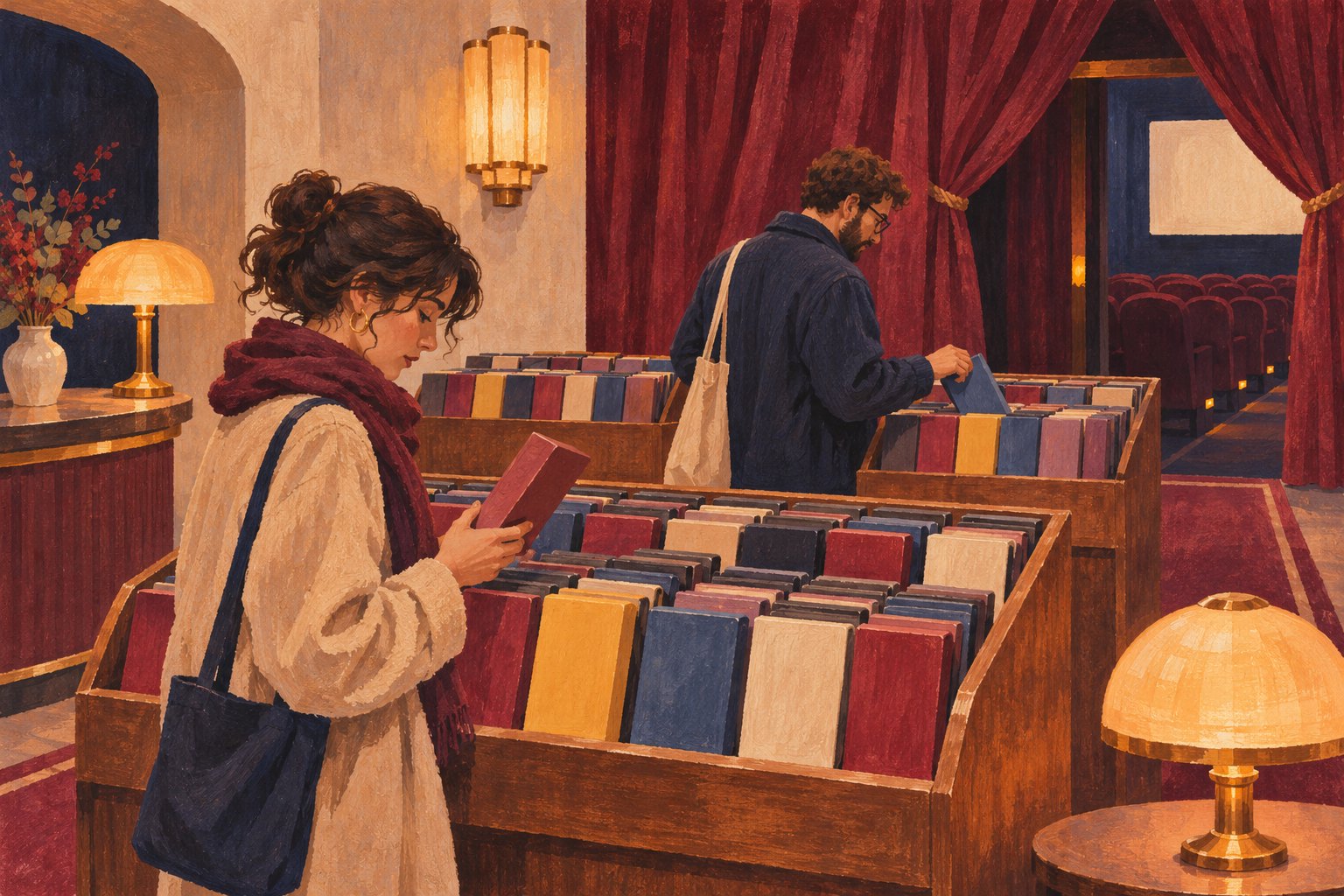
There is a related pleasure in the tactile movie culture explored in our commentary on the Little Theatre’s VHS pop-up and the appeal of physical discovery. Both experiences give screen memories something tangible to attach to. Browsing an object or walking through a place changes the pace at which we remember.
Look at the setting from the character’s position
A useful way to judge a holiday movie is to ask who feels comfortable in its supposedly welcoming spaces. The audience may see an attractive room; the protagonist may see a gathering they dread. Decorations do not settle that difference. Performance, framing, and the relationships inside the scene do.
Consider a hypothetical homecoming scene. A returning character pauses outside a crowded celebration. From their perspective, the warmth inside might represent affection, obligation, or the fear that everyone remembers an earlier version of them. The same doorway can promise refuge or demand an explanation.
This is why production design matters most when it interacts with character. A carefully arranged table can suggest hospitality, but it can also reveal someone's need to control the occasion. An empty seat can make a cheerful room feel incomplete. The objects become expressive because someone has a stake in them.
For a viewer seeking festive movie nostalgia in Langley, this offers a richer habit of attention than simply collecting pretty views. Notice what a space makes you anticipate. Does it suggest a reunion, a private conversation, or an uncomfortable entrance? Those are interpretations, not claims that a particular scene was filmed there.
Comfort works best when it leaves room for friction
My chief reservation about idealized holiday settings is that beauty can do emotional work the screenplay has not earned. A lovely backdrop may encourage us to accept a reconciliation before the people involved have addressed what separated them.
The stronger version of this storytelling lets the setting offer a possibility. A character still has to listen, apologize, change a habit, or accept an answer they dislike. The destination cannot make those decisions on their behalf.
That distinction also matters when stories involve returning home. Familiarity is not automatically evidence that staying is right. A convincing ending allows the character to choose belonging instead of treating nostalgia as an instruction to reverse every departure.
The value of preserving a character’s freedom also runs through our discussion of why the Guardians’ farewell matters when considering another reunion. Affection for a familiar group can coexist with respect for its members’ need to move forward. Holiday storytelling benefits from the same generosity.
How to approach a movie-inspired visit to Langley
The most useful distinction is between enjoying cinematic atmosphere and identifying a documented filming location. Both can be rewarding, but they answer different questions. A place that reminds you of a favorite film does not necessarily appear in it.
Before building plans around a specific venue, tour, or seasonal attraction, establish what is currently available. A feature about festive nostalgia is a starting point for curiosity; it does not, by itself, confirm opening hours, admission arrangements, or access to production spaces.
- Decide what you want to recognize. If your interest is a particular movie, confirm the connection between its title and the location before making a special trip.
- Check access separately. A filming association does not establish that a property welcomes visitors or permits entry.
- Allow atmosphere to be enough. You can enjoy a place’s seasonal character without assigning it an unsupported screen credit.
- Look beyond the photograph. Notice scale, sound, movement, and the distance between spaces—the things a single promotional image leaves out.
This approach also leaves room for Langley to be an actual place. Residents, businesses, and ordinary routines need not match a visitor’s preferred holiday narrative. That difference can make the encounter more interesting, particularly for anyone curious about how cinema selects and reshapes its surroundings.
The deeper appeal: remembering a feeling of possibility
Festive movie nostalgia is not always a desire to return to a specific past. Sometimes it is a desire to revisit a feeling: that an estrangement might end, that someone might notice our absence, or that an ordinary evening could become a turning point.
Seen this way, the appeal of Langley’s connection to festive nostalgia lies in the meeting between physical surroundings and a viewer’s emotional imagination. A place provides surfaces, distances, and thresholds. Memory supplies the scenes we associate with them.
The most satisfying response is to appreciate both the pleasure and the construction. Enjoy the welcoming glow, then ask whose welcome it represents and what a character would have to risk to enter. That question keeps holiday film commentary honest. It also explains why a modest doorway can remain in our minds long after the decorations have come down.
Original content by this site's editorial team. Published: November 15, 2026 at 22:06:48 PST (Los Angeles time)