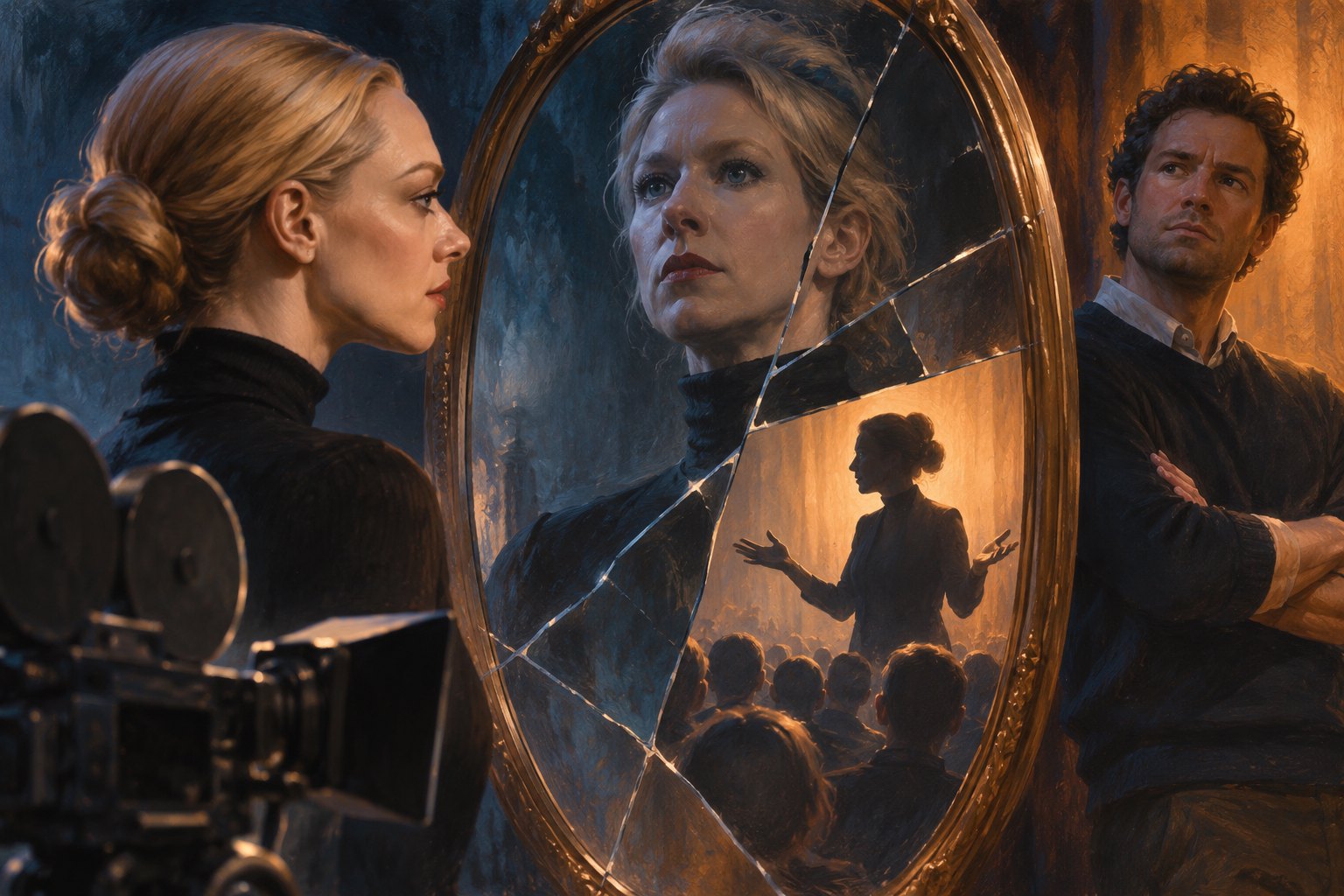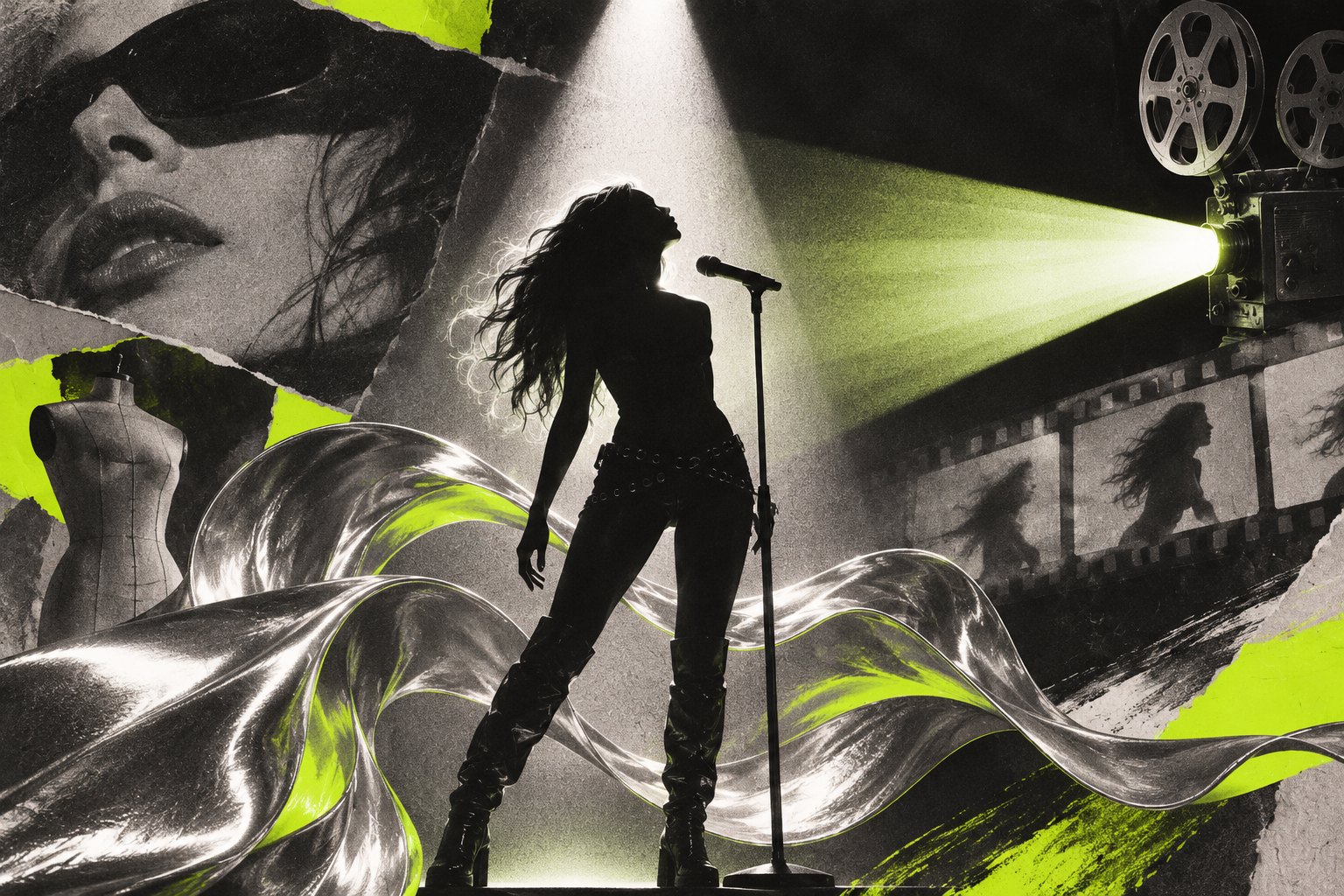
Charli xcx’s “Music, Fashion, Film” tour invites a question that belongs as much to movie criticism as to pop criticism: what happens when the person making the work also becomes its central image? The three-part phrase offers an intriguing way to consider that tension. Music gives a performer a voice, fashion makes a body legible at a glance, and film determines how long—and from what angle—we get to look.
The Santa Barbara Independent has published a review of the tour. This article takes a narrower approach: critical commentary on its music–fashion–film framing, rather than a firsthand concert verdict or a review of a narrative feature. The distinction matters. A tour’s title can open a worthwhile discussion without establishing its staging, its emotional effect, or the artist’s private intentions.
Three art forms, three different relationships with an audience
My reading of “Music, Fashion, Film” begins with the friction between its terms. They can reinforce one another, but they do not ask audiences to pay attention in quite the same way. A song unfolds through repetition and variation. An outfit can make an impression before its wearer moves. A filmed image can direct attention toward something almost invisible from across a room.
For Charli, that combination presents a compelling critical possibility: a public identity that changes depending on the medium through which we encounter it. The voice we hear, the figure we recognize, and the face a camera isolates need not tell exactly the same story. Their differences can become the interesting part.
This is also where a critic should resist treating coherence as the only measure of success. Perfectly matching sound and imagery may produce a clear identity, yet a contradiction can be more expressive. An imposing visual presentation paired with an uncertain vocal perspective, for example, could make confidence feel like an effort. That is an interpretive possibility, not a description of a verified moment in this tour.
Reading a persona without inventing a private person
A character-focused approach requires particular care when the character is a living performer’s public persona. We can discuss how an image invites us to perceive someone. We cannot automatically convert that invitation into knowledge of what the person actually feels.
In a fictional film, dialogue, decisions, and consequences help establish a character’s motives. A pop performance offers different evidence: vocal emphasis, physical gesture, arrangement, presentation. Even an apparently revealing moment remains something an audience encounters through artistic choices. Sincerity and construction can coexist.
For a film reader approaching Charli’s tour, the useful question is therefore how the public figure is being presented, rather than whether an imagined private self has finally been exposed. Does a presentation invite identification, admiration, distance, or some unstable combination? Does the audience get room to revise its initial impression?
The distinction connects with the broader question of who gets to define a real person on screen. A portrayal can be persuasive while remaining partial. That principle applies even when an artist participates in creating the image we see.
What film adds beyond a bigger picture
The word “film” is the most demanding part of the tour’s framing. It suggests more than visual polish. Cinema creates meaning through duration, selection, and relationships between images. A close-up can change the emotional weight of a gesture; a sustained wide shot can make the same gesture seem small or exposed.
Consider a hypothetical performer pausing after a song. Seen from far away, the pause might register as a break in momentum. Held in close-up, it could become a moment of expectation or discomfort. Cut immediately to an applauding crowd, and it might read as triumph. The action has barely changed, but its interpretation has.
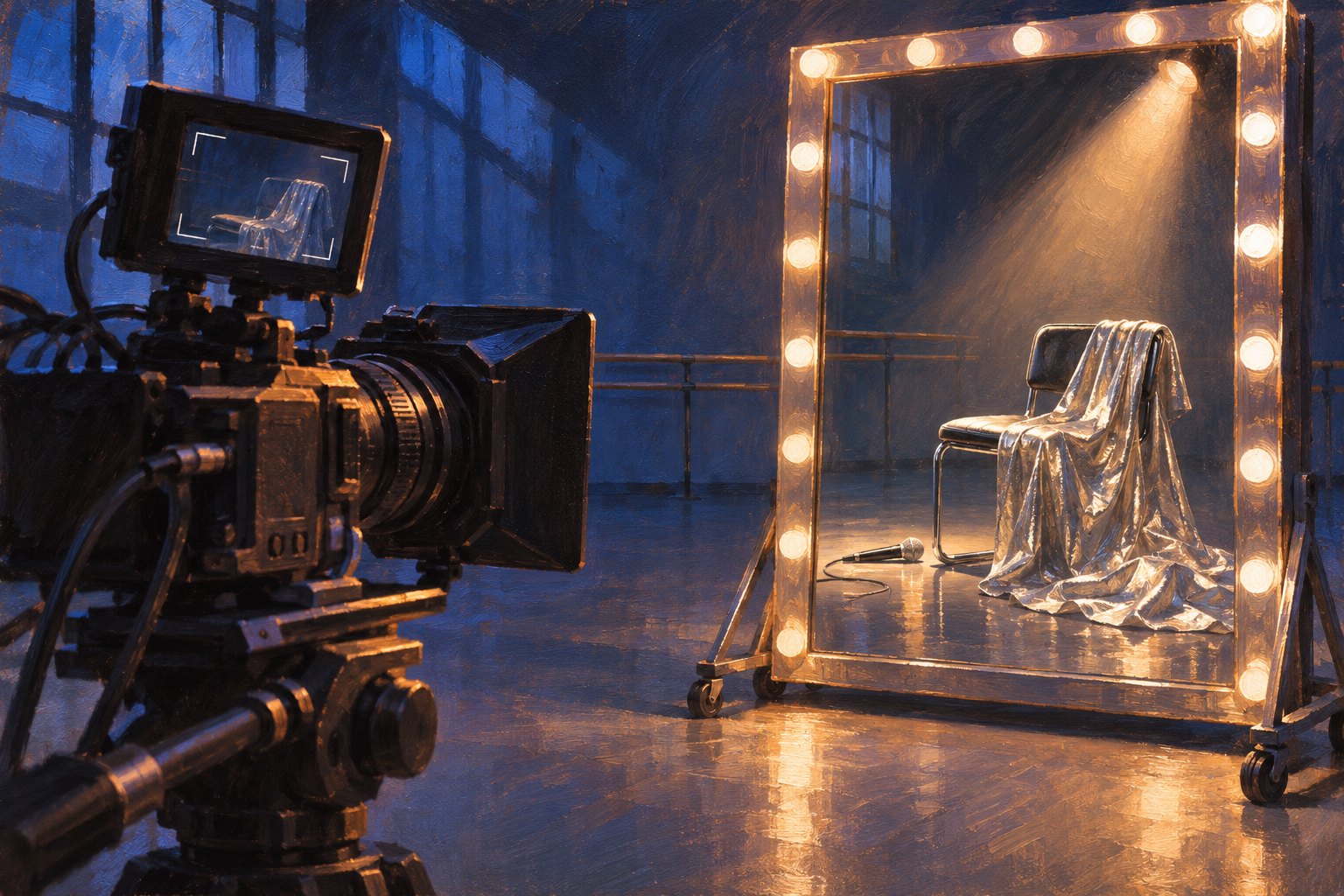
That is the standard I would bring to the cinematic dimension of a Charli performance: whether the images develop an idea about the performer. Beautiful lighting can be pleasurable on its own. A more substantial cinematic achievement would make us reconsider something we thought we understood.
It also matters who appears to control the look. A performer addressing a lens can seem to take possession of the image. The same direct gaze might feel confrontational, intimate, or carefully rehearsed. None of those meanings is automatic; framing and context have to earn them.
Fashion can do the work of characterization
Fashion deserves equally precise attention. In film, costume can communicate how a character wants to be perceived before dialogue explains anything. Its dramatic value often emerges through use: how someone moves in it, adjusts it, protects it, or appears constrained by it.
Applied to the tour’s three-part concept, this suggests a richer approach than identifying memorable looks. The question becomes what styling allows the performing body to communicate. An image of ease and an image of control can appear similar in a still photograph while feeling very different in motion.
My preference is for criticism that notices those differences. Calling an outfit striking tells readers little about its relationship to a performance. Explaining how silhouette, movement, and sound work together gives them something they can recognize and assess themselves. It also treats fashion as an expressive discipline rather than decorative evidence of ambition.
The music still has to shape the experience
The danger in discussing Charli through a film lens is that the visual argument could swallow the musical one. Sound deserves more than the role of accompaniment. Rhythm determines bodily anticipation; repetition can create pleasure, impatience, or tension; a change in vocal delivery can alter the apparent meaning of familiar words.
A useful review would trace how those musical decisions interact with the images. Does a visual transition follow an audible change? Does it introduce a competing emotional suggestion? Does the production give a song room to establish its own atmosphere?
Listeners can also enjoy the immediate experience without embracing every larger interpretation. As our discussion of enjoying a movie without critics’ permission argues, analysis should sharpen an encounter with art. It should leave space for pleasure that does not require a theoretical defense.
The deeper question is authorship
The strongest idea I take from “Music, Fashion, Film” is the problem of authoring an image that other people will inevitably interpret for themselves. Each medium offers another means of expression, but also another opportunity for the audience to see something the artist may not have intended.
That makes Charli’s tour framing interesting as a subject for film commentary. Its three terms suggest a performer who can be heard, styled, and framed, with no single version necessarily settling the meaning of the others. The critical test is whether those perspectives create a fuller experience of the work.
For me, the most rewarding possibility is a spectacle that leaves room for uncertainty: confidence that can be questioned, glamour that can carry tension, an image that changes when we spend longer looking at it. That is where the relationship between pop performance and cinema becomes worth examining—where being seen becomes part of the story.
Original content by this site's editorial team. Published: November 15, 2026 at 18:52:28 PST (Los Angeles time)