
LACMA’s Art+Film Gala raised nearly $7 million, according to ARTnews, giving its celebrity gathering a substantial financial headline. For movie lovers, that figure prompts a question that lasts longer than the photographs: how can the attention surrounding a major cultural event become something valuable for the people who watch, study, and care about films?
The amount establishes a fundraising result. It does not, by itself, explain the eventual allocation of the money or measure the experience of an ordinary visitor. Those distinctions matter. A successful gala and a successful cultural program are connected possibilities, but they require different kinds of evaluation.
Our view is that the most compelling way to assess this event is through the audience it could ultimately serve. The glamour attracts attention; the deeper opportunity lies in helping people encounter cinema with greater curiosity, context, and independence.
What the nearly $7 million figure tells us
The reported total is the central news here. It gives the evening a concrete outcome beyond its social visibility. However, readers should preserve the precision of the reporting: nearly $7 million is an approximate amount, not an exact $7 million, and a fundraising headline should not automatically be read as a statement of net proceeds after expenses.
Nor should the whole figure be treated as a dedicated film-programming budget without a breakdown establishing that connection. Describing what cultural funding could accomplish is analysis; identifying what this particular money will pay for requires specific reporting.
That is not a reason to dismiss the achievement. It is a reason to ask better follow-up questions. Which activities will receive support? Who will be able to participate? What will become possible that otherwise would not have happened? Answers would connect a memorable number to an observable public benefit.
Readers interested in the event’s artistic recognition can explore our separate coverage of the artists at the center of LACMA’s Art+Film celebration. Here, the focus is the relationship between fundraising success and the wider culture of watching movies.
Why a museum setting can deepen film appreciation
The strongest argument for bringing art and film together is that each can sharpen our perception of the other. Watching a movie involves more than following the plot. A face positioned at the edge of a frame, a room divided by shadows, or a repeated color can communicate something a character never says aloud.
A thoughtfully designed museum film program could make those choices easier to recognize. Consider a hypothetical screening paired with a discussion of portraiture. Instead of merely identifying beautiful close-ups, viewers could examine how framing distributes power: who receives sustained attention, who remains partially hidden, and whose reaction determines the emotional meaning of a scene.
That approach would support character-centered criticism without reducing characters to psychological summaries. A person on screen is also a visual construction shaped by performance, lighting, editing, costume, and sound. Understanding those decisions helps explain why a scene feels intimate, threatening, or morally uncertain.
There is a limit, though. Treating cinema as a succession of attractive still images misses what makes it cinema. A shot acquires meaning through its duration and its relationship to the shots around it. Any productive conversation between gallery art and movies should leave room for movement, rhythm, voices, and silence.
The audience should be part of the success story
For this editorial, the most persuasive measure of cultural impact would be whether more people gain meaningful opportunities to engage with film. Attendance alone would tell only part of that story. A packed room can be exciting, but the quality of the encounter matters too.
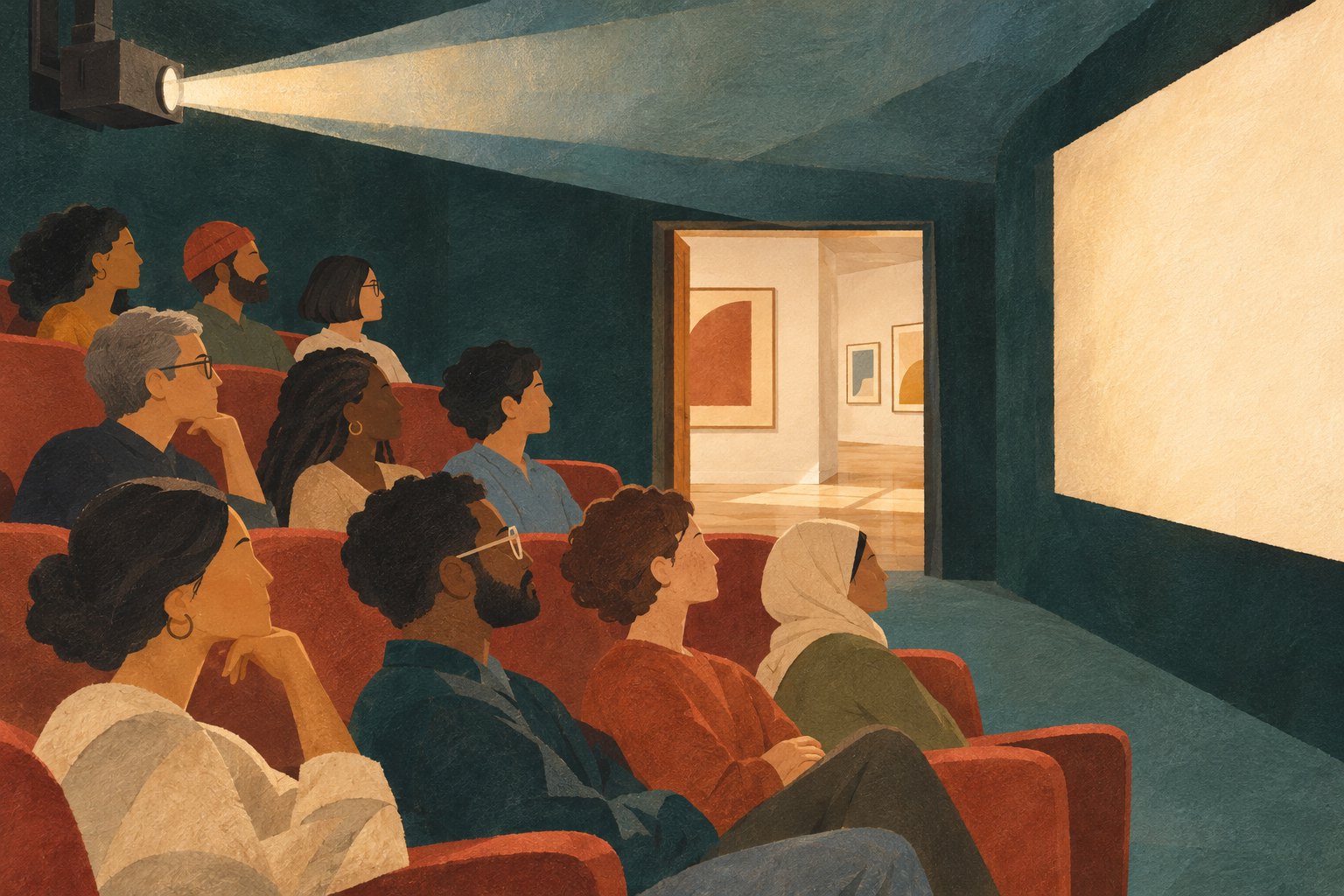
Useful outcomes might include an affordable screening, an accessible introduction to an unfamiliar filmmaker, or a conversation that gives a first-time viewer the confidence to disagree with an established interpretation. These are examples of potential public benefits, not announced uses of this gala’s proceeds.
Good presentation also respects viewers’ time and expectations. Clear descriptions, appropriate accessibility information, and advance notice of whether a discussion will reveal major plot developments can make a substantial difference. Film culture becomes more welcoming when newcomers can understand what they are signing up for.
The ideal experience would send someone home wanting to watch more carefully. Perhaps they would notice how a supporting character changes the atmosphere of a scene, or how an edit invites sympathy before the story complicates it. That kind of attention can outlast the event that helped fund it.
Celebrity visibility has value—and needs a next step
The star-studded character of the gala is part of its appeal. Familiar faces offer an accessible entry point into a cultural institution that some readers might otherwise overlook. There is nothing inherently shallow about arriving through an interest in an actor or filmmaker.
The editorial question is where that interest goes next. Coverage becomes more useful when it connects recognition to work: a performance worth examining, a formal decision worth debating, or an unfamiliar artistic practice worth exploring. A list of guests cannot do that work on its own.
The same distinction applies to critical authority. A glamorous setting does not settle whether a film succeeds, and institutional recognition does not make disagreement inappropriate. Our discussion of how to approach festival-winning films considers a related issue: recognition can guide curiosity while leaving the eventual judgment to the viewer.
For Fun Movie Reviews, that independence is essential. Celebrating support for cinema should remain compatible with honest criticism of the cinema itself. Otherwise, appreciation becomes publicity, and audiences lose the conversation they came for.
What meaningful follow-through would look like
As further information becomes available, three questions would help readers assess the gala’s significance beyond the headline:
- Purpose: What activities or institutional needs will the proceeds support?
- Access: How will the resulting opportunities reach people beyond the gala’s attendees?
- Experience: What will visitors and movie audiences actually be able to see, learn, or discuss?
These questions do not presume a problem with the event. They provide a practical way to distinguish resources raised from results delivered. They also avoid the opposite mistake of assuming that an exclusive evening cannot contribute to a broader public good.
LACMA’s nearly $7 million result deserves attention as a fundraising achievement. Its deeper cultural significance will become clearer through what follows. Our hope is for a connection between the people able to support an institution and the people whose encounters with art and film that support can enrich.
The most satisfying legacy would be a viewer discovering something that changes how they see: a performance previously overlooked, an image newly understood, or a difficult film that finally opens up through conversation. That is where the relationship between art and film becomes tangible—in the attention audiences bring back to the screen.
Original content by this site's editorial team. Published: November 9, 2026 at 19:25:12 PST (Los Angeles time)