Kira Goldberg and Don Granger are set to run Paramount, while Jeff Goldstein is set to retire, according to Variety’s reporting on changes at Skydance’s movie operation. For audiences, the immediate significance is a change in the people making decisions around the movies. Whether that produces more adventurous storytelling, stronger entertainment, or a different mix of releases remains an open question.
Our view is that this transition deserves attention because studio leadership helps determine which creative possibilities receive support. But an appointment is an early signal. The meaningful evidence will be the films themselves: whose stories get told, how much individuality survives production, and whether audiences have compelling reasons to care.
What the Paramount leadership news establishes
The central reported developments concern Goldberg, Granger, and Goldstein. They establish a leadership transition, not a verdict on Paramount’s future output. The announcement alone cannot establish which projects will move forward, whether particular filmmakers will gain greater freedom, or how any individual movie will be released.
Those distinctions matter when reading entertainment business news. A new executive team can become shorthand for a new creative era before viewers have seen anything attributable to its decisions. Anticipation then starts doing the work of criticism, assigning promise or blame to names rather than finished films.
Goldberg and Granger’s leadership should therefore be assessed through decisions that become visible over time. Goldstein’s reported retirement is a separate part of the transition; it should not be treated as evidence of a specific disagreement, strategy, or creative outcome. A personnel announcement does not explain every motive behind it.
Two leaders, one practical question: how will decisions get made?
For Goldberg and Granger, shared leadership raises an organizational question with artistic consequences: how will filmmakers receive clear decisions? Two perspectives can strengthen a project when they identify different weaknesses and agree on what makes the movie worth making. They can also complicate development if a filmmaker receives competing priorities. Neither outcome can be assumed here.
Imagine a hypothetical thriller built around an unreliable protagonist. One development conversation might focus on helping viewers understand that character’s immediate objective. Another might ask for the character to become more likable. Those sound like similar requests for audience engagement, but they could produce very different movies. Clarity can preserve moral ambiguity; compulsory likability can erase it.
That is why the useful question extends beyond whether new leaders have good taste. It concerns whether their process helps filmmakers identify and protect a story’s defining choices. For Paramount’s incoming leadership, a coherent approach would matter more to the viewing experience than any broad promise of creative renewal.
The character test for Paramount’s future films
Our preferred measure of that renewal begins with character agency. Does a protagonist make decisions that change the story, or merely travel through a sequence of scheduled attractions? Do supporting characters have desires that complicate the central journey? Can a movie tolerate a moment of uncertainty without immediately explaining how the audience should feel?
These are practical standards for film reviews, and they apply across genres. An action sequence becomes more involving when a character must choose between incompatible responsibilities. A comedy gains texture when two people want different things from the same conversation. A family adventure becomes memorable when its emotional conflict cannot be solved solely by defeating an external threat.
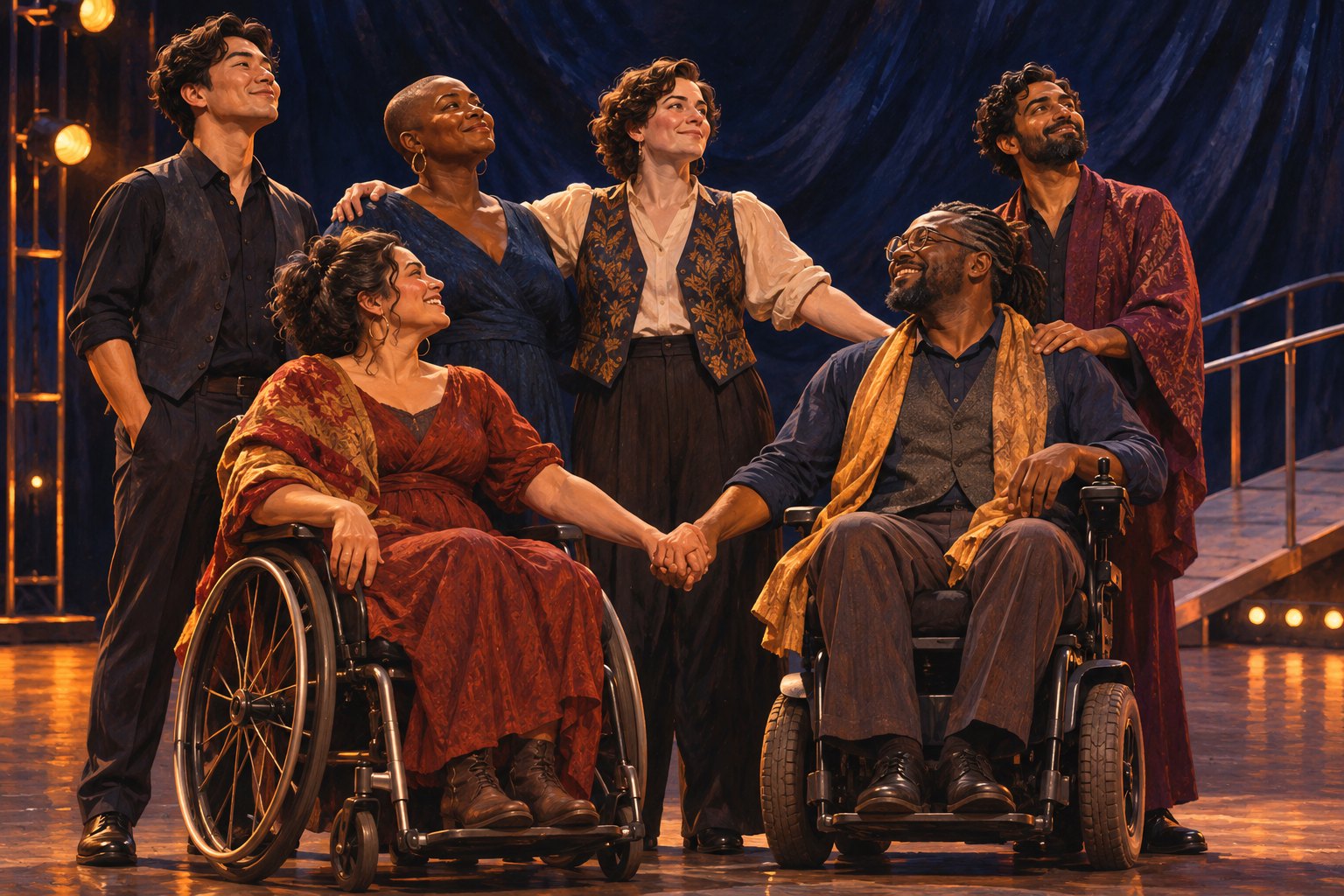
The relevance to Goldberg and Granger is indirect but important. Executives do not perform those scenes or determine every creative choice. They can, however, influence the conditions under which filmmakers develop them. Our commentary on ensemble performance and shared storytelling offers a related viewing perspective: a film’s strength often depends on how much life exists beyond its central attraction.
A distinctive slate needs more than different genre labels
One useful way to follow Paramount under Goldberg and Granger will be to examine the range of experiences its films offer. A release schedule can include comedy, action, horror, and drama while still feeling remarkably uniform if every film uses the same rhythm, emotional cues, and approach to resolving conflict.
Meaningful variety is more specific. It includes differences in scale, pace, perspective, and tone. A tightly contained story should be allowed to build pressure through small gestures. A broad comedy should have room for comic timing. An ambitious spectacle should be able to pause long enough for its consequences to register.
This is an editorial standard, not a prediction about either incoming leader’s plans. It also avoids making originality synonymous with an unfamiliar title. Established properties can support surprising character choices, while a new premise can still deliver entirely predictable drama. Our analysis of why endings matter in franchise storytelling examines that distinction through the importance of lasting consequences.

Why Goldstein’s retirement should not become a ready-made narrative
Retirement news invites a familiar interpretation: one era closes and another begins. That can be a useful description of a career transition, but it becomes misleading when used to explain the artistic direction of an entire studio without further evidence.
Goldstein’s reported departure deserves accurate treatment on its own terms. It does not establish that institutional knowledge will disappear, that colleagues will reject previous practices, or that audiences will experience an immediate change. Those would be additional claims requiring additional reporting.
More broadly, the combination of arrivals and departures is a reminder that filmmaking depends on continuity as well as change. A promising idea needs people who can help carry it through practical obstacles. Fresh judgment and accumulated experience can both serve that purpose. The question is how effectively a studio brings them together.
How to judge the transition without rushing the verdict
Moviegoers following the Paramount news can look for a few concrete forms of evidence:
- Projects that advance: Distinguish an announced intention from a film that actually moves into production and reaches viewers.
- Creative specificity: Look for identifiable differences in voice and perspective across releases, rather than relying on genre labels.
- Finished storytelling: Ask whether performances, character choices, and endings fulfill the movie’s own ambitions.
- Fair attribution: Establish when consequential decisions were made before crediting or blaming a new leadership team for a particular release.
That final point is especially important. A film arriving after an executive appointment is not automatically an expression of that executive’s priorities. Development and production histories matter. Criticism becomes less useful when every success or disappointment is forced into a convenient corporate storyline.
The real promise is room for better storytelling
The deeper significance of the Goldberg–Granger appointment lies in the opportunities their leadership may help create. Our hope is for films confident enough to give characters conflicting motives, supporting players meaningful choices, and endings that follow from what came before.
Goldstein’s retirement belongs to the same news moment, but the three names do not yet add up to an artistic verdict. That verdict must wait for evidence on screen. For Paramount, the strongest argument for a new chapter would be movies whose individual qualities make audiences want to watch, discuss, and revisit them.
Original content by this site's editorial team. Published: November 17, 2026 at 10:41:38 PST (Los Angeles time)