Jordan Peele’s Monkeypaw Productions and Universal Film are teaming with American Cinematheque and Beyond Fest for the No Drama initiative, according to Variety. The partnership brings a recognizable filmmaker’s company into a collaboration that also includes organizations whose names moviegoers associate with the theatrical experience. For readers following the announcement, the immediate subject is an initiative—not a newly announced Jordan Peele movie.
The most interesting question is what that association could make possible for individual storytellers. My view is that No Drama’s creative value should ultimately be measured by the distinctiveness of the work it supports: the characters we remember, the choices that unsettle us, and the filmmaking that makes an unfamiliar perspective feel immediate. Famous names can attract attention. What happens after that attention arrives deserves closer scrutiny.
What the No Drama announcement establishes
The central reported fact is the collaboration among Monkeypaw Productions, Universal Film, American Cinematheque, and Beyond Fest. That is meaningful news on its own. It puts a production company, a studio partner, and cinema-facing organizations together under a shared initiative.
It does not, by itself, establish a particular film’s story, cast, artistic quality, or release arrangements. Nor should Peele’s association with Monkeypaw be read as a directing credit for every project connected to the company. Those distinctions matter because a familiar filmmaker’s name can quickly become shorthand for promises an announcement has not actually made.
This is therefore a moment for film-industry commentary rather than a conventional movie review. There is no basis here for assigning a star rating, quoting character dialogue, or describing an ending. The useful task is to consider what audiences should look for when the partnership’s creative results become available for assessment.
A partnership should make individual voices easier to hear
The appeal of this combination lies in the possibility of connecting creative support with an audience prepared to engage. That is an interpretation of the partnership’s potential, not a claim about its specific operating arrangements. Making work and helping people encounter it are related challenges, but success at one does not automatically solve the other.
For a filmmaker, an established association can give an unfamiliar name an initial introduction. For a viewer, it can provide a reason to try something outside an existing watchlist. The productive exchange begins when that introduction gives way to curiosity about the actual artist: how they frame a face, structure a conversation, or let a scene remain unresolved.
Our discussion of the American Film Market’s partnership with AMC movie clubs considers a related question about discovery. Access becomes culturally valuable when it helps audiences develop an opinion about an unfamiliar film. The connection gets someone into the room; the encounter with the work gives them a reason to care.
No Drama would be especially interesting if its name eventually brought together films that audiences could distinguish from one another immediately. A shared institutional identity need not produce a shared visual style, rhythm, or worldview. From a critical standpoint, variety within the work would be a stronger sign of creative opportunity than a uniform surface polish.
Character is the strongest test of a striking idea
For this site, the most revealing way to approach any resulting work would be through its characters. A premise can sound extraordinary in a paragraph and still leave a film emotionally inert. The decisive question is often simpler: what does this person want badly enough to make a difficult choice?
Consider a hypothetical scene, not a description of any No Drama project. Someone hears a noise behind a closed door. The sound may create anticipation, but the character’s relationship to that door creates meaning. Opening it to protect another person carries a different emotional weight from opening it to hide evidence, satisfy curiosity, or prove that fear has no hold over them.
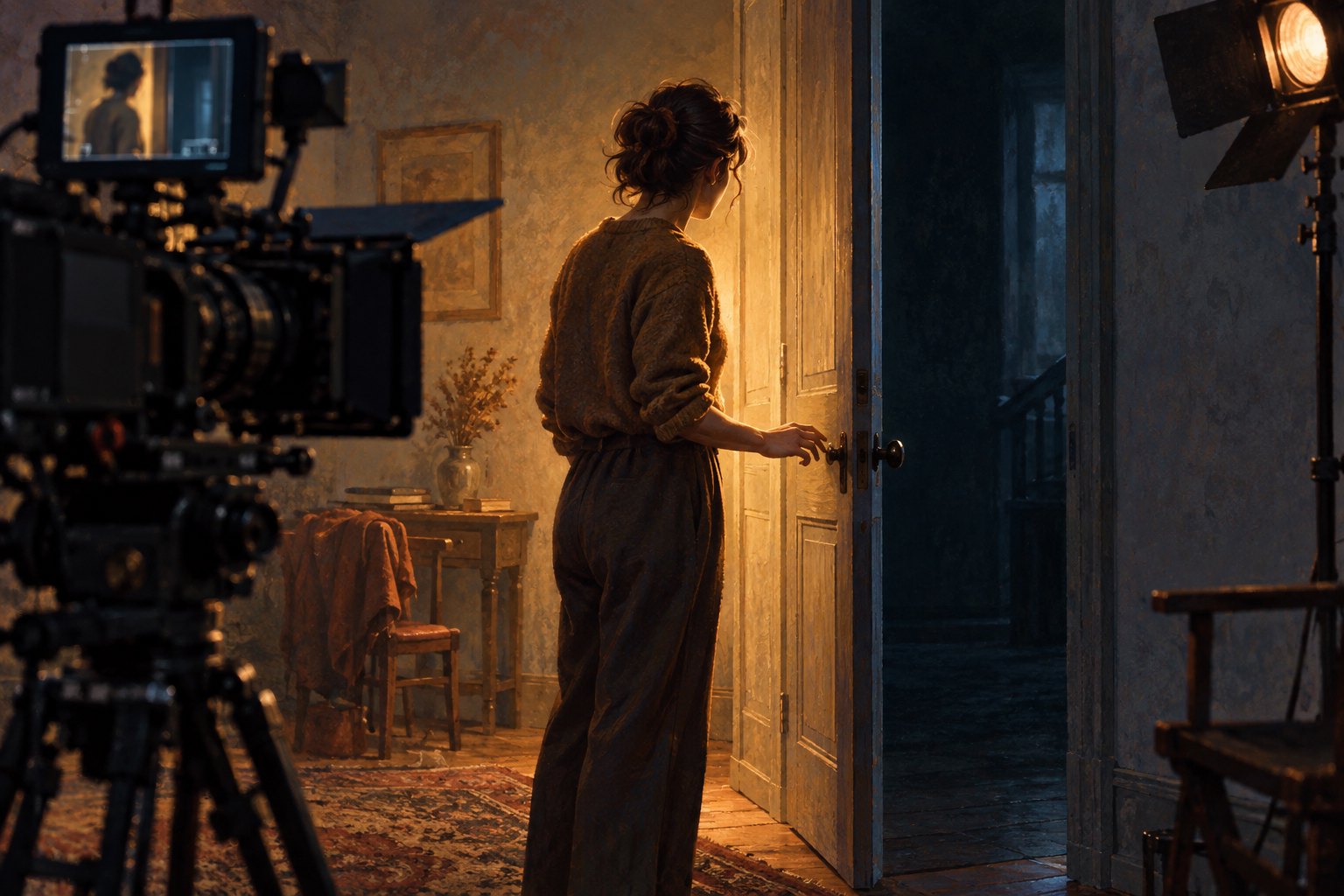
That distinction provides a practical critical standard. Does the film establish enough about the person for the decision to feel specific? Does the camera share their uncertainty or reveal information they lack? Does the aftermath change a relationship, or does the story simply reset for another striking moment?
Dialogue deserves the same attention. A memorable line earns its place through the speaker, the situation, and the consequences of saying it. Sometimes a plain sentence becomes devastating because a character finally means it. Sometimes silence communicates the decision more precisely. Until actual films can be examined, invented quotations would only obscure the very craft worth discussing.
Watch for influence without demanding imitation
Peele’s name will understandably shape expectations around No Drama. The critical risk is allowing that association to become a template every filmmaker is expected to satisfy. An audience looking exclusively for echoes of a celebrated figure can miss what another artist is trying to do.
A better approach begins with the film’s own terms. Is its tone playful, abrasive, patient, intimate, or deliberately disorienting? Which character receives our attention, and which remains difficult to understand? What kinds of behavior does the film invite us to question? Those observations tell us more than whether a work resembles the sensibility we expected from its institutional connection.
This also means resisting premature symbolic interpretation. A repeated object may acquire meaning through a character’s actions, but repetition alone does not establish a hidden code. Likewise, a visual resemblance to another movie is not automatically a confirmed Easter egg. Interpretation becomes persuasive when it can point to patterns within the finished film and explain their dramatic function.
What would make the initiative worth following?
As more information becomes available, audiences can separate three useful questions. First, what work is actually associated with the initiative? Second, how can people encounter that work? Third, what does each film accomplish on its own artistic terms? Keeping those questions distinct prevents anticipation from hardening into an unearned verdict.
The audience question matters particularly for a collaboration involving American Cinematheque and Beyond Fest. An institutional announcement can create interest, but viewers still need clear information about opportunities to see the films. Our commentary on why festival support must translate into access to movies explores that broader relationship between cultural ambition and the practical experience of watching.
My hope for No Drama is that its partners’ visibility will help audiences become attentive to filmmakers whose individual choices deserve discussion. The deeper promise of a collaboration like this is the possibility of expanding whose imagination reaches the screen. Its strongest eventual endorsement would be a viewer leaving a film with a character still on their mind—and a new director’s name worth remembering.
Original content by this site's editorial team. Published: September 23, 2026 at 15:11:08 PDT (Los Angeles time)