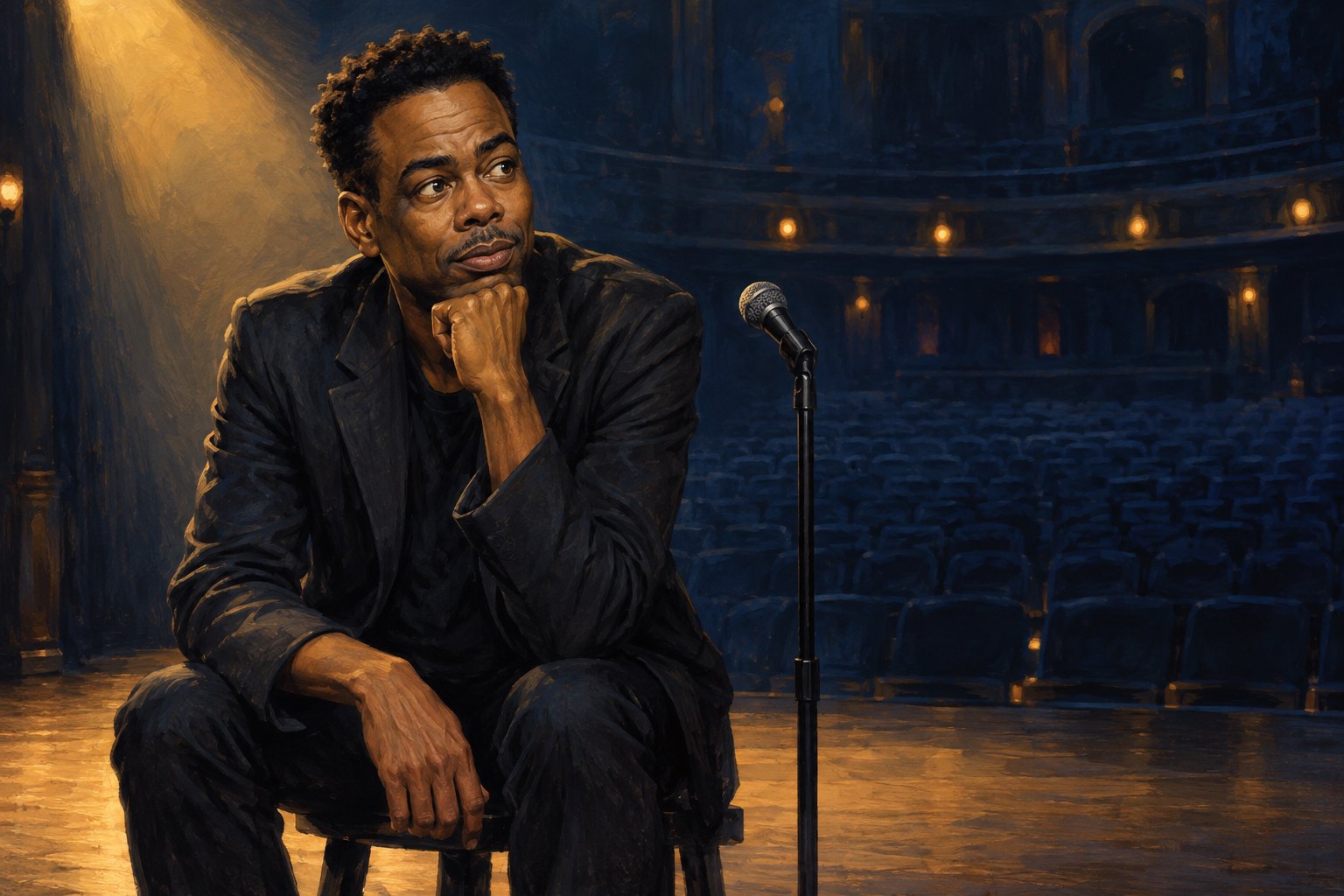
Jonathan Majors’s Run Hide Fight: Infidels raises a sharper question than whether an action movie can be offensive: what happens to suspense when the story gives its central authority figure an enemy designed to confirm his beliefs? The controversy concerns the connection between Clay Saunders’s sweeping statements about Islam and a campus siege that turns his warnings into an immediate physical threat.
Spoiler notice: This critical analysis discusses the publicly documented premise, released dialogue, and reported character situations. It is not a firsthand assessment of the complete film’s performances, editing, or action choreography.
Clay Saunders: soldier, speaker, and apparent answer to the crisis
Majors plays Saunders, a retired Delta Force soldier visiting a college to promote his book. Terrorists seize the campus, and resistance involves students, a security guard, and the veteran. The distributor’s account explicitly connects the attack with Saunders’s warning about Islam. Those are the foundations of the film’s political argument, as well as its action premise. [The Daily Wire’s synopsis and character description](https://www.dailywire.com/news/jonathan-majors-stands-behind-his-run-hide-fight-infidels-role).
Viewed from Saunders’s position, the situation offers a powerful fantasy of vindication. A speaker encounters opposition; violence then makes his warning appear prescient. His professional background gives him practical authority, while the attack potentially gives him intellectual authority too. Yet these are different kinds of credibility. Knowing how to respond to armed attackers does not establish the truth of a generalization about a religion.
That distinction is where the character becomes interesting to examine. Military competence can supply an action hero with useful skills, but dramatic complexity usually comes from the limits of those skills. A soldier may understand a battlefield while misunderstanding someone he needs to protect. A persuasive speaker may discover that listening requires more courage than commanding. The documented premise of Infidels instead places Saunders in a situation unusually well suited to validating his existing outlook.
The speech makes the target larger than the attackers
The most consequential material is the auditorium speech. Reporting on the released sequence describes Saunders discussing immigration, reproduction, and Western freedoms as instruments of Islamic conquest. It also records objections from Muslim advocacy organizations and producer Ben Shapiro’s rejection of the characterization that the film is anti-Muslim. These competing descriptions should remain attributed rather than presented as an uncontested consensus. [Reporting on the speech and responses](https://tali.news/2026/09/majors-daily-wire-infidels-anti-islam-scene/).
The critical distinction is specific: an antagonist can commit violence in the name of religion without representing everyone who practices it. A story crosses into a broader argument when its authoritative character treats the religion itself as the danger. The objection therefore cannot be answered simply by observing that terrorists make legitimate movie villains. The question is how far the film invites viewers to extend their judgment beyond those villains.
This is also a problem of characterization. A person becomes less dramatically particular when the script makes him an illustration of an entire population. His individual desires, contradictions, loyalties, and choices become secondary to the category he represents. An action film can communicate danger quickly, but speed is not the same thing as precision.
“We have to fight” narrows the space for character
In dialogue quoted by the distributor, Saunders declares, “We cannot run or hide from what is coming.” He follows it with, “We have to fight.” The paired lines neatly invoke the franchise title while converting three possible responses into a single imperative.
As action dialogue, that construction is efficient. It establishes urgency and promises resistance. As characterization, it prompts a harder question: what does Saunders have to discover after announcing the answer? A command becomes emotionally meaningful when following it costs something beyond physical exertion—trust, certainty, an old resentment, or a cherished view of oneself.
Consider the distinction between surviving danger and changing through it. Survival supplies an external objective. Change supplies an internal story. A hero may achieve the first without the second, but then the supporting characters must carry more of the film’s emotional development. That makes the students especially important: they need experiences and decisions of their own, beyond recognizing that the veteran was right.
The students deserve more than a lesson in humiliation
The New Republic’s account describes student protesters becoming victims of the attackers and identifies the son of Saunders’s fallen military comrade as a central participant in the resistance. That relationship introduces a potentially personal dimension: a younger character encounters a man connected to his father’s death and military past. [The New Republic’s account of the characters and plot](https://newrepublic.com/article/215730/jonathan-majors-back-new-movie-canceled).
My reading is that this connection offers a more promising dramatic question than ideological vindication. What does a young person owe an inherited model of courage? Following an older soldier can express admiration, unresolved grief, or a desire for approval. Resisting him can be equally meaningful. The relationship becomes compelling when the younger character’s choices reveal an individual conscience.
For the threatened students more broadly, the essential distinction is between being mistaken and deserving harm. A viewer can reject someone’s politics while caring whether that person survives. Suspense depends on that capacity to recognize vulnerability across disagreement. When a victim becomes primarily an opportunity for ridicule, the story risks weakening the very concern that should make rescue matter.

The distinction between explaining a character and reducing one to a thesis also informs our analysis of character and responsibility in Unabomber. A narrative becomes more revealing when its people can complicate the explanation offered for them.
What the premise reveals about the film’s idea of courage
A useful way to examine Infidels is to separate three questions. Does Saunders possess the skills needed during an attack? Does his speech make sound claims about people outside that attack? Does the story give the people he protects enough individuality to matter? An affirmative answer to the first cannot automatically settle the other two.
That separation matters for viewers interested in either political commentary or straightforward action. Political conviction does not prevent a filmmaker from creating suspense. It does, however, become dramatically restrictive when every supporting character exists to affirm the conviction. The audience then has little to discover about the people, even if their immediate survival remains uncertain.
Our discussion of belief and resistance in Daniel and the Fiery Furnace approaches a related issue: conviction gains dramatic weight through the choices made under pressure. Declaring a position establishes a starting point; the human consequences give it meaning.
The deeper issue is who gets to remain a person
The most troubling implication of the documented setup is that rescue and vindication can become indistinguishable. Saving someone demonstrates courage. Saving someone principally so that their worldview can be defeated makes their vulnerability serve another character’s argument.
For me, that is the strongest basis for criticizing Infidels: the danger that its broad judgments overwhelm the individual lives that should make a siege thriller gripping. Saunders’s certainty may explain the appeal of the premise, but certainty alone cannot provide emotional depth. The more searching measure of his heroism is whether the people around him retain dignity, agency, and the freedom to be more than evidence that he was right.
Original content by this site's editorial team. Published: September 27, 2026 at 13:07:08 PDT (Los Angeles time)