
Johnny Depp’s Ebenezer has given the actor his first No. 1 opening in eight years, according to NBC News. That makes the film a career milestone. It also creates an obvious temptation: to treat a story about Ebenezer Scrooge as a story about the actor playing him. The more revealing approach is to look at someone whose life extends beyond the leading man’s regrets: Belle.
This adaptation gives Scrooge’s former love an identity as a novelist. That choice deserves attention because it changes the possibilities of her role. A woman remembered by a disappointed man can also become a woman who decides what deserves remembering. For a film arriving amid so much interest in its star’s return, that is an unusually productive tension.
Spoiler note: This character-focused commentary discusses Belle’s revised role, Scrooge’s relationships, and the story’s redemption arc. It draws on reported film details rather than claiming a firsthand screening review.
What the opening establishes—and where the character story begins
The reported opening gives Depp a clear commercial achievement. It does not explain why each person bought a ticket, and it cannot tell us which character or relationship will remain with those viewers afterward. Those are separate questions, requiring attention to the film itself.
Our earlier discussion of Ebenezer’s box-office lead and its limits considers the commercial distinction. Here, the more useful question is narrative: when a movie organizes itself around one man’s awakening, how much freedom does it give everyone else?
That question matters particularly in a redemption story. Supporting characters can easily become exhibits in the protagonist’s case: evidence that he once loved, once suffered, or might deserve another chance. A richer interpretation asks what those people want when they are not occupied with his transformation.
Belle’s authorship changes how we can read her
Common Sense Media’s account describes Belle as intelligent and strong-willed, with agency as an author. RogerEbert.com’s review also identifies her literary ambitions and her work in a soup kitchen after the relationship ends. These reported details give her a life that is not simply a prolonged response to losing Scrooge.
My reading is that authorship matters here less as an impressive occupation than as a claim to perspective. Scrooge can remember their relationship as his personal tragedy. Belle can understand it differently. His grief does not automatically become the definitive account of what happened between them.
That is an important distinction for viewers. A breakup can be devastating to someone who helped cause it. Recognizing that devastation does not require treating the person who left as a missing possession. Belle’s departure can be both his loss and her decision.
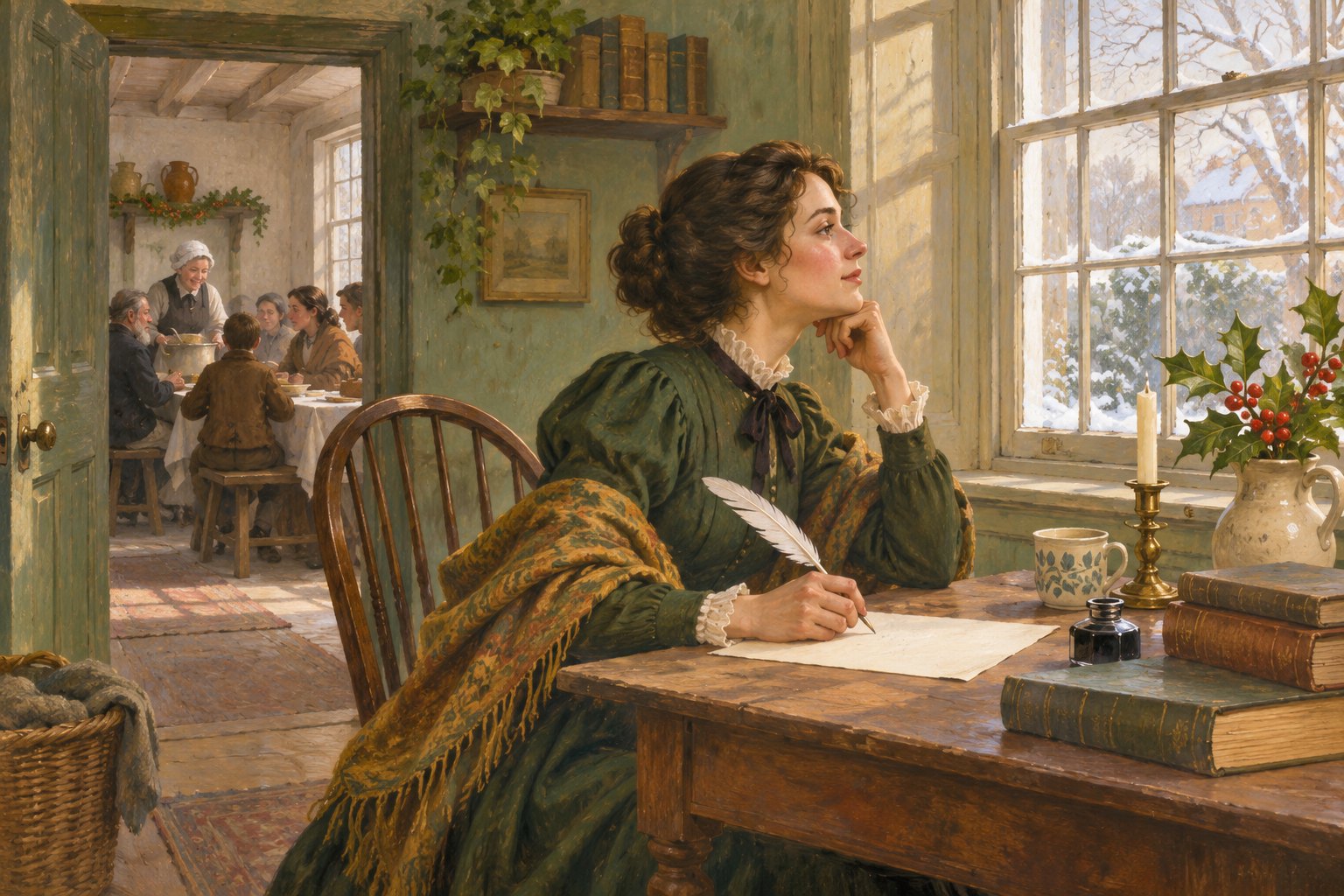
The critical test is therefore not merely whether Belle receives more backstory. It is whether her independence changes our understanding of the relationship. Giving a character a profession supplies information; allowing her values to challenge the protagonist supplies drama. The novelist detail opens that possibility without, by itself, proving how fully the movie realizes it.
Regret becomes meaningful when it stops demanding control
A familiar romance invites us to mourn the life a couple might have shared. That can be emotionally powerful, but it can also narrow the woman’s role to an imagined future belonging to the man. Belle’s independent activity offers another way to think about lost love: the unlived relationship is not the only life worth considering.
From Scrooge’s perspective, remembering Belle means confronting a choice whose consequences cannot simply be purchased away. From hers, a meaningful future need not wait for his recognition. Holding those perspectives together makes regret more demanding. He must acknowledge value outside what he can recover.
For me, this is the strongest interpretive promise of the character. Mature remorse includes accepting that another person’s life has continued. An apology cannot require its recipient to step back into an abandoned role, and transformation cannot be measured solely by whether the protagonist feels better.
Listen to the difference between protest and a promise
Two lines reproduced in the Associated Press review capture Scrooge’s movement between resistance and pleading. “Enough! This nightmare has run its course,” he protests. Later, he declares, “I was once good, and I swear I can be again.”
As statements, they point in different directions: the first demands an end to discomfort; the second offers a future commitment. Neither is evidence of completed change. The interpretive question is what the promise will require once the immediate terror has passed.
Belle provides a useful perspective on that distinction. Someone who has already made a life beyond a damaged relationship has reason to judge conduct rather than intensity. A forceful declaration may be sincere, but sincerity does not erase another person’s experience.
Fred makes room for a different kind of relationship
Scrooge’s nephew Fred offers another perspective on emotional withdrawal. RogerEbert.com’s review connects Scrooge’s coldness toward him with the memory of his beloved, deceased sister. That connection makes his behavior understandable without making Fred responsible for repairing it.
The distinction is crucial. A relative can remind someone of grief without being its cause. Reading the relationship from Fred’s side shifts attention from the older man’s wound to the younger man’s experience of being kept at a distance.
Placed beside Belle, Fred suggests a broader standard for interpreting Scrooge: other people should be allowed to exist beyond the feelings they awaken in him. This complements our analysis of why Scrooge’s transformation requires more than fear. Recognition involves seeing a person, not merely recognizing one’s own pain in their presence.
The deeper question is who owns the ending
The No. 1 opening makes Ebenezer a story about Depp’s renewed commercial visibility. Within the fiction, however, Belle’s authorship invites a less familiar question: must everyone else’s story resolve inside Scrooge’s?
My answer is no. The most persuasive interpretation of his redemption would leave room for relationships he cannot restore, judgments he cannot dictate, and lives that remain independent of his wishes. Generosity becomes meaningful when it loosens the giver’s control.
Seen through Belle, the story’s emotional destination is not simply a lonely man becoming welcome again. It is a man learning that other people have always possessed futures, purposes, and perspectives of their own. His second chance matters most when he finally makes room for them.
Original content by this site's editorial team. Published: November 15, 2026 at 16:28:42 PST (Los Angeles time)