Ebenezer brings Johnny Depp to a Christmas story whose hardest task is making a cruel man’s transformation convincing. The Associated Press offers a negative assessment of its horror-inflected approach. That verdict raises a useful question: when Scrooge becomes the frightened center of attention, how much room remains for the people he has hurt? [AP’s film review](https://apnews.com/article/0808613f3bbfac8cd0639038e69a908e).
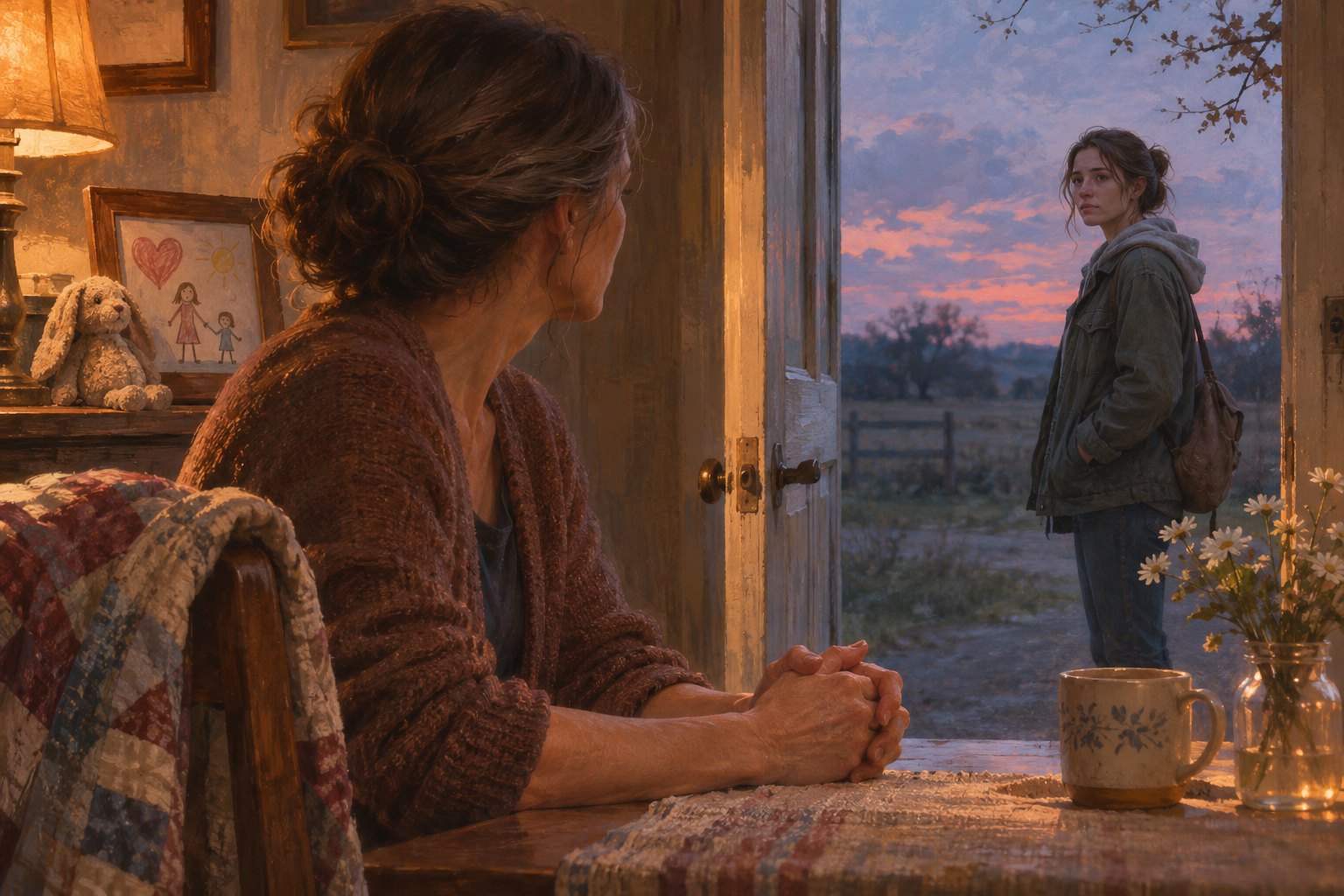
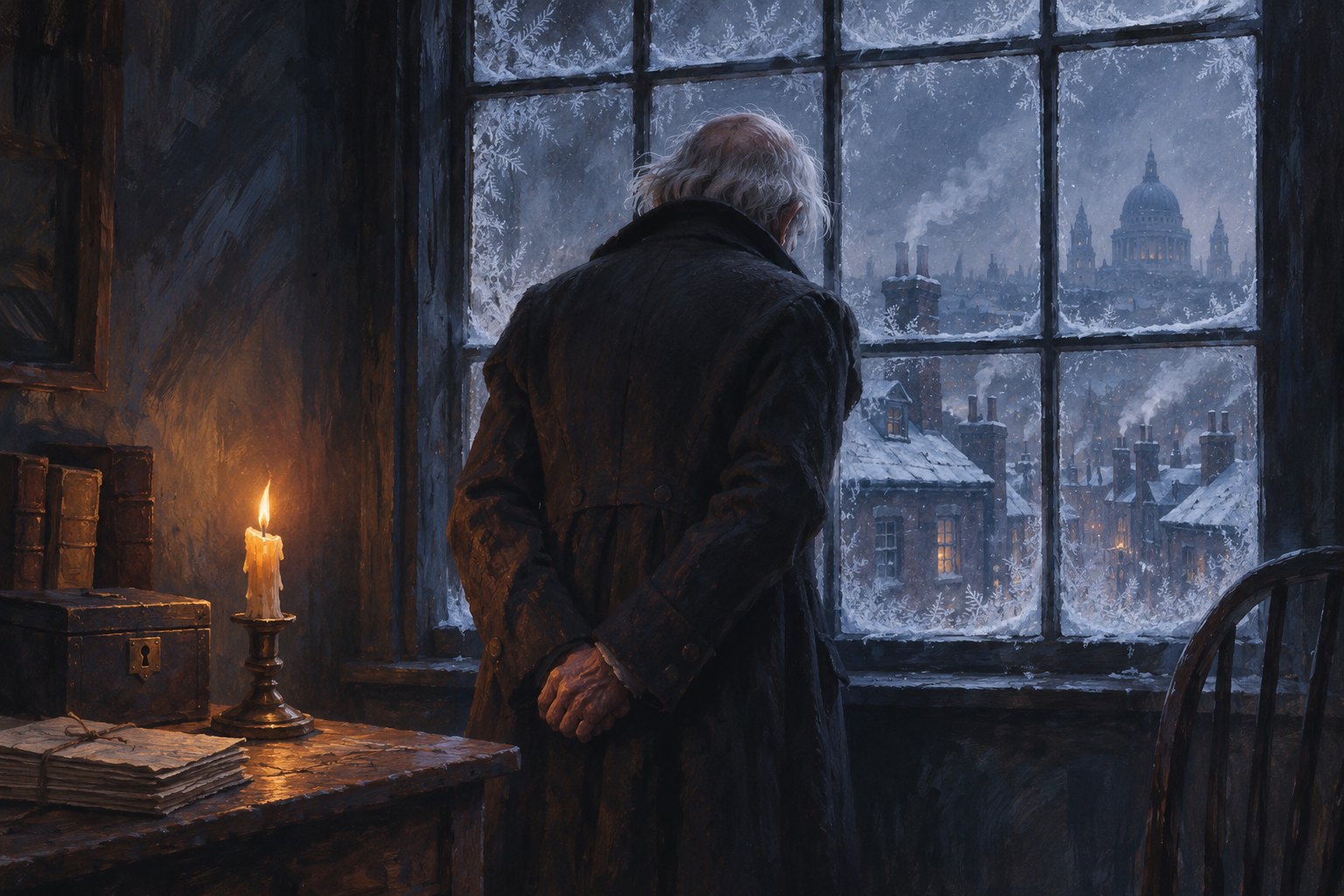
This is a critical reading of the film’s verified premise and reported reception, rather than a firsthand screening review. Spoilers follow for the underlying redemption story. The illustrations are conceptual artwork, not movie stills.
The man at the center of the haunting
Directed by Ti West, Ebenezer follows Depp’s Scrooge through a supernatural confrontation with his past, present, and future in Victorian London. Paramount identifies Ian McKellen as Jacob Marley and describes the journey as a struggle for another chance. Those elements establish the dramatic foundation: a man who has organized his life around control must submit to experiences he cannot manage. [Paramount’s film overview](https://www.paramountplus.com/sneak-peak/ebenezer-everything-you-need-to-know/).
From Scrooge’s perspective, the haunting is an invasion. His habits have made the world predictable: business can be counted, obligations resisted, and uncomfortable feelings dismissed. A ghost defeats that arrangement simply by appearing. Money cannot negotiate with it. Social authority cannot make it leave. For once, Scrooge must listen without setting the terms.
That reversal makes him a compelling protagonist without making him an innocent one. His fear can bring an audience closer, but sympathy requires a second movement: recognizing that other people have been living with insecurity all along. The most revealing question is whether he begins to understand their vulnerability after experiencing his own.
Horror belongs here—but needs a dramatic purpose
A frightening approach to this material makes thematic sense. Dickens built a Christmas story around visitation, mortality, and the possibility of a wasted life. Cheerfulness is the destination; it need not be the starting atmosphere. A dark adaptation therefore has a legitimate route into the material without treating its seasonal associations as something embarrassing to overcome.
My view is that the decisive distinction lies between fear that exposes character and fear that merely interrupts him. A shock can make Scrooge recoil. A revelation can make him reconsider. Both may belong in the same film, but they perform different jobs. Repeating the first cannot substitute for developing the second.
This also explains how a supernatural story can feel slow despite considerable activity. Dramatic momentum depends on a changing understanding of the protagonist. Each encounter should weaken a particular excuse, expose a different cost, or make an earlier judgment harder to maintain. When those changes accumulate, even a quiet conversation can feel urgent.
The useful viewing question is therefore specific: after this encounter, what can Scrooge no longer honestly tell himself? That offers a better measure of narrative progress than counting apparitions or waiting for a larger scare.
Depp’s Scrooge and the challenge of being changed
A star playing Scrooge faces an unusual acting problem. The role invites recognizable behavior, yet its emotional direction requires that behavior to become less secure. A commanding entrance is only the beginning. The harder work is allowing attention to move toward another person’s suffering.
For Depp’s central performance, the most useful critical lens is responsiveness. Does an exchange feel like an opportunity to display Scrooge’s personality, or does another character seem capable of altering it? That distinction matters because remorse is relational. Someone else must become more important than the miser’s account of himself.
Our discussion of how Spielberg challenges Tom Cruise’s screen authority explores a related dramatic principle: a familiar star becomes interesting when the story puts pressure on the qualities audiences expect. Scrooge likewise needs moments when his established defenses stop working.
Public discussion of an actor’s return can complicate this process by encouraging viewers to treat fictional redemption as a statement about the performer. The character deserves a more precise reading. Scrooge’s moral progress concerns his conduct within the story, and the people affected by it.
The people outside Scrooge’s account of himself
In Dickens’s underlying story, characters such as Bob Cratchit and Fred give generosity different forms. Cratchit brings material vulnerability into view; Fred represents a willingness to maintain connection. Their importance is not exhausted by what they teach Scrooge. They also demonstrate that meaningful lives exist beyond his approval.
That is a crucial standard for any adaptation. If everyone becomes a supporting witness to the central man’s emotional awakening, the story risks shrinking the very community it asks him to recognize. Compassion becomes convincing when people have needs, loyalties, and pleasures that do not revolve around him.
The same principle applies to memories of lost affection. Understanding why someone became closed off can deepen a portrait. It cannot automatically excuse the consequences. A painful past explains a wound; it does not settle the question of what the wounded person owes others.
Readers interested in that distinction may also appreciate our analysis of grief, forgiveness, and family boundaries in Reminders of Him. Redemption stories gain complexity when the desire to change meets another person’s right to remain cautious.

Two lines that frame the moral problem
AP quotes Scrooge declaring, “This nightmare has run its course,” and later insisting, “I’m not the man I was.” Those statements suggest a movement from resisting discomfort to claiming transformation. The question between them is whether relief has become responsibility.
Wanting punishment to stop is understandable. Wanting to repair harm demands more. This is where a redemption narrative must become concrete: changed priorities need to affect how a person treats someone with less power. Otherwise, a declaration of renewal remains an appealing description of the self.
The deeper meaning: another chance creates an obligation
The strongest interpretation of Scrooge’s journey treats survival as an assignment. He receives time in which to behave differently. The prospect of death makes that time visible, but the people around him give it purpose.
That is why the holiday setting matters. Christmas supplies a recurring occasion for attention, hospitality, and giving. The deeper challenge is carrying those practices beyond a single emotional morning. A lasting transformation changes ordinary habits as well as extraordinary declarations.
For Ebenezer, that remains the most demanding measure of its premise. Gothic imagery can express the terror of a life closing in. The emotional payoff depends on making an opened life equally meaningful. Scrooge’s most consequential discovery is that having another chance leaves him with something to do.
Original content by this site's editorial team. Published: November 15, 2026 at 11:04:40 PST (Los Angeles time)