James Gunn is already writing his next film ahead of Man of Tomorrow, according to Variety. For viewers wondering whether he has begun another screenplay, that is the answer. It is a narrower answer to the question fans will naturally ask next: what movie is he writing?
The reported confirmation does not, by itself, identify that project. It also offers no basis for judging its characters, dialogue, or eventual quality. What makes the update interesting is the creative question behind it: as Gunn looks beyond another Superman story, what deserves to carry forward, and what needs to reach a satisfying conclusion first?
This is spoiler-free commentary on the writing update, not a review of an unseen film. The most useful response is to consider the storytelling standards that should meet the news, without turning an early statement into an imaginary movie.
What Gunn’s writing update actually tells us
The operative word is “already.” It establishes that work has begun. It does not tell us how far the screenplay has progressed, whether its central idea will survive revision, or when an audience might see the finished result. Writing a film and announcing a production are different milestones.
That distinction matters because a brief update can easily become a much larger claim as it circulates. A writer beginning a screenplay does not establish casting, a release date, a completed script, or a connection to a particular character. None of those conclusions follows automatically from Gunn’s confirmation.
For moviegoers, the useful takeaway is simple: there is another writing project to follow, but its identity should remain an open question. Attaching a favorite superhero to it may be enjoyable speculation; treating that guess as news makes the actual announcement harder to understand.
The same separation between evidence and expectation informs our discussion of what early reactions can tell viewers about an upcoming film. Each kind of update answers a particular question. Trouble starts when we ask it to answer all the others.
The character question comes before the franchise question
My interest in Gunn’s next screenplay begins with perspective. Whose experience will organize the story? What does that person want, and what belief makes getting it difficult? A recognizable name can establish an audience’s curiosity immediately. Sustaining that curiosity requires a character whose decisions have consequences.
For Superman, the critical possibilities are especially rich because physical capability does not settle every moral problem. Being able to intervene is different from knowing how to intervene well. A character can possess extraordinary power while still needing to listen, reconsider, or acknowledge the limits of his judgment.
Those are interpretive possibilities, not claims about scenes in Man of Tomorrow. They explain why I would look for more than an impressive opponent when assessing another Superman film. A larger threat can increase the scale of the action without necessarily revealing anything new about the hero.
The more searching dramatic test is whether his values become difficult to practice. Compassion means more when extending it costs something. Restraint becomes visible when force would be easier. Trust becomes dramatic when a character must accept uncertainty rather than control every outcome.
Supporting characters need the power to change the story
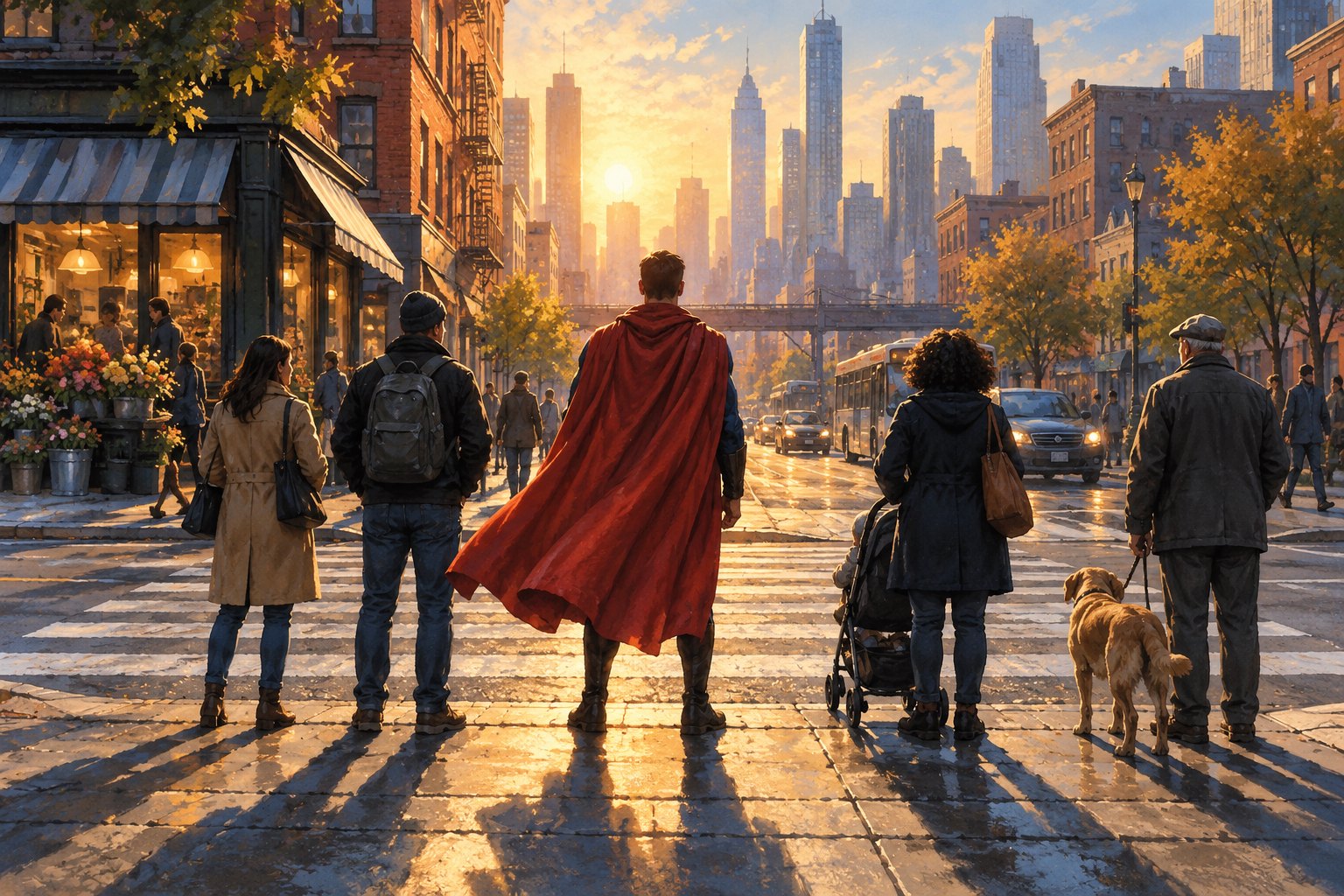
A character-centered Superman film also needs people who can affect him without matching his physical strength. The test is whether their decisions alter what happens. If removing a supporting character would leave every major outcome intact, that person may be supplying atmosphere rather than participating in the drama.
This is where disagreement becomes valuable. Someone who questions a hero’s decision should have an intelligible reason, not merely serve as an obstacle until the script proves the hero correct. A convincing disagreement can leave both people changed, even when one of them ultimately makes the better choice.
For any future Gunn project, I would apply the same standard to the antagonist. A villain’s explanation is useful only if the film tests it through behavior. Stated motives, self-serving excuses, and actual choices need not align. That gap gives an audience something to interpret beyond the mechanics of victory and defeat.
Our examination of how a central figure can dominate an origin story raises a related issue: selecting a protagonist also determines whose experience receives less attention. A strong screenplay makes that choice deliberately while allowing the surrounding characters lives and motives of their own.
A memorable line needs a dramatic reason to exist
There is no verified dialogue from Gunn’s unidentified writing project to assess here. Quoting familiar Superman language as though it belonged to that screenplay would create an impression of knowledge the announcement does not provide.
Still, dialogue offers a useful standard for the eventual film. A memorable line should do something in its scene: expose a fear, change a relationship, challenge an excuse, or commit a character to an action. Its force comes partly from what the speaker risks by saying it.
Humor deserves the same scrutiny. A joke can reveal how someone handles embarrassment or uncertainty. It can also interrupt an emotion before the audience has time to feel it. My preference is for comedy that makes a character more legible, particularly when that character would rather hide behind the laugh.
The eventual review should therefore connect standout dialogue to performance, context, and consequence. An isolated quotation cannot establish whether a scene earns its emotion.
The next screenplay should not become the current film’s ending
Gunn starting another script is not evidence that Man of Tomorrow will sacrifice its ending to future setup. It does, however, bring a familiar viewing concern into focus: audiences deserve a complete dramatic experience even when the fictional world continues.
Completion does not require resolving every mystery. It requires answering the emotional question the movie has made central. A character might fail, compromise, or remain uncertain, but the ending should let us understand what the experience has changed.
A future appearance or unresolved thread can coexist with that resolution. The problem arises when the promise of another installment supplies the excitement that the present story has not earned. Anticipation is pleasurable, but it cannot substitute for consequences within the film we have just watched.
What would make Gunn’s next chapter worth following?
The next useful information would identify the project and clarify its premise. Until then, there is little value in assigning it an imaginary cast or storyline. The writing update is meaningful on its own modest terms: Gunn has begun another screenplay.
My deeper interest is whether the next story makes power reveal character. Superhero drama becomes compelling when ability creates responsibility without supplying certainty—when doing good involves judgment, attention, and the possibility of being wrong.
That is the standard I would bring to Man of Tomorrow and to whatever Gunn writes afterward. Another film offers more time with a fictional world. The stronger achievement would be giving its characters a new decision that changes how we understand them.
Original content by this site's editorial team. Published: October 6, 2026 at 00:35:47 PDT (Los Angeles time)