FILM FEST KNOX 2026 offers an appealing starting point for a conversation about how we watch movies: give the experience enough time to become something more than an immediate verdict. The phrase “Move Slow and Connect Things,” framing Inside of Knoxville’s retrospective, suggests a useful way to approach a festival. Watch carefully, let impressions settle, and make room for another person’s interpretation.
That idea deserves examination on its own terms. Slowing down can sharpen criticism, but patience does not automatically make a film profound. Connection can enrich a screening, but a friendly conversation cannot repair an unconvincing character. The interesting question is what attentive viewing actually helps us notice.
This is spoiler-free festival commentary, not a firsthand assessment of the 2026 screenings or a review of an individual film.
What slowing down can reveal about a character
Movie discussions often begin with whether a protagonist is likable. That reaction is understandable, but it can close off the more revealing questions. What does this person want? What do they believe they are entitled to? What information do they possess when they make a decision, and what information has the filmmaker given us?
Those distinctions matter because viewers and characters rarely occupy exactly the same position. We might recognize a threat before someone on screen does. We might know a secret that makes an otherwise ordinary exchange painful. Judging a character only by the outcome of a choice can erase the uncertainty under which that choice was made.
A useful exercise after a screening is to describe one decision twice: first from the audience’s perspective, then from the character’s. If the descriptions differ substantially, that gap may be central to the film. It can generate suspense, sympathy, frustration, or irony. If they do not differ, the character’s motivation may need a different explanation.
This is where taking time becomes a critical practice. It allows an initial response such as irritation to develop into a specific judgment about performance, writing, or perspective. You may still dislike the character. You will have a better account of how the movie produced that feeling.
A pause matters only when something changes
The invitation to move slowly should not be confused with an endorsement of slow pacing. A brisk comedy can reward close attention as richly as a restrained drama. Conversely, a long silence can reveal very little.
When a scene lingers, look for a change in its emotional balance. Does someone stop meeting another person’s eyes? Does a sound outside the frame interrupt the apparent intimacy? Does the camera remain with the listener after the speaker has finished? These choices can move a scene forward without adding dialogue or a new plot event.
The same scrutiny should apply when a passage feels empty. If a pause repeats an emotional point already established, impatience may be a reasonable response. Serious film analysis needs room for that conclusion. Respecting a filmmaker’s intention means considering the choices carefully; it does not require declaring every choice successful.
For viewers reflecting on FILM FEST KNOX 2026, this distinction offers a practical way to discuss pacing. Identify what developed during the time a scene occupied. Duration becomes meaningful when it changes our understanding of a relationship, a space, or a decision.
Conversation should make a reaction more precise
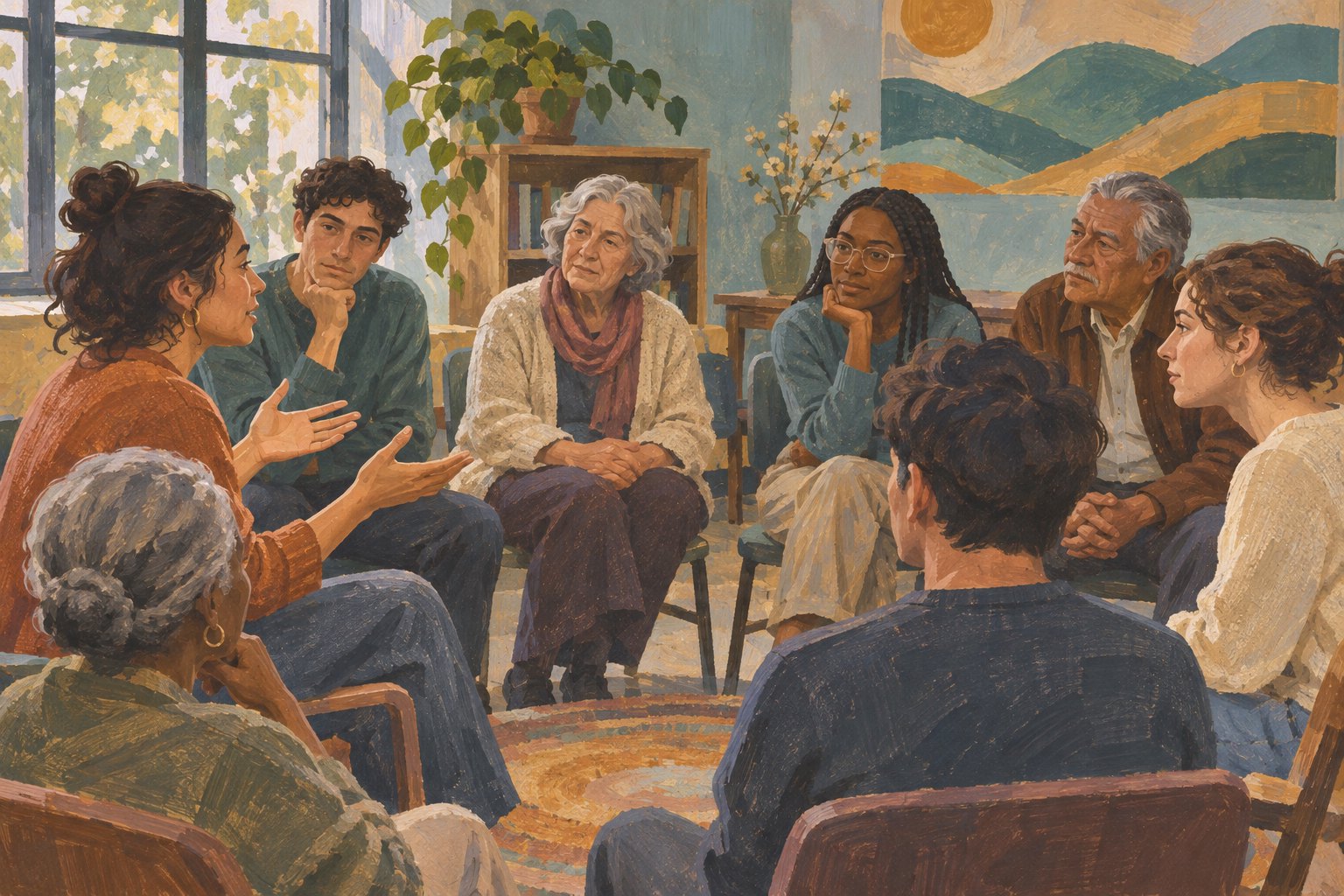
The connecting half of this festival perspective is equally valuable. Another viewer may notice a supporting performance you barely registered, or interpret a familiar gesture differently. That does not invalidate your response. It gives you another piece of evidence to consider.
The most productive opening is often a concrete observation. Describe where your sympathy shifted, which image stayed with you, or when you stopped believing a relationship. Another person can respond to a moment more usefully than to a sweeping declaration that a film was brilliant or boring.
Try keeping three categories separate: what happened on screen, how you interpreted it, and how it made you feel. A disagreement may turn out to concern only one of them. Two viewers can agree about a character’s actions while differing sharply on whether the film understands their consequences.
Our discussion of why an uncomfortable watch can attract an audience raises a related question: what does a difficult feeling contribute to the experience? Discomfort becomes more interesting to discuss when we can identify its source and purpose.
Keep festival affection separate from the film’s achievement
A festival provides a setting for watching, and settings influence reactions. The pleasure of discovery, an engaged audience, or an illuminating discussion can become part of a viewer’s memory of a movie. There is nothing dishonest about that. The critical responsibility is to recognize what belongs to the work and what belongs to the occasion.
Consider a general example: a filmmaker’s explanation might clarify why a scene was designed around emotional restraint. That explanation can deepen appreciation of the intention. Whether the restraint communicates anything within the finished scene remains a separate question.
The distinction also protects modest work from unfair expectations. A film need not become a sweeping statement about its community to succeed as an intimate character study. Its scale should be judged against what it attempts and achieves.
As our commentary on Bentonville’s festival return and producer spotlight explores, attention and recognition create an occasion to look more closely. The evaluation still depends on the work.
A simple way to preserve what a screening gave you
The reflective approach suggested by the FILM FEST KNOX discussion becomes useful when translated into a few small habits. There is no need to turn a night at the movies into an assignment.
- Record one concrete detail. Choose an image, sound, gesture, or transition rather than an adjective.
- Name one character’s immediate objective. Keep it specific to a scene before reaching for a broad theme.
- Separate memory from inference. If you cannot recall exact dialogue, paraphrase it without quotation marks.
- Return to one unresolved response. Ask whether distance has clarified it or merely softened its intensity.
These habits preserve the film’s particularity. Instead of remembering only that something was moving, you retain the choice that moved you. Instead of repeating another viewer’s interpretation, you can test it against your own recollection.
What a lasting connection should leave behind
The most compelling idea in this framing of FILM FEST KNOX 2026 is that watching can remain unfinished after the credits. A judgment can be confident enough to express and open enough to revise.
My view is that a worthwhile festival conversation leaves viewers better able to explain what they saw. Agreement is optional. Someone may leave admiring a performance more and trusting the screenplay less. Someone else may discover why a seemingly minor character carried the film’s emotional weight.
That is the deeper promise of taking movies slowly: carrying forward a more exact memory of another person’s choices on screen, and a more thoughtful account of our own response.
Original content by this site's editorial team. Published: November 20, 2026 at 02:40:04 PST (Los Angeles time)