
I Play Rocky raises a question that the original Rocky answered with unusual tenderness: who gets to decide what a person is worth? The Los Angeles Times reports that director Peter Farrelly calls the new film an “anti-money movie.” That description makes sense as a statement about creative conviction. Its more interesting implication is that getting paid and getting the life you want can be different achievements.
The comparison with the original needs care. Rocky Balboa does not reject opportunity or embrace deprivation. His story gives him a purpose that a paycheck cannot fulfill. For a film about Sylvester Stallone’s determination to play the character he created, that distinction is the essential dramatic challenge.
Spoiler notice: This thematic analysis discusses the ending of Rocky (1976) and the documented premise of I Play Rocky. It does not offer a firsthand verdict on the new film’s performances or every scene.
Stallone’s demand is about participation, not just payment
Directed by Farrelly from a screenplay by Peter Gamble, I Play Rocky stars Anthony Ippolito as the young Stallone. Its central conflict concerns an unknown actor trying to make his screenplay into a movie while insisting that he play the lead. Those credits and that premise are confirmed by [Amazon MGM Studios’ film overview](https://www.aboutamazon.com/news/entertainment/i-play-rocky-trailer-cast-release-date-amazon-mgm-studios).
Seen from the protagonist’s perspective, the dispute involves two different ambitions. Selling a screenplay would establish that someone values his writing. Playing Rocky would give him the opportunity to demonstrate something about himself that the writing alone cannot prove. The role is the work he wants to do, rather than an incidental benefit attached to the sale.
That makes the title unusually direct. I Play Rocky sounds like a declaration of identity as much as a casting demand. Its dramatic force depends on understanding why this particular opportunity matters to this particular person. Otherwise, persistence can become an empty virtue: the hero refuses advice, and the audience applauds because it already knows his name.
There is a related problem in our examination of what makes a movie worth making. A project’s financial possibilities cannot fully explain its creative purpose. Here, that purpose also involves who gets to embody the story.
Rocky’s first moral test happens outside the ring
The original film makes its hero’s relationship with money uncomfortable from the beginning. Rocky works collecting debts for a loan shark, yet cannot bring himself to break a debtor’s thumb. Later, Apollo Creed selects him for a championship opportunity designed to attract publicity. Both situations place Rocky inside transactions controlled by people with greater power.
Those plot details, documented in the [American Film Institute’s synopsis](https://www.afi.com/afis-100-years-100-cheers/?id=1751011), establish a useful contrast. In one job, Rocky’s reluctance to hurt someone makes him less effective. In boxing, his ability to absorb and deliver punishment becomes valuable. His body is employable before his inner life receives much attention.
My reading is that this gives “anti-money” a more precise meaning. The film questions the habit of confusing market usefulness with personal worth. Rocky’s mercy does not improve his professional standing, but it helps the audience recognize a person who exceeds the role he has been assigned.
That is a demanding standard for I Play Rocky. Its central struggle becomes richer when we consider the distance between being useful to a production and being allowed to participate on meaningful terms. A screenplay can be wanted while its writer’s ambition remains inconvenient.
Apollo offers an opportunity with a meaning already attached
Apollo’s promotional plan depends on an appealing story about an ordinary man receiving an extraordinary chance. Rocky initially enters that story as someone else’s selection. The champion and the people organizing the event have reasons to believe they understand what he represents.
The fascinating part is Rocky’s ability to develop an ambition inside that arrangement that belongs to him. He does not need to control the entire spectacle to decide what his own effort will mean.
For Stallone as the protagonist of I Play Rocky, the parallel is compelling but imperfect. Insisting on a role is an attempt to influence the terms of production. Rocky’s task is to find meaning within terms largely established by others. Connecting the two stories should reveal those differences rather than turn them into interchangeable lessons about refusing to quit.
Adrian makes the idea of dignity personal
Before the fight, Rocky tells Adrian that he wants to “go the distance.” The phrase turns an intimidating public contest into a private measure of endurance. Winning the championship would require defeating Apollo. Lasting the fight would answer a different fear: that Rocky has never amounted to anything.
Adrian matters because she hears that distinction. He can express uncertainty to her without performing confidence for an audience. The relationship allows vulnerability to coexist with determination.
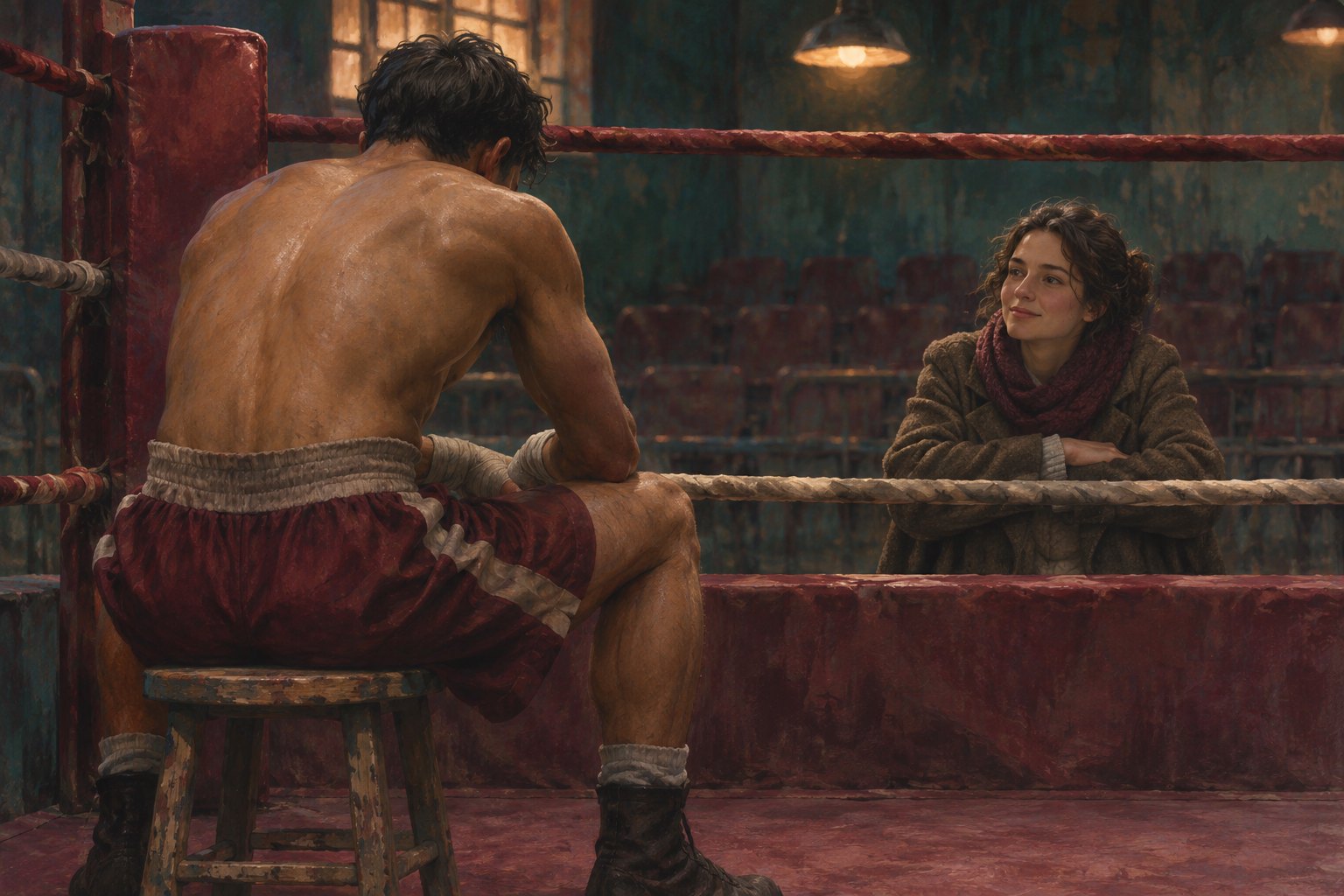
The ending makes that emotional priority unmistakable. Apollo wins the decision, while Rocky calls for Adrian. His cry of “Adrian!” matters because the film has already established why reaching her is an achievement the judges cannot award.
That is also why memorable dialogue needs dramatic context, a connection explored in our analysis of why movie quotes endure. A name can carry more feeling than an inspirational speech when the story has taught us what saying it means.
Farrelly’s editing decision offers a revealing companion idea
A concrete filmmaking detail complicates the discussion usefully. In a Directors Guild of America conversation, Farrelly described removing a fight sequence after deciding that the film’s emotional momentum had already peaked at the stairs. He acknowledged resisting the cut because the sequence had taken a week to shoot. The [DGA’s account of the discussion](https://www.dga.org/events/2027/january2027/iplayrocky_qna_1126) documents his eventual decision to prioritize the film’s rhythm.
This does not establish whether the finished sequence of scenes works. It does illustrate a creative judgment that fits the larger issue: expenditure cannot automatically determine value. Material that required substantial labor may still weaken the shape of a movie.
There is a productive tension here. Stallone’s central ambition requires holding firm; Farrelly’s editing example requires letting go. Artistic conviction needs both capacities. The difficult judgment is knowing which choice serves the work.
The toughest test: would the conviction matter without success?
An “anti-money” interpretation becomes less persuasive if it merely celebrates rejecting an offer because a larger reward eventually follows. That would make financial success the final proof that the hero was right all along.
The original Rocky offers a more durable idea. Its emotional resolution survives the official loss. That is why it supplies such a useful test for the new film’s stated philosophy: can the audience understand the value of Stallone’s commitment before treating his eventual fame as the answer?
There is no need to romanticize poverty to recognize the importance of that question. Money provides security and makes work possible. The deeper concern is whether it also receives the authority to define every worthwhile choice.
The most compelling meaning of I Play Rocky lies in the desire to be present in one’s own life. Rocky wants his effort to express something beyond the promoter’s pitch. Stallone wants to inhabit the character he wrote. In both cases, dignity begins when a person’s ambitions become more specific than the value other people have assigned them.
Original content by this site's editorial team. Published: November 12, 2026 at 05:00:24 PST (Los Angeles time)