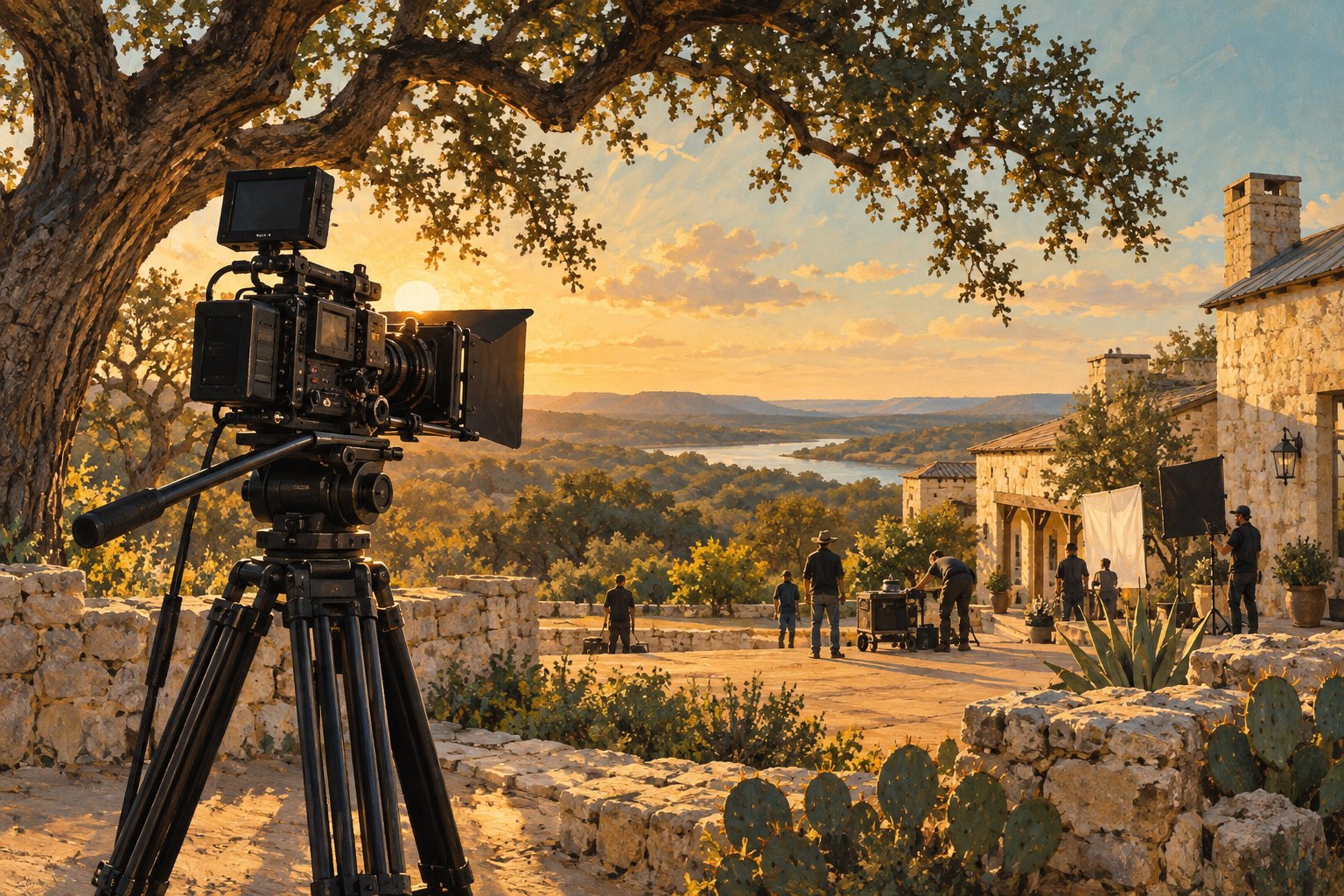
Goldenrod is attracting attention for a practical promise: helping productions secure a Texas film boost. Deadline’s reporting identifies the new platform with that purpose. For filmmakers, the immediate interest is access to production support. For moviegoers, the more compelling question is what that support might allow a film to preserve: its setting, its working time, or a scene that gives a character room to become believable.
The announcement deserves attention, but an announcement alone cannot establish how much a particular production will benefit. Goldenrod’s significance will depend on the work it helps complete and the clarity it brings to decisions made before cameras roll. This is an assessment of that creative and practical promise, rather than a review of a finished movie or a tested evaluation of the platform.
What the Goldenrod news establishes
The central reported development is straightforward: a new platform called Goldenrod is associated with helping productions secure support connected to filming in Texas. That establishes the subject of the news. It does not, by itself, establish an individual project’s eligibility, a guaranteed financial result, or a measurable improvement in the finished film.
Those distinctions matter because production announcements can compress several different milestones into a reassuring impression of progress. Identifying a possible benefit, establishing that a project qualifies, and actually receiving support are separate questions. Readers should resist treating the word helps as a promise that every production will achieve the same outcome.
For the same reason, no specific funding amount, approval timetable, client result, or service feature should be inferred from the announcement’s premise. The useful starting point is the problem Goldenrod proposes to address: making production support more accessible to the people trying to get a project made.
Why a production platform belongs in a conversation about movies
A film’s budget can sound remote from its emotional life. Yet a critic’s favorite moment might depend on an apparently ordinary production decision: keeping two performers together in a location, allowing an exchange to play without interruption, or finding a room that tells us something about the person who lives there.
Consider a hypothetical family drama in which an adult child returns home. Shooting the reunion in a cramped kitchen could make every movement uncomfortable. A parent standing between the visitor and the door might express possessiveness without a speech. Replace that room with a more convenient, spacious interior, and the same dialogue could lose some of its pressure.
This is an illustration of the creative stakes, not a description of a Goldenrod-supported film. If production assistance makes a carefully chosen location feasible, its contribution could become visible through character behavior. The value would lie in what the filmmakers do with that opportunity.
Our commentary on the creative questions surrounding Time Zone Capital’s launch approaches a related issue: how to judge industry infrastructure by the storytelling it enables. Goldenrod invites that same scrutiny at the level of production planning.
The questions producers should bring to Goldenrod
For a filmmaker considering the platform, a useful first conversation would connect its proposed assistance to an actual project. A screenplay, a working schedule, and a clear description of production needs provide something concrete to discuss. Enthusiasm becomes more useful when everyone understands which decisions remain open.

The following are evaluation questions, not claims about Goldenrod’s current features or terms:
- What work does the platform handle? Ask for a concrete description of its responsibilities and the tasks that remain with the production team.
- Which project assumptions need checking? Establish what information is needed before anyone can assess the proposed benefit.
- What does participation cost? Request a clear explanation of fees, obligations, and any circumstances that could change them.
- What happens when the production changes? Ask how a revised schedule, location, or budget would affect the assessment.
- What evidence demonstrates the result? Look for a distinction between an initial estimate, an approval, and support actually received.
These questions also provide a better framework for future coverage. A useful follow-up would explain a documented project outcome, the work involved, and the limits of that example. A satisfied client’s experience could be informative without establishing that every film will see comparable results.
Texas should contribute more than a backdrop
From a critical perspective, the most interesting possibility is that assistance connected to Texas could help filmmakers use a location with greater intention. A place becomes dramatically meaningful when it affects what characters notice, where they gather, and how easily they can leave one another.
That does not require a film to turn its setting into a tourist attraction. A modest apartment, a workplace corridor, or a familiar stretch of road can carry more emotional information than a panoramic skyline. The test is whether the environment participates in the story.
There is also no reason to assume every production filmed in Texas must tell an explicitly Texan story. What matters artistically is the relationship between the location and the fictional world. My preference is for practical support that expands those choices while leaving filmmakers able to explain why a particular place belongs in their movie.
The people outside the frame count, too
A production’s relationship with its location extends beyond what the camera records. For residents, the experience of hosting a shoot may center on access, communication, and the temporary use of shared space. Those concerns deserve a place in any discussion of what makes filming beneficial.
Our examination of traffic and parking questions around Old New Castle movie production considers that everyday perspective. It offers a useful companion to the Goldenrod story: a production’s practical success should include how it works with the community around it.
This is a standard for evaluating production activity, not an allegation about Goldenrod or any associated project. Future reporting could usefully ask whose work becomes possible, what local participation looks like, and whether the benefits extend beyond a single announcement.
The strongest verdict will come from completed work
Goldenrod’s premise is worth following because the work of making a movie possible can influence the movie itself. Clearer planning could give filmmakers a firmer basis for choosing locations, organizing a shoot, and protecting the moments they consider essential. Whether Goldenrod delivers those advantages remains a question for documented outcomes.
The deeper creative test is specific: what did a production gain the freedom to do? Perhaps it kept a difficult scene, used a more expressive location, or preserved time for a performance. Those are possibilities, not reported achievements. They are also the kinds of results that would give this platform’s promise meaning for an audience.
A successful film boost should eventually be legible in the work it enables. Goldenrod’s most persuasive story will be the one filmmakers can tell about a completed project—and viewers can recognize in the choices on screen.
Original content by this site's editorial team. Published: September 15, 2026 at 08:28:05 PDT (Los Angeles time)