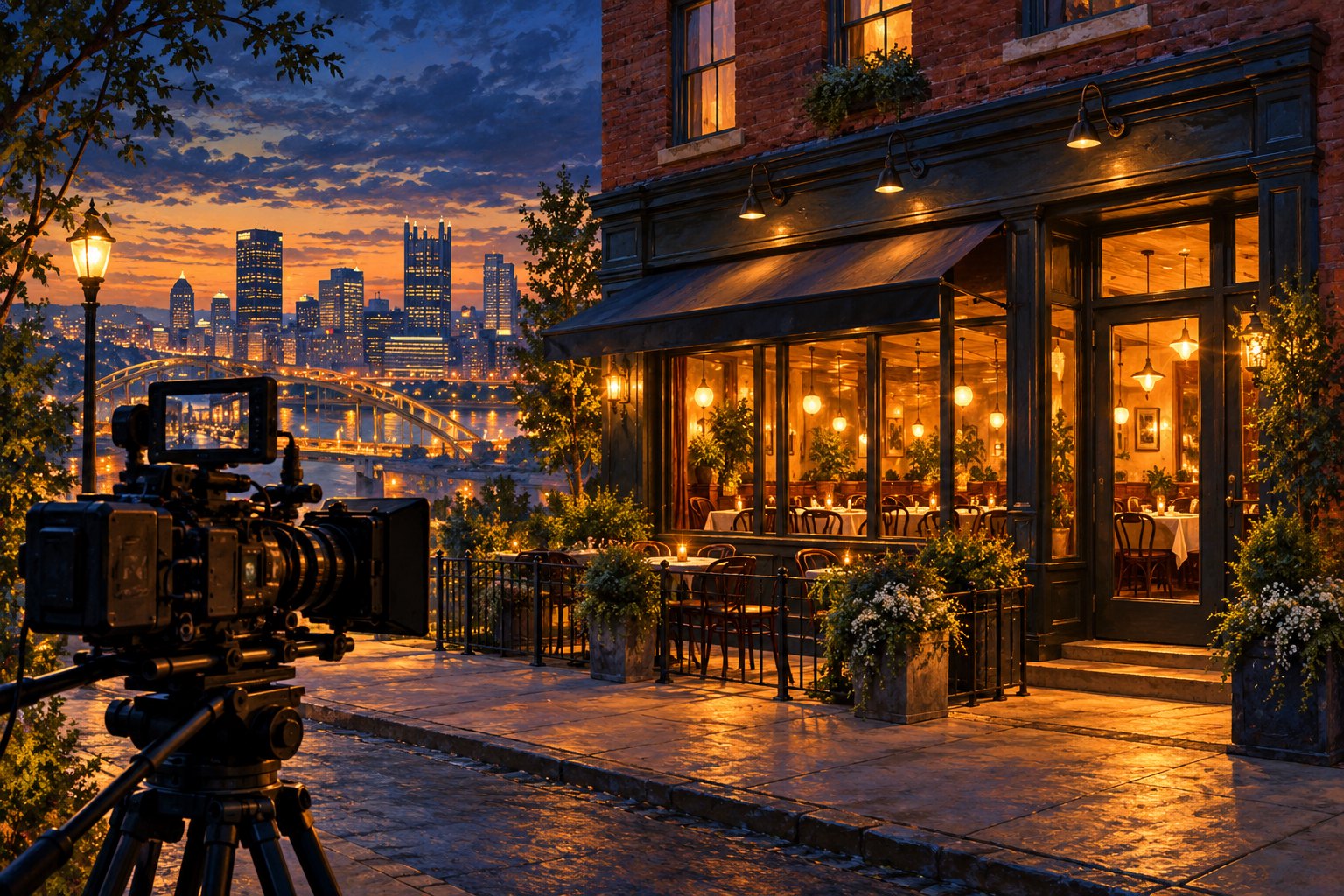
The Pitt is set to film at a historic Pittsburgh restaurant, according to WPXI. For viewers interested in the series’ relationship with its namesake city, that is a small production development with an appealing creative possibility: a neighborhood institution could give the drama a different kind of human space.
The filming plan alone does not establish which characters will appear, what they will discuss, or how the location will function in the finished episode. Those distinctions matter. A restaurant can host a confrontation, an ordinary meal, a brief transition, or something else entirely. Its dramatic value will depend on the choices made inside the frame.
This is spoiler-free commentary on the location news, not a review of an unseen sequence. The interesting question is what an established local place might let the series express about its characters—and what viewers should look for when the footage eventually appears.
What the filming news does—and does not—tell us
The central reported fact is straightforward: a historic Pittsburgh restaurant is to serve as a filming location for The Pitt. That connects the production to a real place with a life beyond television. It does not, by itself, reveal a narrative turning point or confirm that the restaurant will become a recurring setting.
It also helps to separate a filming location from a story location. Productions can use a building as itself, adapt its appearance, or show only a limited part of it. Until the finished material establishes the relationship, recognizing a real venue cannot tell us everything about its fictional role.
For criticism, this creates a useful boundary. We can assess the possibilities of the choice without pretending to know its outcome. No dialogue, character encounter, or hidden reference should be attached to the restaurant merely because filming is planned there.
A historic restaurant offers more than an attractive background
A restaurant is a space organized around recurring human behavior. People arrive, wait, choose, eat, pay, and leave. Some linger. Others watch the door. Those ordinary actions give actors something meaningful to do while a scene develops, allowing emotion to emerge through behavior instead of explanation.
A historic establishment offers another potential dimension: the impression that people occupied this room before the central characters arrived and will continue using it after they leave. In screen storytelling, that sense of continuity can make a setting feel independent of the plot.
History, however, is not automatically visible. A room’s age cannot do the work of a screenplay. A beautiful establishing shot may communicate atmosphere while revealing almost nothing about the people in it. The stronger choice would be to let the setting affect how a character behaves: whether they relax, hesitate, seek privacy, or seem out of place.
This is where my interest in the news lies. A recognizable local institution could help make Pittsburgh feel like somewhere the characters live, with routines and associations that extend beyond the immediate demands of a scene.
Read the room through the characters
When the restaurant footage reaches the screen, the most revealing detail may be where someone sits. A person who takes the edge of a booth creates a different impression from someone who settles against the wall. Choosing a seat facing the entrance can suggest watchfulness; moving closer to another person can alter the emotional balance without a line of dialogue.
These are possibilities of staging, not predictions about The Pitt. Their value is that they direct attention toward performance. Instead of asking only whether a familiar restaurant looks good on television, viewers can ask what the room allows them to learn.
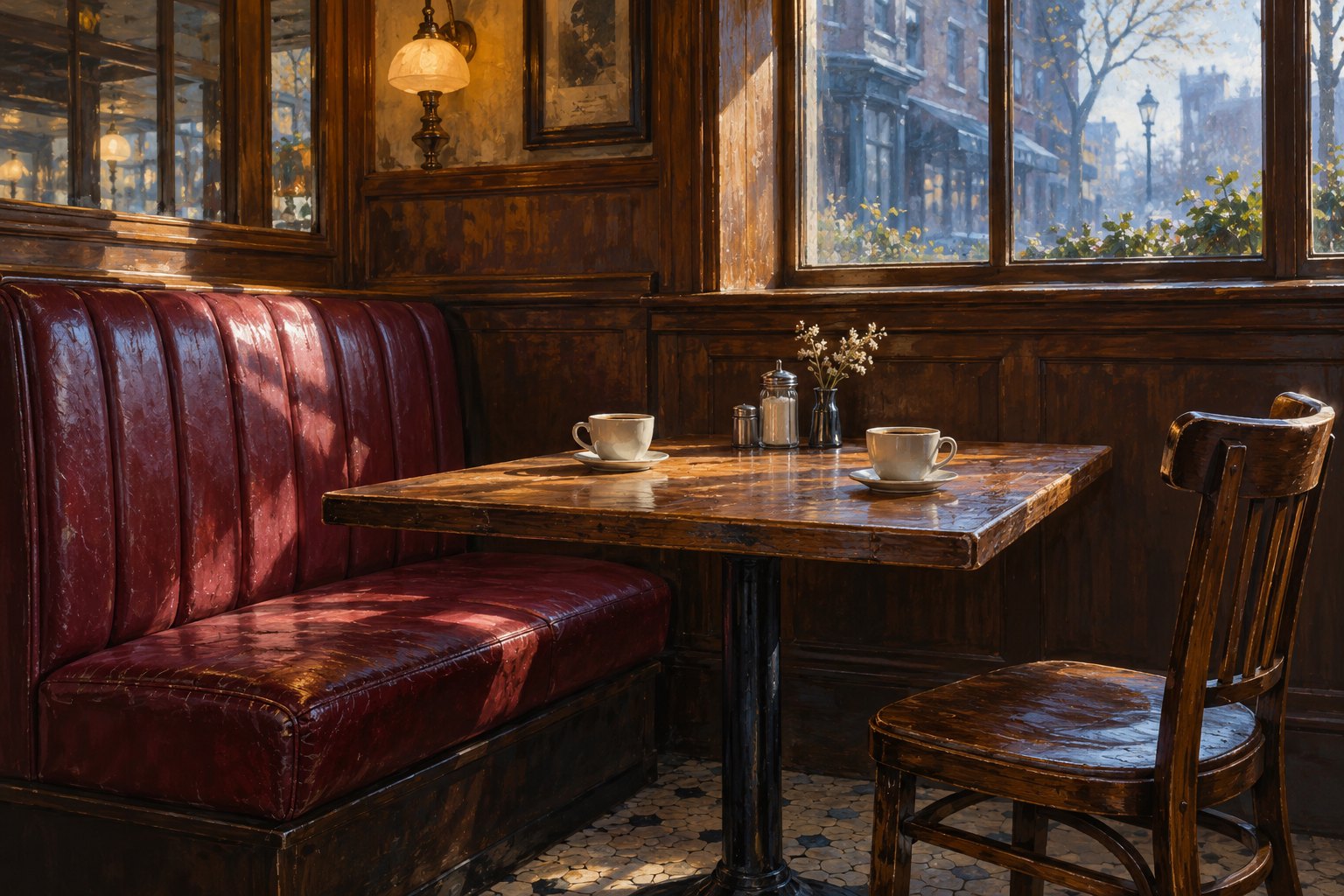
Shared tables also create an interesting tension between proximity and intimacy. Two people can sit close enough to touch and still avoid an honest conversation. A wide shot can preserve that distance; alternating close-ups can make the same exchange feel more private. Neither approach is inherently better. The choice becomes meaningful when it serves the relationship.
That emphasis on individual behavior connects with our examination of why intimate conflicts need room within ambitious storytelling. A location earns its importance through the people experiencing it. Its reputation cannot substitute for their emotional specificity.
Listen for the ordinary life around the scene
Restaurant scenes also depend on sound. Background conversation, cutlery, footsteps, and the interruption of service can create a world that continues regardless of what the main characters are feeling. Used thoughtfully, those sounds can make an exchange seem exposed, fragile, or unexpectedly comfortable.
Silence is equally consequential. If surrounding noise falls away, the audience may experience a moment as intensely subjective. If the room stays busy, a private disappointment can feel almost invisible to everyone else. The emotional effect comes from the relationship between the character and the surrounding activity.
My preference would be for details that remain useful even to viewers who cannot identify the restaurant. Local recognition can add pleasure, but the sequence should still communicate through rhythm, gesture, and attention. A setting becomes dramatically convincing when its significance survives the loss of its name.
Authenticity requires more than filming in the right city
There is an understandable appeal to seeing a Pittsburgh production use a historic Pittsburgh business. Yet geographic accuracy and dramatic credibility are separate achievements. A real location supplies physical specificity; the filmmaking must turn that specificity into an experience.
One test is whether the restaurant feels occupied or displayed. Does the camera allow ordinary activity to exist around the characters? Do their movements suggest familiarity with the room? Does the scene have a reason to happen here beyond the attractiveness of the background?
These questions connect with our commentary on how location filming can contribute to convincing screen worlds. Production activity creates an opportunity. The finished work determines whether that opportunity becomes expressive.
The deeper possibility: a place that belongs to everyone
The most promising interpretation of this location choice is also the simplest. A restaurant is a shared space where people with different responsibilities briefly participate in the same ordinary ritual. Sitting down to eat can reveal fatigue, companionship, impatience, or the difficulty of being present.
For The Pitt, a historic Pittsburgh restaurant could offer a way to connect individual experience with the continuing life of the city. That remains a creative possibility rather than an established meaning of the planned footage.
The eventual measure of success will be whether the setting changes our understanding of someone. A location can be memorable because viewers recognize it. A scene becomes memorable when, after watching it, they recognize something in a character that they had not seen before.
Original content by this site's editorial team. Published: October 30, 2026 at 15:57:03 PDT (Los Angeles time)