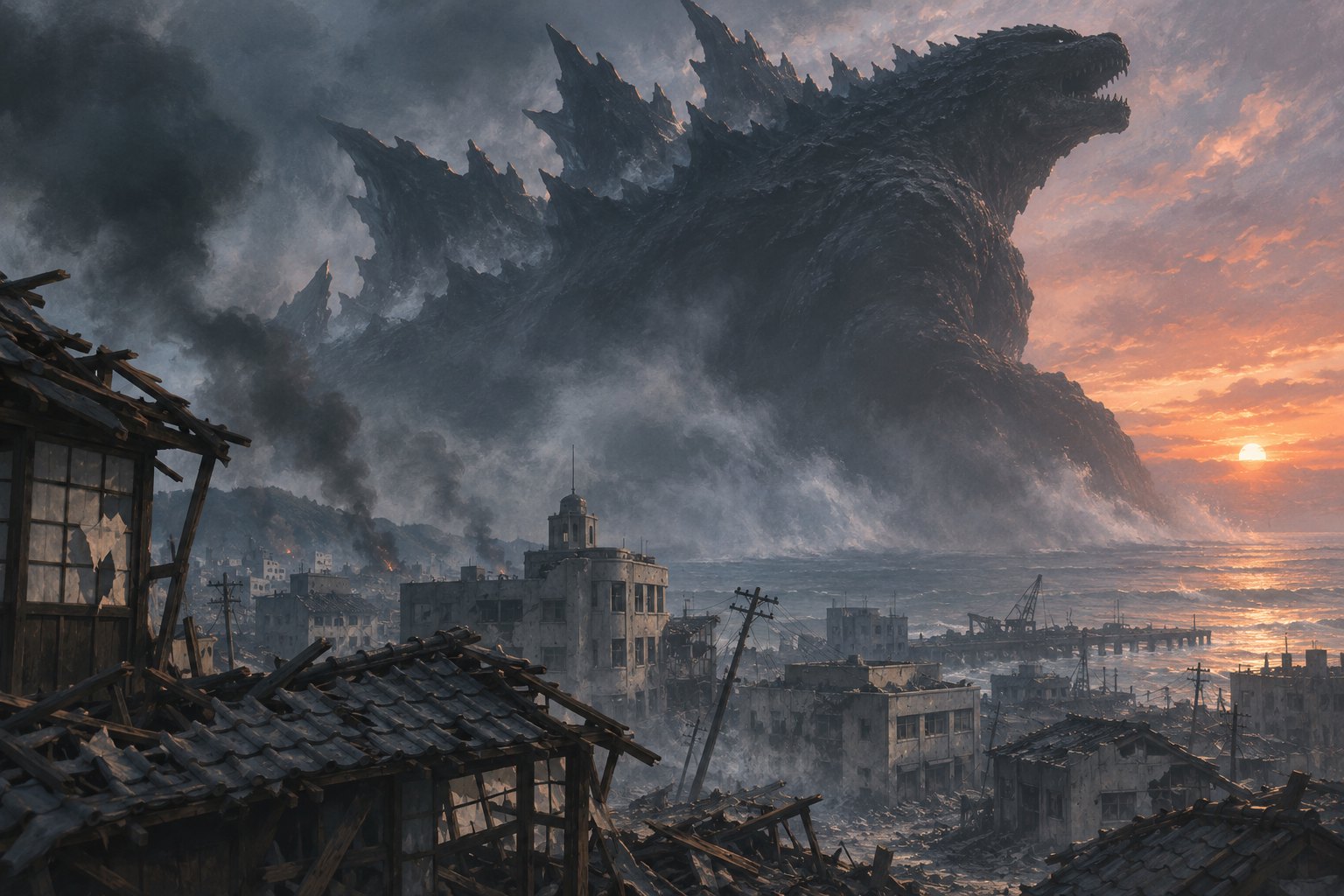
Godzilla Minus Zero has a compelling idea beneath its monster confrontation: surviving catastrophe does not settle the question of how to live afterward. Its characters face competing obligations to their families, their communities, and the dead. The strongest argument for the sequel lies in those conflicts, where an apparently practical solution can become another excuse to sacrifice someone.
The Rider News has greeted the film enthusiastically. This character-focused analysis examines its reported narrative rather than presenting a firsthand screening verdict. Major spoilers follow, including the ending and a central character's death.
A larger disaster puts private lives under pressure
Takashi Yamazaki returns as director, screenwriter, and visual-effects lead. Toho and GKIDS confirmed the November 6, 2026, North American theatrical release and introduced Masami Nagasawa's Makoto Aoyama as a weather forecaster working with the Disaster Response Bureau. Those details establish an important expansion: scientific interpretation and organized disaster response now sit alongside the returning family's experience. [Official film announcement](https://godzilla.com/en-gb/blogs/news/new-theatrical-trailer-and-poster-revealed-for-godzilla-minus-zero).
There is a useful distinction between making a threat bigger and making a decision harder. Another monster supplies the first almost automatically. The second requires people who disagree about what survival permits. A forecast, a weapon, or an evacuation plan becomes dramatically interesting when its benefits and costs fall on different people.
That is the lens through which this sequel's premise becomes worth examining. The question is not simply whether human ingenuity can overcome impossible odds. It is whether ingenuity remains humane when desperation makes almost any proposal sound reasonable.
Koichi's responsibility begins with wanting to come home
According to GamesRadar+'s review, Koichi Shikishima, played by Ryunosuke Kamiki, now places Noriko and their adopted daughter Akiko at the center of his life, even as duty draws him back into the cockpit. The same review describes a broader ensemble and less concentrated attention on the family than in Minus One. [GamesRadar+ review](https://www.gamesradar.com/entertainment/sci-fi-movies/godzilla-minus-zero-review/).
My reading of that conflict is that Koichi's desire for domestic safety gives his courage a necessary boundary. Wanting to return home is a positive motive. A person who has something to lose makes a different kind of hero from someone who treats his own disappearance as the answer to every problem.
The broader cast creates a corresponding structural risk. Every additional specialist and operation competes for attention with that intimate stake. The crucial measure is whether the collective struggle makes Koichi's choices more difficult, or merely interrupts them. Scale alone cannot supply emotional development.
This is also the central adaptation problem explored in our discussion of turning Catan's systems into character drama: procedures become stories through the relationships they test.
Noriko makes survival a question of agency
The published plot account describes Noriko's connection to Godzilla's cells and a plan that requires her participation in a resonance device. Koichi initially tries to protect her by fleeing with the family. After encountering the devastation in Matsumoto, she volunteers. [Published plot account](https://en.wikipedia.org/wiki/Godzilla_Minus_Zero).
That distinction matters. Being valuable to an operation is different from choosing to join it. Noriko's condition invites others to understand her body as equipment; her decision demands that they recognize a person with judgment and obligations of her own.
Koichi's protective instinct is understandable, but it cannot settle her responsibilities for her. Their disagreement therefore has more substance than a familiar argument about whether a hero should take a risk. Both want to preserve life. They differ over whose danger they can accept and who gets to decide.
The uncomfortable question remains whether consent can ever be fully free under catastrophic pressure. Volunteering does not make the danger disappear, nor does it absolve the people who designed the plan. That unresolved tension gives the premise its moral force.
Akiko and Noda speak from opposite ends of responsibility
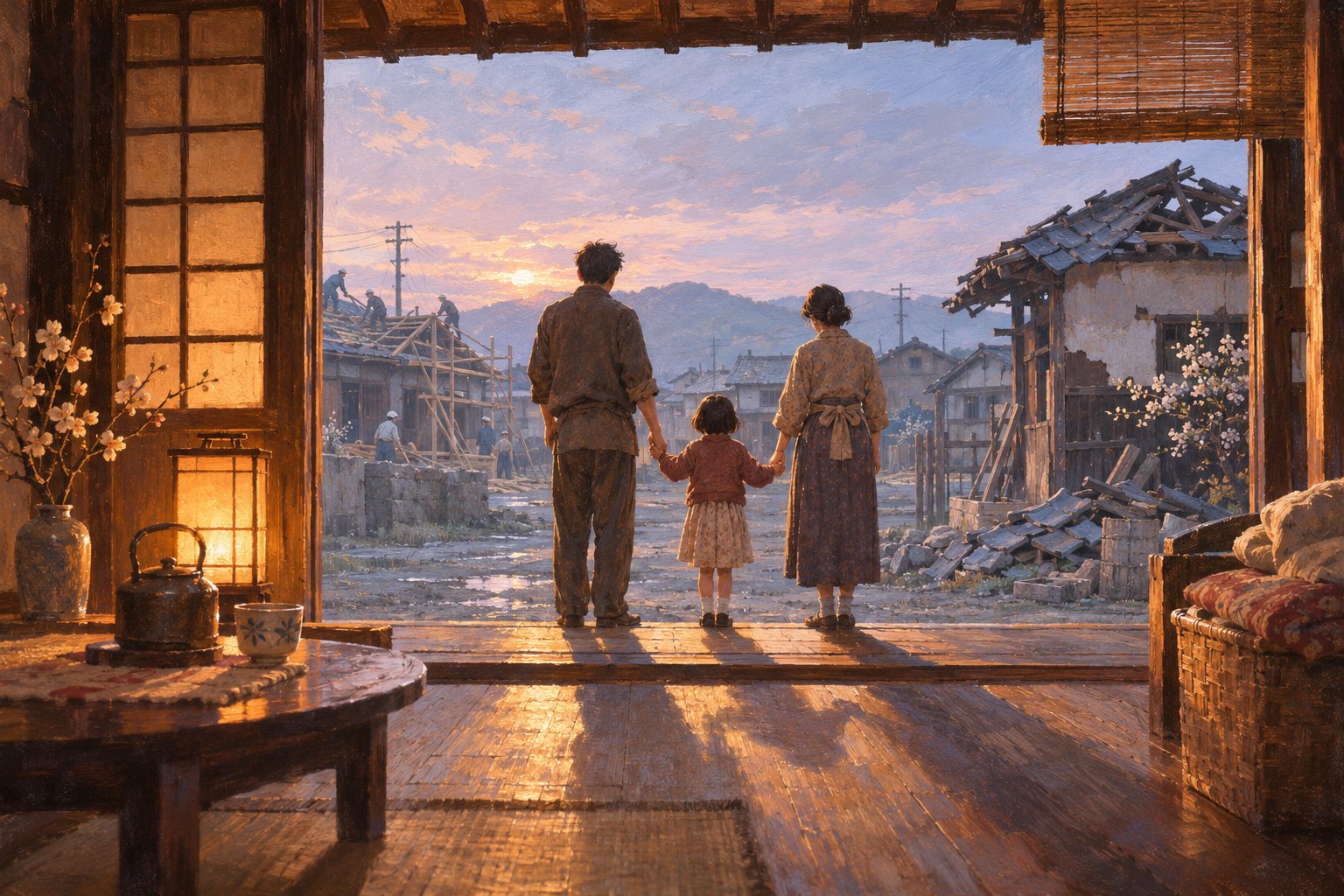
Two short lines capture the distance between experiencing danger and accepting responsibility for others. Wikiquote records Akiko's warning, “Something scary is coming,” and Noda's final words, “The rest … I leave it to you.” English subtitle wording may differ between editions. [Collected dialogue](https://en.wikiquote.org/wiki/Godzilla_Minus_Zero).
Akiko's sentence reduces the elaborate machinery of disaster to a child's immediate perception. She does not need to understand strategy to understand fear. Her perspective challenges any account of victory that overlooks what children actually need: dependable care and adults who return.
Noda's words move in the opposite direction. They acknowledge that responsibility outlasts the individual carrying it. Read together, the lines suggest a relationship between generations: adults inherit unfinished work, but children should not have to inherit the same terror.
Neither line requires grand philosophical language. Their plainness is their strength. One names vulnerability; the other entrusts the future to someone else.
Murakami exposes the temptation inside revenge
GamesRadar+'s ending explanation identifies Murakami as a Hiroshima survivor whose imagined attack on New York expresses his desire for retaliation. Noda helps turn him away from that intention. The ending also involves destroying the research and apparatus that could enable further exploitation of Noriko and control of Godzilla. [Ending explanation](https://www.gamesradar.com/entertainment/sci-fi-movies/godzilla-minus-zero-ending-explained-ghidorah/).
For me, this is the narrative's sharpest moral problem. Grief can explain the wish to retaliate without making its targets responsible. Murakami's scientific ability makes that distinction urgent: an injured person's fantasy becomes a potential policy once he possesses the means to carry it out.
Destroying the means of control consequently has meaning beyond escape. It rejects the reassuring belief that overwhelming power becomes safe when the right person holds it. This resembles the distinction between conviction and moral authority examined in our analysis of conscience and power in Confession.
The deeper victory is refusing to repeat the damage
My interpretation is that Minus Zero's most persuasive dramatic idea concerns limits. Love cannot justify deciding everything for another person. Collective survival cannot automatically authorize using a vulnerable body. Suffering cannot confer permission to manufacture new victims.
Those limits make the human story more demanding than a contest of destructive strength. A monster can be defeated through force; a cycle of retaliation requires people to relinquish something they believe they deserve. The meaningful future is therefore measured in relationships preserved and powers surrendered. That is where this monster story finds its most human stakes.
Original content by this site's editorial team. Published: November 10, 2026 at 21:36:15 PST (Los Angeles time)