Fatherland asks an uncomfortable question about greatness: what does a celebrated writer’s moral authority mean to the people who need his affection? Paweł Pawlikowski’s 2026 drama approaches Thomas Mann through the daughter accompanying him across postwar Germany. Its most compelling conflict lies between the importance of what this father represents and the difficulty of getting him to respond as a parent.
My reading is that the film works best as a study of unequal emotional responsibility. Erika must help sustain the distinguished man everyone has come to hear while carrying feelings his public role leaves little room to acknowledge. The political journey gives that imbalance a larger setting without making the family merely illustrative.
Spoiler warning: This review discusses the family tragedy and the final scene.
A homecoming with competing claims
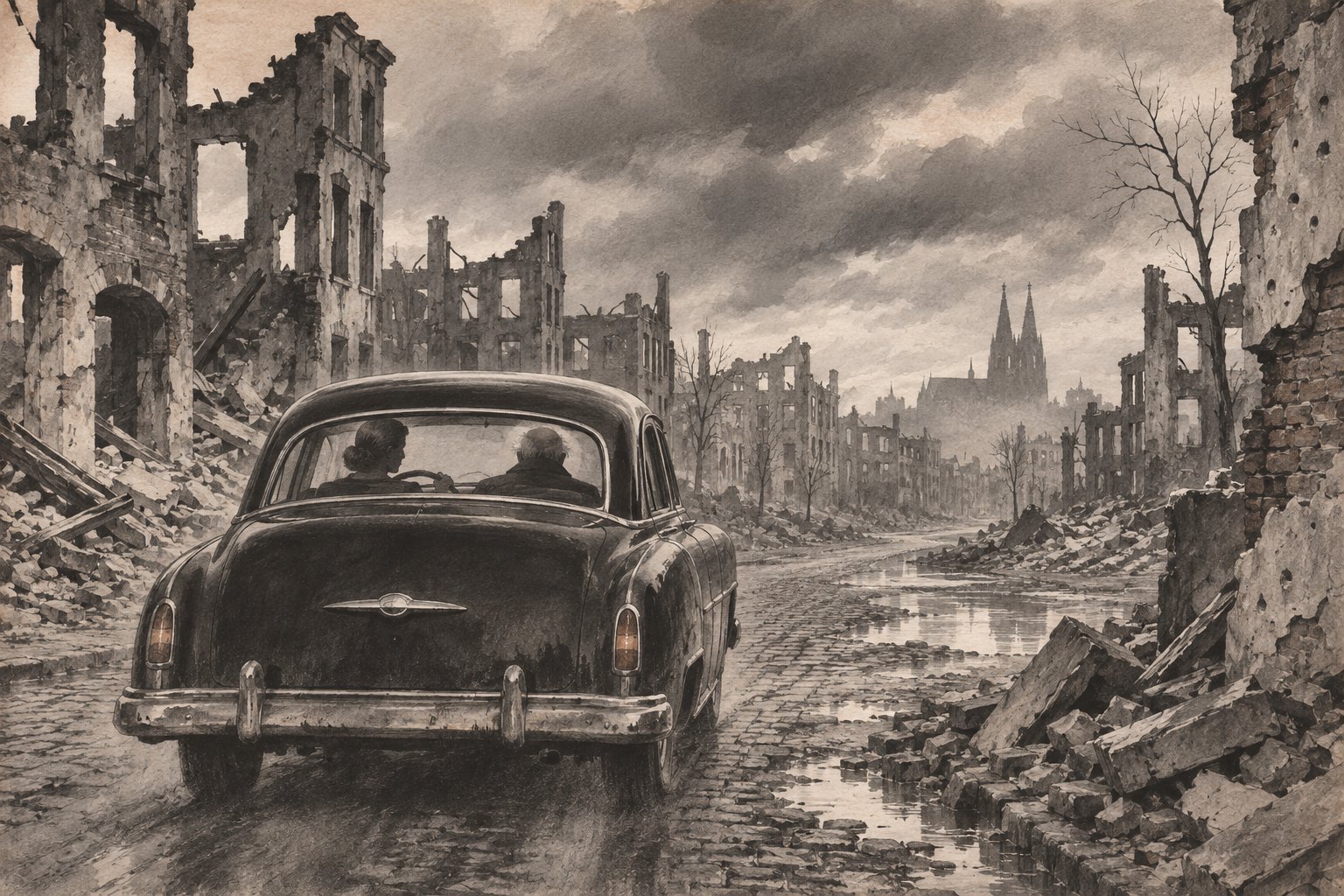
The premise is deliberately compact. Thomas Mann and his daughter Erika travel by black Buick from Frankfurt to Soviet-controlled Weimar. The journey places a famous German writer between rival political systems, each with reasons to welcome his cultural authority. The distributor identifies this route as the film’s central movement. [MUBI’s film synopsis](https://mubi.com/en/us/films/fatherland-2026).
Hanns Zischler plays Thomas, Sandra Hüller plays Erika, and the story takes place in 1949. Crucially, this is a fictionalized journey, as Film at Lincoln Center’s program description makes explicit. Its intimate encounters should be understood as dramatic constructions rather than a documentary record of the Mann family’s movements. [Film at Lincoln Center’s program notes](https://www.filmlinc.org/nyff2026/films/fatherland/).
The road-movie structure creates an effective contradiction. Father and daughter keep moving, but neither travel nor official hospitality guarantees a sense of belonging. A country can invite someone back without becoming a place where that person feels at home. For Erika, the same uncertainty applies to the family: proximity to her father offers no assurance of emotional access.
Erika: the work behind paternal greatness
Erika’s responsibilities extend beyond companionship. She helps with her father’s speeches, manages demands around him, and even shaves him. These practical details matter because they make his independence look less self-sufficient. The authoritative public figure depends on another person’s constant attention. John Powers’s account of the film identifies this labor as central to their relationship. [NPR’s review, published by KQED](https://www.kqed.org/arts/13995139/thomas-mann-fatherland-movie-review).
From Erika’s perspective, devotion contains a difficult bargain. She knows the significance of her father’s work, yet supporting that work can reduce the space available for her own needs. Her competence becomes a trap: the more successfully she keeps everything running, the easier it becomes to overlook what the effort costs her.
This is where the character offers the richest basis for criticism. Treating her simply as her father’s conscience would repeat the relationship’s imbalance. She deserves attention as someone whose loyalties compete: to her father, to her brother, to the public principles they profess, and to herself.
The distinction between care and self-erasure also informs our analysis of devotion and its limits in Mad Love. Here, the question becomes whether a daughter can remain loving while refusing to organize every feeling around her father.
Klaus and the exhaustion behind the joke
August Diehl’s Klaus introduces a more openly disillusioned perspective. His early telephone conversation with Erika establishes a man struggling to believe in the consolations available to him. The political choice receives a brutally compressed formulation: “Stalin or Mickey Mouse.” The line is reported in the Associated Press’s review. [Associated Press on Fatherland](https://apnews.com/article/84aa4a322cd7a42317b70e24d8523020).
It is a memorable joke because neither option answers the speaker’s underlying need. A demand to choose allegiance offers little help to someone who doubts whether he belongs anywhere. The humor makes political categorization sound absurdly inadequate to a complicated human life.
Klaus’s relationship with Erika also changes the meaning of her journey. She is a sister as well as a daughter. Attending to Thomas cannot exhaust her obligations, and the family’s emotional center need not coincide with its most famous member.
Public rehabilitation, private accountability
The encounters in Germany sharpen the problem of reputation. Wagner’s grandsons seek Thomas’s support, while Erika confronts an ex-husband whose accommodation with the Nazi establishment remains part of his past. In the East, Thomas faces a different attempt to enlist his prestige. These episodes make hospitality feel transactional: the honored visitor is also someone whose approval could prove useful. [Time Out’s account of the film’s encounters](https://www.timeout.com/movies/fatherland-review-2026).
The strongest implication is that cultural distinction can become a shortcut around accountability. If an important writer accepts an invitation, shares a room, or lends his name, others may treat the association as evidence that difficult questions have been settled.
That pressure makes the family story more uncomfortable. Thomas’s ability to recognize public evasions does not automatically make him attentive at home. Intellectual judgment and emotional generosity are separate abilities. The film gains force when we resist assuming that excellence in one guarantees the other.
Readers interested in characters who arrange events into a tolerable account of themselves may recognize a connection with our discussion of self-justification in Detour. Here, the protective story concerns dignity and cultural purpose.
Where restraint helps—and where it limits
Klaus’s death makes the conflict between public duty and private grief unavoidable. Thomas’s determination to continue the tour wounds Erika, who needs something different from him than another successful appearance. The film’s treatment of this rupture is discussed in Powers’s review. [NPR on the family tragedy](https://www.kqed.org/arts/13995139/thomas-mann-fatherland-movie-review).
The dramatic question is not whether every grieving person should behave identically. It is whether one person’s preferred way of continuing leaves any room for another’s distress. Erika needs recognition; Thomas’s composure can feel like a refusal to acknowledge the scale of what has happened.
My reservation concerns the narrowness of this arrangement. Centering Erika’s confrontation with her father gives the drama focus, but it can also keep defining her through him. The most productive way to watch is to attend to her judgment and competing attachments, rather than treating each reaction merely as another clue to Thomas.
The ending: listening after the speeches
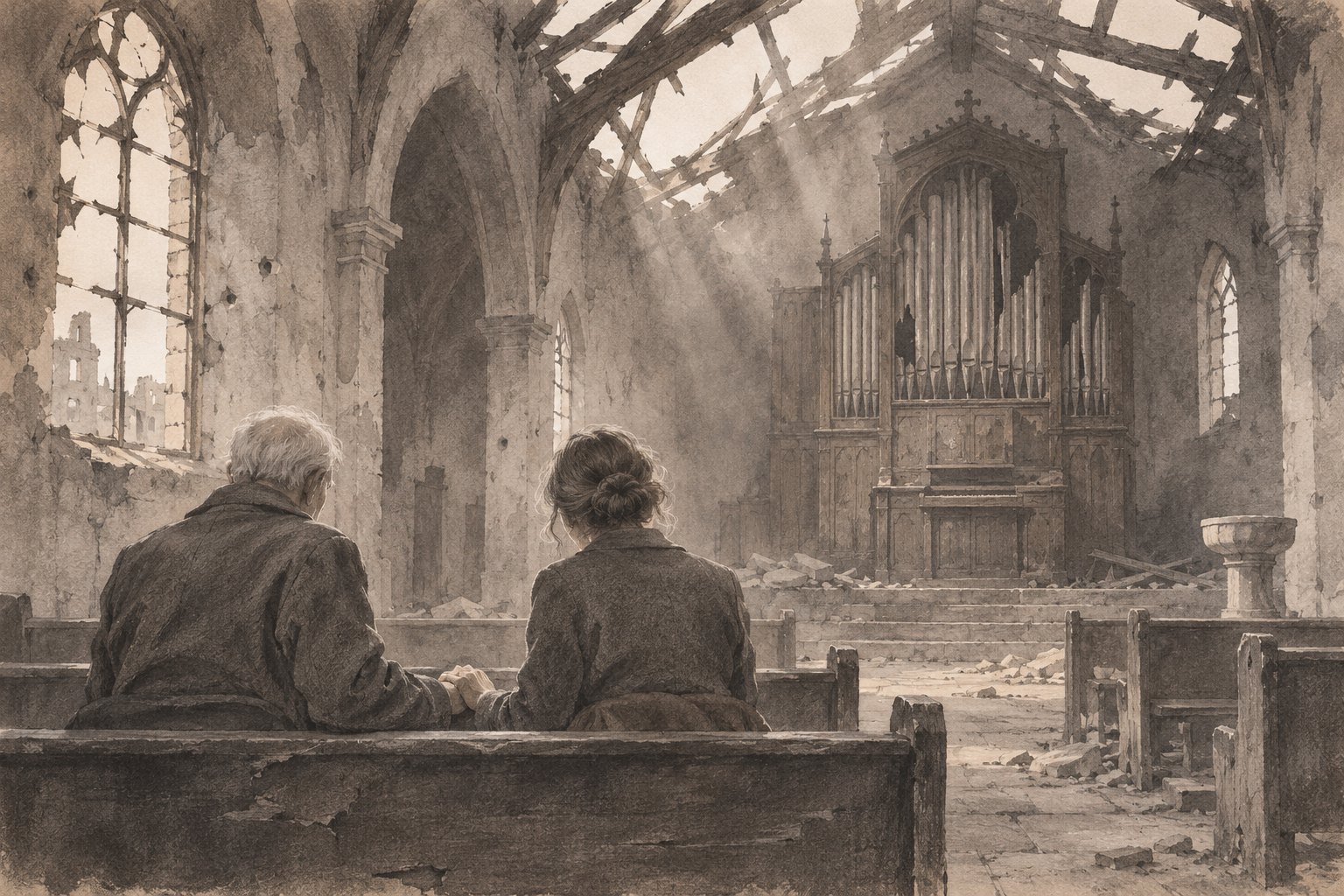
The final scene brings father and daughter into a damaged church, listening to Bach and holding hands. Earlier, Thomas has invoked “a good Germany”; here, that aspiration acquires an intimate counterpart in shared grief. Both the phrase and the concluding encounter are documented in Fernanda Eberstadt’s discussion of the film. [The European Review of Books on Fatherland](https://europeanreviewofbooks.com/fatherland-2026/).
I read the ending as a limited opening. Music does not repair neglect, and an emotional breakthrough cannot restore Klaus. What changes is the distribution of attention. Thomas can temporarily stop being the person whose words organize the occasion and become someone who listens alongside his daughter.
That makes the title’s deepest meaning familial as well as national. A fatherland promises belonging, but belonging requires more than reverence for an inherited name. The film’s most persuasive insight is that love becomes credible through responsiveness: the willingness to let another person’s sorrow interrupt the story you have been telling about yourself.
Original content by this site's editorial team. Published: November 14, 2026 at 02:32:43 PST (Los Angeles time)