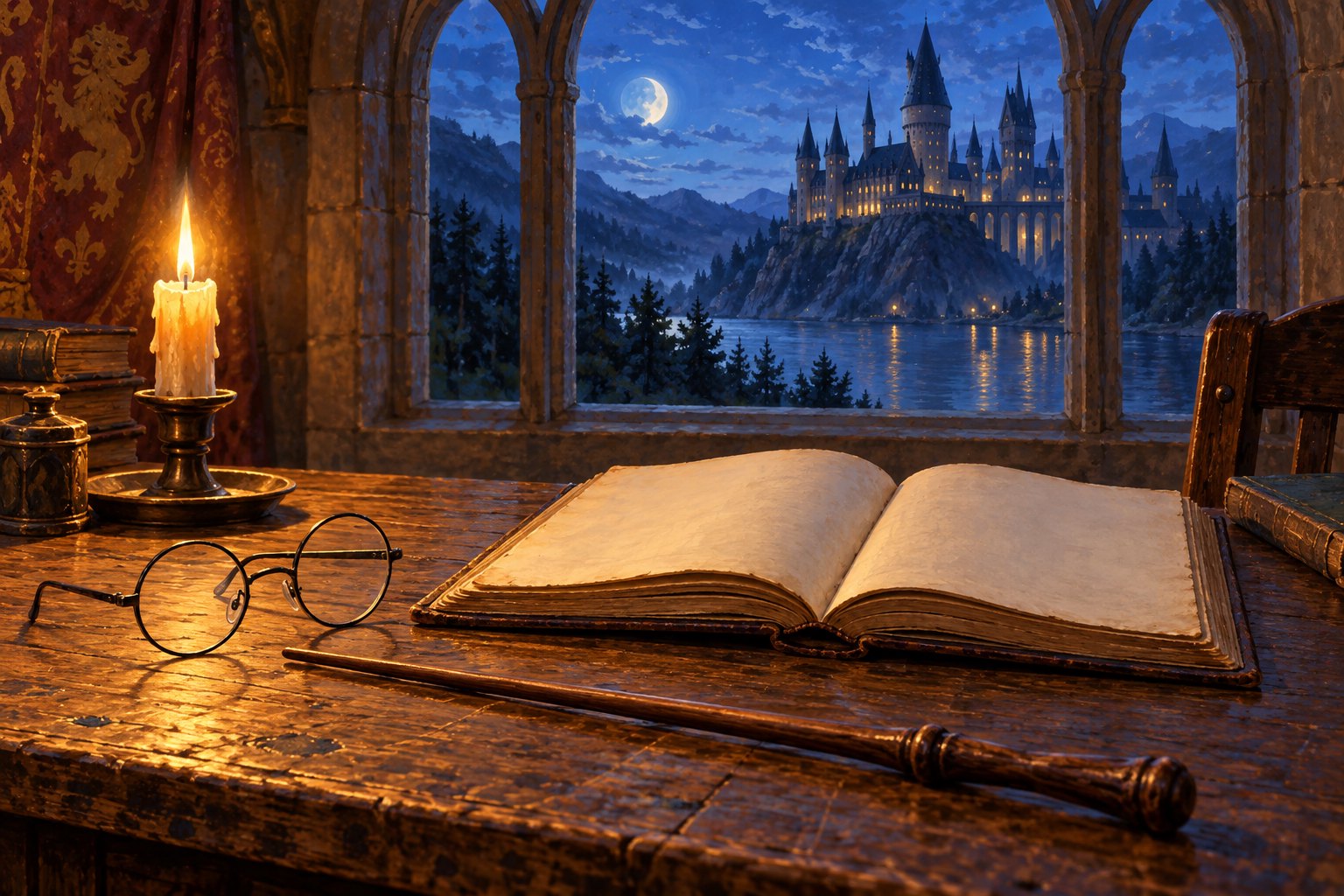
Prisoner of Azkaban takes first place in our ranking of the eight Harry Potter movies because its filmmaking makes Harry’s emotional growth inseparable from the adventure. Chamber of Secrets finishes last: its sinister mystery has plenty to recommend it, but its crowded structure gives familiar discoveries too much room and developing relationships too little.
This is a subjective ranking of the original eight films, excluding the Fantastic Beasts series. The priorities are character development, visual storytelling, pacing, and how convincingly each ending pays off what came before. Adaptation fidelity matters when it clarifies motivation; reproducing the most incidents does not automatically make the strongest movie.
Full spoilers follow for all eight films.
8. Harry Potter and the Chamber of Secrets
The second movie has an excellent psychological question: what happens when the place that made Harry feel welcome starts treating him as a threat? His ability to speak Parseltongue feeds suspicion, while attacks on Muggle-born students expose the prejudice beneath Hogwarts’ comforting traditions.
Harry’s fear of resembling Voldemort gives the mystery personal stakes. Unfortunately, the flying car, spiders, school incidents, and explanatory conversations make the journey feel overextended. Hermione’s petrification also removes the trio’s sharpest investigator from active participation at a crucial point.
The ending recovers something valuable. Harry freeing Dobby turns cleverness into compassion, giving him a victory measured by another person’s freedom. That small act says more about his character than defeating the enormous basilisk, even if the movie takes a cumbersome route to reach it.
7. Harry Potter and the Goblet of Fire
The Triwizard Tournament makes Harry’s unwanted celebrity brutally literal: everyone watches while he faces dangers he never volunteered to confront. Ron’s jealousy briefly punctures the comforting assumption that friendship will survive fame without effort.
The Yule Ball is especially effective from Hermione’s perspective. She wants recognition as a person with desires of her own, while Ron behaves as though her availability should be automatic. Their awkwardness gives adolescence a texture the tournament machinery sometimes lacks.
The limitation is connective tissue. Tasks and revelations arrive rapidly, leaving the mystery’s emotional consequences unevenly developed. Then Cedric’s death changes the film’s register completely. Harry returning with his body, while the crowd initially expects celebration, makes the distance between public spectacle and private horror devastating. That ending is stronger than much of the movie leading toward it.
6. Harry Potter and the Sorcerer’s Stone
“You’re a wizard, Harry” matters because it offers an abused child a new account of himself. His difference can mean possibility rather than shame. The first film understands that emotional release, giving Diagon Alley and Hogwarts the spaciousness of places Harry wants to absorb.
Its weaknesses are largely structural: the school-year tour can feel episodic, and the final obstacles resemble a sequence of individual tests. Yet those tests establish the friendship clearly. Hermione brings knowledge, Ron brings strategic judgment and courage, and Harry must act when neither can accompany him further.
The Mirror of Erised gives the spectacle an ache it needs. Harry’s deepest wish is family, making every later promise of belonging more consequential. That balance between discovery and emotional need also informs our discussion of what a fantasy adaptation must earn beyond its magical setting.
5. Harry Potter and the Half-Blood Prince
This is the series’ most interestingly uneven film. Romantic embarrassment shares space with dread, and the combination sometimes works beautifully: adolescence continues even as the adults lose control of the world.
Draco is its strongest character study. His isolation and distress turn an established bully into a frightened boy trapped inside a murderous assignment. Recognizing that fear does not excuse his actions; it makes the cost of his allegiance visible.
Harry, meanwhile, enjoys the borrowed competence of the annotated Potions textbook before discovering how dangerous unexamined trust can become. His use of Sectumsempra against Draco gives that idea a shocking consequence.
The romantic material and larger mystery do not always reinforce each other. Still, the cave sequence strips Dumbledore of reassuring invulnerability, preparing Harry for a loss that the film’s subdued atmosphere has been anticipating all along.
4. Harry Potter and the Deathly Hallows: Part 1
Removing Hogwarts also removes the trio’s routines, protection, and reliable sense of progress. The resulting film can feel stalled, but its strongest passages make that uncertainty the subject.
Hermione altering her parents’ memories establishes the personal cost before the quest properly begins. Ron’s departure then exposes an uglier strain: fear and insecurity can make loyalty feel impossible, especially under the locket’s influence. His return matters because friendship requires repair.
Harry and Hermione’s dance briefly interrupts their despair without resolving it. The scene gives them permission to be young people seeking comfort rather than instruments of the plot.
“Dobby is a free elf” supplies the clearest statement of agency. His rescue is a freely chosen act, and his death makes the ending painfully intimate. The film earns its place through these moments, though its incomplete dramatic shape limits it as a standalone experience.
3. Harry Potter and the Order of the Phoenix
Harry’s central problem is credibility. He has survived something terrible, and powerful adults find his testimony inconvenient. Umbridge makes institutional hostility concrete through classroom restrictions, punishment, and a relentlessly pleasant manner.
Dumbledore’s Army provides the satisfying answer: Harry becomes useful to others. Teaching turns experiences that isolate him into knowledge his friends can share. Neville’s increasing confidence is particularly rewarding because resistance becomes something practiced, not merely declared.
The emotional danger is Harry’s hunger for connection with Sirius. During the Ministry battle, Sirius’s “Nice one, James!” momentarily blurs godson and lost friend. It suggests affection complicated by longing, making their relationship less comfortable and more human.
The compressed storytelling sometimes rushes transitions, but the film maintains an unusually clear dramatic argument: denying fear gives authority more power; confronting it together gives the students some power back.
2. Harry Potter and the Deathly Hallows: Part 2
The finale succeeds most when the battle pauses. Snape’s memories rearrange Harry’s understanding of his life, while the walk into the forest turns the chosen-one story into a question of consent: what will Harry do once he understands the cost?
Neville’s resistance gives the climax a second source of courage. Harry may occupy the center of the prophecy, but the film needs people who act without that special status. Hogwarts becomes worth defending through the people defending one another.
Some choices weaken the payoff. The extended duel favors motion over clarity, and Voldemort’s disintegration makes his defeat more abstract than it needs to be. Nevertheless, the film delivers extraordinary emotional accumulation. Like the losses examined in our character-focused Endgame retrospective, its sacrifices matter because viewers understand the relationships being broken.
1. Harry Potter and the Prisoner of Azkaban
Alfonso Cuarón makes Hogwarts feel changeable, windswept, and slightly beyond Harry’s control. The landscape and moving camera express the instability of a boy discovering that the adults’ version of his history may be wrong.
Lupin offers patient guidance, Sirius shifts from imagined murderer to possible family, and Harry must revise judgments built from fear. Hermione’s intelligence becomes physical action as she navigates the Time-Turner sequence, while earlier incidents acquire new meanings.

The Patronus climax is the decisive achievement. Harry waits for his father to save him, then realizes that he saw his own future self. His longing remains, but it no longer prevents action. The magical mechanism and emotional revelation arrive together.
The film leaves the Marauders’ history insufficiently explained, a real weakness for newcomers. Even so, no other installment integrates atmosphere, suspense, humor, and character transformation so elegantly.
What the ranking reveals about Harry’s story
The series begins with a child hoping someone will take him somewhere safe. Its strongest films gradually complicate that hope. Teachers can fail, institutions can lie, and even loving guardians carry needs that children cannot satisfy.
Harry’s maturity emerges through his response: accepting help without surrendering judgment, and protecting others without expecting safety in return. Azkaban places first because it expresses that development through a single visual discovery. The person he has been waiting for is himself, acting with everything others have helped him learn.
A small reward in the closing credits
Stay through Prisoner of Azkaban for its Marauder’s Map-style credits and the closing “Mischief managed.” The playful farewell preserves something essential after all that fear: growing up need not mean losing the pleasure of exploration.
Original content by this site's editorial team. Published: September 27, 2026 at 18:36:28 PDT (Los Angeles time)