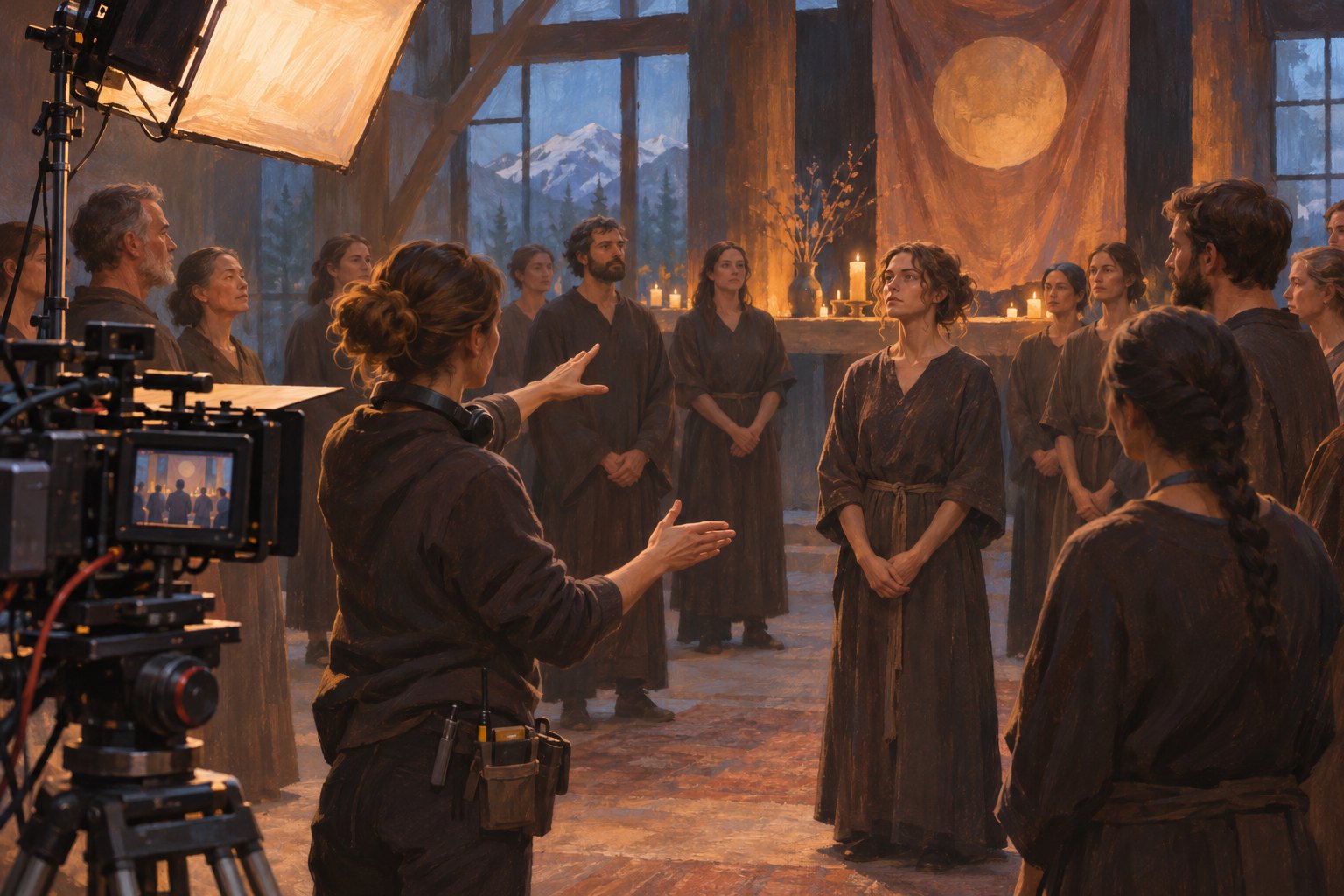
Eckerd College alumni have involved current students in a feature-film shoot taking place over multiple days, according to a college news announcement. The immediate interest is the collaboration itself: graduates making room for students within a production, where individual tasks must contribute to a shared result.
For movie lovers, that relationship deserves attention because the work behind a scene shapes what eventually reaches the screen. A convincing character depends on more than a performer delivering dialogue. Framing, sound, timing, and the consistency of separate takes all help make a fictional person feel coherent. Student participation offers a reason to examine that often invisible work.
This is production commentary, rather than a review of the finished feature. The information confirmed here does not establish the film’s title, plot, characters, dialogue, or release plans. It therefore cannot support a character-by-character verdict or quotations from the screenplay. What it does support is a closer look at why this kind of alumni-student collaboration can matter—and what would make its value more than promotional.
What the Eckerd College announcement establishes
The reported facts are specific but limited: Eckerd alumni incorporated current students into a feature-film shoot that extended across multiple days. That description establishes participation and duration. It does not establish which departments the students joined, whether they appeared on camera, how much responsibility they held, or whether those days represented the entire shoot.
Those distinctions matter. Observing a production, assisting a department, and performing a credited creative role can each be worthwhile, but they offer different experiences. Calling every encounter with a camera professional training would blur the very things that make meaningful participation valuable.
There is also a distinction between a production milestone and a viewing opportunity. A shoot does not establish that a movie is finished or available to audiences. Readers looking for a trailer, screening date, or streaming release should not infer one from this announcement.
Why working across several days can change the lesson
The strongest educational possibility in the Eckerd story lies in its duration. A single visit can introduce the atmosphere of a set. Returning across several days can reveal how decisions accumulate: an earlier setup constrains a later shot, a performance choice needs to be remembered, and a small practical adjustment may affect several departments.
These are general possibilities, not a description of particular incidents on this production. Their relevance is that filmmaking depends on connections between tasks. A student may understand how to operate a piece of equipment yet still need to learn when an adjustment helps the scene and when it interrupts someone else’s work.
Repeated participation can also make feedback more useful. A suggestion received on one day becomes something to apply on the next. The benefit is not simply more hours near a film camera; it is the opportunity to recognize a problem, change an approach, and see whether the change works.
That is why the next useful details about this collaboration would concern actual responsibilities and supervision. What did students do? Who helped them understand the task? Did they get to see how their contribution affected the footage? Those answers would tell us more than a broad claim about access.
How crew work protects a character’s point of view
Although the feature’s characters cannot yet be analyzed here, its production news opens a useful question for anyone interested in film analysis: how does work outside the frame preserve the inner life of someone inside it?
Consider a hypothetical conversation scene—not a scene attributed to the Eckerd project. One character approaches an uncomfortable subject while another tries to avoid it. The dramatic turn might happen in a pause, a glance, or a hand moving away from an object. If separate shots fail to preserve that progression, the exchange may feel emotionally confused even when each individual take contains good acting.
Continuity, in that situation, involves more than keeping a cup in the same position. It helps maintain the relationship between action and feeling. Sound preserves a hesitant answer. Framing determines whether viewers notice the listener’s reaction. Editing can give that reaction space or move past it.

For students, seeing those dependencies can connect technical practice with interpretation. The practical question becomes more precise than whether a shot looks attractive: does it help the audience understand what the character wants, fears, or conceals?
Our discussion of why memorable movie lines depend on their dramatic context approaches the same relationship from the audience’s side. Dialogue gains force through the situation around it. A set is where many of the conditions for that force are created.
What alumni can contribute beyond an invitation
The alumni connection is the distinctive element of this story. A graduate may offer students an approachable point of entry into an unfamiliar working environment. Shared institutional experience can make an initial conversation easier, but the educational value still depends on what happens after the introduction.
In our judgment, useful mentorship makes decisions understandable. It explains why a setup needs another adjustment, what a department requires before a take, and where a newcomer’s responsibility begins and ends. It also leaves room for a student to ask a basic question without having to pretend to know the answer.
Nothing in the confirmed details establishes how this production organized that guidance. These are standards for assessing the opportunity, rather than claims that the shoot met or failed them. The distinction allows enthusiasm about the collaboration without turning limited reporting into an endorsement of every working arrangement.
For readers considering similar opportunities, our guide to questions to ask before joining a movie shoot offers a related practical perspective. Understanding the role is part of being able to contribute well.
The finished movie will require its own judgment
A compelling production story and a compelling film are separate achievements. Student involvement can be meaningful even if the eventual movie has weaknesses. Conversely, an effective finished scene cannot by itself reveal whether newcomers received useful instruction.
When the feature becomes available for assessment, the critical questions should concern the work on screen: whether characters have understandable motivations, whether performances sustain their relationships, and whether visual and editorial choices deepen the story. The alumni connection can provide context, but it should not predetermine the verdict.
The deeper significance of the Eckerd collaboration is the possibility of making filmmaking knowledge transferable. Movies reach audiences as apparently continuous experiences, while their creation requires many people to coordinate fragments. Bringing students into that process can help them understand how a small responsibility serves a larger dramatic purpose. The most revealing next chapter will be what those students actually contributed—and what the completed film allows audiences to see.
Original content by this site's editorial team. Published: November 13, 2026 at 07:52:33 PST (Los Angeles time)