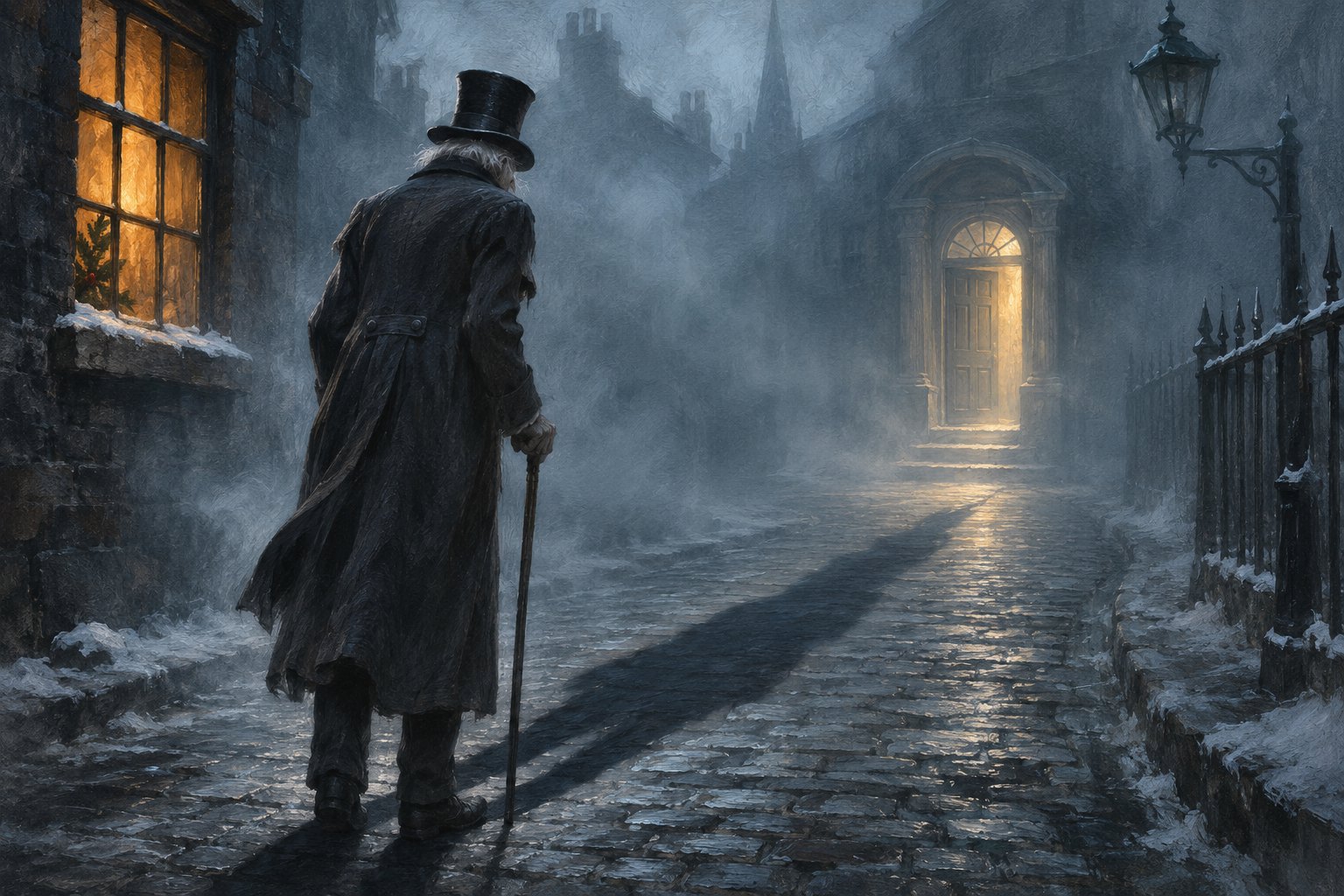
Ebenezer invites a question that goes deeper than whether a Christmas movie can be frightening: can fear make Scrooge generous, or merely make him desperate to escape punishment? Movie Nation’s description of the film as joyless and weighted toward horror puts that distinction at the center of the conversation. Darkness belongs in this story. The harder artistic challenge is giving that darkness somewhere meaningful to lead.
My view is that a frightening Scrooge adaptation succeeds when its supernatural encounters change what its protagonist notices. Terror can command his attention; it cannot, by itself, teach him how to care. That difference offers a useful way to examine the criticism surrounding Ebenezer without confusing a grim atmosphere with emotional depth.
Scope and spoilers: This is critical commentary on the film’s reported tonal emphasis, rather than a firsthand assessment of its performances or individual scenes. The character developments and quotations discussed below come from Charles Dickens’s A Christmas Carol; they are not presented as verified dialogue or scene descriptions from Ebenezer. Spoilers for Dickens’s story follow.
Scrooge’s First Defense Is Disbelief
Scrooge begins Dickens’s story with a talent for explaining inconvenient things away. Poverty can be assigned to institutions. Christmas can be dismissed as foolishness. Even a ghost can initially be treated as a digestive disturbance. His skepticism serves an emotional purpose: if nothing has a legitimate claim on him, he never has to reconsider his behavior.
“Bah! Humbug!” is memorable because it compresses an entire defensive personality into two words. Scrooge does not simply dislike festivities. He rejects the possibility that another person’s pleasure might possess value beyond its usefulness to him. His contempt allows him to feel superior while remaining untouched.
That makes horror a promising dramatic language. A supernatural visitor cannot be handled like an unwanted dinner invitation. Scrooge’s familiar methods of refusal stop working. But breaking his defenses is only the beginning of the story. An adaptation still has to show what becomes possible once those defenses fall.
Marley’s Chains Make Responsibility Visible
Jacob Marley provides the clearest argument for treating this material as horror. Dickens gives moral failure physical weight: a dead businessman carries the burden of the life he constructed. The frightening image matters because its meaning is specific. Marley has not stumbled into an arbitrary nightmare.
“I wear the chain I forged in life,” he tells Scrooge in the novella. The verb matters. Marley helped manufacture his own imprisonment through accumulated choices. His condition turns an apparently respectable career into evidence against him.
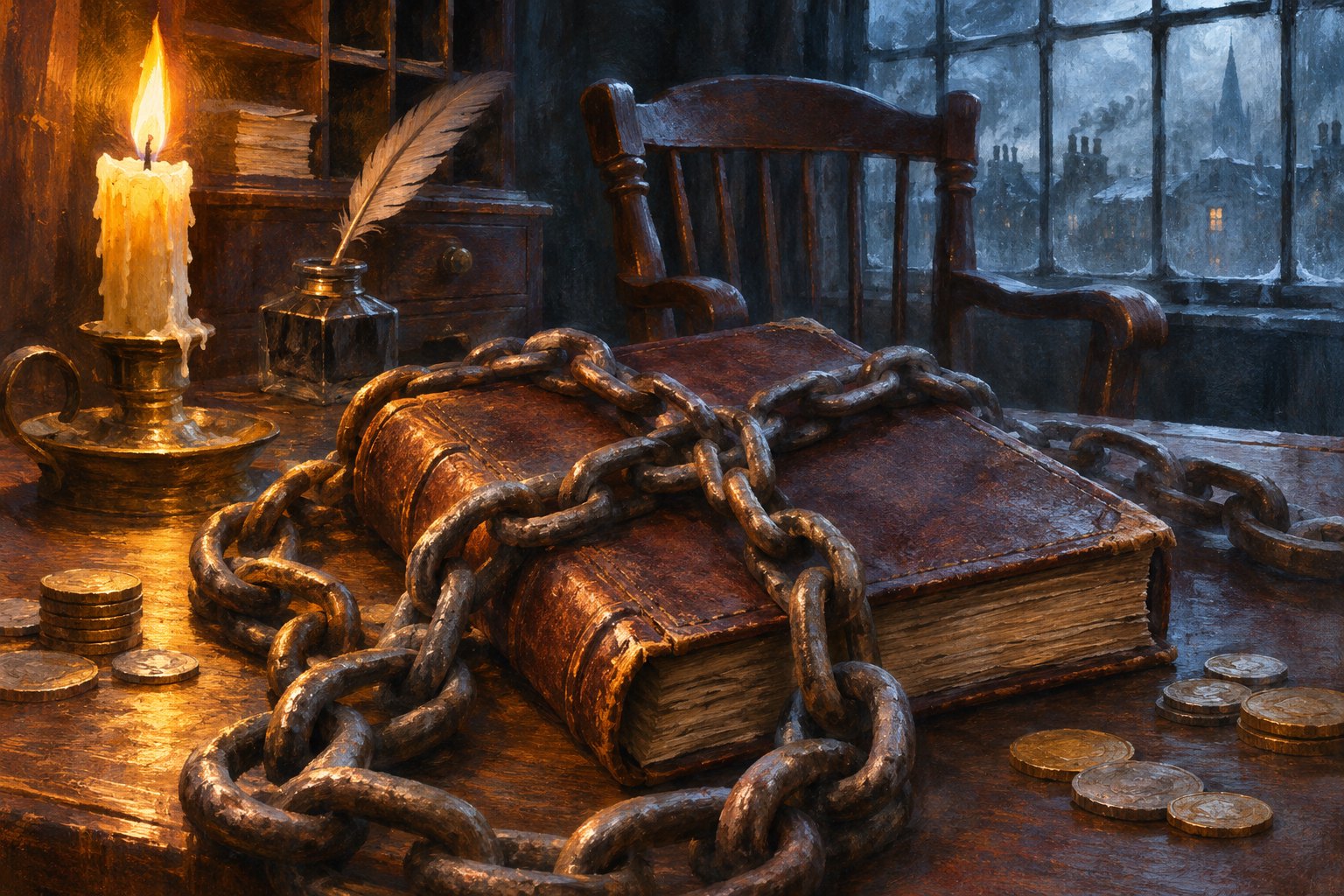
From Marley’s perspective, the deepest horror is belated understanding. He can recognize suffering but can no longer participate in ordinary human life to relieve it. His warning therefore contains something beyond menace: an attempt to help someone who still has time.
For a darker Ebenezer, that is the crucial balance to preserve. A terrifying messenger can also be an act of mercy. If the threat overwhelms that purpose, the audience may remember the apparition while losing the relationship that gives it meaning.
The Ghosts Need Different Emotional Jobs
Dickens’s visitors are powerful partly because they do not all teach the same lesson. The past confronts Scrooge with memory. The present challenges the limits of his attention. The future makes him face consequences. Their differences give his transformation a progression.
The Past: Remembering the Ability to Feel
In the novella, revisiting his earlier life exposes Scrooge to feelings he has trained himself to suppress. Loneliness, pleasure, affection, and loss become immediate again. Memory unsettles his claim that his current personality is simply the inevitable product of common sense.
This is where a uniformly punishing tone could become restrictive. Remembered happiness needs enough vitality to make its loss hurt. If every earlier experience feels equally miserable, the audience has less reason to understand what Scrooge abandoned—or why he might want to recover his capacity for attachment.
The Present: Looking Beyond Personal Injury
The present requires a different movement. Scrooge must look beyond the story of what happened to him and recognize lives continuing outside his concerns. Other people possess relationships, rituals, and pleasures that he neither creates nor controls.
That shift is essential because self-pity can resemble insight. A character may become more articulate about his wounds without becoming more considerate. The same distinction between disclosure and accountability informs our character analysis of confession in Oh, Canada. Understanding yourself is valuable, but it does not automatically settle what you owe others.
The Future: Consequences Without Reassurance
The final visitor’s silence leaves Scrooge unable to bargain his way into comforting explanations. Dickens places him before a possible future in which his absence inspires little affection. The terror concerns both mortality and the discovery that he has made himself emotionally expendable.
Here, fear reaches its strongest dramatic position because earlier encounters have established alternatives. Death is inevitable; this particular legacy is not. The distinction gives Scrooge something to change rather than merely something to dread.
Why Joy Is Part of the Argument
Calling a Christmas adaptation joyless need not mean demanding constant cheerfulness. Joy performs structural work in A Christmas Carol. It gives the audience evidence that another way of living is attractive, sustaining, and available.
Without that evidence, redemption risks looking like an emergency transaction: behave better so the nightmare stops. That is understandable self-preservation, but it is a thinner emotional destination than learning to take pleasure in other people’s happiness.
Our earlier discussion of Scrooge’s relationships with the living approaches his transformation through the people around him. The emphasis here is on the supernatural teachers: their effectiveness depends on whether they reopen his curiosity, not simply whether they overpower him.
A useful question for viewers is therefore whether Scrooge’s attention changes across the story. Does he become interested in lives beyond his own? Can he experience delight without calculating a return? Those signs reveal a transformation more persuasively than distress alone.
The Deeper Test: What Does Scrooge Want After the Fear?
Dickens gives the transformed Scrooge a promise: “I will honour Christmas in my heart, and try to keep it all the year.” Its force lies in duration. A frightening night becomes meaningful through the ordinary days that follow it.
That is the strongest interpretive test for Ebenezer and its horror emphasis. The ghosts should make Scrooge’s existing life unbearable while helping him imagine a better one. Their task involves awakening desire as well as conscience: the desire to belong, to participate, and to give without treating generosity as a loss.
My objection to joylessness as an adaptation strategy is therefore dramatic, not seasonal. A redemption story needs a destination worth reaching. Scrooge’s most consequential discovery is that kindness offers a richer life than the one he has defended so fiercely. The darkness earns its place when it makes that discovery visible.
Original content by this site's editorial team. Published: November 18, 2026 at 03:45:42 PST (Los Angeles time)