The Eagles–Giants defensive film deserves a discussion built around how plays develop, not simply how they end. A tackle identifies the player who finished the action. It does not necessarily identify the player who made that finish possible. That distinction is the most useful starting point for understanding why a defense can offer something worth discussing even when the broader conversation around a team feels exhausted.
Here, film means football game footage, rather than a scripted movie. The relevant critical tools are still attention, perspective, and close observation. But the people on screen are athletes making decisions under pressure, and their assignments cannot always be reconstructed from the image alone. This is an interpretive guide to the Eagles–Giants defensive discussion, rather than a claim to have independently graded every snap.
Give the defense its own argument
Bleeding Green Nation’s Eagles–Giants review puts the defense at the center of the conversation. That framing invites a more precise question than whether the team inspired confidence: which aspects of defensive execution deserve closer examination?
Our earlier commentary on Eagles–Giants offensive frustration and viewer fatigue considers the emotional weight of watching an attack struggle. A defensive reading needs its own standards. Offensive frustration can explain the mood surrounding a game, but it cannot establish whether a defender maintained leverage, recognized a developing route, or helped a teammate reach the ball.
My view is that the strongest defensive criticism follows relationships. Instead of assigning a heroic role to whoever appears at the end of a highlight, it asks how the front, linebackers, and secondary affected one another. That approach also makes room for mixed judgments: an effective individual action can coexist with an unresolved collective problem.
Start before the tackle
The front: creating an opportunity
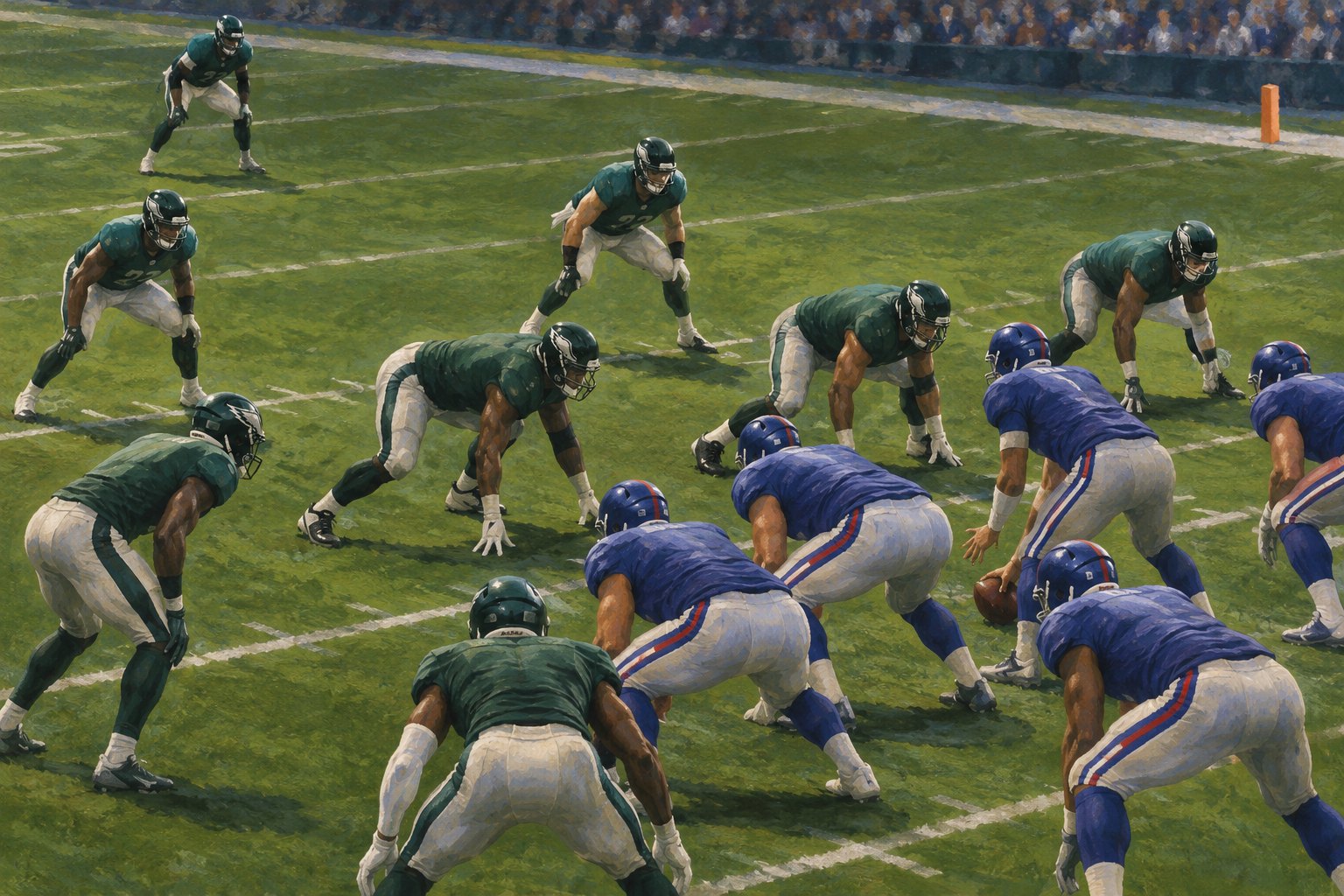
When watching Philadelphia’s defense against New York, begin a replay before contact. Notice where the defensive linemen align, how the blockers respond, and whether a running lane changes shape. Then follow the player who reaches the runner. Did he create his own path, or did someone else keep that path available?
Consider a general example, rather than a claim about a particular snap: a lineman engages a blocker long enough for a linebacker to arrive untouched. The linebacker makes the tackle, but the action has two essential contributors. Conversely, a defender can charge impressively into the backfield while leaving an opening elsewhere. Visible aggression and useful execution are not automatically the same thing.
This is where the defender’s perspective matters. The task may involve protecting space that the ball never enters. A viewer following only the runner can miss that contribution entirely. The absence of a dramatic collision does not mean nothing happened.
The linebackers: reading before reacting
A linebacker’s first movement is often more revealing than the final pursuit. Watch whether he steps forward, moves laterally, or pauses as the play develops. Then examine the information available to him: the movement of the line, the backfield action, and any receiver crossing his field of vision.
Be cautious about converting a pause into a character judgment. Hesitation can reflect uncertainty, but a player may also be respecting a competing responsibility. Without knowing the defensive call, the strongest observation is specific: he took an extra step before pursuing, or a blocker reached him before he could close the lane. Calling him uninterested goes beyond what that image establishes.
Read pressure and coverage together
Pass defense becomes easier to understand when the rush and coverage remain in the same conversation. A quarterback needs both somewhere to throw and enough time to throw there. Defensive success can come from disrupting either requirement, and the two parts often reinforce each other.
For the Eagles–Giants matchup, a useful viewing question is whether a pressured throw began with an immediate rush victory or with the quarterback having to wait. Those are different sequences. Both may be valuable, but credit should follow the sequence that the footage actually supports.
The same restraint applies when a pass is completed. A receiver catching the ball near a defender does not, by itself, prove that defender failed his assignment. Coverage can involve shared responsibilities and exchanges that are difficult to infer from a single angle. Describe the separation first. Assign responsibility only when the evidence supports it.
A practical way to watch the defensive footage
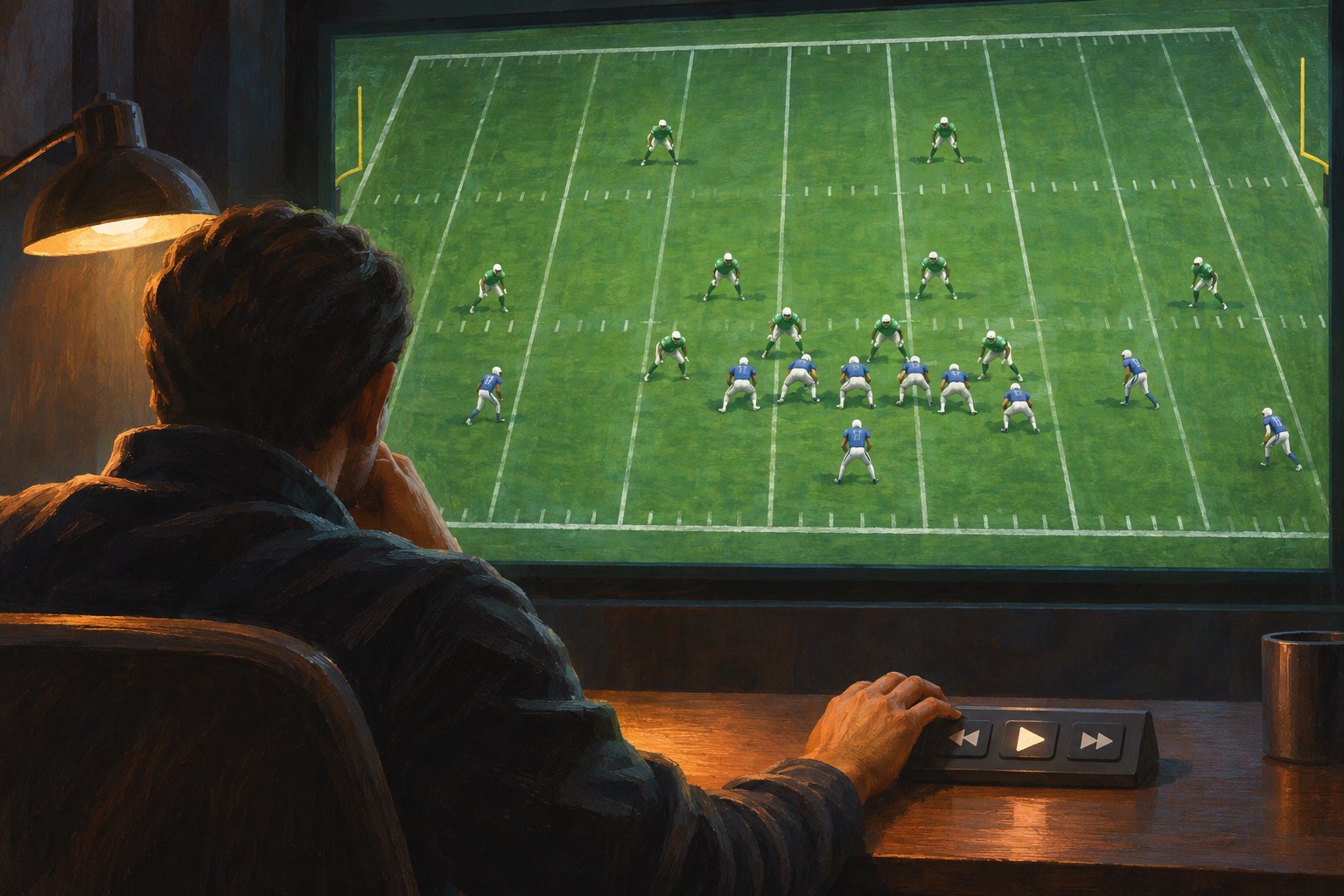
Repeated viewing is most useful when each pass answers a different question. Otherwise, replaying the same dramatic finish can simply make an initial impression feel more certain.
- Watch the complete action at normal speed. Establish where the ball goes and how quickly the play develops before isolating a player.
- Return to the alignment. Note the defenders’ starting positions and any offensive movement that changes the picture.
- Follow one relationship. Watch a blocker and defender, a linebacker and running lane, or a receiver and nearby coverage players.
- Reconnect that relationship to the outcome. Ask whether it created, limited, or merely accompanied the result.
- Record what remains uncertain. An obstructed view or unknown assignment should narrow the conclusion.
These steps keep the Eagles–Giants discussion anchored to observable action. They also prevent slow motion from becoming unfair. A decision that looks obvious after several pauses may have required recognizing several competing signals in a fraction of a second.
One good play is an example, not a verdict
A highlight establishes that something happened. Establishing a dependable strength requires a broader sample. Does the same kind of execution appear against different looks? Does it survive a change in offensive approach? Are the unsuccessful snaps failing for a consistent reason?
Those questions matter before describing any defensive performance as a turning point. They also matter before dismissing it. A useful contribution does not become meaningless simply because it falls short of proving a lasting transformation.
There is a related viewing problem in our discussion of Buffalo’s Vikings win as a mini movie: knowing the ending changes how we interpret everything leading toward it. With defensive footage, the remedy is to judge each decision within the situation the player faced, then decide how those decisions add up.
What makes this defense worth discussing
The deeper value of returning to Eagles–Giants is the opportunity to distribute attention more fairly. Football rewards some contributions with obvious endings: a tackle, a hurried throw, an interrupted route. Other contributions make those endings possible while remaining peripheral to the camera’s apparent story.
My preferred reading of defensive film treats that interdependence as the central subject. The most revealing player may be the one who makes a teammate’s decision simpler. The most revealing failure may be a disagreement between responsibilities rather than an isolated physical defeat.
That is a demanding but useful standard for the Eagles’ defense: identify what worked, explain the visible mechanism, and leave room for what the footage cannot settle. A performance becomes worth discussing when the discussion helps us see more than the ball.
Original content by this site's editorial team. Published: November 11, 2026 at 19:19:53 PST (Los Angeles time)