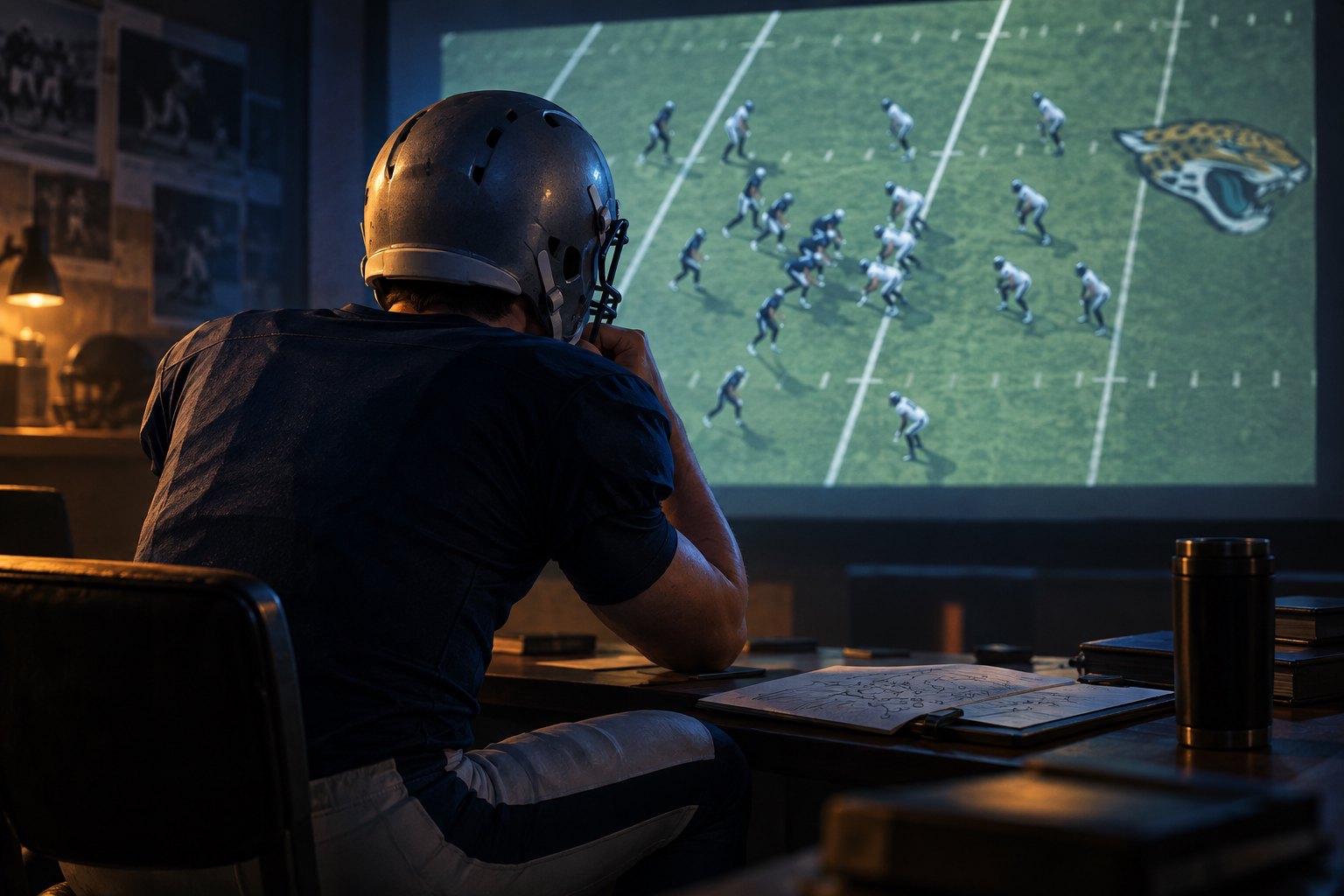
Drake Maye’s performance deserves close examination after New England’s loss to Jacksonville, but the result alone cannot explain his decisions. The Patriots’ After Further Review coverage identifies three subjects for that examination: Maye’s quarterback play, defensive coverage splits, and shorter observations from the game. The useful question connecting them is how individual decisions fit into what everyone else was doing.
This is commentary on how to evaluate that breakdown, rather than an independently charted assessment of the game. No verified play-by-play findings or coverage percentages are presented here. In this context, film means football footage: there is no feature-film plot, scripted dialogue, or fictional character arc to review.
Start With Maye’s Available Choices
A quarterback is the easiest player to follow because the ball repeatedly returns attention to him. That visibility can make responsibility look simpler than it is. To judge Maye fairly, a review needs to distinguish what happened after a throw from what was reasonably available when he committed to it.
Consider a hypothetical incompletion. The ball might miss an available receiver, arrive after a passing window closes, or go safely out of bounds when the alternatives are worse. Those outcomes can look similar in a brief highlight. They raise different questions about accuracy, timing, and judgment. None should be assigned to Maye in this game without the relevant footage.
The most revealing pause is often before release. Where are the defenders? Is a receiver already separating, or will that separation appear only after the quarterback has started throwing elsewhere? Does the pocket still offer room to step forward? A receiver who looks open at the end of a replay was not necessarily a viable target at the decision point.
That distinction is especially important when interpreting body language. A head turn can suggest where a quarterback is looking, but it does not establish the entire progression or his instructions. A careful review describes the visible action first and marks its interpretation as an inference.
Watch the Play From More Than One Perspective
Maye should remain central to an evaluation of his performance, but he cannot be its only subject. Receivers influence defenders through route depth and spacing. Protection influences how long a decision remains available. Defenders react to one another as well as to the ball. Looking only at the quarterback removes much of the evidence needed to assess him.
This resembles the problem of perspective in screen criticism. Our discussion of whose perspective organizes a familiar story asks how attention shapes interpretation. In football footage, the camera can create a similar imbalance: the player kept in frame appears to explain an action whose causes may extend beyond it.
A useful second viewing follows the intended receiver. A third follows the nearest defender. When the angle permits, another viewing examines protection. The purpose is to locate the point at which the play’s options changed, then determine whose visible action contributed to that change.
Coverage Splits Need a Clear Definition
Defensive coverage splits sound authoritative because they organize complicated movement into categories. Before drawing a conclusion, however, establish what the categories measure. Are they describing the coverages Maye faced or the coverages New England used? Are they counting passing attempts, dropbacks, or another set of snaps? Those are different analytical questions.
As a general football distinction, man coverage emphasizes responsibility for particular eligible receivers, while zone coverage emphasizes areas and the threats entering them. Actual assignments can combine those principles. A defense’s alignment before the snap also need not reveal how its players will distribute responsibilities afterward.
That makes the denominator essential. A percentage drawn from pass attempts may exclude sacks and scrambles. A dropback-based measure can capture those outcomes, but it still needs a consistent definition. Two tables can describe the same game differently without either being deliberately misleading.
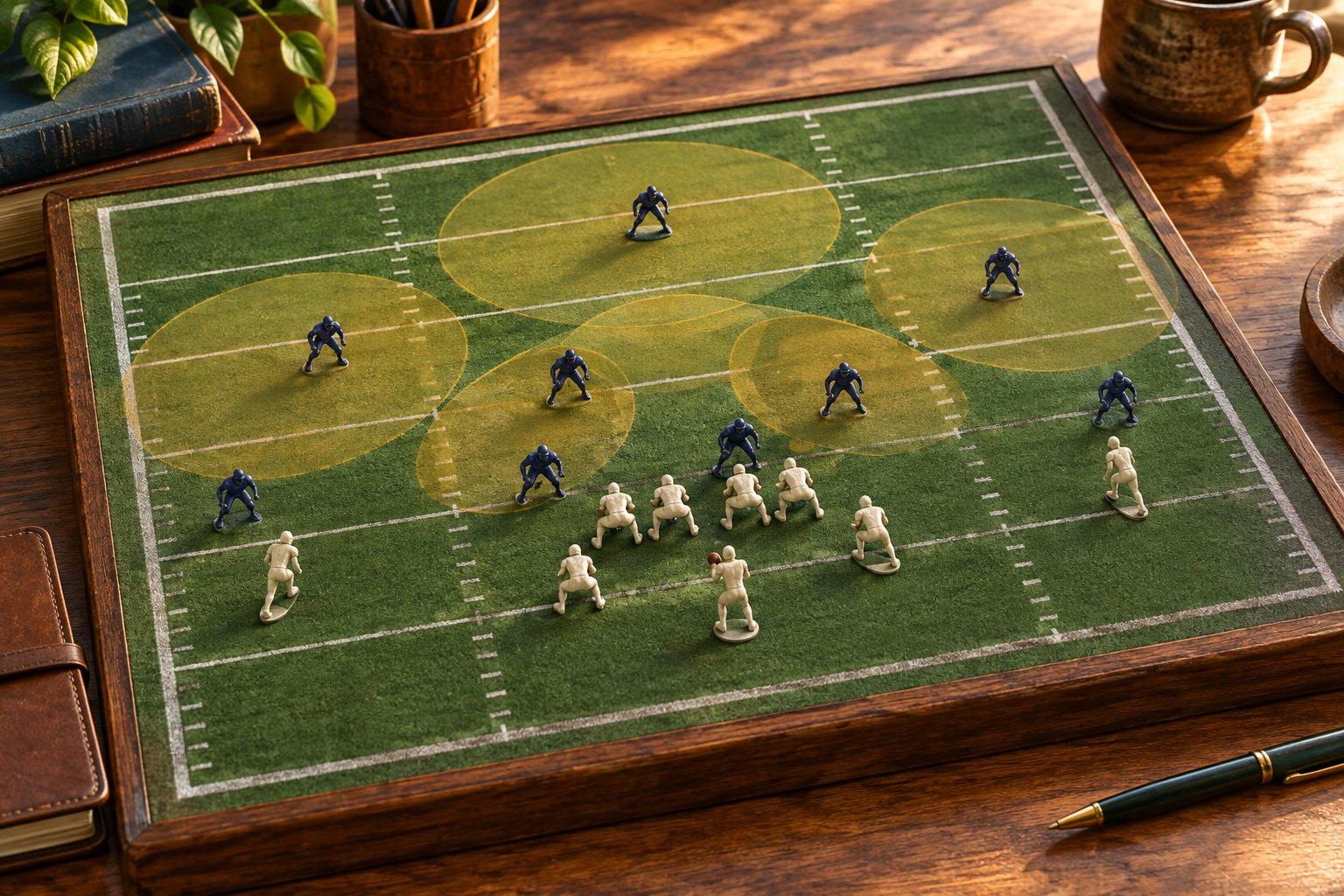
Frequency and effectiveness also answer different questions. How often a defense used a coverage does not, by itself, explain whether the choice worked. Down, distance, field position, and the offense’s response all matter. A short completion might represent a defensive concession that preserved the situation, or an offensive success that sustained a possession.
For the Jaguars loss, the responsible approach is to require those definitions before treating a coverage split as an explanation. Without verified figures and accompanying examples, assigning a preferred coverage or a specific tactical failure would go beyond the evidence.
Quick Film Notes Should Remain Specific
Short observations are valuable when their claims stay close to what the footage shows. A note about one release, one protection exchange, or one defender’s movement can sharpen a viewer’s understanding. Trouble begins when that observation becomes a sweeping verdict about a player’s ability or an entire unit’s identity.
A useful film note contains three elements:
- Observation: the movement or action visible in the sequence.
- Consequence: how that action appears to affect the available space or timing.
- Limit: what the angle, missing assignment information, or small sample prevents the viewer from establishing.
For example, in a hypothetical sequence, a defender stepping toward an underneath route might help open space behind him. That does not automatically prove he abandoned his assignment. The relevant question is whether another defender was expected to occupy that space. Describing the gap is easier than identifying responsibility for it.
Small moments can carry substantial meaning, but context supplies that meaning. The same principle underlies our examination of how a brief moment gains force through surrounding reactions. In sports footage, watching the response can be as revealing as watching the initiating action.
A Practical Order for Rewatching Maye
For readers returning to available footage, a consistent viewing order helps prevent the final result from determining every judgment.
- Watch at normal speed. Register how quickly the situation develops before slowing it down.
- Identify the decision point. Evaluate available options before the throw or escape, rather than after the outcome becomes obvious.
- Follow movement away from the ball. Check whether receivers and defenders outside the central action change the interpretation.
- Separate choice from execution. A sensible target selection and accurate placement are related but distinct questions.
- Look for repetition. Treat an isolated example as an example until comparable plays support a broader conclusion.
What the Second Viewing Should Deliver
My view is that the strongest review of Maye after Jacksonville should make responsibility more precise. It should explain where a decision was supported by the situation, where execution deserves scrutiny, and where the available view cannot settle the question. Defensive coverage notes should meet the same standard.
A loss supplies an ending; it does not supply every cause. The deeper value of film study lies in recovering the choices that existed before that ending was known. For Maye and the players around him, that is the difference between a memorable impression and an assessment that can withstand another viewing.
Original content by this site's editorial team. Published: September 29, 2026 at 01:11:40 PDT (Los Angeles time)