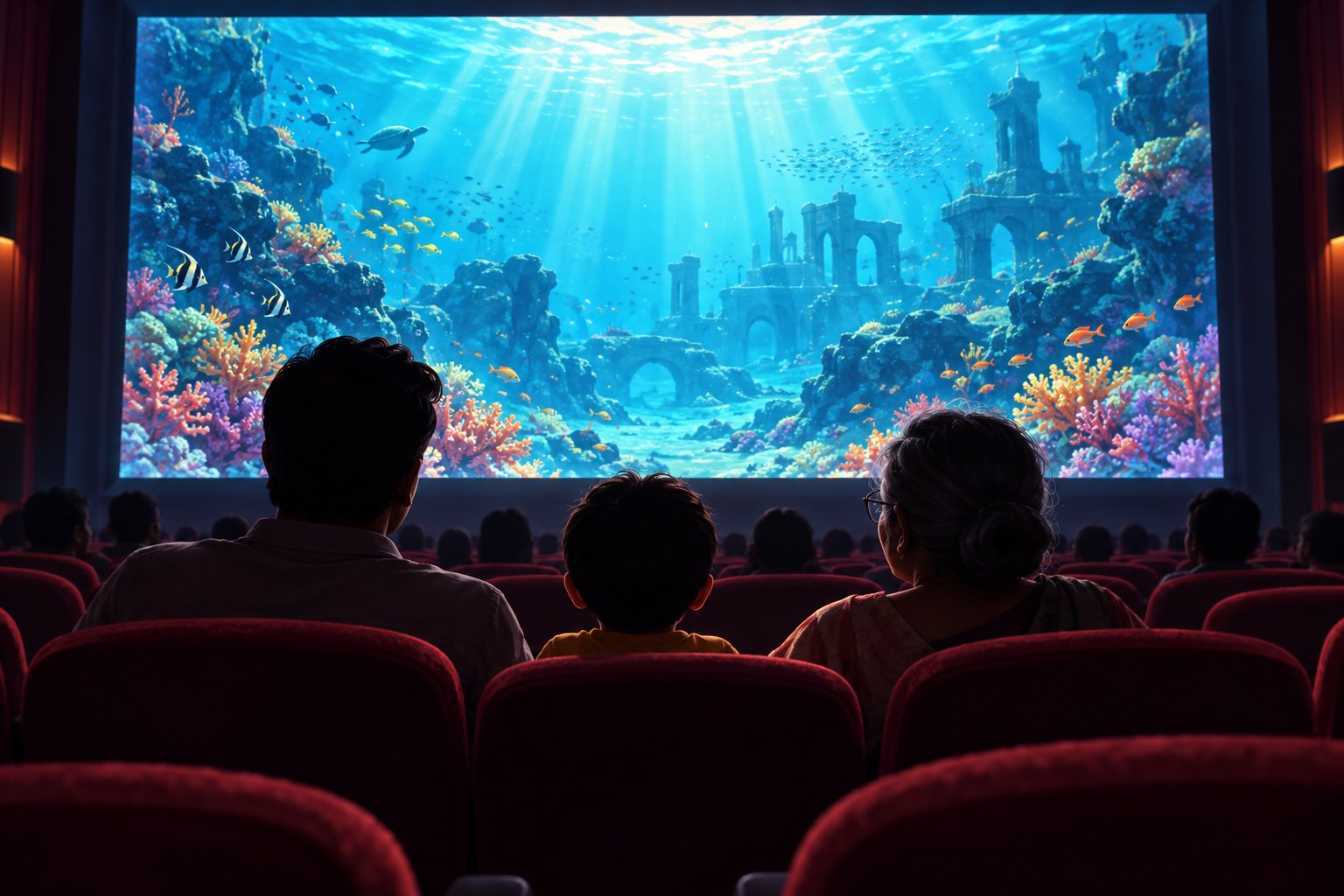
Doraemon’s journey into Indian cinemas carries an expectation that goes beyond a bigger screen. Nobita’s undersea adventure offers families the possibility of sharing a familiar imaginative world while discovering something new within it. Variety’s reporting frames that ambition around the franchise’s ability to connect generations. The interesting question is how a story earns that connection through its characters.
Doraemon the Movie: New Nobita and the Castle of the Undersea Devil has a premise well suited to that challenge: a childhood outing opens onto a world where being friendly does not automatically make someone trusted. Its potential lies in the distance between those two things.
Scope and spoilers: This is a critical preview based on the documented story setup and reporting about the Indian theatrical release. It discusses premise-level spoilers, without offering a verdict on the completed film’s pacing, performances, or ending. No unverified dialogue is presented as a movie quotation.
A Family Outing Begins With a Familiar Disagreement
The official Japanese synopsis starts with Nobita and his friends disagreeing about where to camp during summer vacation. Doraemon proposes an ocean adventure. Using his gadgets, including an underwater buggy, the group explores the seabed. Discovering a sunken ship leads them to El, an inhabitant of the underwater Mu Federation, whose people distrust those from the surface. News that the threatening castle has become active expands the danger.
That opening disagreement is a useful dramatic foundation. Before there is a large threat, there is the ordinary problem of several children wanting different things. From Nobita’s perspective, the adventure begins inside a recognizable social situation: how to have an exciting holiday together when everyone has an opinion.
My reading of this setup is that its modest beginning gives the spectacle somewhere to grow. A story can announce that the world is in danger, but a shared vacation gives viewers an immediate reason to care about the people facing that danger. The friends already have something small, specific, and understandable at stake: their time together.
Doraemon Can Open the Way, but Friendship Still Takes Work
Doraemon’s role in the premise is to make an impossible experience available. His intervention changes the group’s practical circumstances. An inaccessible environment becomes somewhere they can visit.
As a storytelling device, that is wonderfully efficient. It also establishes a useful distinction for character analysis. Equipment can solve a physical obstacle; another person’s suspicion calls for a different response. The most interesting question to carry into this adventure is whether the characters recognize when their problem has changed.
For Nobita, that creates the possibility of meaningful participation without requiring him to become the strongest or most technically capable person present. In a story about meeting strangers, attention, patience, and the willingness to reconsider an assumption can matter. Those are the qualities I would look for in his decisions, rather than treating the size of the threat as a measure of his development.
This is also where a family film can respect its youngest viewers. Children understand that being able to approach someone does not mean being welcomed. They encounter that distinction in classrooms, playgrounds, and unfamiliar groups long before they have the vocabulary to describe it.
El Changes the Meaning of Exploration
The official character description identifies El as a Mu Federation soldier assigned to watch Doraemon and his companions. That position creates an immediate difference in perspective: the visitors are having an adventure, while someone else is responsible for observing their arrival.
From El’s side, the situation invites questions about duty and judgment. What does a person owe the community that trusts him? What happens when an individual encounter complicates an inherited belief? The premise raises those questions; the finished film must answer them through behavior.
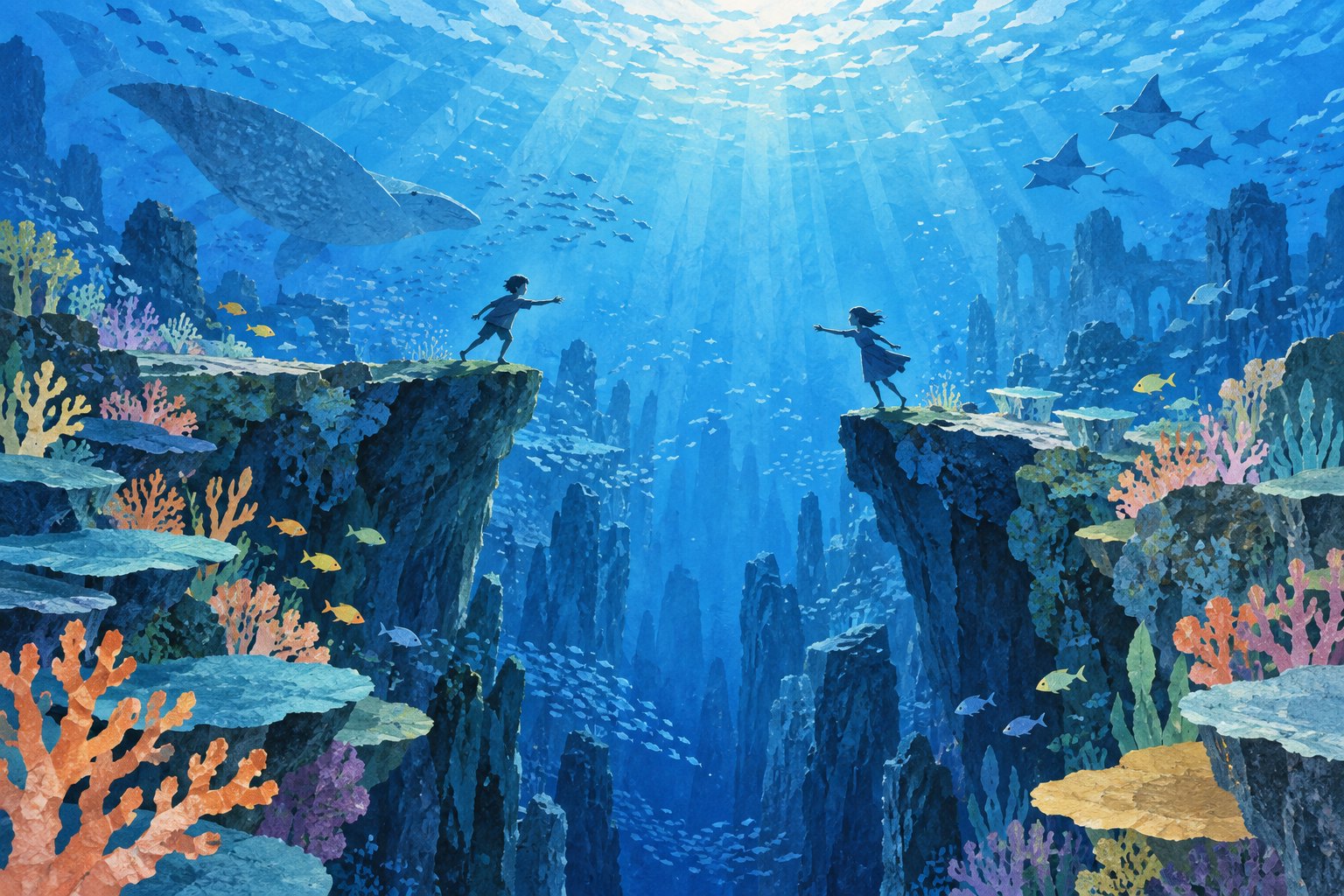
That shift matters because exploration stories can become complacent about their heroes. A destination exists before the protagonists arrive. Its inhabitants have concerns that do not begin with the visitors’ curiosity. Giving those concerns dramatic weight would make the underwater setting feel inhabited rather than simply available for discovery.
Our discussion of how a film setting becomes a place that matters to its characters approaches a related issue. Here, the question is especially concrete: can the audience understand the same encounter from both sides?
What Connecting Generations Actually Requires
“It transcends generations,” the phrase highlighted in Variety’s headline, is an appealing description of Doraemon’s reach. It is also a claim worth examining. Adults and children can recognize the same character while wanting different things from the experience.
An adult may arrive with memories attached to a familiar world. A child may be encountering its possibilities with far less accumulated affection. A successful shared viewing gives both an immediate dramatic reason to pay attention. Recognition can welcome the audience, but it cannot carry every scene.
The undersea premise offers a promising meeting point. Wonder is accessible without extensive background knowledge. Disagreement, uncertainty, and the desire to be accepted are similarly legible. Adults may interpret those experiences through memory; children may recognize something that happened yesterday.
For me, the strongest version of intergenerational storytelling preserves the child’s perspective. It allows a small embarrassment or a fragile friendship to feel consequential. Adults can rediscover that scale of feeling without the film repeatedly explaining its importance to them.
What to Look for on the Big Screen
The theatrical setting makes visual scale part of the invitation, but scale becomes expressive when it changes how we understand a character. An immense environment can make curiosity feel exhilarating, loneliness palpable, or another person’s presence reassuring.
When watching, pay attention to whose reactions guide a discovery. Does the scene give the friends different responses? Does a moment of danger reveal a relationship? Does a pause allow uncertainty to register before the action resumes? Those choices distinguish attractive scenery from effective visual storytelling.
For families deciding whether to attend, the practical checks remain local: the screening language, age guidance, running time, and available showtimes. Familiarity with Doraemon alone does not establish how comfortable an individual child will be with a feature-length adventure. Our guide to choosing films around the viewing experience you want offers a useful broader principle: start with the audience’s needs.
The Deeper Promise Beneath the Adventure
The most compelling interpretation of this premise concerns the limits of access. Reaching an unfamiliar place is an achievement; understanding the people there requires further effort. The ocean provides the distance, while the characters supply the harder work of crossing it.
That is the possibility that makes this Indian cinema outing worth considering beyond nostalgia. A child can follow the excitement of discovery. An adult can recognize how easily curiosity becomes assumption. If the film makes room for both experiences through specific choices and earned trust, its connection across generations will have a dramatic foundation. The decisive question is whether these characters learn to see one another more clearly.
Original content by this site's editorial team. Published: October 2, 2026 at 03:42:21 PDT (Los Angeles time)