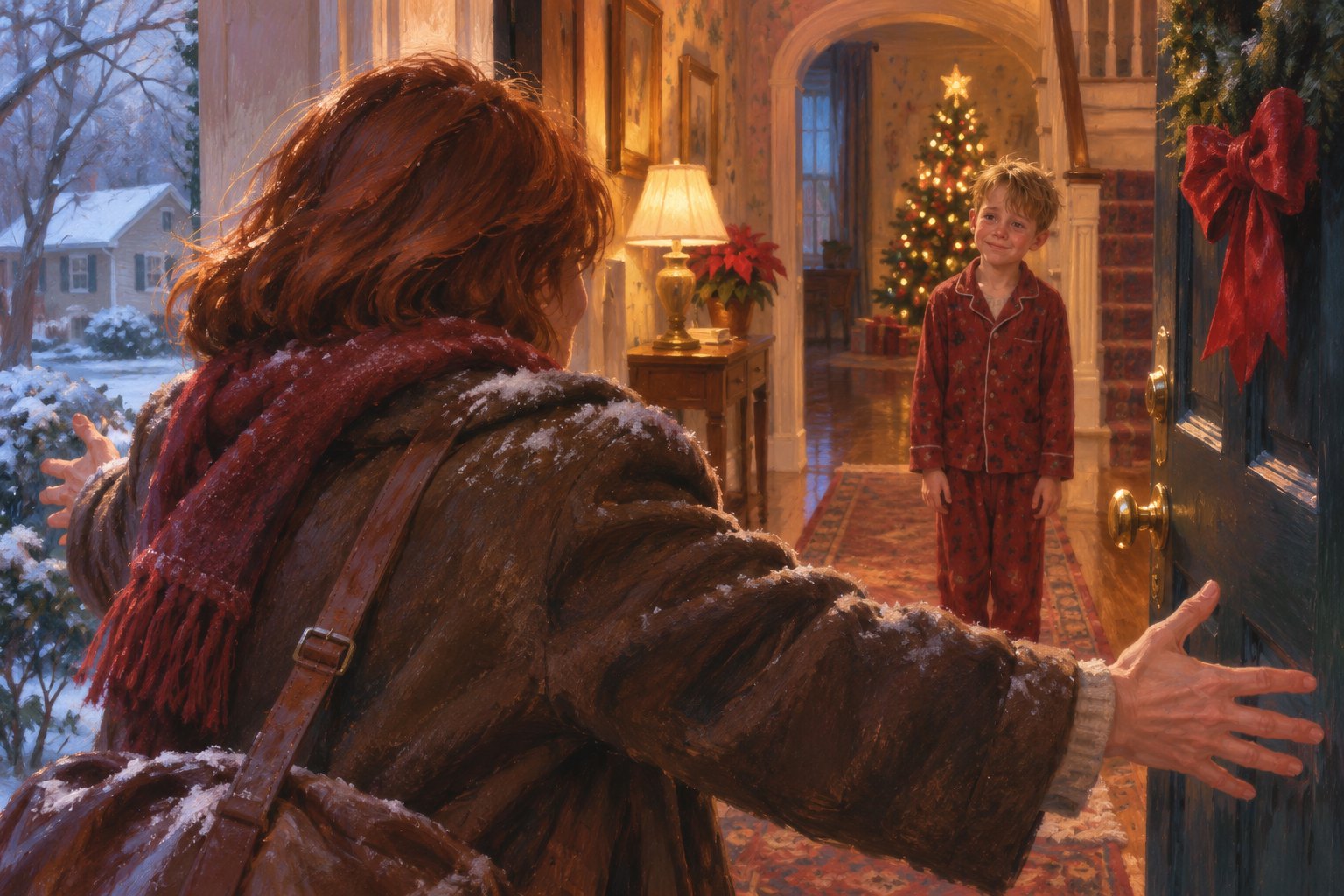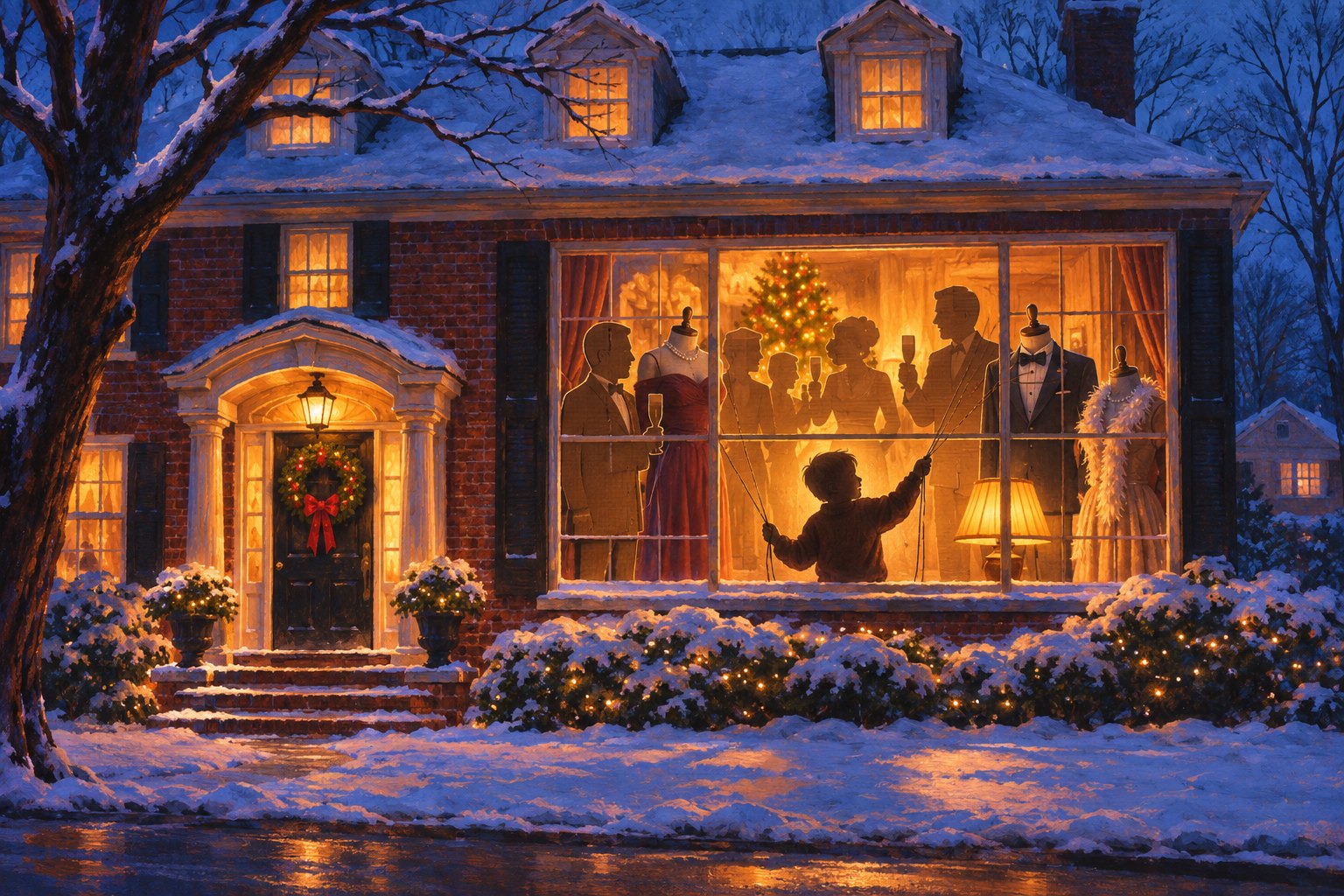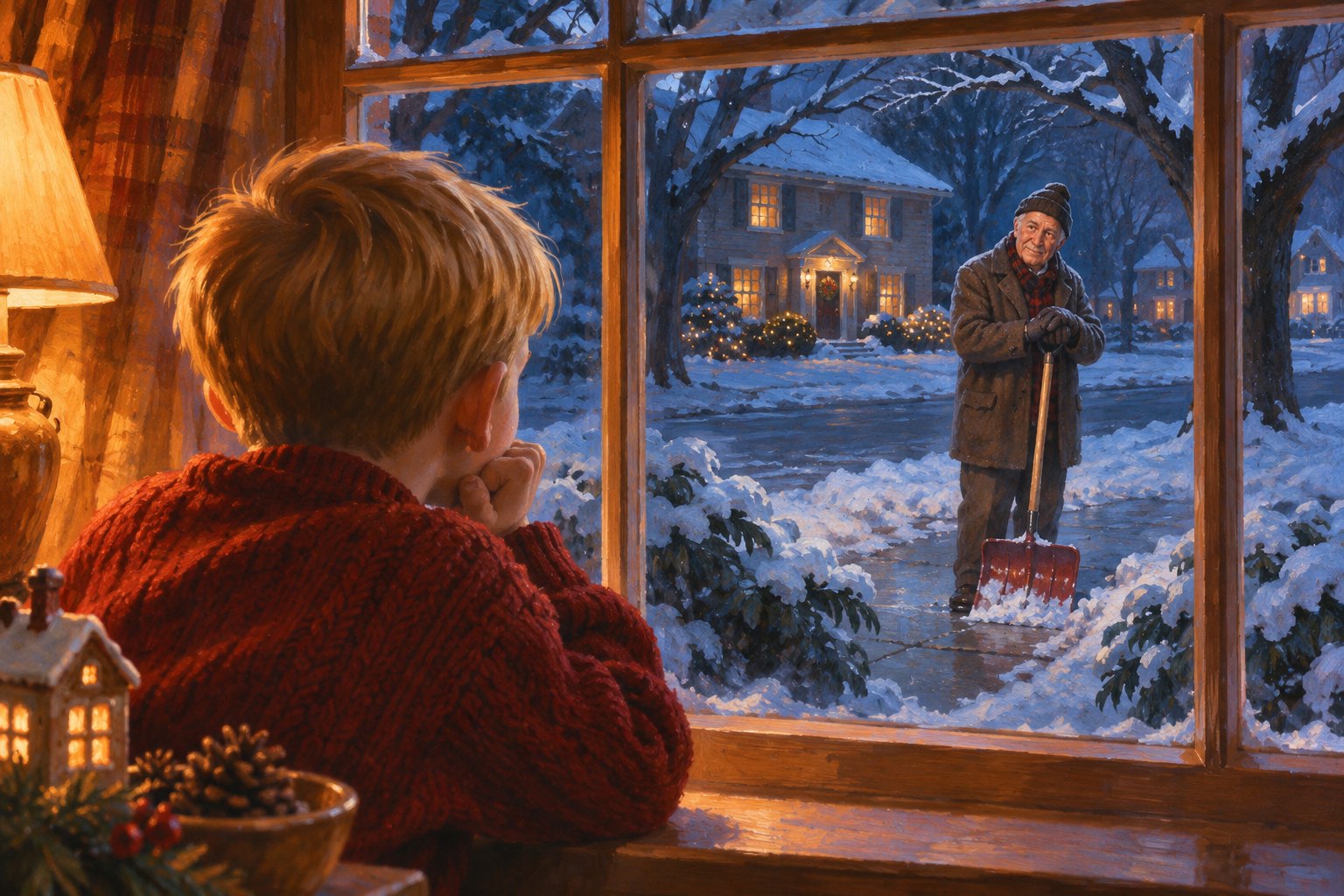
A Home Alone reboot is reportedly in the works at Disney involving Macaulay Culkin, Seth Rogen, and Evan Goldberg, according to Variety. That development news raises an appealing creative question: which part of Kevin McCallister’s childhood adventure deserves another look? My choice is his unreliable judgment about other people. Before Kevin becomes an expert at defending a house, he has to discover that a reassuring adult can be dangerous and a frightening neighbor can be kind.
The reported project should not yet be judged as a finished movie. Its premise, performances, and treatment of Kevin remain matters for the film itself to establish. Revisiting the original, however, offers a useful standard: a new installment should give its characters something meaningful to misunderstand.
Spoilers follow for the original Home Alone, including its ending. Discussion of the new project is creative analysis, not a description of its plot.
Harry and Marley Reverse Kevin’s First Impressions
The original sets up an unusually effective contrast. Harry enters the McCallister household dressed as a police officer, using apparent authority to gather information. Meanwhile, Kevin’s brother Buzz supplies a lurid story that makes their elderly neighbor Marley seem murderous. One man benefits from an official-looking costume; the other suffers from a story told about him.
Seen through Kevin’s perspective, these introductions expose a problem that household independence cannot solve. He has inherited categories for understanding adults, but those categories are unreliable. A uniform offers reassurance. An older brother sounds knowledgeable. A silent neighbor leaves room for the imagination to supply everything else.
What makes this more than a tidy lesson about appearances is the movie’s willingness to participate in Kevin’s mistake. Marley’s early appearances feel ominous. The audience understands the conventions of a children’s comedy, yet the presentation still borrows the emotional pressure of a scary story. We experience the boy’s apprehension before being invited to reconsider its basis.
My favorite consequence of that approach is that growing up becomes a process of revision. Kevin does not simply acquire courage and become correct about everything. He has to recognize that confidence and understanding are separate achievements.
Kevin’s Bravery Begins as Something He Says Out Loud
“I’m not afraid anymore!” is a wonderfully revealing declaration. Kevin wants the statement to make itself true. Culkin’s performance makes that impulse funny without stripping it of vulnerability: the boy is trying on a more capable version of himself and hoping the fit will improve.
That distinction matters when assessing the original’s comedy. Kevin’s resourcefulness is entertaining partly because it coexists with immaturity. He can solve practical problems while continuing to misunderstand emotional ones. His abilities develop unevenly, which makes him recognizable as a child rather than merely a miniature action hero.
Our earlier discussion of Kevin’s talent for staging convincing illusions examines his ability to manage what others see. The trust question approaches him from the other direction: how well does he interpret what he sees? His imagination is both a useful resource and a source of error.
A new film involving Culkin could find substantial comedy in that contradiction. The relevant challenge would be to preserve fallibility. A character who already understands every threat and every person leaves little room for discovery, however elaborate the physical jokes become.
The Church Scene Lets Both Characters Be Afraid
When Kevin and Marley talk in church, the story changes its terms. Marley is estranged from his son and fears that reaching out will lead to rejection. Kevin, who has been treating this man as a source of terror, encounters an adult with an anxiety of his own.
“You’re never too old to be afraid,” Marley tells him. The line punctures Kevin’s assumption that adulthood means graduating from fear. It also prevents the conversation from becoming a simple exchange in which a wise elder explains life to an ignorant child. Both characters have something the other needs.
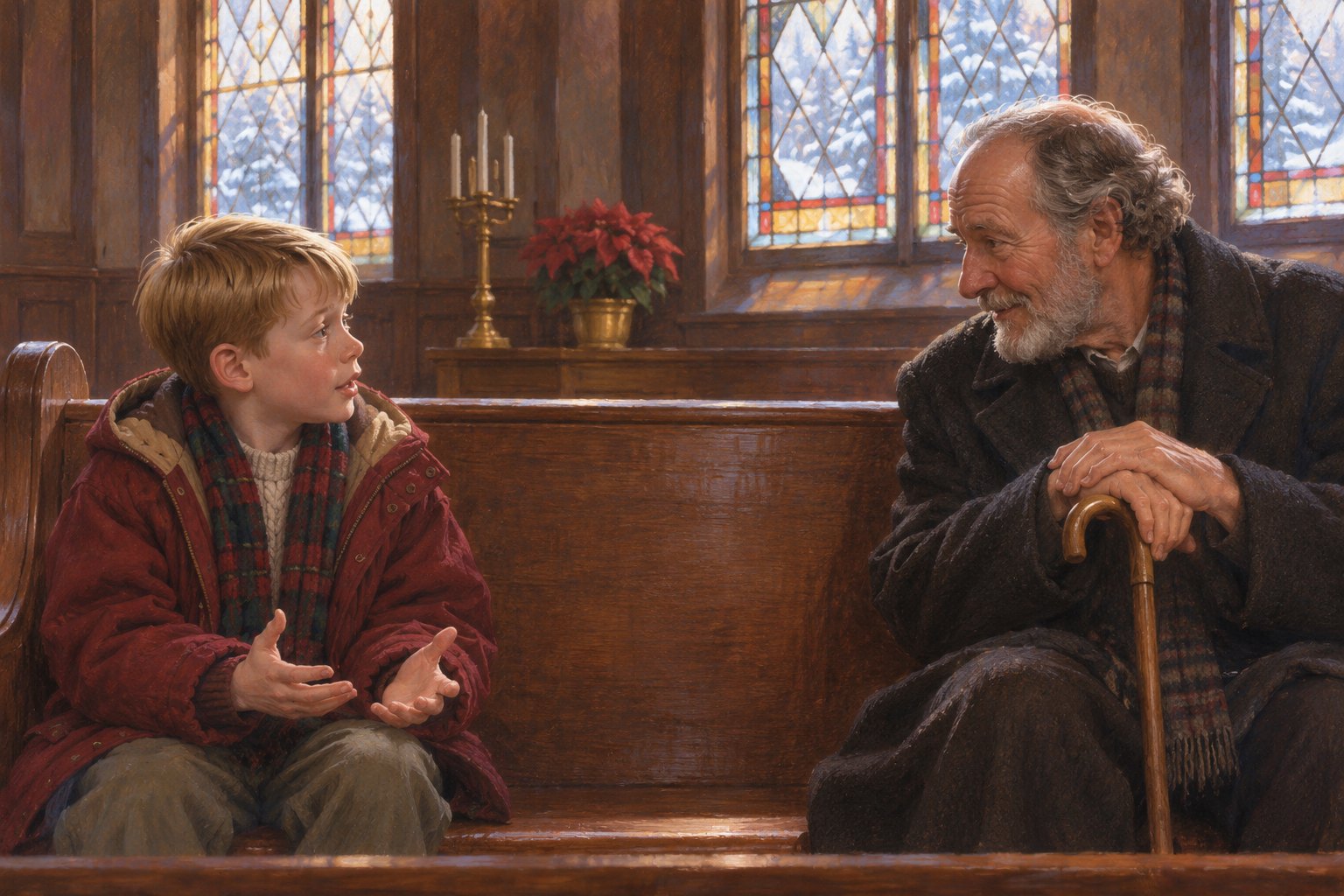
Kevin encourages Marley to contact his son. The advice has the directness of a child who has not yet learned all the ways adults justify postponing painful conversations. Marley, in turn, gives Kevin space to acknowledge complicated feelings about his family. Neither needs to deliver a grand speech. Listening is enough to alter their relationship.
For me, this is the original’s most persuasive account of maturity. Kevin gains something by allowing his first impression to collapse. Marley gains something by taking a child seriously. Their difference in age becomes a reason to exchange perspectives rather than a fixed hierarchy of wisdom.
The scene also earns its quietness. A comedy built around noise, interruption, and physical escalation briefly allows attention to become the main action. That change of pace gives the later mayhem emotional context without asking the audience to stop enjoying it.
The Rescue Complicates Kevin’s Victory
“This is my house. I have to defend it.” Kevin’s resolve gives the final confrontation its satisfying clarity. Yet the film ultimately refuses to make self-sufficiency his complete achievement. Harry and Marv eventually catch him, and Marley intervenes with his snow shovel.
The reversal is precise: the neighbor associated with an imagined threat becomes the person who stops a real one. Even the shovel changes meaning. An object made sinister by Buzz’s story becomes an instrument of rescue. The payoff works because the film has already changed our understanding of the man carrying it.
There is a limitation here worth acknowledging. Marley’s intervention is an extremely convenient escape from a dangerous situation. But convenience does not make it emotionally arbitrary. The church conversation has prepared us to recognize him as a person capable of care, so his arrival completes an existing relationship rather than merely solving a mechanical problem.
That makes the ending richer than a fantasy in which a child proves adults unnecessary. Kevin’s ingenuity matters, and so does another person’s help. As our analysis of the emotional stakes behind Kevin’s traps argues, physical invention needs a human reason to remain memorable.
What the Reboot Could Learn From the Final Window
Kevin’s glimpse of Marley reunited with his family completes the exchange between them. The neighbor has helped him survive; his encouragement has offered the neighbor a way forward. Kevin can now look across the street and see a relationship where he previously imagined a monster.
That is the deeper achievement a new Home Alone could pursue. Culkin, Rogen, and Goldberg’s involvement is a reason for curiosity, but familiar names alone cannot supply this kind of dramatic movement. A fresh story needs an assumption worth challenging, a relationship that changes through attention, and comedy that grows from the characters’ incomplete understanding.
The original’s most durable insight is that being capable does not eliminate the need for other people. Kevin learns to protect his home while becoming less certain that he understands everyone outside it. A reboot that gives its characters comparable room to reconsider themselves would have something valuable to add to the franchise.
Original content by this site's editorial team. Published: November 20, 2026 at 21:28:59 PST (Los Angeles time)