A Home Alone sequel involving Macaulay Culkin is in the works at Disney, according to Deadline. That development invites an immediate question: what makes Kevin McCallister worth revisiting beyond the familiar sight of burglars getting flattened? The original film offers a particularly useful answer. Kevin is a gifted showman who discovers that controlling what adults see and hear can briefly give him power over them.
The reported project is a development story, not a finished film to review. The analysis here concerns the 1990 original, directed by Chris Columbus and written by John Hughes, and the creative possibilities its character work suggests. Any discussion of what a sequel should do is critical judgment, not a description of its plot.
Spoilers follow for the original Home Alone, including its ending.
Kevin’s First Mistake Is Believing His Own Story
When Kevin discovers that his family has left without him, his explanation is wonderfully revealing: “I made my family disappear.” The audience understands the chain of accidents behind his abandonment. Kevin interprets an empty house as proof that his angry wish worked.
That gap establishes more than a joke. Kevin wants to believe he can reshape reality because, in the crowded household, he struggles to influence even an ordinary conversation. His complaints are swallowed by noise, impatience, and assumptions about his incompetence. Alone, he suddenly gets to decide what everything means.
Culkin makes this transformation funny by allowing certainty to arrive before understanding. Kevin can look completely satisfied with a conclusion that the audience knows is wrong. His confidence has the force of a proclamation, while his circumstances remain precarious.
To my eye, this is the performance’s essential balance. Kevin is resourceful without possessing an adult’s judgment. If a continuation preserves only his ingenuity, it risks losing the mismatch between how powerful he feels and how vulnerable he remains.
The Fake Party Turns the House Into a Stage
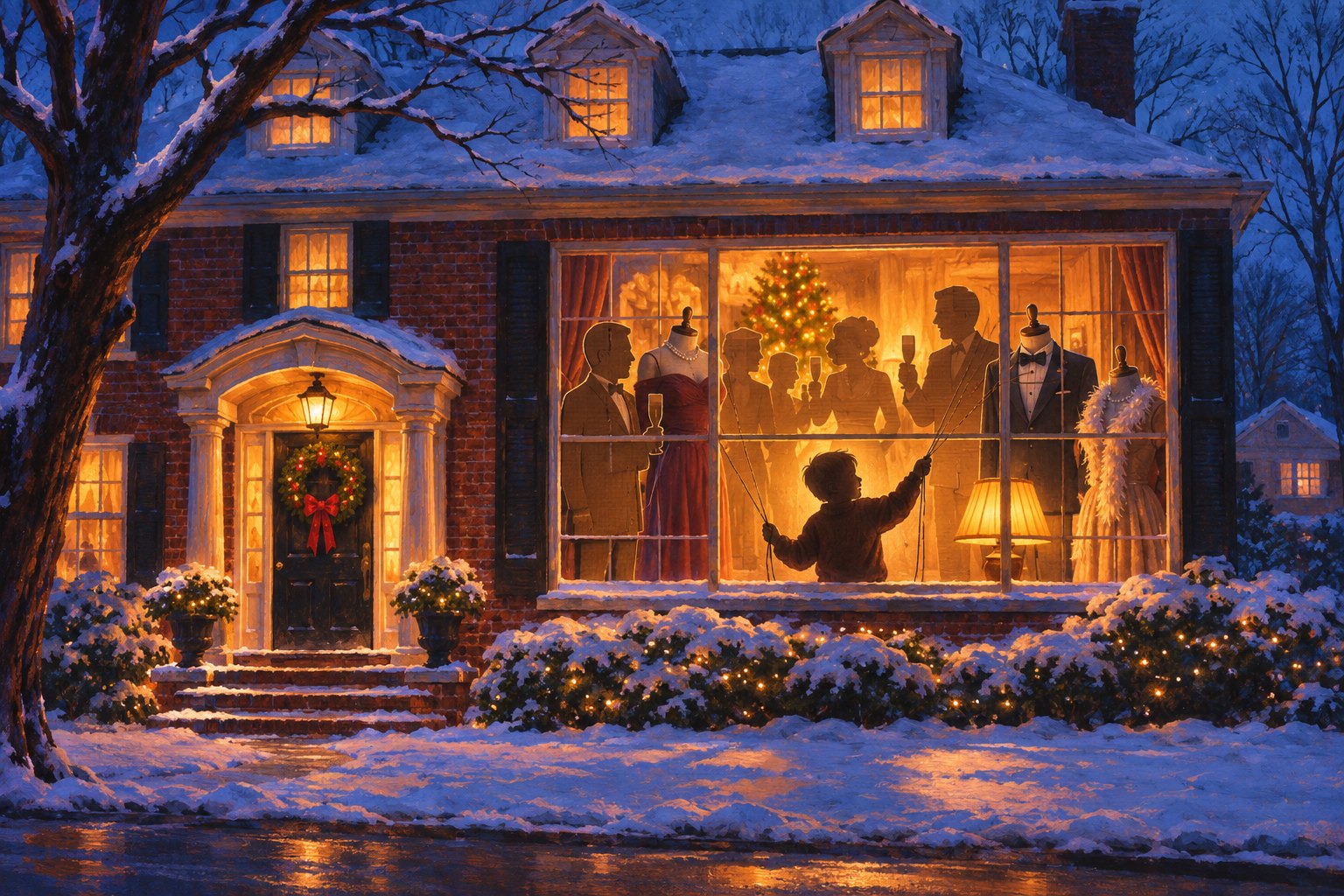
The staged party is one of the original’s smartest comic sequences. Kevin uses mannequins, a cardboard basketball-player cutout, movement, and music to suggest that the house is occupied. Harry and Marv receive a carefully arranged view through the windows. We get access to the mechanism behind it.
Kevin’s achievement depends on understanding his audience. The burglars do not need to meet convincing party guests. They only need enough evidence to conclude that breaking in would be inconvenient. Distance and limited visibility do much of the work for him.
The scene also changes the house’s dramatic function. A building that has made Kevin feel small becomes something he can operate. Windows frame his production; household objects become performers. His physical limitations matter less because he has found a way to make appearances work on his behalf.
This is where the film’s visual storytelling becomes especially satisfying. Showing the trick does not ruin the joke. It creates the pleasure of watching someone else fall for it. As our discussion of how framing shapes visual storytelling explores, a picture’s meaning depends on what its boundaries allow us to see. Kevin instinctively exploits that principle.
A Television Gives Kevin an Adult’s Voice
The pizza-delivery sequence develops the same idea through sound. Kevin uses recorded dialogue from Angels with Filthy Souls to manufacture an intimidating presence behind the door. “Keep the change, you filthy animal” becomes the signature flourish of a performance he could never deliver with the same authority in person.
The joke belongs partly to editing. Kevin selects when the recorded speaker talks and lets the unsuspecting visitor supply the other half of the exchange. A scene made for one purpose becomes useful in another context. The child who was previously a spectator now controls the playback.
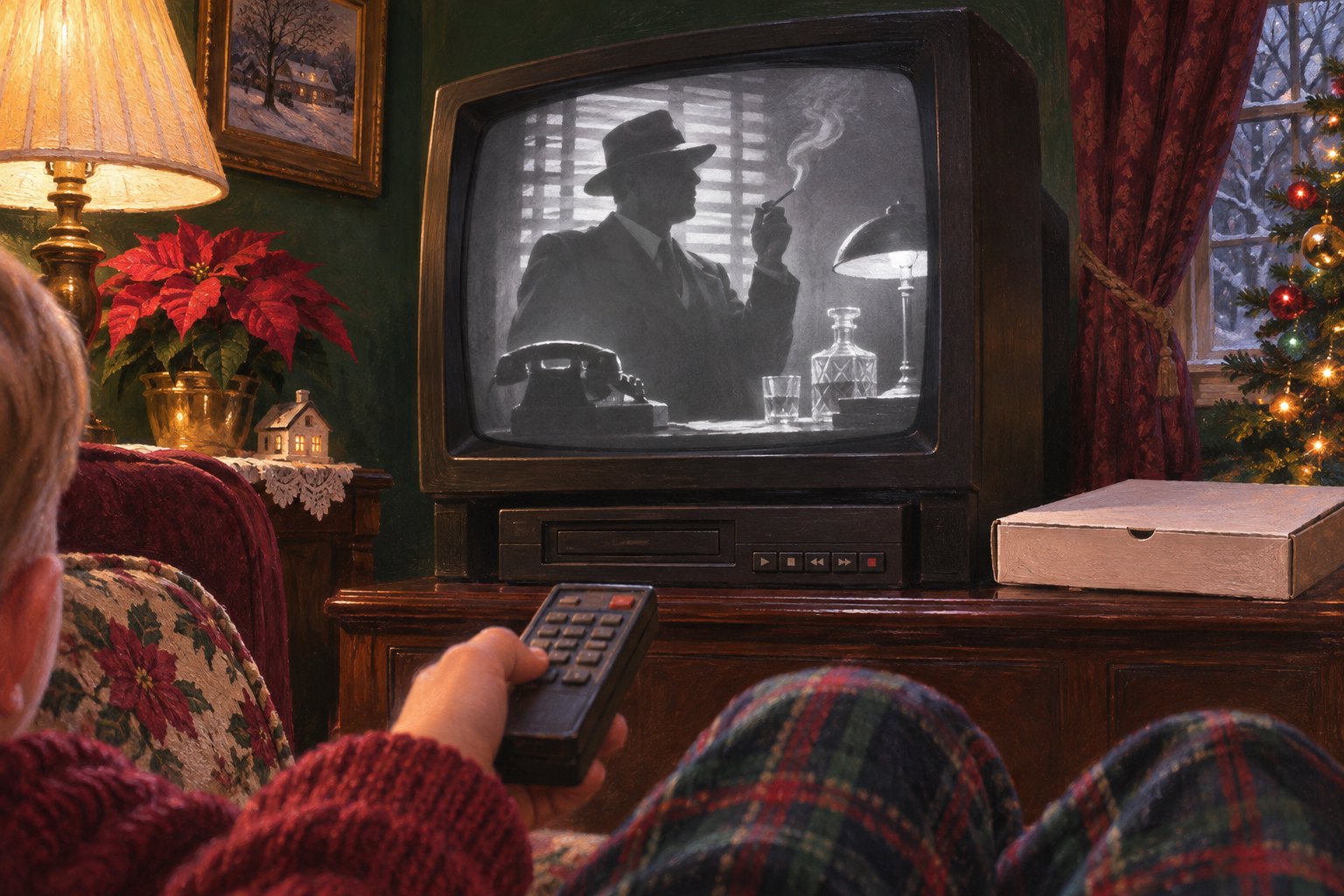
There is a mischievous edge here that deserves acknowledgment. The delivery worker is not a burglar. Kevin enjoys frightening someone who has done nothing to deserve it. His imagination can protect him, but it can also make him inconsiderate.
That imperfection helps the characterization. Kevin has discovered a shortcut to adult power without acquiring the restraint that should accompany it. Culkin’s pleasure in the deception keeps the moment playful, while the imbalance between the participants leaves room to recognize that our hero is behaving badly.
Harry Understands Appearances, Too
Kevin does not invent deception within the film’s world. Harry enters the story disguised as a police officer, using the appearance of authority to gather information about the household. The adults accept a performance that serves a criminal purpose.
This creates an interesting relationship between hero and antagonist. Harry relies on people responding automatically to a familiar image. Kevin later relies on the burglars responding automatically to familiar signs of occupancy and danger. Both understand that people often mistake convincing presentation for knowledge.
The difference lies in their objectives and in the comedy of their miscalculations. Harry’s confidence makes him underestimate Kevin. Kevin’s confidence encourages him to believe that preparation can keep him in control indefinitely. Their contest becomes a struggle over who gets to define the situation.
Joe Pesci’s irritated intensity gives Kevin’s tricks resistance. Daniel Stern’s more visibly bewildered reactions allow each setback to expand into physical comedy. The burglars are funny because their reactions keep changing the rhythm; they are more than targets waiting for the next impact.
The Traps Work Because Control Can Still Fail
“This is my house. I have to defend it.” Kevin’s declaration sounds decisive, but it is also a child talking himself into action. The line gains its force from the fear beneath it.
The assault on the house turns his advance planning into a succession of payoffs. Yet the film does not let the fantasy of total control stand. Harry and Marv eventually catch Kevin, and Marley intervenes to save him. Kevin’s inventiveness has limits that another person must cross on his behalf.
That ending prevents the story from becoming a simple endorsement of self-sufficiency. Our earlier examination of Kevin’s emotional stakes and the sequel’s challenge considers the family dimension. Seen through the film’s repeated acts of deception, the rescue also marks the point where staging a convincing defense can no longer substitute for receiving help.
The Movie Within the Movie—and the Sequel’s Opportunity
One useful detail for a rewatch: Angels with Filthy Souls is a fictional gangster film created for Home Alone. Its title echoes Angels with Dirty Faces. The reference does more than add an old-movie flavor. It supplies Kevin with a ready-made image of intimidating adulthood, which he can borrow without fully understanding.
That suggests a more interesting creative challenge for Disney’s reported sequel than simply increasing the scale of the traps. A return could explore whether the instinct to arrange everything—and anticipate everyone’s reactions—remains useful as Kevin gets older. That is a possibility, not a reported story detail.
The original remains compelling because it lets imagination be powerful, funny, selfish, and insufficient within the same character. Kevin learns to direct what other people perceive, but he cannot direct every outcome. A sequel involving Culkin would have something substantial to build on if it remembered that the cleverest person in the room can still misunderstand the scene.
Original content by this site's editorial team. Published: November 20, 2026 at 18:28:22 PST (Los Angeles time)