
Disney’s Hexed has acquired a difficult label: commercial disappointment. The Wall Street Journal has characterized it as another unsuccessful original animated release, placing the film inside a larger argument about Hollywood’s willingness to introduce unfamiliar worlds. That framing matters, but it leaves the central critical question unresolved: what does this particular story offer viewers?
The most interesting answer begins with Billie and Alice, a daughter discovering her abilities and a mother who has restricted them. Their conflict gives the film a more specific subject than magical self-discovery alone: the damage that protection can cause when it becomes secrecy.
Spoiler note: This character-focused commentary discusses the officially described premise, relationships, and supporting characters. It does not reveal the ending or present a firsthand verdict on the complete film’s execution.
What the Flop Label Establishes—and What It Leaves Open
The reporting identifies a commercial problem. It does not, by itself, explain whether audiences resisted the premise, disliked the advertising, preferred competing releases, or simply postponed a theater visit. Those explanations require separate evidence. Treating any one of them as settled would turn a result into an unsupported diagnosis.
There is also a difference between disappointing ticket sales and a demonstrated final loss. Revenue periods, distribution costs, marketing expenses, and later earnings all affect that calculation. Without a verified financial breakdown, a precise loss estimate would add false certainty.
For readers deciding whether a movie interests them, the useful distinction is between financial performance and dramatic achievement. Our discussion of what a box-office milestone can tell us about a film approaches that distinction from the opposite direction. Commercial success cannot certify emotional power; commercial disappointment cannot disprove it.
Billie: Discovering Power Changes the Meaning of Her Past
Disney’s official synopsis introduces Billie, voiced by Hailee Steinfeld, as an unconventional teenager whose emerging magic takes her from suburbia into Hexe, a realm of witches. Her cautious mother, Alice, voiced by Rashida Jones, accompanies her into an adventure involving family secrets. The American theatrical release date was November 25, 2026. [Disney’s official film overview](https://movies.disney.com/hexed)
Read through Billie’s perspective, this setup contains two discoveries. She learns that she possesses unusual abilities, but she must also reconsider the ordinary life in which those abilities remained hidden. The second discovery carries the sharper emotional possibility. Learning that you are powerful can be exhilarating; learning that someone else has controlled your access to that power can feel like betrayal.
That distinction gives her impulsiveness a useful dramatic context. A teenager testing boundaries may be behaving recklessly, responding to unnecessary restrictions, or doing both simultaneously. A compelling character study leaves room for that contradiction. Billie does not need to be correct about every danger for her desire to understand herself to be legitimate.
My reading of the premise is that its strongest question concerns ownership: who gets to decide what Billie becomes? A magical inheritance supplies the fantasy mechanism. The recognizable adolescent experience is realizing that a parent’s account of your life may be incomplete.
Alice: Protection Has an Emotional Cost
Disney’s production account confirms that Alice suppressed Billie’s abilities from childhood. It also describes the filmmakers’ decision to retain Billie’s perspective, even though their experiences as parents initially drew them toward Alice. Writer Jared Bush described their goal as making the relationship “the star of the film.” That is a statement of creative intention, rather than proof of the finished result. [Disney’s mother-daughter story feature](https://thewaltdisneycompany.com/news/disneys-hexed-billie-alice/)
Alice’s position becomes interesting when love and control occupy the same action. From a parent’s perspective, preventing exposure to danger can look responsible. From a child’s perspective, concealing essential information can make the world harder to navigate once that protection fails.
The critical standard here should be demanding. Explaining a parent’s fear does not automatically excuse every decision made because of it. Likewise, recognizing the harm caused by secrecy does not require treating the parent as incapable of love. The richest interpretation allows both characters to have understandable needs while acknowledging that their power within the relationship is unequal.
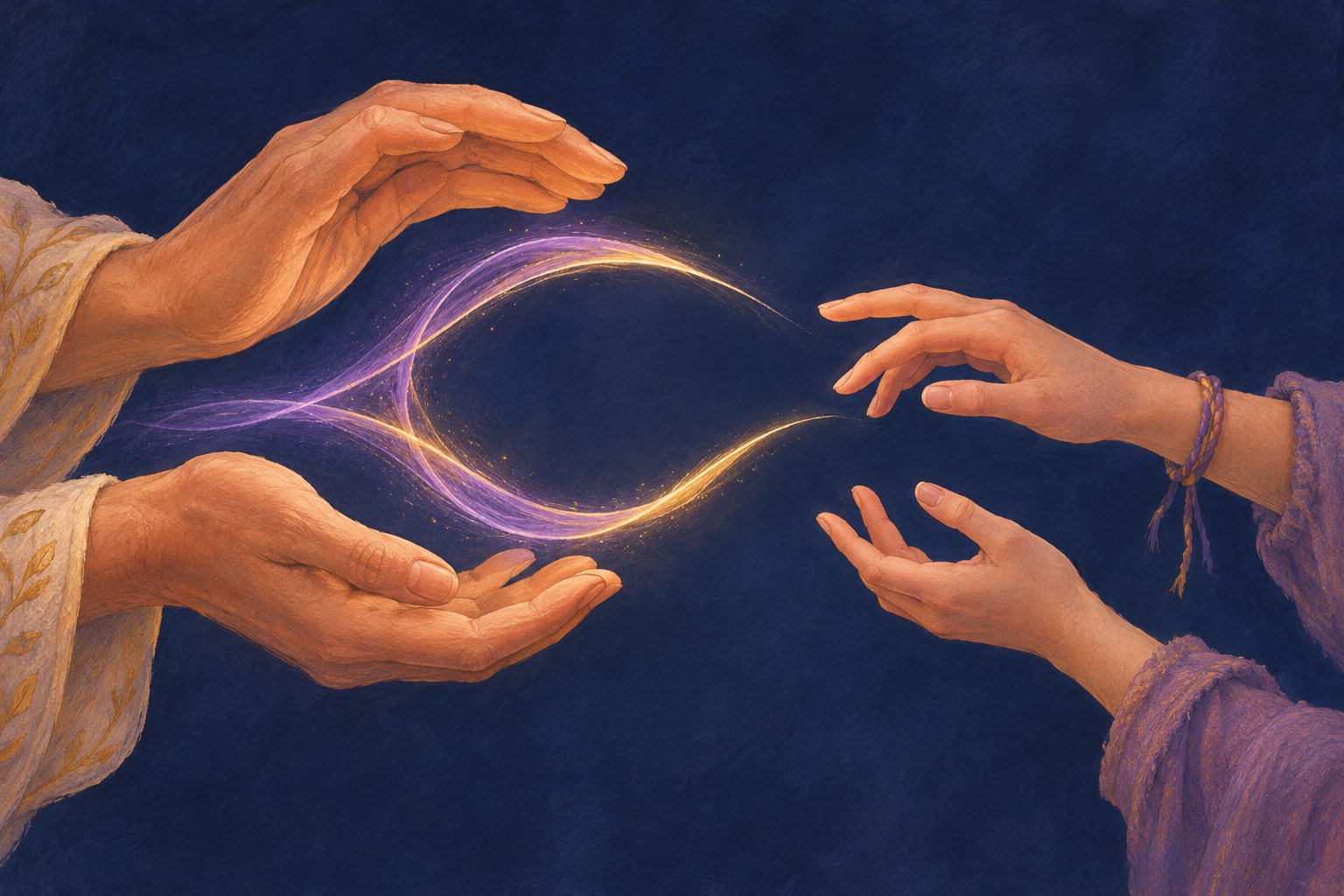
This is why the mother-daughter relationship deserves attention independently of the commercial narrative. Its potential lies in an uncomfortable distinction: a child can eventually understand a parent’s reasons and still need that parent to change.
Celeste and Beef Offer Different Models of Connection
The official character descriptions introduce Queen Celeste, voiced by Jodie Foster, as a ruler determined to preserve her power. They also identify Walton Goggins’ Beef Roger Crummchuk as a withdrawn, three-eyed magical cat who reluctantly helps Billie and Alice. Goggins describes the character’s relationship with Billie as an opportunity to care about others again. [Disney’s character guide](https://d23.com/meet-the-characters-of-disneys-hexed/)
These descriptions suggest a useful interpretive contrast. Celeste approaches other people through the preservation of her position. Beef’s involvement opens the possibility of renewed attachment. Between them, Billie encounters different answers to what another person’s abilities might mean: a threat, an opportunity, or a reason to become involved.
That comparison should remain a reading of the character design, rather than a claim about how effectively every scene develops it. Still, it identifies something worth watching closely. Supporting characters become dramatically valuable when their choices complicate the protagonist’s understanding of trust. Their usefulness extends beyond supplying jokes, exposition, or an attractive silhouette.
Original Property, Familiar Emotional Architecture
Calling Hexed an original animated film describes its position outside an established film series. It does not establish that every narrative ingredient is unfamiliar. Hidden powers, family secrets, protective parents, and threatening rulers belong to a recognizable fantasy vocabulary.
That familiarity creates an artistic challenge rather than an automatic defect. Distinction comes from the specificity of a character’s decisions: what someone refuses to admit, which reassurance fails, or how an act of help changes a relationship. New names and locations cannot do all that work.
A related challenge appears in our examination of parental gatekeeping and repeated conflict in Focker-In-Law. Whether a film introduces a new family or revisits an established one, the question is how familiar tensions acquire fresh consequences.
The Deeper Question: Can Love Make Room for Independence?
The most productive interpretation of Hexed centers on the difference between keeping someone safe and preparing them to act. Protection can reduce immediate risk while also delaying the knowledge needed for independence. That tension gives Billie and Alice’s story a meaningful subject beyond the spectacle of magical abilities.
It also provides a fairer basis for discussing the film than assigning moral meaning to its commercial performance. Audiences do not owe an original movie their attendance. Studios should not treat one disappointing release as evidence that unfamiliar characters have no future. The artistic question remains specific: does the relationship make its conflicts feel necessary, and do its characters earn whatever understanding they reach?
A Small Disney Callback to Watch For
Disney’s production feature identifies the enchanted pen Quill and journal Quire as playful echoes of Beauty and the Beast’s animated objects. Producer Roy Conli describes these references as brief pleasures rather than the story’s purpose. The distinction fits the larger critical issue: recognition can produce a smile, but Billie and Alice need an emotional identity of their own.
Original content by this site's editorial team. Published: November 29, 2026 at 11:16:28 PST (Los Angeles time)