Park Syeyoung’s The Fin gives its dystopian premise an intimate center: a dying father wants something of himself to reach his daughter. Around that request stands a society that treats certain bodies as expendable. For readers discovering the filmmaker through Tone Glow’s Film Show 077: Park Syeyoung, this conflict offers a useful entry into his work—political horror understood through the people forced to live inside it.
Spoiler note: This article discusses the publicly documented premise and central character relationships. It offers an interpretation of those elements, without revealing the ending or claiming a full screening-based assessment of the film’s performances and execution.
The world of The Fin begins with unequal survival
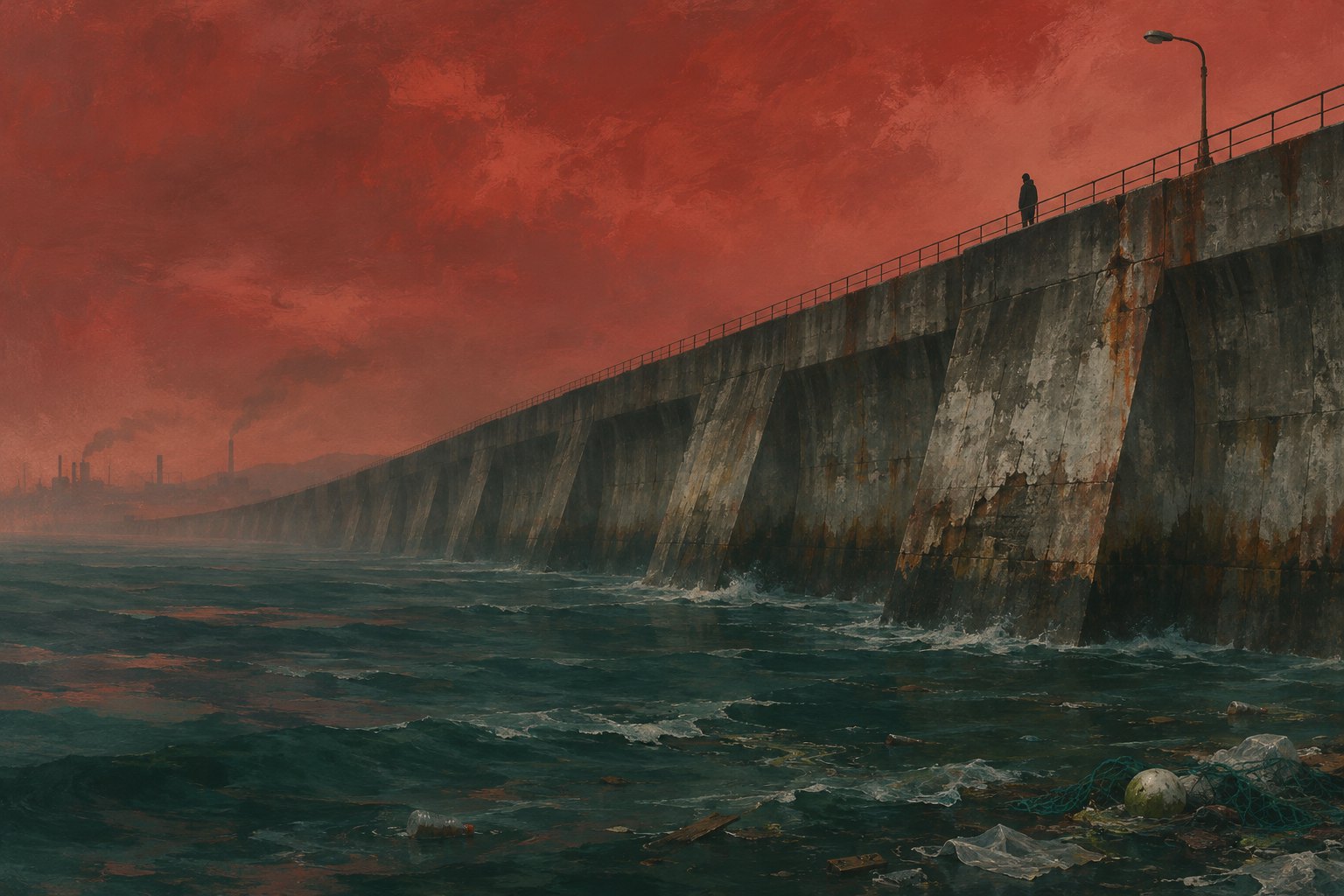
The film takes place in a devastated, postwar United Korea. Mutated people called Omegas supply exploited labor while being excluded from ordinary society. KANI Releasing’s synopsis describes a dying worker who asks a colleague to find his daughter Mia, hidden among humans, and deliver his fin as part of a final rite. Meanwhile, a young civil servant named Sujin pursues an Omega as her confidence in state ideology begins to weaken.
These intersecting motivations give the premise its force. The worker’s journey has a personal purpose, but the authorities can interpret his movement as a threat. Mia’s concealment protects her, but it also places ordinary family contact in danger. Sujin possesses institutional authority, yet the pursuit exposes uncertainty within the beliefs supporting that authority.
My reading is that the story’s strongest idea lies in this collision between everyday obligations and official categories. Returning something to a daughter should be comprehensible without elaborate justification. A society that makes such an act dangerous reveals its cruelty through the obstacles it places around a recognizable human need.
Mia: when being recognized becomes dangerous
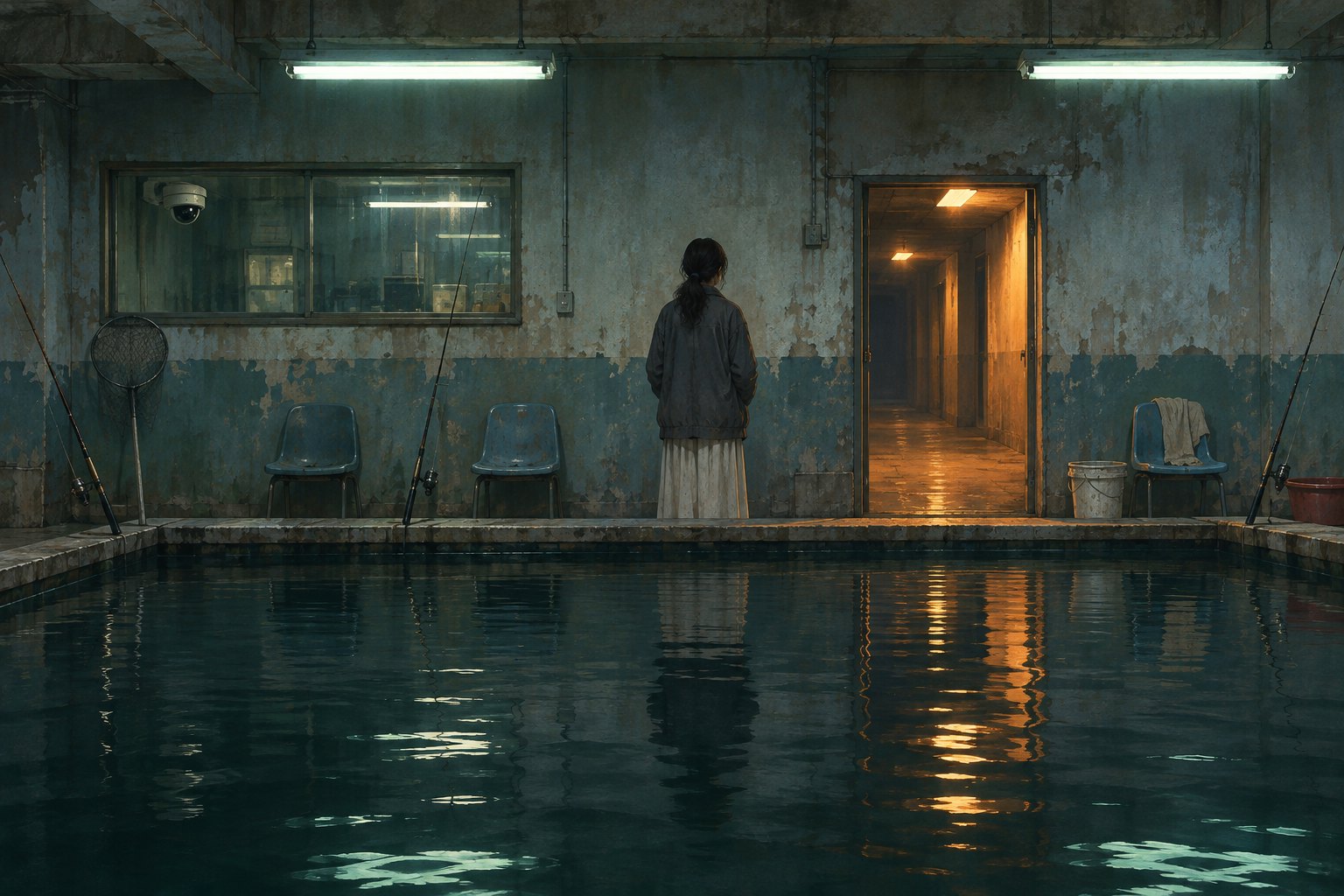
The Sitges Film Festival’s synopsis identifies Mia as an Omega in hiding who works at a fishing shop. Seoul Independent Film Festival materials describe the workplace more specifically as an indoor fishing center. Her position makes concealment an ongoing condition of employment and survival.
From Mia’s perspective, recognition carries competing meanings. Being recognized by family can affirm a history that public life requires her to suppress. Being recognized by an official can jeopardize the life she has built. The same discovery can therefore promise connection and threaten exposure.
That tension invites a more careful understanding of secrecy. A hidden identity does not automatically indicate dishonesty in any meaningful moral sense. Where a state punishes a person’s existence, concealment can become a practical defense. The relevant question is what Mia would lose if other people gained unrestricted access to the truth about her.
The fishing-center setting also invites interpretation. Water belongs to the Omegas’ wider ecological story, yet here it occupies a contained workplace. Read symbolically, that arrangement suggests a society comfortable managing an environment while controlling the people associated with it. This is an interpretation of the setting, rather than a claim about a particular shot or an explicit statement by the character.
Sujin: curiosity does not erase power
Sujin provides another route into the story. Festival descriptions establish that her suspicion of Mia develops alongside doubts about the state’s ideology. That makes her an unstable observer: someone whose investigation can change her understanding while still threatening the person she investigates.
The distinction matters. Curiosity can open a closed mind, but it can also authorize intrusion. An official who wants answers has resources that a person in hiding does not. Even sincere uncertainty cannot make their encounter equal.
For me, the most productive way to approach Sujin is to separate doubt from accountability. Questioning an institution is a psychological development. Changing how one treats the people subject to that institution is an ethical one. The premise establishes the first movement; it does not entitle us to assume the second is completed.
This is also why Mia should remain central to any assessment of Sujin’s journey. A persecuted character can become merely an instrument for an official’s enlightenment. A character-focused reading asks what the pursuit costs Mia, alongside what Sujin learns from it. Our discussion of whose perspective leads stories about institutional power raises a related question about narrative attention and responsibility.
A father’s fin gives the political story a personal scale
The dying father’s request makes the title unusually charged. His fin marks the bodily difference around which exclusion operates, but it also becomes something entrusted to another person for delivery to his daughter. An anatomical feature acquires familial and ceremonial meaning.
My interpretation is that this changes the terms on which the audience is asked to regard an Omega body. The state’s categories reduce a person to a manageable type. The father’s request restores relationships: someone has a daughter, someone remembers him, and someone accepts an obligation on his behalf.
The colleague’s journey similarly gives solidarity a concrete form. He has a task to perform for another person. Its significance does not depend on a grand speech about resistance. The journey matters because care must travel across boundaries designed to prevent it.
That personal scale is essential to speculative storytelling. Political worldbuilding becomes dramatically meaningful when its rules obstruct a specific desire. It is the same underlying principle explored in our analysis of making large-scale movie stakes personal, although Park’s premise locates that pressure in mourning, labor, and concealment.
The missing blue ocean
The Korean Film Council’s introduction to The Fin reproduces the line, “I don’t think I’ve ever seen a blue ocean.” Without assigning it to an unverified speaker or scene, the sentence offers a revealing way to think about the film’s environment. Ecological loss has become so extensive that an ordinary image of nature may no longer belong to lived experience.
Another brief line in the same introduction sharpens that displacement: “The sky was stained red.” Together, the sentences suggest a world in which damage shapes the vocabulary of memory. The absence of a healthy environment becomes part of what a person can imagine, recall, or pass down.
Park’s published director’s statement connects the project with spreading fear and the creation of myths. That emphasis encourages attention to the stories a society tells about outsiders. Fear becomes especially useful to authority when it makes exclusion feel natural, necessary, or protective.
A deeper reading: belonging without permission
The premise of The Fin supports a troubling interpretation: environmental catastrophe does not necessarily dissolve social hierarchies. People can respond to shared devastation by imposing sharper divisions over who works, who moves, and who receives protection.
Mia’s concealment, Sujin’s suspicion, and the father’s final request approach that division from different directions. One person needs privacy, another seeks knowledge, and a third wants a relationship acknowledged beyond death. Their interests expose the distance between an official classification and a life understood through its attachments.
For me, the deepest question here concerns whether belonging must be granted by those already holding power. The father’s bond with Mia exists before an official recognizes it. The colleague’s obligation exists before a border permits its fulfillment. That is the premise’s most compelling challenge: a society’s refusal to acknowledge someone cannot erase the relationships that make that person matter.
Original content by this site's editorial team. Published: November 29, 2026 at 11:54:34 PST (Los Angeles time)