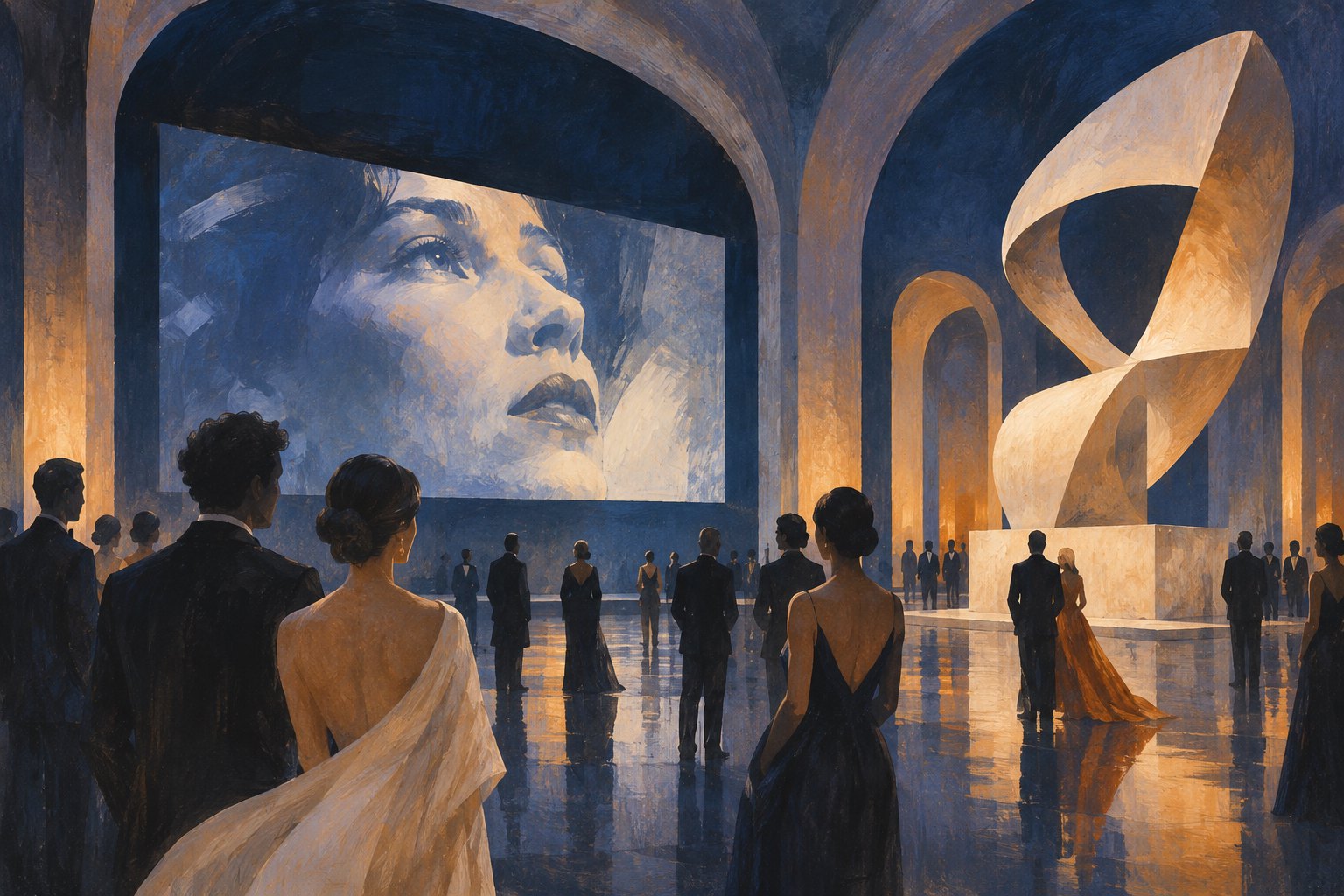
Denis Villeneuve has offered an upbeat James Bond update at the LACMA Art + Film Gala. Variety’s coverage describes the filmmaker teasing progress on the project, with one brief remark capturing his mood: “I’m having a great time.” For audiences wondering how the next Bond is taking shape, that is encouraging testimony about his experience. It does not, by itself, reveal the film’s story, establish a timetable, or tell us what kind of man his 007 will be.
That last question deserves attention. A new Bond film can introduce a different visual style, a different rhythm, and a different interpretation of its central character. The most interesting possibility is how those choices might work together: whether the spectacle will let us understand Bond through what he notices, what he chooses, and what he refuses to admit.
This is spoiler-free news commentary and character-focused analysis, not a review of a completed film. The creative possibilities discussed below are critical expectations, not reported story details.
What Villeneuve’s LACMA remark actually tells us
The useful distinction is between enthusiasm and disclosure. Villeneuve’s remark communicates enjoyment. It gives the public a glimpse of his attitude toward the work while leaving the work itself largely out of view. Reading a particular tone, storyline, or production milestone into those words would give them more weight than they can carry.
It is tempting to interpret “a great time” as a promise of a lighter Bond. That would be premature. A filmmaker can enjoy constructing an unsettling sequence, developing a difficult relationship, or solving a technical problem. The pleasure of making a movie and the emotional experience of watching it are separate things.
My reading is modestly positive: creative enjoyment is a welcome note in a conversation that can become consumed by expectations. But the eventual film will need to earn its response through scenes and performances. A gala sound bite cannot do that work in advance.
The central challenge: give Bond a point of view
For this prospective Bond film, the most revealing creative question is how closely the audience will share the protagonist’s perception. Does a scene let us discover a danger when he does? Does it show us something he has missed? Can we recognize the moment he changes his mind without having him explain it?
These choices shape character more precisely than a general promise of sophistication. A camera can admire a beautifully dressed spy entering a room. It can also direct our attention toward the exit he checks, the person he avoids, or the exchange that interrupts his confidence. The second approach gives the elegance a dramatic function.
From Bond’s perspective, an apparently social encounter might be an exercise in gathering information. From another character’s perspective, the same encounter might feel like an intrusion. A compelling interpretation could allow both readings to coexist. We would understand his method while remaining alert to its effects on other people.
That is what I would want from Villeneuve’s version: a protagonist whose attention organizes the scene, but whose assumptions do not automatically become the film’s truth. Intelligence becomes interesting when it has limits. Confidence becomes interesting when someone else has good reason to question it.
Composure should reveal something worth concealing
Bond’s polished identity offers a useful starting point for character analysis. Composure can signify expertise, self-protection, vanity, or habit. The challenge for a new interpretation is to make those possibilities legible through behavior rather than treating a controlled expression as sufficient evidence of depth.
A pause before an answer can have meaning if the scene gives us competing explanations. Is he protecting a person, concealing a mistake, or deciding how much honesty the situation can bear? Without that surrounding pressure, silence risks becoming decoration.
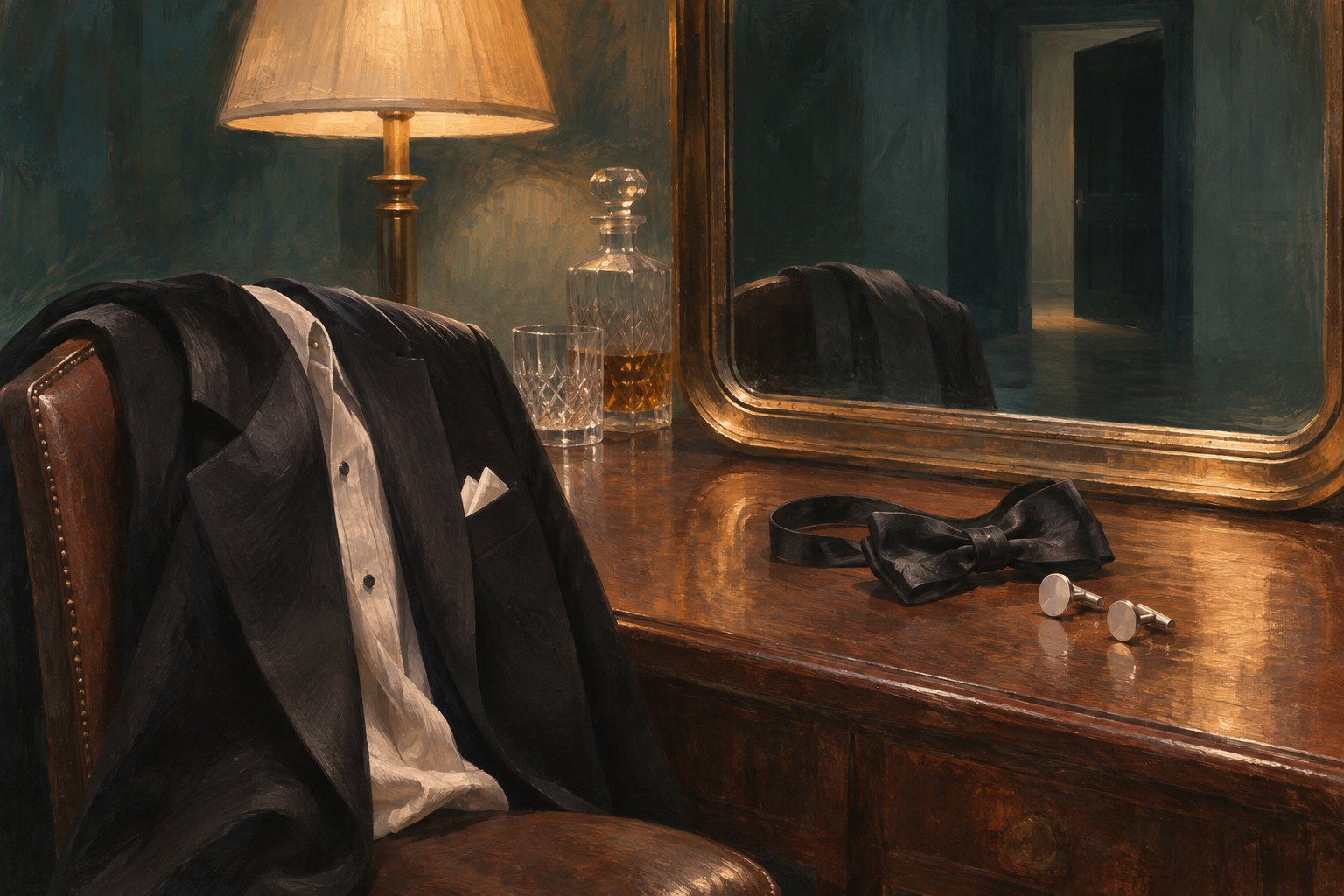
The illustration’s empty formalwear suggests a distinction worth carrying into the film: the recognizable image of Bond and the individual who must inhabit it. This is a thematic illustration, not a depiction of a scene or costume from the project.
The gala setting also connects with our discussion of how looking closely at faces can sharpen our understanding of screen acting. For Bond, however, the crucial test would be what an expression does inside a relationship. A flicker of doubt matters more when another person sees it and responds.
The people around 007 need their own reasons
A character-focused Bond film would also need a world that resists his interpretation. An ally should have a reason to cooperate beyond recognizing the hero. An opponent should pursue something more specific than making him suffer. An intimate connection should involve another person’s desires, boundaries, and judgments.
These are standards for the eventual film, not descriptions of its unannounced characters. Their value is practical: they provide a way to distinguish a relationship that changes a story from one that merely supplies information or emotional emphasis.
Consider trust as a dramatic mechanism. If Bond trusts someone only because the screenplay needs the next sequence to happen, the relationship feels convenient. If trust follows an observable decision that costs the other person something, the audience has grounds to believe it. Later uncertainty can then carry emotional force without relying on surprise alone.
This is also why the prospect of a new creative direction should lead to questions about behavior. As our analysis of what a franchise genre shift must get right argues, a change in presentation becomes meaningful when it changes what characters must confront.
Action should expose decisions under pressure
For my money, the strongest test of a prospective Bond interpretation is whether its action could belong only to this version of the character. Scale alone cannot answer that. A sequence becomes personal when its outcome depends on judgment: what he prioritizes, how he improvises, and which consequences he accepts.
Suspense also depends on clarity. Viewers need enough information to understand an objective, an obstacle, and a narrowing set of choices. With those elements in place, even a small hesitation can become dramatic. Without them, a lavish sequence can leave the audience watching motion without understanding the struggle.
Humor belongs in that assessment too. A joke can reveal defensive instinct, social intelligence, or a desire to unsettle an adversary. It need not interrupt characterization. Used precisely, wit can show how Bond manages a situation before force becomes necessary.
The deeper question behind the next Bond
Villeneuve’s LACMA update leaves room for anticipation while offering little basis for a verdict. There is no responsible way to extract a plot analysis, memorable new-film dialogue, or Easter eggs from this brief remark. Those require the actual film and evidence within it.
The deeper interpretive opportunity lies in the relationship between competence and identity. If Bond is exceptionally good at his work, what does that ability encourage him to believe about himself? Where does professional judgment end and personal certainty begin? A film that makes those questions visible through choices could give familiar glamour fresh dramatic purpose.
Villeneuve’s enjoyment is welcome news. What will ultimately matter is whether his Bond gives viewers something equally absorbing to watch: a capable man encountering situations that skill alone cannot resolve.
Original content by this site's editorial team. Published: November 8, 2026 at 20:27:11 PST (Los Angeles time)