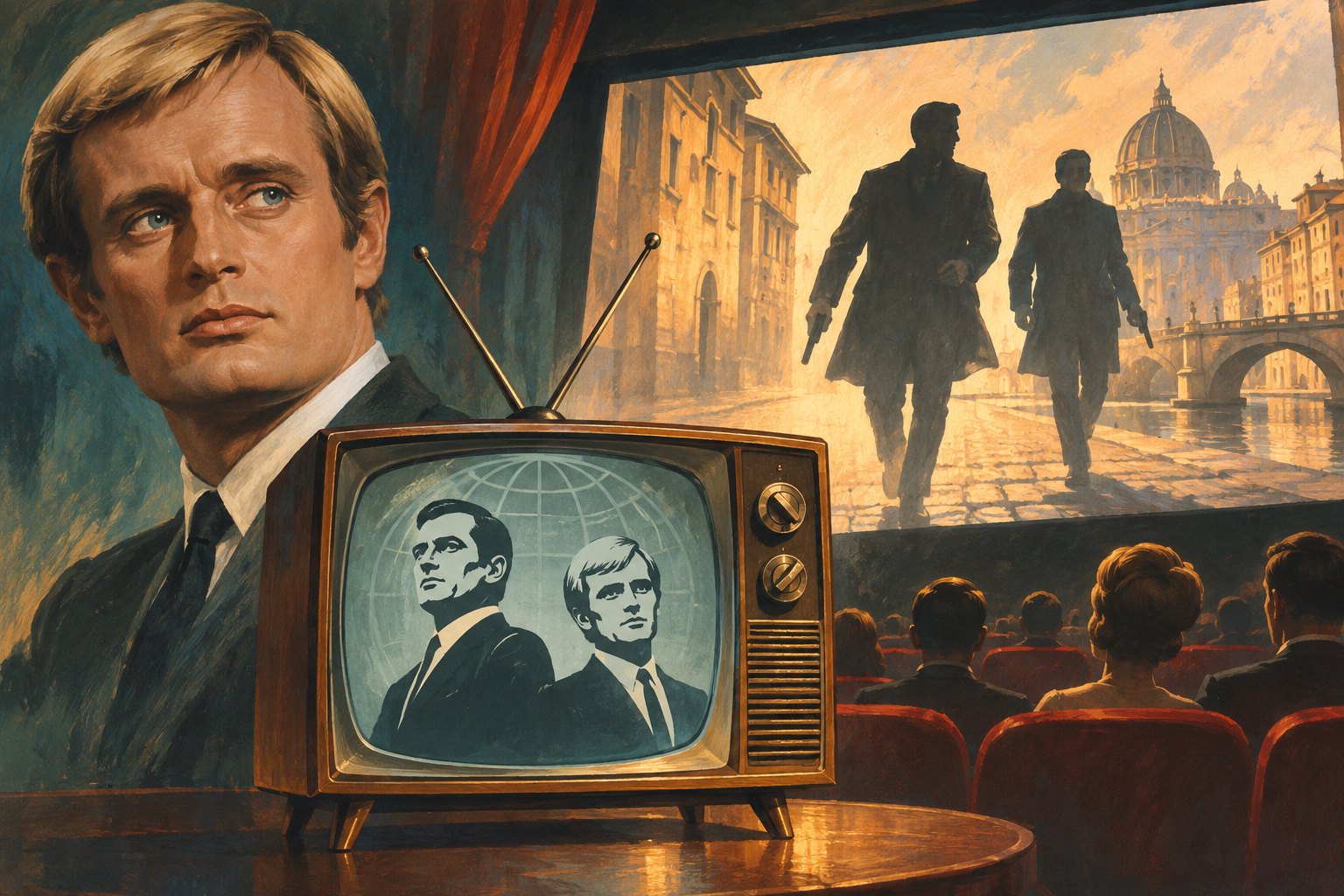
David McCallum initially welcomed the movie reboot of The Man from U.N.C.L.E.. Before its 2015 release, the actor known to NCIS viewers as Ducky praised Guy Ritchie’s adaptation as a “wonderful, exciting movie.” He appreciated its ability to borrow from the television series while allowing the original to retain its identity. That enthusiastic response anchors [TVLine’s account of his reaction](https://www.tvline.com/2303792/ncis-david-mccallum-the-man-from-uncle-movie-reboot-thoughts/).
His opinion also had a sharper edge. In a later interview, McCallum criticized the reboot’s interpretation of Illya Kuryakin, the Soviet agent he had originated. Understanding both reactions makes his verdict more interesting: a movie can succeed as entertainment while making choices that its original star finds fundamentally strange.
Spoilers follow for the 2015 film, including its ending.
What McCallum liked—and what later bothered him
McCallum’s early endorsement was generous toward a production taking over familiar territory. He also singled out Alicia Vikander for praise. His comments suggested that continuity could come through the film’s spirit and performers, without requiring an imitation of everything the television series had done.
Later, however, he described the new Illya as “ridiculous,” while saying Armie Hammer had done a good job. His objection concerned the character’s agitation and aggression. The distinction between performance and characterization matters here. These remarks appear in a Television Academy interview excerpt discussed by [The Spy Command in 2022](https://hmssweblog.wordpress.com/2022/06/19/mccallum-2015-illya-was-ridiculous/).
It would be misleading to compress those statements into either unconditional approval or wholesale rejection. They address different aspects of the adaptation. There is no need to invent a private explanation for the difference: the record establishes enthusiasm for the movie and a later objection to its treatment of his character.
That leaves viewers with a productive question. What does Ritchie gain by making Illya so visibly combustible, and what does the film lose?
Illya’s aggression turns cooperation into the story
The basic assignment pairs Henry Cavill’s CIA operative Napoleon Solo with Hammer’s KGB agent Illya Kuryakin against a criminal organization pursuing nuclear weapons. Guy Ritchie directs this 2015 action comedy, whose central premise is confirmed by the [British Council’s film listing](https://filmsandfestivals.britishcouncil.org/projects/the-man-from-uncle).
My reading is that the reboot uses Illya’s volatility to make partnership feel difficult enough to become a dramatic achievement. He cannot simply arrive as an ideal colleague. His physical confidence and readiness to take offense create obstacles that charm alone cannot remove.
That approach produces an entertaining imbalance. Solo treats social interaction as a game he expects to win; Illya often seems irritated that anyone is playing. Hammer’s rigidity gives Cavill’s verbal ease something to push against. Their exchanges work because each man considers the other’s defining skill slightly embarrassing.
But McCallum’s criticism identifies a genuine cost. When Illya’s anger becomes too conspicuous, the joke threatens to reduce him to a problem that smoother people must manage. A formidable intelligence officer needs more than force. The film is strongest when Hammer lets restraint, embarrassment, or attachment interrupt that force.
Solo’s taunt, “Not very good at this whole subtlety thing, are you?” captures their imbalance. The wording appears in the [film’s dialogue transcript](https://transcripts.simpleremix.com/script.php/the-man-from-uncle-2015-6sD5). It is funny because Solo enjoys presenting composure as proof of superiority. Yet composure can also be a way of avoiding emotional exposure.
Solo’s charm needs something to challenge it
Cavill plays Solo with a polished assurance that suits the movie’s emphasis on surfaces. His confidence invites us to enjoy expertise: the pleasure of watching someone appear prepared for every room, encounter, and inconvenience.
For me, the limitation is that such immaculate control can flatten suspense. If a character treats danger as an interruption to his good taste, the audience may start treating danger that way too. The film needs another person’s vulnerability to make Solo’s choices matter.
Illya supplies that pressure. Their eventual loyalty becomes interesting precisely because professional competition has made generosity inconvenient. Helping a rival requires Solo to surrender a little of the distance that keeps him looking invulnerable.
This is also a useful distinction when considering the relationship between professional competence and loyalty in our Cliff Booth analysis. Skill makes a character impressive; the purpose that skill serves determines whether the character deserves trust.
Gaby Teller refuses to remain their assignment
Vikander’s Gaby travels with the agents to Rome, where she and Illya pose as an engaged couple. The film eventually reveals that she is working undercover for British intelligence. Those developments make her more than the person the men believe they are managing. The film’s [plot account](https://en.wikipedia.org/wiki/The_Man_from_U.N.C.L.E._(film)) establishes that reversal.
Gaby’s greatest contribution to the comedy is her impatience with the agents’ self-importance. When she asks, “So why am I playing mother, huh?” the [dialogue](https://transcripts.simpleremix.com/script.php/the-man-from-uncle-2015-6sD5) punctures their performance of effortless competence. She is the person supposedly requiring supervision, yet she must remind them to behave professionally.
Vikander makes that frustration feel like an assessment rather than a decorative wisecrack. Her reserve suggests that the men’s understanding of her is incomplete. They can organize an operation around someone and still fail to understand what she wants.
The film could give her emotional experience more room. Its brisk movement sometimes values a revelation for the surprise it produces more than for the feelings it exposes. Nevertheless, Gaby helps prevent the central partnership from becoming a closed contest in masculine vanity.
The watch gives the ending its emotional weight
Near the conclusion, Solo returns Illya’s stolen family watch. The men also abandon their competing instructions to secure the nuclear research for their respective governments, destroying it instead. These linked actions turn mutual respect into a decision with consequences.
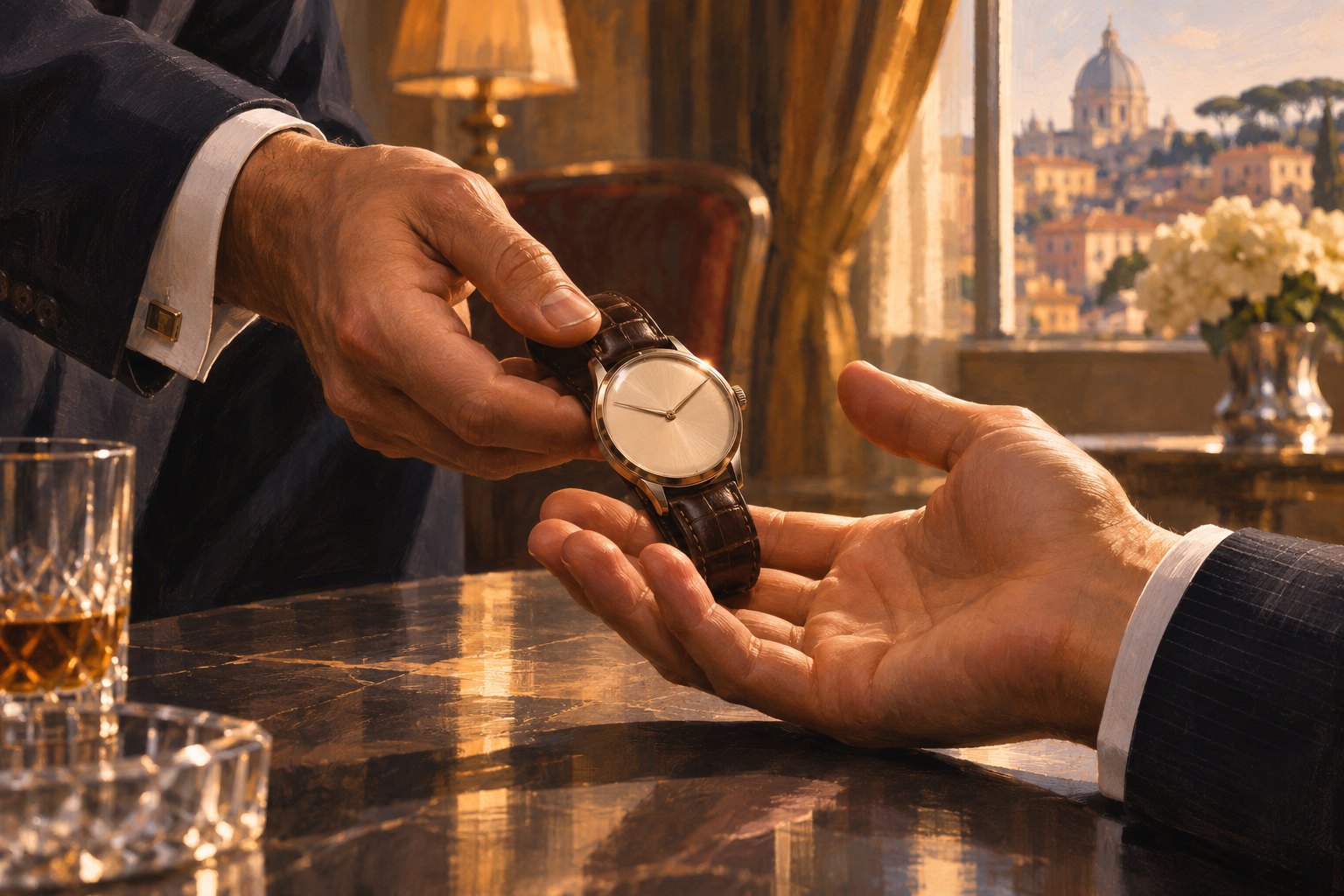
The watch is the more affecting gesture. Nuclear secrets are enormous in geopolitical terms but abstract as an emotional object. A personal possession carries a scale of meaning the audience can immediately grasp. Returning it acknowledges that Illya has attachments beyond the uniform and temperament Solo finds so easy to mock.
My interpretation is that this small act supplies the humanity the broader rivalry sometimes withholds. Solo demonstrates attention. Illya has a reason to recognize goodwill. Their partnership becomes credible through something neither man is professionally required to do.
A reboot can earn affection without settling the argument
The Man from U.N.C.L.E. works best as a comedy about people discovering the limits of their own competence. Its pleasures come from incompatible temperaments learning to cooperate. Its weakness is that characterization occasionally becomes shorthand: charm for Solo, anger for Illya, and secrecy for Gaby.
McCallum’s two reactions illuminate that tension. His enthusiasm makes sense when considering the film’s independent appeal; his criticism makes sense when considering how dramatically it reshapes Illya. Viewers can weigh both without treating the original actor’s response as a compulsory verdict, a principle explored in our discussion of audience independence and the right to disagree.
The ending’s deeper appeal is that cooperation becomes a chosen responsibility. These agents have been trained to recognize an opponent before recognizing a person. The movie finally allows them to reverse that habit. Beneath the immaculate clothes and competitive banter, that modest change is what makes the reboot worth revisiting.
Original content by this site's editorial team. Published: November 23, 2026 at 08:25:12 PST (Los Angeles time)