Could Downton Abbey return for another film? The possibility is the subject of People’s exclusive coverage involving creator Julian Fellowes, but a question about returning should not be mistaken for a confirmed sequel. For viewers, the more interesting issue is what another film could offer after Downton Abbey: The Grand Finale gives its characters permission to move forward.
That distinction matters because the film’s emotional payoff depends on change becoming permanent. Mary needs room to lead. Robert needs an identity beyond being indispensable. Barrow needs recognition that extends beyond his usefulness to an employer. Another visit would be welcome only if those developments remained meaningful.
Spoiler warning: The following critical analysis discusses major character developments and the ending of Downton Abbey: The Grand Finale.
What the return question does—and does not—establish
People’s coverage places the franchise’s future back in conversation. It does not make the prospect of another film a reason to assume a particular cast, production schedule, or storyline. Those details require their own confirmation. A continuation, a prequel, and a reunion would also be different creative propositions, even if all carried the same familiar name.
For now, the finished film provides firmer ground than imagined production plans. Directed by Simon Curtis and written by Fellowes, The Grand Finale follows the Crawleys and their staff into the 1930s, with Mary facing social disgrace and the family confronting financial insecurity. Its central question is who can guide the household through change.
Mary’s story makes authority more important than approval
Mary’s divorce exposes the distance between social standing and actual competence. Her ability to understand the estate does not disappear when other people decide that her private life makes her unacceptable. The scandal instead reveals how conditional their respect has always been.
Her simple declaration, “I think Downton needs me,” carries more weight than a grand defense of her reputation. It expresses purpose, but also dependence. Mary sees work to be done; she also needs somewhere her judgment still matters. That combination makes her attachment to the house emotionally persuasive rather than merely possessive.
My reading is that the film becomes strongest when it treats Mary as a prospective leader rather than a problem the family must solve. Sympathy alone would leave her waiting for permission to reenter society. Responsibility gives her something to do with the experience of being excluded.
A future film could test her decisions as the person in charge. Requiring her to prove, once again, that she deserves the position would weaken the payoff. The interesting next question would be how she uses authority after learning how casually authority can humiliate someone.
Robert’s farewell is a decision to trust
Robert’s difficulty is equally personal. Handing over responsibility threatens his understanding of what makes him valuable. If the estate can function without his constant direction, what is his role within the family and the wider community?
His eventual announcement that Mary will preside at Downton, while he and Cora move to the Dower House, gives that anxiety a concrete resolution. He has to make trust visible. Private affection would be easier; publicly recognizing another person’s ability requires him to relinquish some of his own standing.
For me, this is the film’s most useful idea about aging: being needed and being loved are not identical. Robert’s development depends on accepting that distinction. His family can value him without organizing its future around his continued command.
Bringing him back simply to reverse that decision would diminish the ending. A return could explore the awkwardness of retirement or the temptation to interfere, but it would need to remember that surrendering control was an achievement.
Barrow’s invitation changes the meaning of the house
Barrow’s invitation to join the gathering upstairs gives the familiar architecture a different emotional meaning. A doorway that once organized his working life becomes a threshold he can cross as a guest. The gesture matters because belonging has so often depended on knowing exactly where to stand.
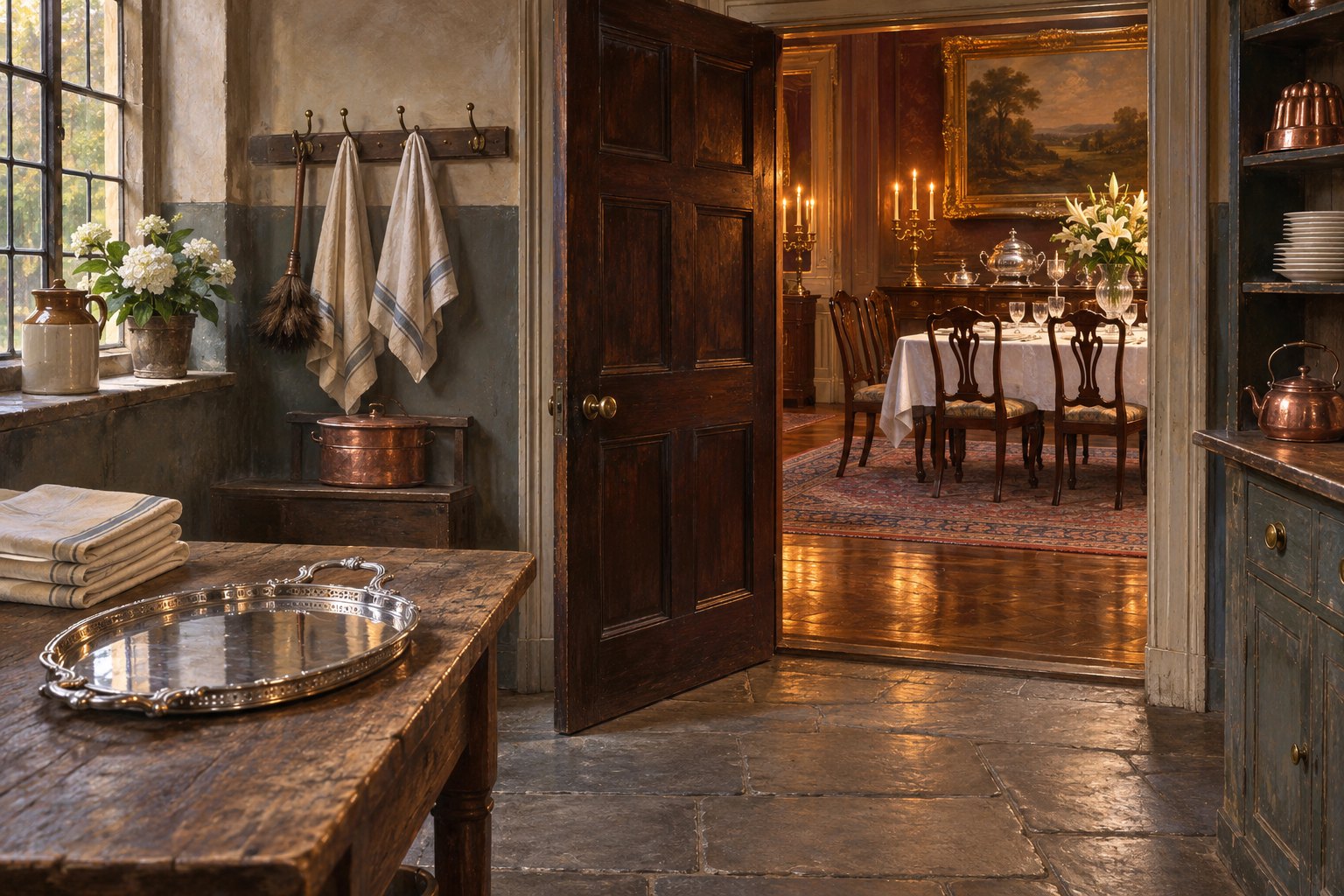
Carson’s observation, “Perhaps we should all have a different compass these days,” makes the scene more than an exception granted to one familiar face. The person associated with maintaining the rules briefly considers whether the rules themselves need revision.
There is a limitation here, too. A gracious invitation does not dismantle a class system. The scene offers interpersonal generosity, and the film’s warmth can make that feel more comprehensive than it is. Still, within Barrow’s story, being welcomed without performing a service represents a meaningful change.
Any continuation would need to preserve that dignity. Returning him to habitual isolation merely because it once produced effective drama would confuse repetition with depth. Our examination of how the original Rocky characters changed across their final appearances raises a related issue: a familiar character’s return matters most when earlier experiences remain visible.
The finale’s comfort is both its appeal and its limitation
As a farewell, The Grand Finale works through recognition, reconciliation, and the pleasure of watching relationships settle into new arrangements. My critical reservation is that its desire to reassure can soften the pressures it introduces. Social exclusion and economic vulnerability are substantial problems; a harmonious gathering cannot fully answer them.
Yet harmony has dramatic value when it reflects a changed relationship. Robert acknowledging Mary and Carson reconsidering his assumptions are satisfying because they involve choices. Familiar rooms and elegant clothes supply pleasure, but the characters supply the reason to care.
This creates a useful standard for another film: it needs a conflict that grows from the ending. Our commentary on why continuing stories must allow their characters to grow applies here as well. More screen time should reveal consequences, responsibilities, and desires that the earlier story made possible.
A literary wink amid the goodbyes
The film also gives Noël Coward a playful moment involving the phrase Private Lives, turning a conversation about personal experience into a nod toward his play. It works as a literary joke within the fictional encounter, not as evidence that the Crawleys inspired the real work.
The joke suits a series fascinated by the gap between public manners and private complications. These people spend considerable energy controlling what others know about them. Drama begins whenever that control slips.
Another film should let the ending remain true
The deeper appeal of The Grand Finale is its suggestion that continuity requires people to change their relationship with the place they love. Mary takes responsibility. Robert steps aside. Barrow enters a familiar room on different terms. The house survives because its meaning becomes less rigid.
That leaves room for imagination without creating an obligation to continue. A convincing future film would ask what those changes cost and what they make possible. Until a specific project is confirmed, the return question remains open. The artistic test is already clear: another Downton Abbey should give its characters a new reason to enter the house, while respecting what it took for them to leave their old roles behind.
Original content by this site's editorial team. Published: November 8, 2026 at 04:38:00 PST (Los Angeles time)