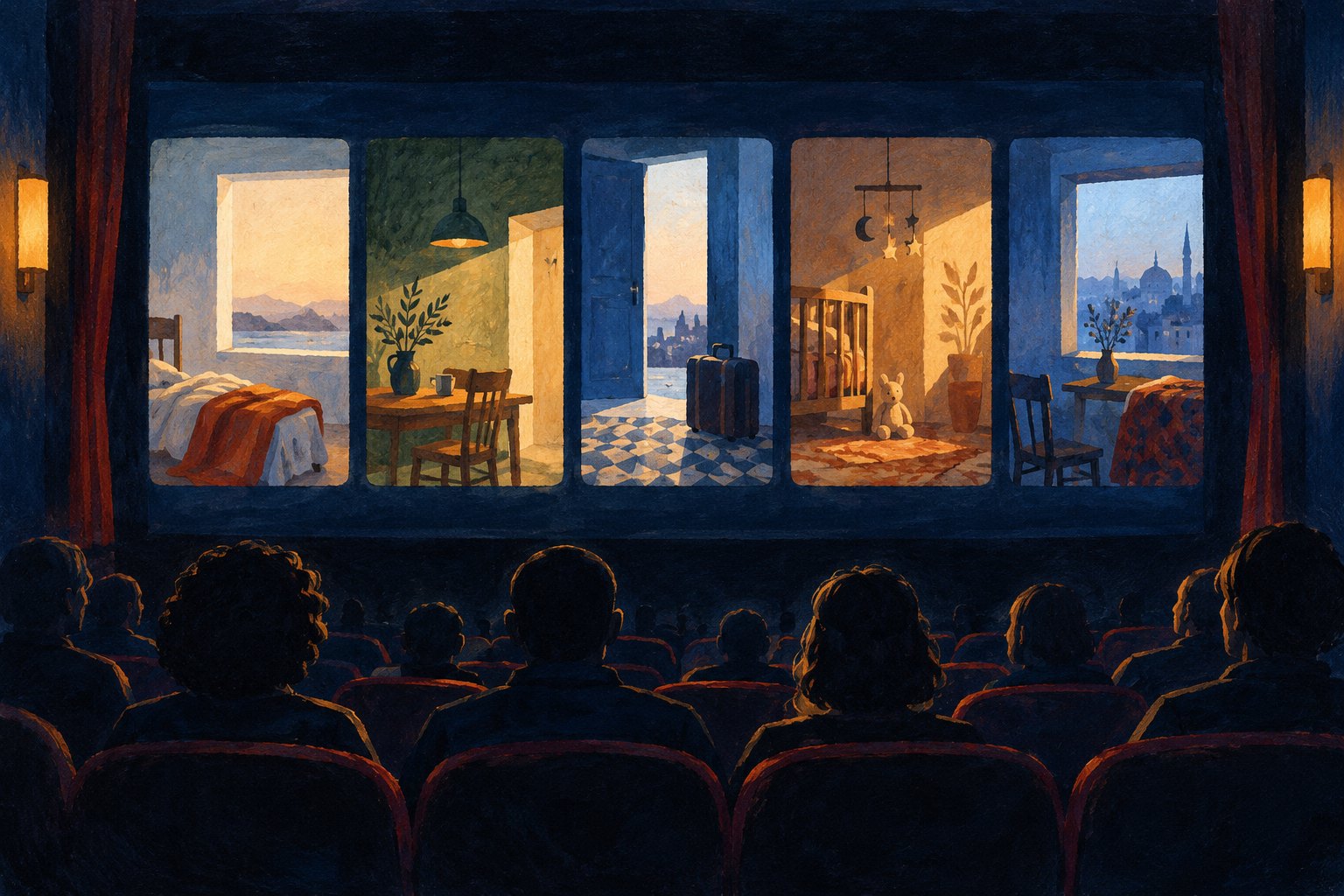
Cate Blanchett’s Displacement Film Fund is partnering with The New Yorker to release five short films, according to Variety. The announcement connects a recognizable public figure, a film initiative, and an editorial publication. For viewers, its most interesting promise is more immediate: an opportunity to encounter five individual works that deserve attention beyond the names introducing them.
That distinction matters. A partnership can make a collection visible; it cannot establish how well its films work. This is spoiler-free commentary on the announcement and the critical questions it raises, rather than a review of the five finished shorts. Their performances, dialogue, endings, and visual choices require direct examination before any verdict is earned.
What the partnership establishes
The central news is straightforward: five short films are to be released through a partnership between Blanchett’s Displacement Film Fund and The New Yorker. That establishes the collaboration and the number of works involved. It does not, by itself, establish their artistic success, their reception, or the size of the audience they will reach.
Readers should also separate a release announcement from practical viewing information. A plan to release films is not sufficient grounds to assume that every title is immediately available, free to watch, or accessible in every territory. Those are distinct questions that require specific release information.
My view is that the partnership is worth attention because distribution belongs in the conversation about film culture. Financing makes a work possible; presenting it to viewers gives that work another chance to matter. Neither step guarantees the other, and neither substitutes for the experience of watching.
Five films should mean five separate encounters
A collection offers a useful invitation. Someone interested in one film may stay for another, discovering a different sensibility along the way. Yet the convenience of a shared banner also creates a critical hazard: treating every work as another illustration of the same idea.
The word displacement carries substantial emotional and political weight. Applied too broadly, however, it can become a shortcut that discourages close attention. A viewer may arrive expecting loss, resilience, or belonging and then notice only the details that confirm those expectations.
A stronger approach is to let each film establish its own priorities. Does it organize attention around a person, a relationship, a place, or an absence? Does its rhythm invite contemplation or create pressure? Those questions leave room for differences that a collection’s introductory language might otherwise flatten.
The practical implication is simple: resist ranking the five solely by which produces the strongest immediate emotional response. Intensity is one artistic effect among many. Restraint, humor, ambiguity, and an unsettling change of perspective can be equally consequential.
Start with the person inside the frame
For character-centered criticism, the first useful question is what a person wants within the film’s immediate circumstances. Broad themes become dramatically meaningful through specific desires, competing obligations, and choices. A person should be allowed to exist beyond the condition that makes their story publicly legible.
That means watching for agency without demanding heroic action. A refusal, a hesitation, or a change in how someone addresses another person can reshape a scene. These are general critical possibilities, not descriptions of sequences in the announced films.
It also means allowing contradictions. Sympathy should not depend on a character being patient, generous, or easy to understand at every moment. A film can respect someone while revealing their vanity, resentment, evasiveness, or mistakes. Complexity is often where recognition begins.

Domestic details can be particularly revealing because they show how people occupy their lives between major events. Who listens? Who interrupts? Who feels entitled to use a room? Our commentary on the dramatic possibilities of everyday spaces in The Pitt considers a related issue: surroundings become expressive through the relationships and behavior they accommodate.
Short running times make formal choices count
A short film does not need to behave like a feature compressed into fewer minutes. It can concentrate on a single encounter, sustain an unresolved question, or build meaning through repetition. The relevant standard is whether its scale suits its purpose.
Pay attention to where a film begins. An opening that withholds background may ask viewers to inhabit uncertainty alongside a character. Alternatively, it may leave essential relationships underdeveloped. The difference becomes clearer when later scenes either deepen that uncertainty or merely depend on it.
Sound deserves equal attention. A voice heard outside the frame, an interruption, or a sustained silence can determine whose experience structures a scene. Dialogue should be judged in context: who speaks, who receives the words, and what changes afterward. A memorable sentence is not automatically the film’s thesis.
Endings require similar care. An unresolved conclusion can preserve the complexity of a life beyond the screen. It can also evade a conflict the film has not developed sufficiently. The test is whether the final moment changes how the preceding material is understood.
Celebrity attention should lead toward the filmmakers
Blanchett’s association gives the announcement an immediately recognizable point of entry. The editorial opportunity is to carry that attention forward into discussion of the individual works, rather than allowing the association to become their principal identity.
The New Yorker partnership likewise provides a reason to notice the release without supplying a ready-made judgment. Institutional prestige can encourage curiosity, but curiosity should lead to scrutiny. Films benefit from being discussed as deliberate artistic constructions, including when their choices are uneven or debatable.
Visibility and artistic achievement are related but separate questions. Our discussion of Wildwood and the value of local moviegoing explores that distinction from an exhibition perspective: the circumstances that bring viewers to a film matter, while the film still has to earn its response.
The deeper opportunity: attention without simplification
The most promising interpretation of this announcement is that five shorts may receive space to be encountered as five distinct works. That possibility becomes meaningful when viewers look beyond a common theme and notice differences in perspective, structure, tone, and emotional demands.
My critical preference is for films that make understanding more precise, even when they make judgment less comfortable. A story about displacement need not offer reassurance, resolve every uncertainty, or turn a person into an example. It can ask us to recognize the limits of what a brief encounter allows us to know.
The partnership creates an invitation. The worthwhile response is to follow it with close attention: learn whose work is on screen, observe whose perspective shapes it, and let each film determine the terms of the encounter. That is how a release announcement can become the beginning of a serious conversation about cinema.
Original content by this site's editorial team. Published: October 29, 2026 at 03:46:28 PDT (Los Angeles time)