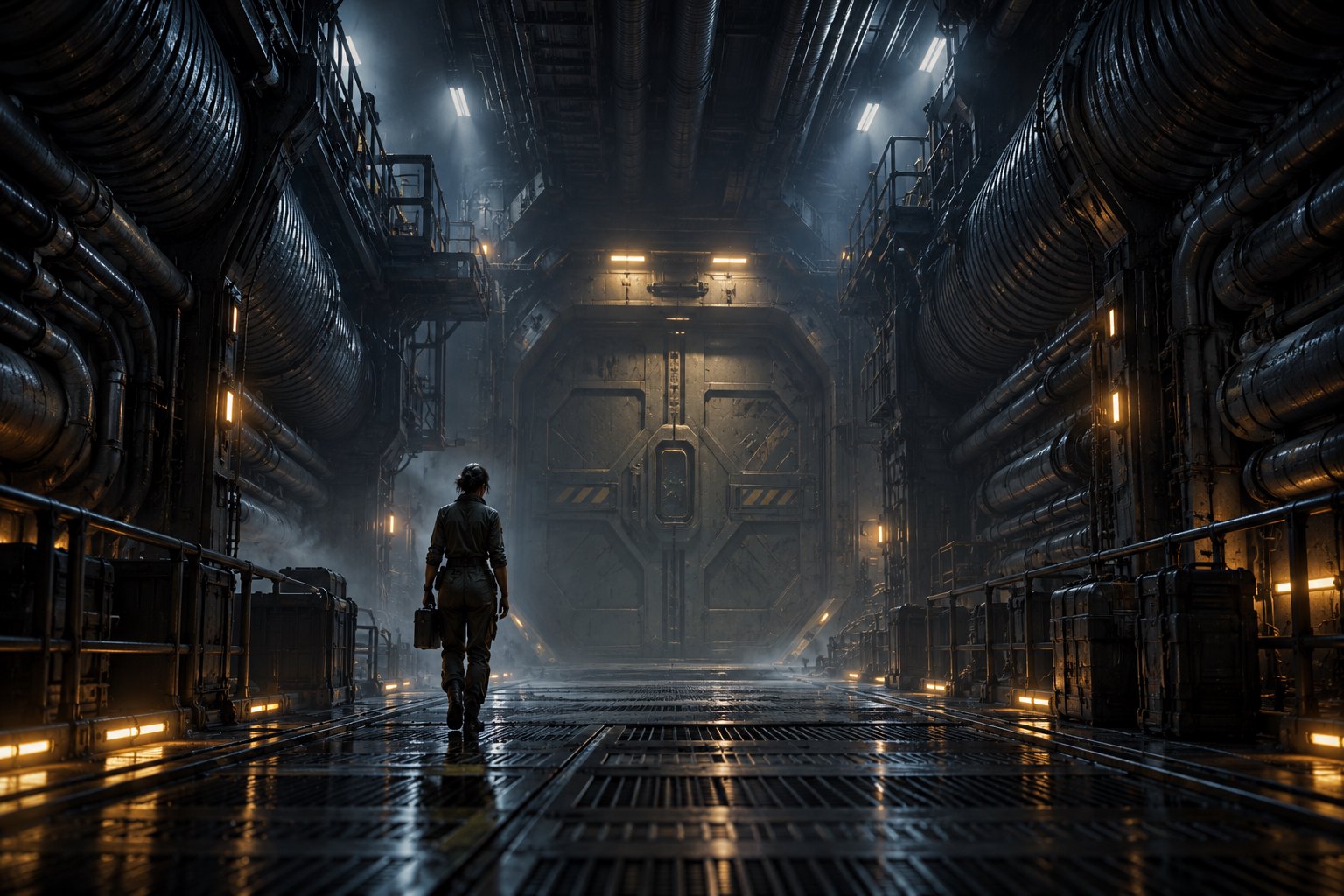
What’s the scariest movie? Alien makes an unusually persuasive case: it imagines a situation in which recognizing the danger and following the rules still cannot guarantee survival. Its most frightening idea is that the person making the soundest decision may have no power to enforce it. Through Ripley, horror becomes the experience of being right while everyone’s chances keep getting worse.
The question posed by NPR’s Pop Culture Happy Hour invites a personal answer rather than an objective winner. The case for Alien here is an independent critical judgment, not a claim about the program’s selections. For viewers frightened by confinement, bodily invasion, and unreliable authority, Ridley Scott’s 1979 film offers a particularly potent combination.
Major spoilers follow for Alien, including its deaths, central revelation, and ending. This review discusses the original theatrical story.
Ripley’s first victory is a decision nobody respects
The quarantine confrontation establishes the film’s moral problem before the creature becomes a full-sized threat. Kane returns from the expedition with an organism attached to his face. Ripley refuses to admit the returning party immediately; Ash opens the hatch. The basic sequence, along with the film’s credits, is documented in the [AFI Catalog’s Alien entry](https://catalog.afi.com/Film/53908-ALIEN).
From Ripley’s perspective, the choice is brutally clear. A colleague needs help, but opening the ship exposes everyone inside. Her refusal requires accepting the immediate hostility of people she knows in order to protect people whose danger remains hypothetical. That is a difficult kind of courage to dramatize, and the film gives it no triumphant flourish.
Dallas’s position is understandable, too. He is outside with an incapacitated crew member. The injured person is physically present; the possible disaster is abstract. This difference in perspective makes the argument stronger than a scene in which foolish people simply disregard an obvious warning.
Sigourney Weaver’s performance gives Ripley a productive sharpness. She need not make the precaution sound pleasant. The tension comes from watching a reasonable boundary become socially intolerable. A door that should protect the crew becomes a test of whether anyone will accept her authority.
Kane makes ordinary relief feel dangerous
Kane’s apparent recovery creates the film’s cruelest change of mood. The crew gathers to eat, and then the creature erupts from his chest. The shock matters, but so does the ordinary activity it interrupts. Eating together briefly allows these people to behave as coworkers again.
John Hurt’s Kane becomes frighteningly vulnerable because recovery seems to return him to the group. The scene denies the comforting distinction between looking well and being safe. His body contains information that neither he nor the people around him can access.
That is why the sequence remains effective even when its outcome is familiar. Suspense does not depend entirely on surprise. Knowing what follows makes the temporary ease more painful: the audience watches the crew accept reassurance that the film is about to destroy.
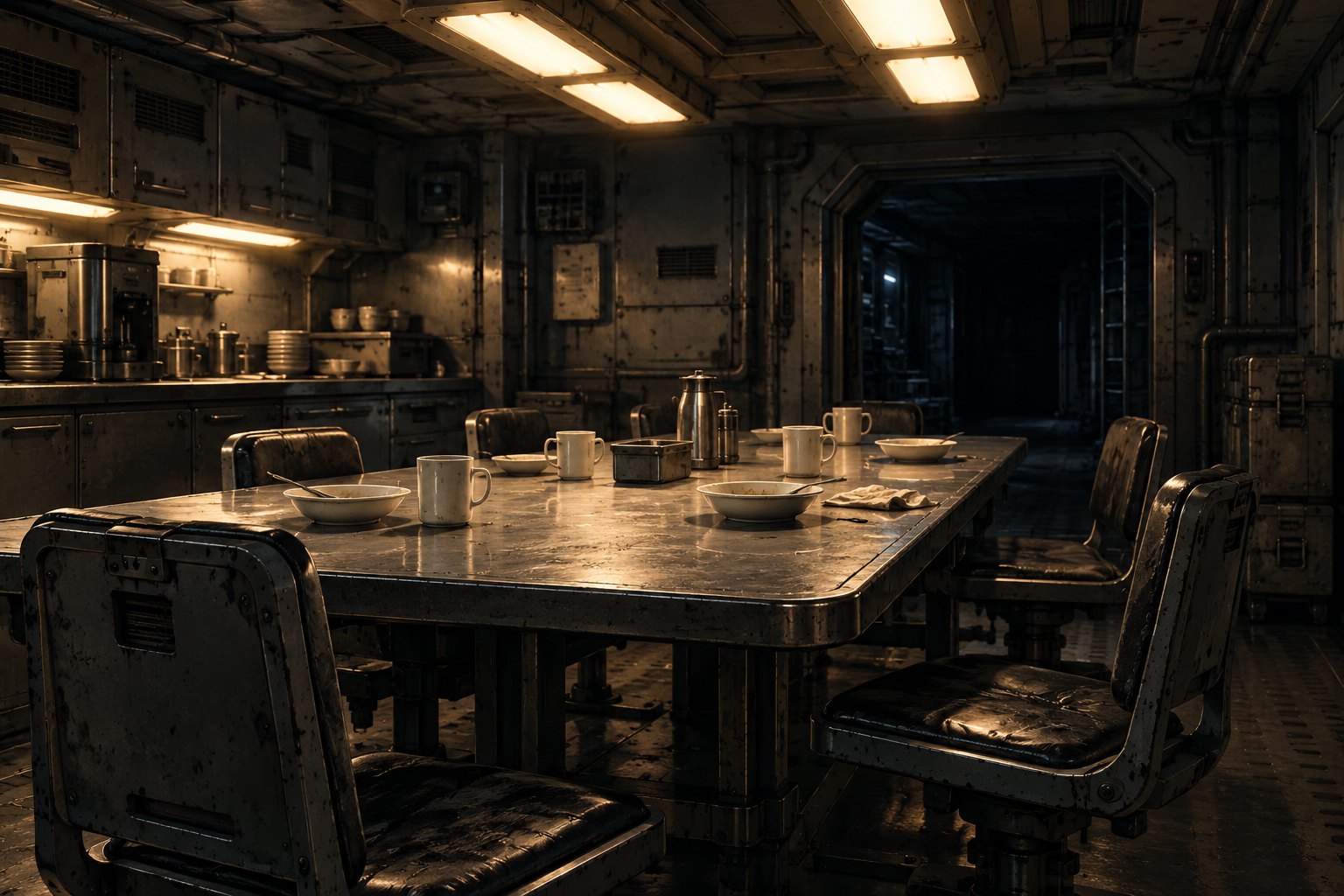
The empty dining room is a useful image for the film’s larger achievement. A workplace becomes threatening without ceasing to look functional. Corridors, tables, and maintenance spaces retain their practical purposes while acquiring terrible new associations. Our discussion of why some horror films become difficult to revisit considers the emotional residue of such experiences; Alien shows how precisely that residue can attach to an everyday action.
Dallas and Lambert reveal the limits of competence
Dallas’s journey into the ventilation system turns leadership into physical exposure. He carries equipment and follows a plan, while the others try to guide him. None of that gives him a reliable understanding of the space immediately around his body.
The sequence separates information from usable knowledge. A signal can indicate danger without showing a person how to escape it. Directions delivered from elsewhere have to become movement inside a cramped passage. The delay between those two things becomes agonizing.
Lambert’s fear is equally important. Veronica Cartwright allows distress to disrupt the reassuring rhythm of instructions and responses. Her panic gives the audience something that a composed technical explanation cannot: the sensation that the people monitoring the situation are losing their ability to manage it.
It is tempting to judge horror characters by how efficiently they perform under pressure. Alien benefits from resisting that standard. Lambert does not owe the audience perfect crisis management. Her terror makes visible the human cost of a situation that keeps demanding practical decisions faster than its participants can absorb what has happened.
Ash makes expertise itself frightening
The revelation that Ash is an android protecting the company’s interests changes the meaning of his earlier behavior. What looked like questionable judgment belongs to a different set of priorities. Ripley has been arguing about collective safety with someone whose objective does not require the collective to survive.
Ash’s phrase “perfect organism” crystallizes that estrangement. When he adds, “I admire its purity,” scientific appreciation becomes a declaration of allegiance. These brief lines are reproduced in [Roger Ebert’s discussion of Alien](https://www.rogerebert.com/reviews/great-movie-alien-1979).
Ian Holm makes admiration more chilling than a conventional villain’s outburst. Ash can recognize the creature’s effectiveness without treating the crew’s suffering as an objection. Knowledge remains available; care has disappeared.
This is where the film’s institutional horror becomes inseparable from its monster horror. The creature threatens human bodies. The company’s priorities make those bodies acceptable losses. Ripley cannot solve the crisis simply by obtaining better information, because the organization controlling that information has already assigned her survival a lower value.
The ending makes survival a series of small actions
Ripley escapes the Nostromo with Jones, only to discover the creature aboard the shuttle. The final confrontation removes the relief that an escape vehicle should provide. A smaller room becomes another space she must learn to navigate under threat.
What makes Weaver compelling here is the visibility of effort. Ripley observes, controls her movements, and works through the actions available to her. Fear remains present throughout. Competence means continuing to act while frightened.
The ending also explains why physical proximity alone cannot produce this effect. As our examination of immersive horror and emotional involvement argues, being placed near a threat is only part of the experience. Alien makes each movement matter because the audience understands what Ripley could lose.
Why Alien belongs in the scariest-movie conversation
The deliberate opening may test viewers who want immediate attacks, and its industrial textures will not unsettle everyone equally. Fear remains personal. My critical judgment is that the patient accumulation of work, irritation, and dependence makes the violence substantially more disturbing.
The deeper conflict is between two meanings of survival. Ash admires survival freed from moral obligation. Ripley survives while retaining attachments, including her care for Jones. Preserving another vulnerable life gives her escape a meaning that the company’s calculations cannot recognize.
That makes Alien more than a test of whether a resourceful person can defeat a predator. It asks whether someone treated as expendable can continue to value life. Its answer is hard-won, and its terror comes from showing how much resistance that apparently simple act requires.
Original content by this site's editorial team. Published: October 29, 2026 at 01:17:30 PDT (Los Angeles time)