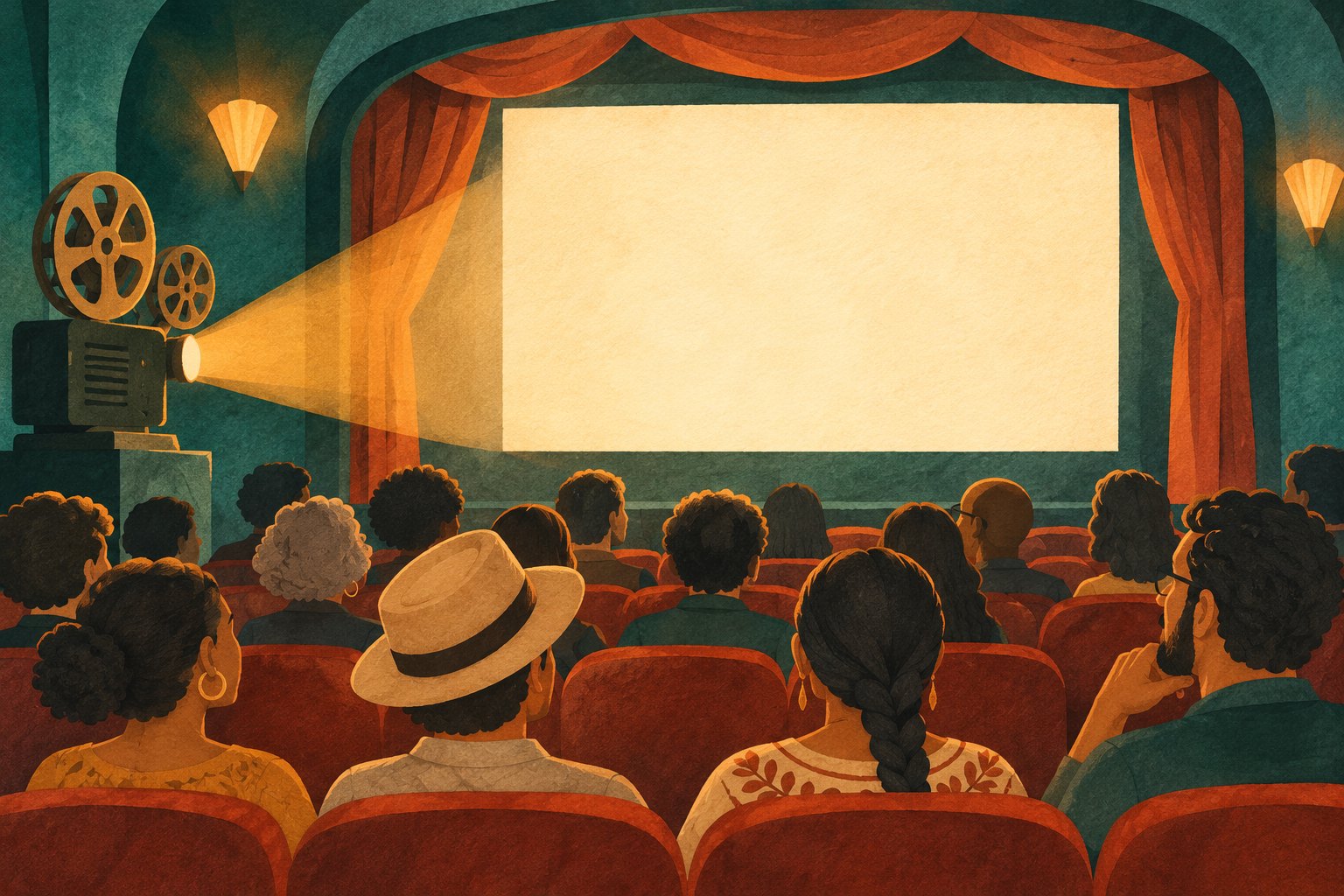
GALA is presenting GALA Film Festival: Latin American Innovation, according to Maryland Theatre Guide. The title offers an appealing invitation for moviegoers interested in discovering different approaches to storytelling. It also raises a useful critical question: what should innovation look and feel like when we are actually watching a film?
My starting point is character. A movie can rearrange chronology, stretch a shot, or disrupt a familiar genre, but those choices become compelling when they change our understanding of someone on screen. For a festival framed around Latin American innovation, that is a productive lens: pay attention to whose experience organizes the story, whose knowledge matters, and whose contradictions survive the ending.
This is spoiler-free festival commentary, not a review of individual selections. The announcement establishes the event and its framing; it does not, by itself, establish the artistic achievements of its films. Specific performances, scenes, and dialogue require their own close examination.
Read “Latin American Innovation” as an invitation to look closely
The festival’s title brings together a regional designation and an artistic proposition. Neither should become a shortcut. “Latin American” does not tell us how a film will move, what its characters want, or whether its tone will be playful, abrasive, intimate, or restrained. “Innovation” does not establish that an unfamiliar technique works.
The interesting possibility is that these terms encourage curiosity before judgment. A viewer can enter with questions about place, language, and perspective while allowing each film to define its own dramatic priorities. That leaves room for disagreement and surprise, both of which are essential to a worthwhile festival experience.
I would resist approaching the program as a search for one representative account of an entire region. A particular household, neighborhood, or relationship deserves attention on its own terms. The more precisely a film develops that world, the more substantial our discussion of its wider implications can become.
Festival framing can help a viewer discover a movie, but the encounter still has to happen. Our commentary on the Doha Film Festival’s prize winners considers a related distinction between the attention a festival generates and the independent response a film deserves.
Start with what the character can know
One of the clearest ways to assess adventurous storytelling is to track information. Does the audience discover events alongside the central character? Do we know something they do not? Does another person’s account force us to reconsider what we initially accepted?
These questions make formal choices concrete. A withheld explanation might place us inside someone’s uncertainty. It might also keep a thinly developed mystery alive. The difference emerges through consequences: does the missing information deepen our understanding of a decision, a fear, or a relationship?
Consider a hypothetical conversation filmed almost entirely on the listener’s face. Such a scene could shift its emphasis from the speaker’s explanation to the listener’s emotional calculation. A pause, a glance, or an interrupted response might become the central action. This is an example of how perspective can work, not a description of a GALA selection.
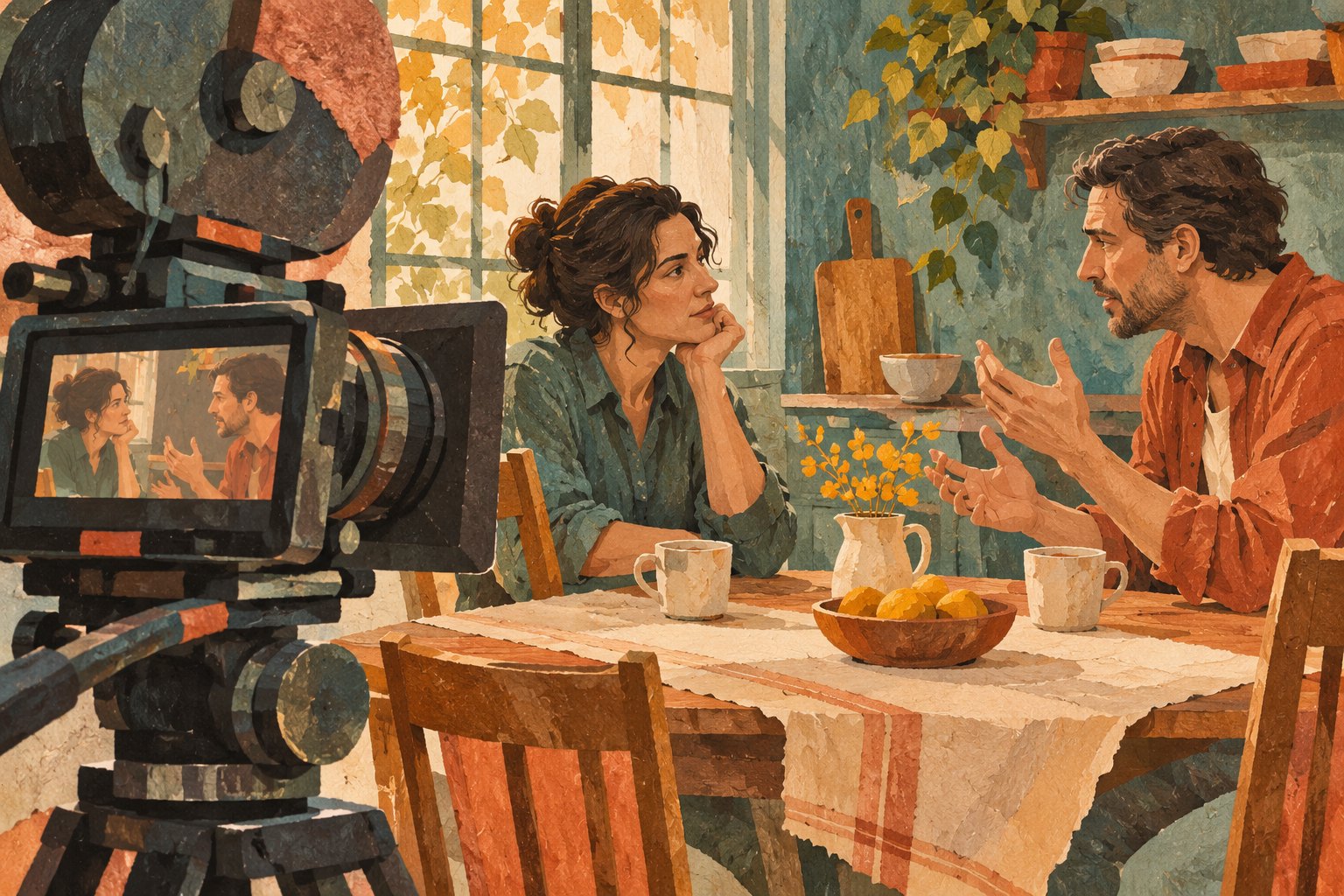
That distinction between an event and a person’s experience of it is where character analysis becomes especially rewarding. Instead of asking only what happened, ask what the character believed was happening—and what the film allowed us to see beyond that belief.
Judge technique by its dramatic effect
When a long take changes the balance of power
A sustained shot can give a performer room to reveal a change of mind without an edit announcing it. It can also keep several people visible, allowing us to choose where to look. The useful question is what develops during that duration. Does someone take control of the conversation? Does another person retreat? Does the space become uncomfortable?
Length alone is a poor measure of ambition. My preference is for duration that makes relationships more legible or more troubling. If a shot asks for patience, its eventual value should be visible in the experience it creates.
When editing makes us revise a judgment
A change in chronology can transform how we interpret a character. An action that initially seems cold may acquire a different meaning once earlier circumstances become clear. But the structure needs to earn that revision through details, rather than depend entirely on a late explanation.
A helpful test is to revisit an early scene mentally after the film ends. Can you identify behavior that now carries additional meaning? If the answer is yes, the structure may have enriched the character rather than merely delayed information.
When sound expands the world
Listen for what exists beyond the frame. An unseen conversation, an approaching vehicle, or a sudden absence of background noise can affect how a character occupies a room. Sound can establish pressure without cutting away to its source.
Again, these are viewing tools rather than claims about the festival’s films. They offer specific ways to investigate the promise of innovation without assuming that every conspicuous technique is an achievement.
Let cultural specificity complicate the characters
A useful critical habit is to distinguish uncertainty about context from uncertainty about motivation. You may not recognize every custom or social reference, yet still understand that someone is trying to avoid embarrassment, protect a relationship, or gain authority. Those emotional stakes offer an entry point while leaving room to learn more.
At the same time, familiarity should not flatten difference. Recognizing a family conflict does not mean every family operates under identical expectations. Notice who can interrupt, who must explain themselves, and whose wishes are treated as negotiable. Such details can reveal the social organization of a scene without reducing its characters to examples of a larger argument.
This is also why a character needs room to be inconsistent. Someone can care deeply for another person and behave selfishly toward them. Our character-focused review of All of a Sudden explores the value of looking beyond the roles people occupy in one another’s lives. That same critical attention can help a viewer approach unfamiliar stories with greater patience and precision.
Three questions to carry out of a screening
After a GALA festival screening, a short conversation built around evidence may be more illuminating than an immediate rating. Try these questions:
- Whose decision changed my understanding of the film? Identify the choice and the circumstances that made it matter.
- Which formal choice affected my response? Name a shot, edit, sound, or performance detail, then explain its effect.
- What remains unresolved for the character? Separate an intentionally open question from a dramatic thread that feels underdeveloped.
These questions allow enthusiasm and criticism to coexist. You might admire a film’s point of view while finding its pacing uneven. You might dislike a protagonist while recognizing how carefully the performance exposes their reasoning. Specific observations make those responses worth sharing.
The deeper promise of the festival’s theme
For me, the most meaningful possibility in Latin American Innovation is a change in how attention is distributed. A film can make a previously peripheral person central, give an overlooked reaction time to register, or expose the limits of the perspective we first trusted. Such choices can reshape a story without announcing themselves as radical.
That is the standard I would bring to GALA’s festival: does a film’s approach help us perceive its people more fully? The title opens the conversation. The individual films must supply the experiences, contradictions, and discoveries that give it substance.
Original content by this site's editorial team. Published: November 27, 2026 at 16:31:18 PST (Los Angeles time)