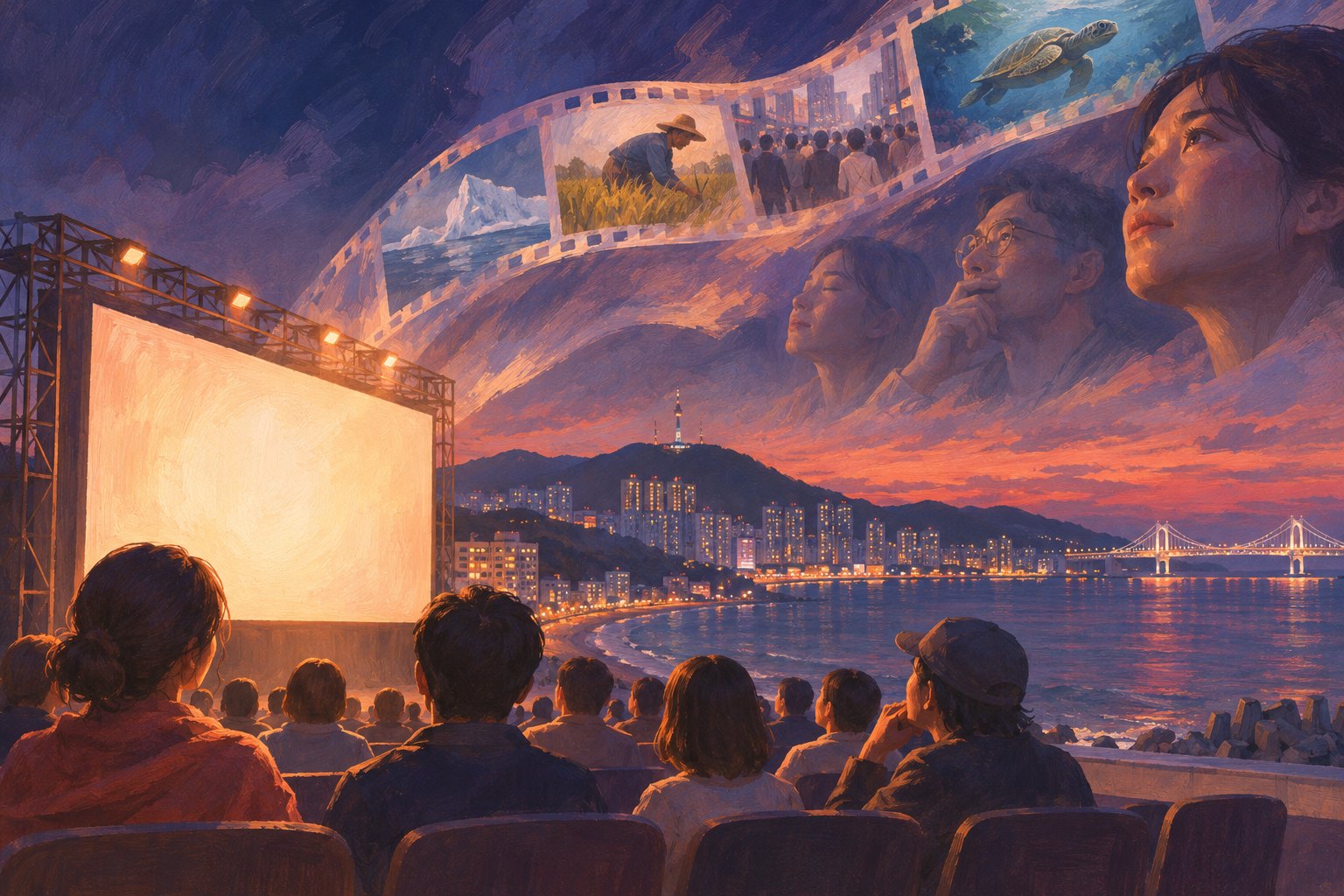
Busan International Film Festival 2026 raises a question that deserves more than a celebration of cinema’s power: what actually counts as a film’s impact? The International Documentary Association’s coverage title, Busan International Film Festival 2026: Cause and Effects, offers a useful starting point. A movie can move an audience, influence a conversation, or become part of a larger struggle. Those outcomes are related, but they are not interchangeable.
For viewers looking beyond festival prestige, the most revealing approach begins with the people on screen. What do they want? What prevents them from getting it? And does the film allow their lives to exceed the argument being made about them? This is critical commentary on the question raised by the Busan coverage, rather than a review of an individual festival selection. It contains no film-specific spoilers.
Start With the Person, Then Consider the Cause
My starting position is that a documentary becomes more persuasive when its subjects remain complicated. Someone can be wrong about a family member and right about an institution. A person seeking justice can also be impatient, funny, defensive, or uncertain. These qualities give viewers something more demanding than an uncomplicated invitation to sympathize.
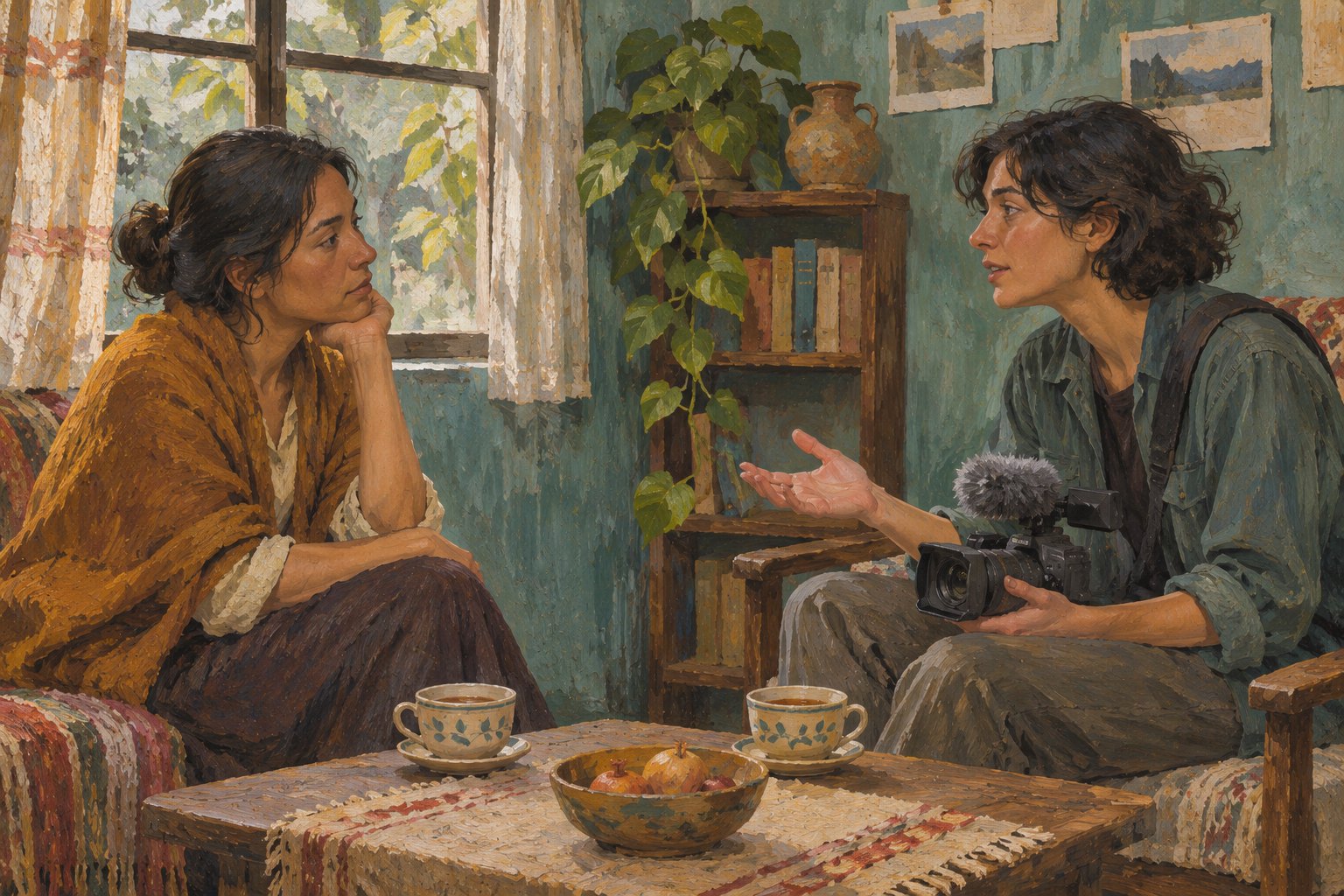
A character-centered reading therefore asks how much room the film gives someone to change their mind. Does an interview preserve hesitation? Can a participant disagree with the filmmaker’s apparent position? Are ordinary pleasures allowed to interrupt the central conflict? Such details matter because they establish whether we are encountering a person or being shown an illustration of a thesis.
The distinction becomes especially important when suffering is central to the story. Pain may explain why a film needs to exist, but it cannot substitute for characterization. A subject’s routines, relationships, and private ambitions help us understand what is at stake beyond the immediate injury.
That concern also informs our analysis of safety and perspective in Josephine: an issue becomes dramatically meaningful through the particular person trying to live with its consequences. Fiction and documentary carry different responsibilities, but both can lose emotional precision when the issue overwhelms the individual.
Cause and Effect Begin Inside the Edit
Before asking what a documentary changes outside a theater, consider how it creates explanations inside one. Put an accusation before a reaction shot, and the reaction appears to answer it. Follow a personal recollection with an archival image, and the image can seem to confirm the recollection. The connection may be justified, but the arrangement alone does not establish it.
This is where attentive film analysis becomes useful. Ask whether the movie demonstrates a relationship or merely encourages you to infer one. Does it establish when events occurred? Does it distinguish what a participant witnessed from what that participant later concluded? Does music intensify something already evident, or supply certainty that the evidence cannot support?
None of those questions requires a documentary to abandon style. Editing, sound, and visual rhythm are part of its expressive language. The critical issue is whether those choices clarify the material or quietly make a stronger claim than the material allows.
A memorable line deserves the same scrutiny. Before treating a sentence as the key to a person’s life, consider who said it, whom they were addressing, and what happened around it. Quoting dialogue without that context can turn an uncertain thought into a declaration. Strong criticism earns its quotations by explaining their dramatic function.
Emotional Force and Public Change Need Different Evidence
A documentary’s emotional effect can be described through close attention to its form. A held shot may make an evasion uncomfortable. An abrupt cut may expose a contradiction. Returning to a familiar space may reveal how much a relationship has changed. These are judgments a critic can explain by examining the film.
A claim about public change requires another kind of support. If a decision follows a screening, sequence alone does not prove that the screening caused the decision. Organizers, participants, journalists, institutions, and earlier campaigns may all belong in the explanation. Giving the film every ounce of credit can erase the work of the people it depicts.
My preference is for criticism that keeps these questions separate long enough to answer both honestly. A formally accomplished documentary may have no easily measurable public outcome. A film with rough edges may become useful to a community. Neither possibility settles the other question.
For Busan coverage framed around causes and effects, that distinction provides a productive reading lens. Look for the mechanism connecting a film to an outcome: who encountered it, what they subsequently did, and what evidence connects those actions. The more specific the explanation, the less it needs grand claims about changing the world.
The People on Screen Live Beyond the Ending
From an audience’s perspective, a screening ends when the lights come up. From a participant’s perspective, public exposure may introduce a new chapter. Recognition can be welcome; visibility can also complicate relationships or reduce a person to the most painful part of their history. These are possibilities to investigate, not consequences to assume about any particular Busan film.
That makes control an important critical question. What boundaries does the finished work appear to respect? Does it acknowledge that its access is partial? Can it leave something unexplained without making a participant’s privacy feel like a missing piece of entertainment?
Our commentary on whose perspective shapes a movie approaches a related problem through a different production context. Access to a setting does not automatically determine whose experience will organize the story. Documentary criticism needs to examine that choice with particular care because its subjects continue living outside the frame.
A Better Way to Read the Busan Conversation
For readers following Busan International Film Festival 2026, three questions can sharpen the discussion:
- What does the film establish? Separate observed events, personal testimony, interpretation, and unresolved uncertainty.
- How does its form shape your response? Identify the image, cut, sound, or sustained encounter that makes an argument emotionally convincing.
- Whose outcome is being measured? A festival audience, a filmmaker, and a participant may have different definitions of success.
The deeper value of the phrase Cause and Effects lies in that final plural. A film need not produce one tidy consequence to deserve attention. It may sharpen understanding while leaving disagreement intact, or make a familiar explanation harder to accept. In my view, the strongest documentary criticism follows those tensions back to the people involved. It asks what cinema enables us to see—and whether we have understood those people well enough to recognize what remains outside the picture.
Original content by this site's editorial team. Published: November 19, 2026 at 11:47:25 PST (Los Angeles time)