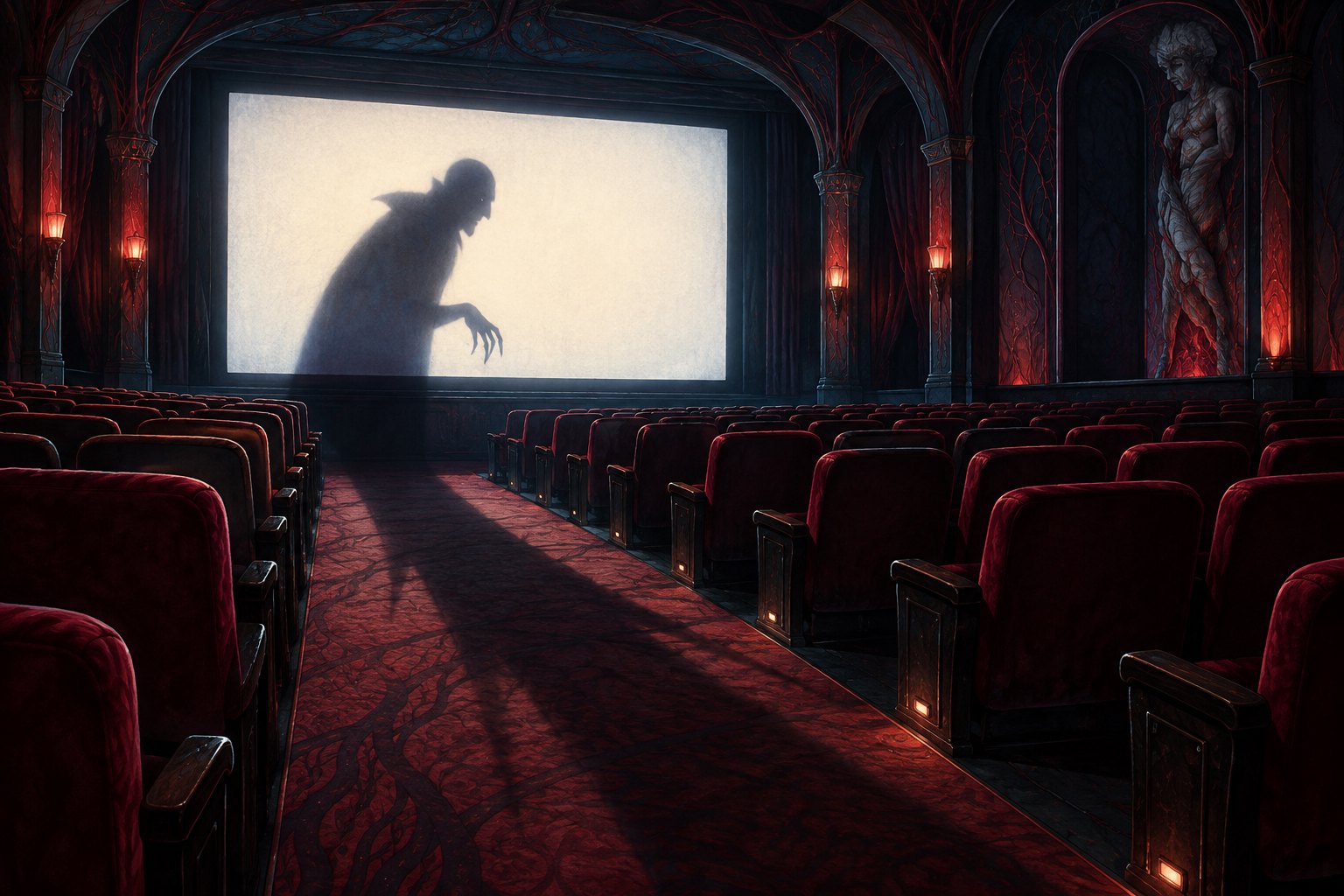
The Brooklyn Horror Film Festival’s 2026 lineup brings vampires and body horror into focus, according to Variety’s lineup coverage. For viewers drawn to horror that makes physical existence feel precarious, that pairing offers an intriguing starting point: stories about needing another person’s body, and stories about losing authority over your own.
This is a spoiler-free critical preview, not a review of the selected films. Individual titles, character arcs, dialogue, and screening arrangements are not established here. The useful question at this stage is what these two strands of horror can offer audiences—and what separates a compelling treatment from a collection of gruesome images.
What the Lineup’s Horror Themes Tell Us
Vampires and body horror describe different kinds of narrative possibilities. A vampire story can organize itself around pursuit, seduction, concealment, or an appetite that makes ordinary companionship dangerous. Body horror can turn the protagonist’s own physical experience into the source of uncertainty. Neither label tells us whether a particular film is frightening, funny, emotionally persuasive, or inventive.
For Brooklyn Horror’s 2026 program, the appeal of this pairing lies in the potential conversation between those forms. One can make intimacy threatening; the other can make even solitude unsafe. Seen together, they invite a question that goes beyond how much blood reaches the screen: where does a character still have room to choose?
That is an interpretive lens, not a claim about the intentions of the filmmakers or programmers. A lineup announcement establishes an invitation to watch. The films themselves must establish the meaning and quality of the experience.
Vampires: Follow the Person Who Pays for the Appetite
My starting point for evaluating a vampire film is the relationship between hunger and responsibility. A supernatural need can explain a character’s behavior without resolving its moral consequences. The dramatic interest comes from watching what the character does with that explanation: seek permission, invent excuses, withdraw from others, or decide that somebody else’s suffering is an acceptable cost.
Perspective matters enormously. Following the hungry character can make restraint feel exhausting and desire feel sympathetic. Following the person being pursued can turn the same encounter into an invasion. A film that moves between those perspectives has an opportunity to complicate its central relationship, provided the more vulnerable person retains an inner life.
For any vampire selections in the Brooklyn program, that would be a useful standard of attention. Does the potential victim want something beyond survival? Can that person recognize danger, misunderstand it, negotiate with it, or change the course of events? When only the predator gets motives and contradictions, a supposedly complex relationship can become dramatically lopsided.
Performance can supply what mythology alone cannot. Watch the pause before an invitation, the effort behind a reassuring expression, or the shift from affection to calculation. To my eye, those small decisions can make a vampire unsettling well before an effects sequence arrives. They give appetite a recognizable social form.
Body Horror: Stay With the Character After the Reveal
Body horror offers a different test of perspective. A transformation can be visually astonishing while leaving the person experiencing it underdeveloped. The stronger dramatic question is what the change interrupts: work, touch, privacy, self-recognition, or the ability to explain what is happening.
Consider a hypothetical scene in which someone notices an unfamiliar physical change. The reveal may deliver the immediate shock. What follows determines its emotional direction. Hiding it could produce shame or secrecy; showing it to someone could expose trust, dependence, or betrayal. These are possibilities within the form, not descriptions of announced festival films.
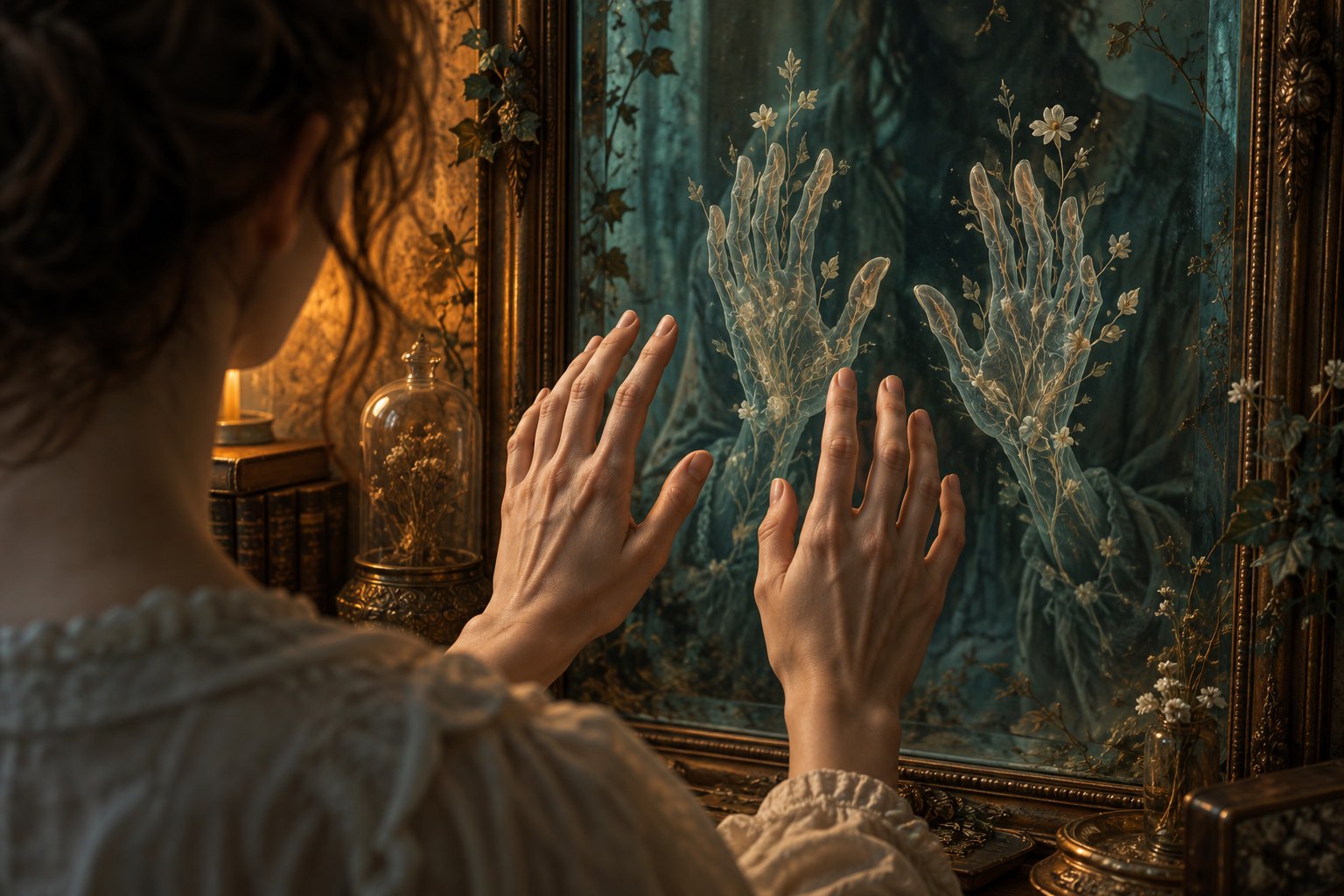
The camera also makes an argument. A distant view can encourage us to inspect a body as an object. Staying near a character’s face, breath, or hesitant movement can encourage us to experience uncertainty alongside them. Neither choice guarantees a good scene, but the distinction helps explain why one image feels intimate and another feels merely demonstrative.
I would also watch how a film handles care. Who believes the character? Who claims the right to intervene? Does help come with conditions? Physical vulnerability creates opportunities for tenderness as well as cruelty. Horror becomes especially troubling when those possibilities remain difficult for the protagonist to distinguish.
Readers interested in that emotional territory can also explore our commentary on Aunt Jet, mortality, and the pleasure of being alive. The relevant connection is the tension between having a limited body and wanting a meaningful life within it.
When the Two Forms Meet: Desire and Permission
Vampire fiction and body horror can overlap around transformation. A bodily change might be feared, desired, accepted under pressure, or understood too late. Those differences matter. Treating every transformation as either punishment or liberation can flatten the conflict before a character has a chance to respond.
A useful question for the Brooklyn selections is whether permission remains meaningful as circumstances change. Agreeing to intimacy does not settle every subsequent decision. Wanting power does not necessarily mean understanding its costs. A character may sincerely desire something and still confront consequences that alter that desire.
For me, the most promising dramatic territory is that movement between wanting and reconsidering. It allows horror to explore responsibility without reducing characters to examples in an argument. The meaning emerges through their decisions and relationships.
How to Read the Program Before Choosing a Screening
Genre labels are helpful starting points, but they cannot substitute for a synopsis or content advisory. When reviewing the Brooklyn Horror Film Festival 2026 program, use the individual listings to narrow your choices:
- Look for the central relationship. A story organized around lovers may offer a different experience from one centered on a family, a stranger, or an isolated protagonist.
- Check the tone. Comedy, romantic tension, dread, and sustained physical distress can all exist under the same broad horror label.
- Read specific content information. The phrase body horror alone does not establish the nature or intensity of a film’s imagery.
- Confirm screening details separately. Consult current event listings for the title, venue, start time, and admission conditions before making plans.
Our guide to approaching festival films through character choices offers a complementary way to turn initial curiosity into attentive viewing.
The Deeper Question: Who Gets to Define the Monster?
The pairing highlighted in Brooklyn Horror’s 2026 lineup makes one distinction especially worth considering: a frightening appearance and a harmful action are different things. A physically transformed character may remain compassionate. An attractive, composed character may exercise devastating control. How a film distributes sympathy between them can reveal more than its most elaborate effects.
My hope for these strands of the program is that the films make room for that uncertainty. Horror can make viewers recoil, then ask them to reconsider the reaction. The lasting experience comes when the person inside the frightening image remains specific enough to trouble an easy judgment. That is the possibility worth watching for when the lights go down.
Original content by this site's editorial team. Published: September 15, 2026 at 12:08:45 PDT (Los Angeles time)