Bad Toys brings Rooster Teeth founders Matt Hullum and Burnie Burns back together for a Christmas horror movie, according to Variety. The reunion supplies an immediate reason for their followers to pay attention. The combination of title and genre supplies another: something associated with delight, generosity, and childhood now carries the suggestion of danger.
That is an appealing starting point, but it is still a starting point. This is a spoiler-free examination of the announcement and its creative possibilities, rather than a review of a finished film. A judgment about performances, dialogue, character arcs, or an ending requires the movie itself. For now, the interesting question is what would make this particular holiday-horror proposition matter beyond the pleasure of seeing familiar collaborators reunite.
What the Hullum–Burns reunion actually tells us
The central news is straightforward: Hullum and Burns are reconnecting professionally around Bad Toys. Their shared association with Rooster Teeth gives the announcement a recognizable identity. It does not, by itself, tell us how the film will look, whose perspective will guide it, or what kind of emotional experience its scares will create.
For returning fans, a reunion can invite expectations of familiar rhythms and sensibilities. For someone approaching the filmmakers for the first time, those expectations may mean very little. Both audiences deserve a story that establishes its own stakes. Recognition can make an entrance feel exciting; it cannot make a character’s loss feel painful without the film doing that work.
That distinction is particularly useful here. The project should eventually be assessed through the relationships and choices onscreen, rather than through assumptions about its creators’ personal chemistry. A productive collaboration may enable strong filmmaking, but the evidence of that strength belongs in the finished scenes.
The most promising tension is between comfort and mistrust
My strongest interest in Bad Toys comes from the emotional contradiction in its title. A toy is an object someone chooses to handle, keep nearby, and invest with personality. Calling it bad introduces uncertainty about that relationship. Is the object dangerous, has its owner misunderstood it, or does the label reveal something about the person applying it? These are possible readings of the title, not established plot points.
Christmas adds another layer because giving a present is also an expression of trust. Someone has selected an object with another person in mind. If a holiday horror story turns a gift into a source of unease, the disturbance can extend beyond physical danger: a gesture meant to communicate affection becomes difficult to interpret.
That possibility is more compelling to me than a simple collision of festive decoration and violence. Decorations establish a season. A damaged relationship gives the season dramatic weight. The strongest version of this approach would make viewers understand why a character initially welcomes something they might later fear.
Character perspective would determine what feels frightening
A title involving toys naturally invites thoughts about childhood, but it would be premature to assign Bad Toys a child protagonist or a particular family structure. What can be examined is the storytelling choice involved in perspective. The same unfamiliar noise could feel like an invitation to one person, a nuisance to another, and evidence of danger to a third.
If a film follows someone who feels protective toward a suspicious object, suspense can develop through hesitation. Recognizing danger might mean surrendering a source of comfort. If it follows someone responsible for other people’s safety, the pressure could come from deciding when uncertainty justifies intervention. Neither situation needs a foolish character; each needs a believable reason to delay or act.
Scale also matters. A room photographed from standing height offers different information from that same room viewed beneath a table. Furniture can become an obstruction. A doorway can conceal the most important part of an action. Our discussion of how physical scale could shape the CookieRun adaptation approaches a related question: can size influence a character’s experience instead of functioning only as a visual novelty?
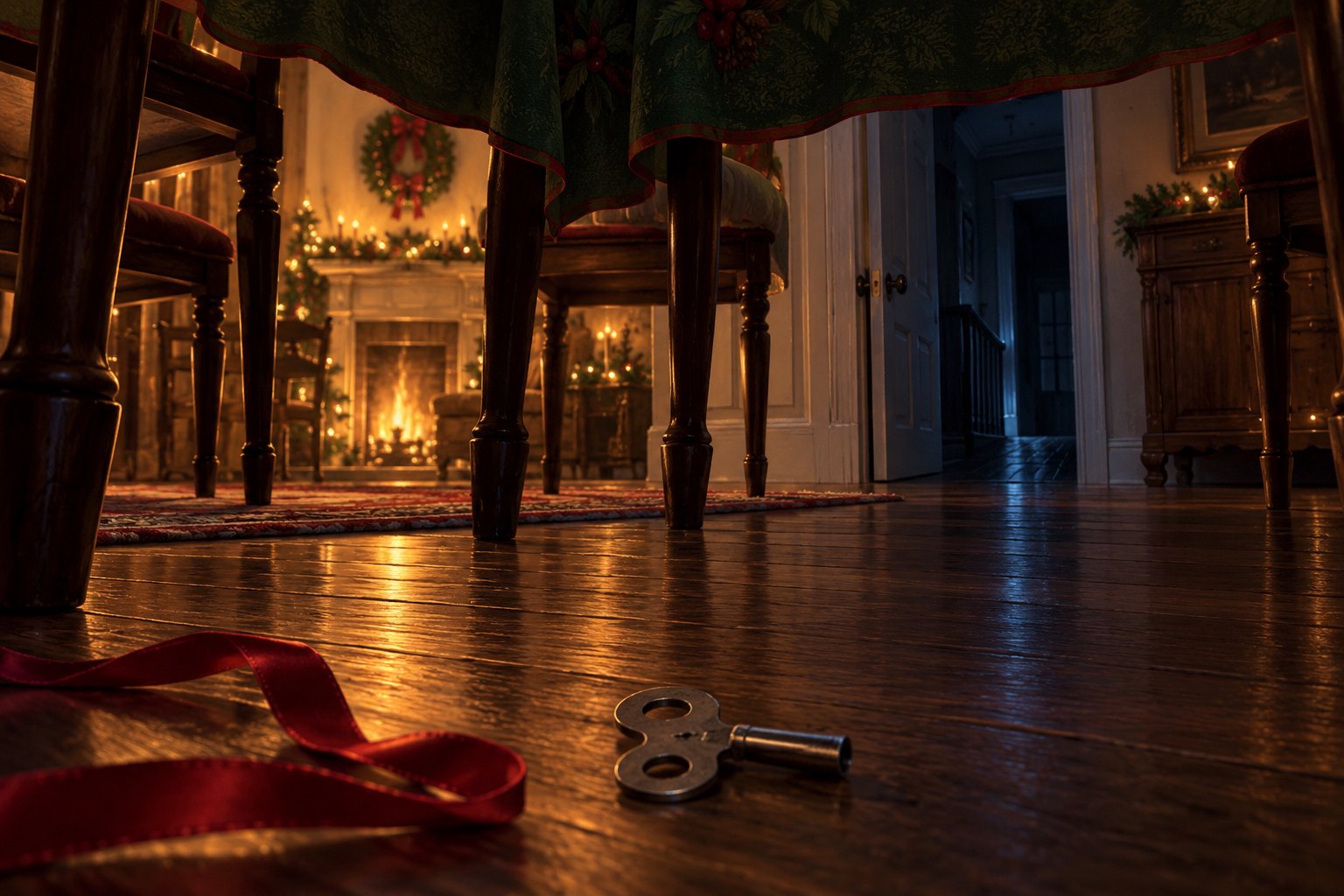
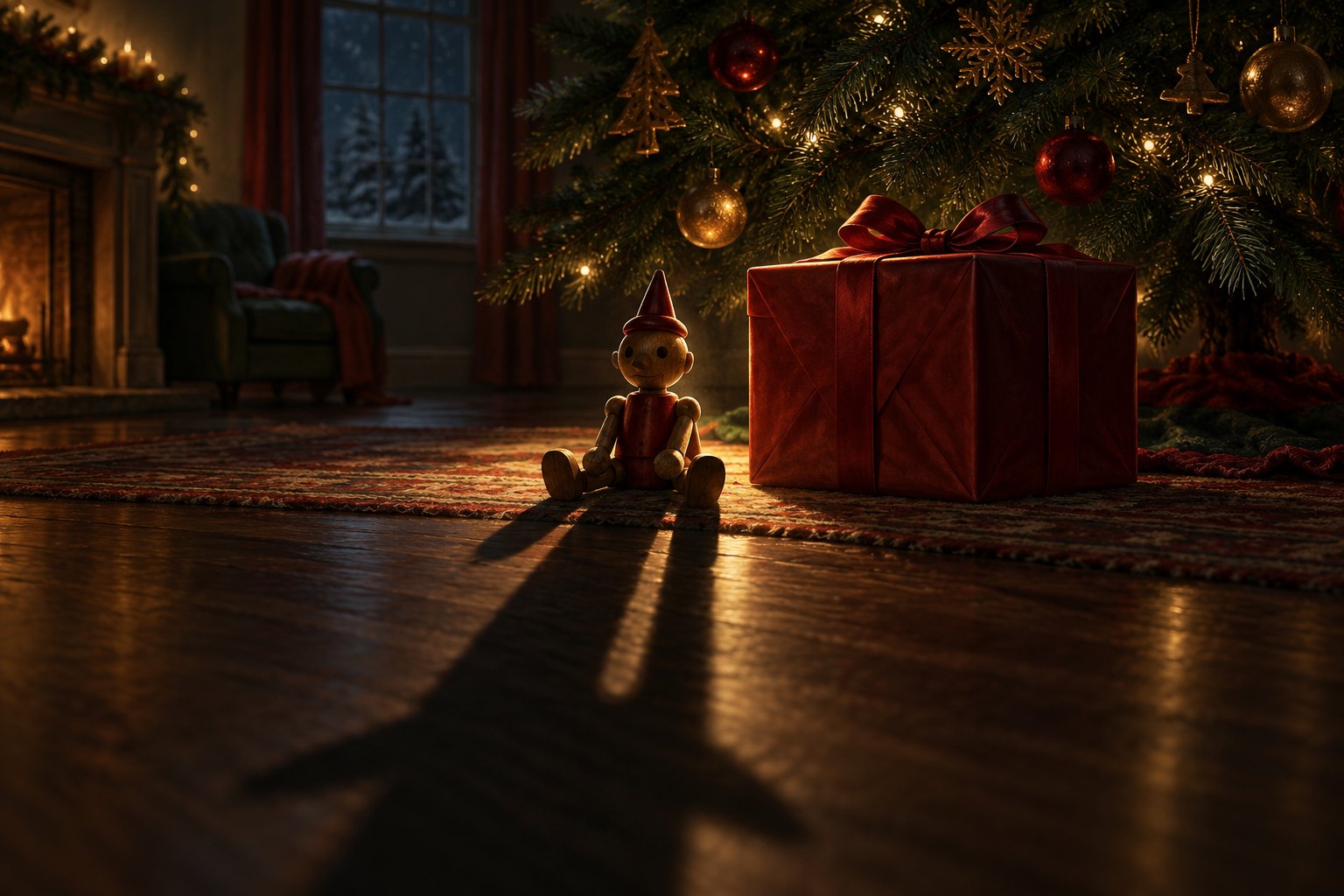
These illustrations explore that visual possibility; they do not depict scenes or production designs from Bad Toys. The distinction matters because imagining a film’s potential should not quietly turn into describing material audiences have not been shown.
Familiar rooms could carry more tension than elaborate spectacle
For a Christmas horror movie, an ordinary interior offers useful dramatic material. A room arranged for celebration has routes, gathering places, and objects people expect to find in particular positions. Once the audience understands that arrangement, even a small change can become noticeable. Suspense depends partly on knowing enough to recognize when something has gone wrong.
Sound could make that uncertainty especially effective. A mechanical click, a scrape beneath furniture, or an abruptly silent room can direct attention without explaining its cause. The critical question would be whether those sounds belong to a character’s experience: what do they hear, what do they dismiss, and what finally changes their interpretation?
This is also why believable surroundings matter. Our commentary on making the Cyberpunk 2077 movie’s world feel inhabited considers how environments reveal daily life. Holiday horror can use the same principle on a domestic scale. A convincing home gives the audience something specific to worry about losing.
What a meaningful review will need to examine
When Bad Toys can be evaluated as a complete movie, the most useful questions will concern cause and consequence. Do characters revise their beliefs when confronted with evidence? Does a frightening incident change a relationship? Does the film develop its central threat, or simply repeat it with greater volume?
Dialogue will matter for similar reasons. A memorable line earns its place through the person saying it and the circumstances surrounding it. Without verified dialogue, quoting supposed jokes or ominous warnings would substitute invention for criticism. Likewise, references to earlier work should only be discussed as Easter eggs when there is something identifiable onscreen to support that reading.
The deeper possibility: when a gift becomes an obligation
The most intriguing interpretation available at this stage concerns the pressure attached to receiving something. Gifts can carry expectations: appreciation, loyalty, affection, or a willingness to overlook discomfort. A Christmas horror story could find unsettling territory in the moment someone realizes that accepting a present has made refusal harder.
That is a thematic possibility, not a claim about Bad Toys’ actual story. Still, it explains why the announcement has appeal beyond the reunion. Hullum and Burns have a title and a seasonal genre pairing that invite questions about trust. If the eventual film makes those questions personal, its holiday setting could become essential to the fear—and the people facing it could give that fear a lasting emotional consequence.
Original content by this site's editorial team. Published: October 8, 2026 at 16:22:33 PDT (Los Angeles time)