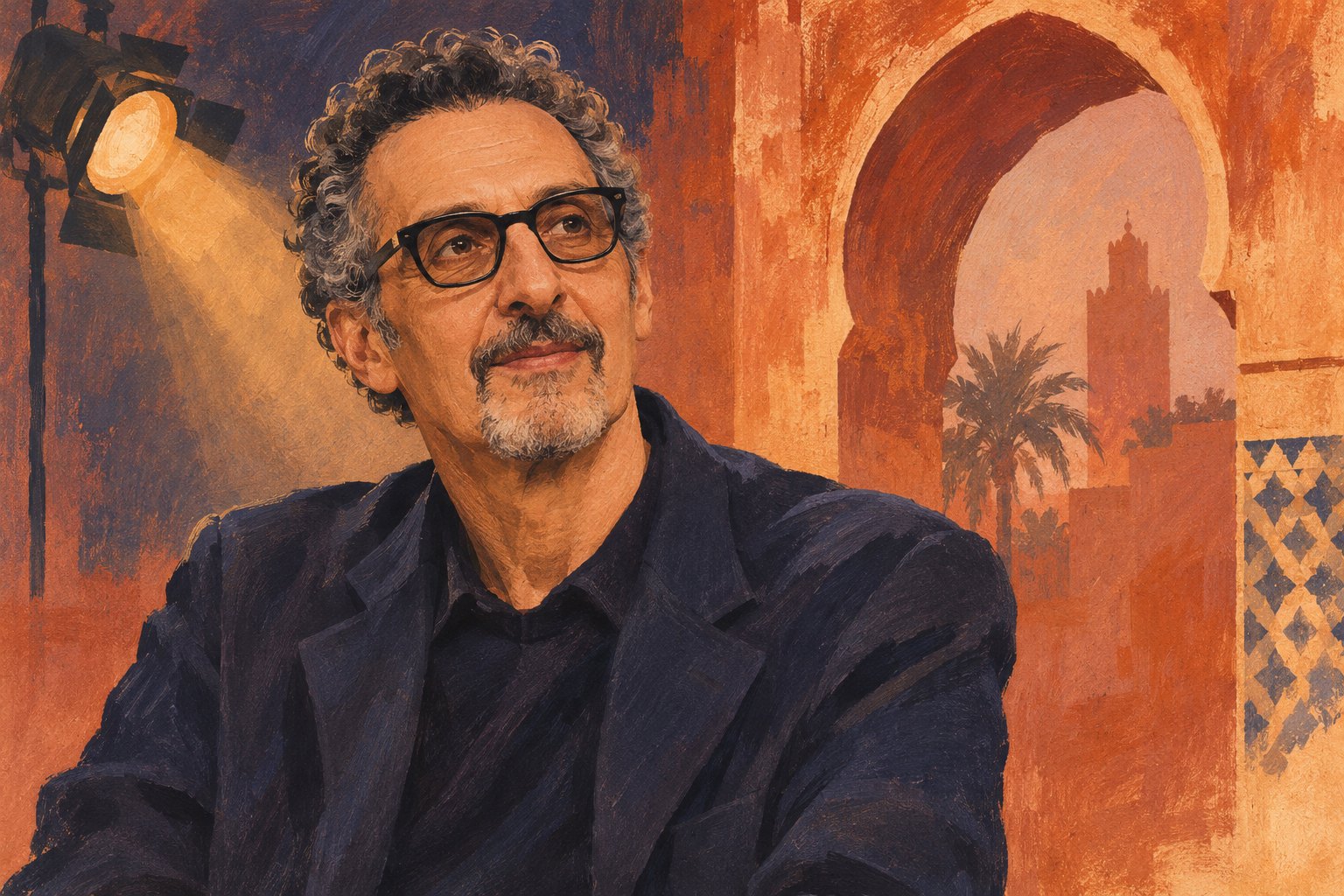
John Turturro has received an award at the Marrakech Film Festival, with Variety’s coverage highlighting his description of himself as “still a beginner.” The honor recognizes achievement; the phrase suggests an artist who remains willing to learn. Together, they offer an illuminating way to revisit one of his most unsettling performances: the writer at the center of Barton Fink.
There is a productive tension between that expression of openness and a character who struggles to practice it. Barton believes deeply in his artistic mission. He has much less patience for experiences that might challenge his understanding of other people. Watching Turturro inhabit that contradiction makes the Marrakech news an invitation to look closely at the work, beyond the reassuring language of a career tribute.
Spoiler warning: The following critical analysis discusses major developments and the ending of Barton Fink.
Why Barton Fink belongs in this conversation
The Coen brothers’ 1991 film gives Turturro a particularly demanding assignment: make a self-important man vulnerable without quietly excusing him. His performance won the best actor award at Cannes, where the film also received the Palme d’Or and the directing prize. Those honors are recorded in the [official Cannes archive](https://www.festival-cannes.com/en/f/barton-fink/).
Recognition makes the comparison especially pointed. Barton begins with acclaim, yet acclaim has not prepared him to meet unfamiliar demands. His confidence concerns the importance of his vocation; his uncertainty concerns almost everything he must actually do.
For me, Turturro’s achievement is that both conditions remain visible. Barton’s anxiety does not erase his vanity, and his vanity does not make his fear ridiculous. The performance leaves us in the uncomfortable position of understanding him while recognizing how exhausting he would be to know.
Our discussion of Jeff Goldblum’s Marrakech appearance and screen storytelling approaches another festival moment through performance. Turturro’s beginner remark opens a different question: how does an actor convey a person whose certainty prevents discovery?
A writer who loves humanity at a distance
The premise is simple. A successful New York playwright moves to Hollywood and receives an assignment to write a wrestling picture. Inside the shabby Hotel Earle, he struggles to produce it. His neighbor, Charlie Meadows, appears to offer precisely the everyday experience Barton claims to value.
Barton’s attachment to “the common man” sounds generous until an actual person wants to speak. Charlie offers stories; Barton keeps explaining his philosophy. The scene’s discomfort comes from the gap between declaring an interest in people and making room for them.
Turturro makes that failure legible through the character’s urgency. Barton seems compelled to establish his position before the conversation can move anywhere else. His ideas become a form of self-protection: if he keeps talking about what a writer should be, he can postpone the frightening business of becoming one in this unfamiliar setting.
That is why the film’s treatment of blocked creativity feels sharper than a simple portrait of professional frustration. Barton wants authentic material, but he also wants authority over what authenticity looks like. The world keeps arriving in forms he has not approved.
Charlie makes listening a dangerous proposition
John Goodman’s Charlie initially offers warmth against Barton’s constriction. Their contrasting rhythms matter: one seems willing to occupy the room, while the other appears anxious about everything entering it.
The revelation that Charlie is a killer prevents an easy moral lesson. Listening would not necessarily have delivered Barton a trustworthy friend or a useful screenplay. The person he reduces to a reassuring social category contains realities far beyond that category.
Charlie’s accusation, “You don’t listen,” therefore lands with disturbing force. A monstrous person can identify a real failure without becoming a reliable moral authority. The film asks us to hold those judgments together.
This is where Turturro’s performance becomes essential to the horror. Barton is not simply receiving surprising information. The system through which he has understood himself is failing. He has imagined that his sensitivity gives him special access to human experience; now his proximity to another human being exposes how little he knows.
These plot developments and the film’s recurring language are documented in the [film’s detailed narrative account](https://en.wikipedia.org/wiki/Barton_Fink). The interpretation here is that Barton’s deepest crisis concerns attention as much as authorship.
Audrey exposes the work behind the reputation
Audrey Taylor, played by Judy Davis, introduces another challenge to Barton’s assumptions. Her contribution to the work of the novelist he admires unsettles his idea of solitary literary greatness. Talent and reputation no longer belong neatly to the same person.
From Barton’s perspective, this is disorienting. From Audrey’s, the practical demands of helping someone write already exist, regardless of the elevated stories men tell about inspiration. She understands the labor beneath the image.
Her murder makes the film’s treatment of her especially troubling. My reservation is that her narrative function remains heavily tied to what happens to Barton. Yet that imbalance also sharpens the question the film raises: how readily does another person’s suffering become material for someone else’s artistic crisis?
Turturro does not resolve that problem by making Barton suddenly noble. His panic remains immediate and personal. The character’s vulnerability brings us close enough to feel his terror without guaranteeing that his priorities deserve our approval.
A performance that keeps the satire human
Barton Fink can feel deliberately punishing. Its grotesque encounters and withheld explanations may frustrate viewers seeking a straightforward portrait of Hollywood. I find its strongest passages are those in which an ordinary social failure becomes unbearable before anything overtly nightmarish happens.
Turturro supplies that continuity. Embarrassment, pride, dependence, and fear belong to the same man. The strange world around Barton remains compelling because his need to preserve a flattering account of himself is recognizable.
On a rewatch, pay attention to who gets to finish a thought. Then watch how Barton responds when someone offers practical help instead of admiration. Those exchanges reveal more about the performance than treating every object as a clue to a single hidden solution.
The ending leaves understanding unfinished
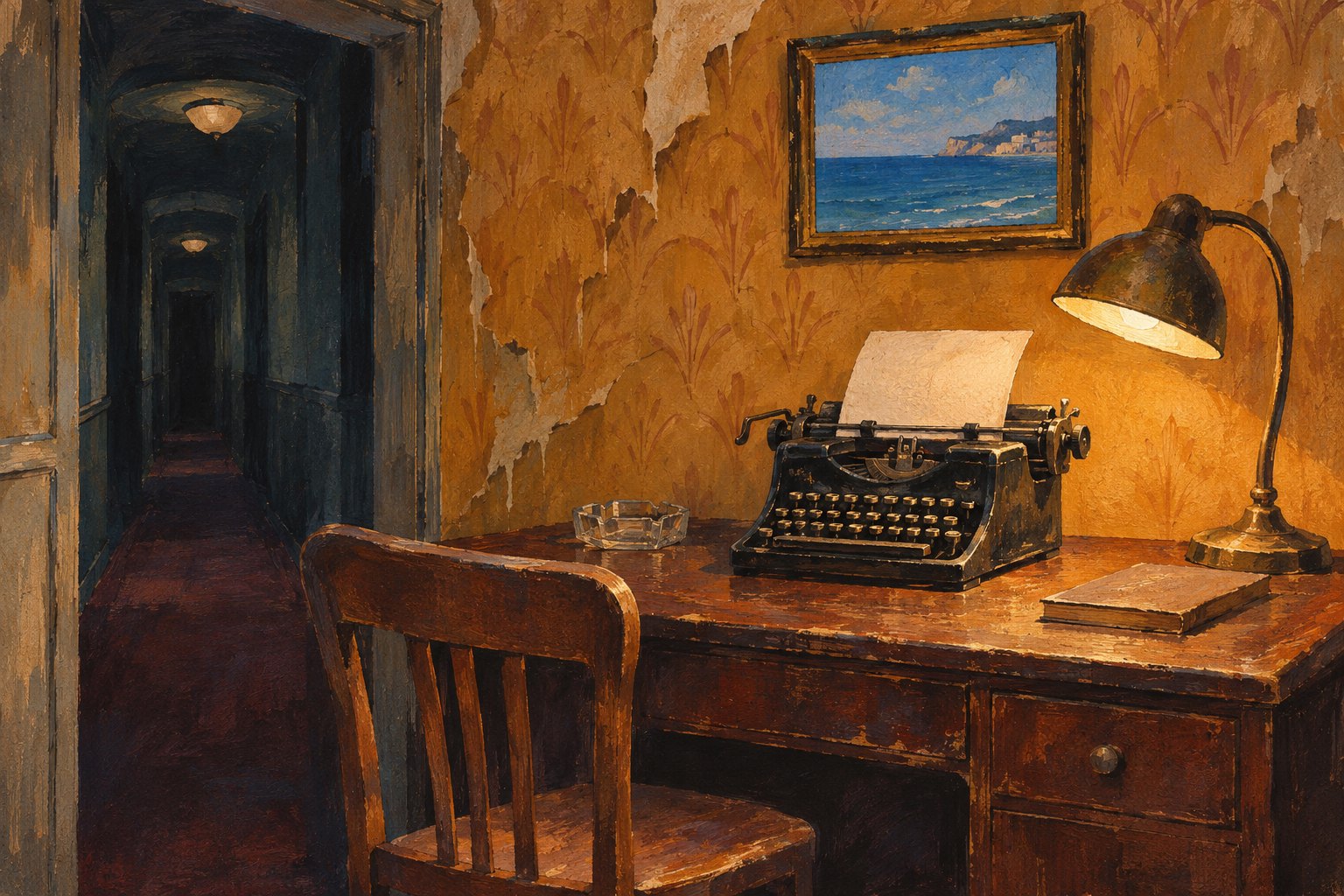
The beach ending returns to the visual language of the picture in Barton’s hotel room, while the contents of the box he carries remain unconfirmed. The repetition offers recognition without providing mastery. Seeing something familiar does not mean he understands what stands before him.
My reading is that the film leaves Barton suspended between observation and possession. Can he encounter an image—or a person—without immediately making it serve his own story? The ending withholds an answer because his earlier certainty has earned our suspicion.
That uncertainty connects with the question of what stays with viewers after a festival screening. A lasting performance may give us a contradiction to reconsider rather than a lesson to repeat.
Turturro’s Marrakech honor brings us back to the distinction between achievement and completion. Calling oneself a beginner need not diminish accumulated skill. It can express a willingness to let the next encounter change what that skill is for. Barton Fink remains a powerful companion to that thought: an accomplished portrayal of someone who desperately needs to learn how to begin again.
Original content by this site's editorial team. Published: November 22, 2026 at 18:01:59 PST (Los Angeles time)