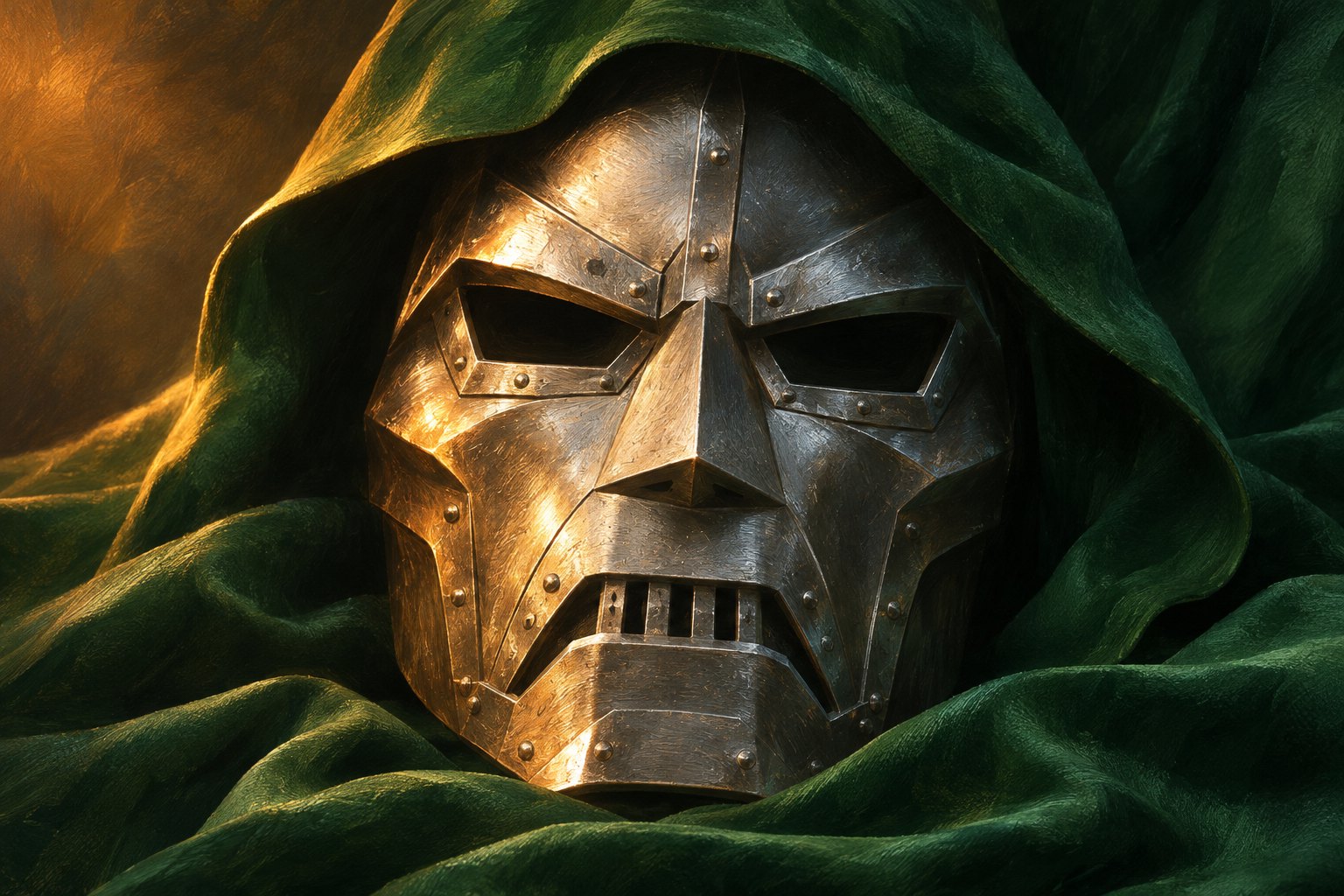
Marvel Studios’ Avengers: Doomsday is scheduled to open exclusively in U.S. theaters on December 18, 2026. An official trailer is available, while a Disney+ streaming date has not been announced. The casting carries the most intriguing creative question: what happens when Robert Downey Jr., an actor audiences associate with Tony Stark, becomes Victor von Doom? These release and casting details are outlined in [Disney+’s official film guide](https://www.disneyplus.com/explore/articles/avengers-doomsday?msockid=09755eb363ca66a4050a494b62006788).
This is a spoiler-free casting analysis and preview, not a review of the completed film. The announced roles offer plenty to examine without inventing scenes, quoting unverified dialogue, or treating promotional footage as a complete story. The interesting question is how these performers might change our understanding of characters we think we already know.
The essential release, trailer, and cast details
Anthony and Joe Russo direct Avengers: Doomsday. Its announced ensemble includes Downey as Doctor Doom, Chris Evans as Steve Rogers, Chris Hemsworth as Thor, and Anthony Mackie as Sam Wilson/Captain America. Pedro Pascal, Vanessa Kirby, Joseph Quinn, and Ebon Moss-Bachrach play the Fantastic Four; Patrick Stewart and Ian McKellen return as Charles Xavier and Magneto. Those assignments appear in [Disney+’s official cast guide](https://www.disneyplus.com/explore/articles/avengers-doomsday-cast-characters).
That is a useful starting point, but an actor’s inclusion does not establish screen time, narrative importance, or a character’s ultimate allegiance. A cast announcement answers who is participating. It cannot tell us whose perspective organizes the movie.
Likewise, the trailer can introduce the film’s visual approach and advertised attractions without revealing the finished experience. Editing, reaction shots, and dialogue placement can create associations that a full scene later complicates. For a broader discussion of the theatrical announcement, see our preview of Doomsday’s release and dramatic stakes. Here, the focus is on the performances and relationships behind the lineup.
Doctor Doom has to establish his own identity
Downey’s casting creates an immediate layer of audience interpretation. Even before Doom speaks, viewers may bring memories of another character to the performance. That response exists outside the fiction: recognizing an actor does not establish a connection between the people he plays.
Downey playing Doom is not, by itself, confirmation that Tony Stark returns. The announced role is Victor von Doom. Any theory about a shared identity or an explanation for the resemblance needs separate evidence.
As a performance challenge, this is fascinating. An actor can distinguish characters through tempo, posture, attention, and the way a line lands. A pause can invite intimacy or demand submission. Humor can make someone approachable or reveal contempt. Those choices will matter more than simply changing the costume.
My hope is that Doom becomes recognizable through his own habits of thought. A convincing antagonist needs a definition of success that makes sense to him, even when it is intolerable to everyone else. If the performance establishes that internal logic, recognition of Downey can become an unsettling extra layer rather than the character’s entire attraction.
The danger is that anticipation of the casting reveal overwhelms curiosity about Victor himself. A movie can spend considerable energy announcing that an actor has changed sides while giving the new character too little independent substance. The useful critical question will be whether viewers leave discussing Doom’s decisions as much as Downey’s return.
Reed Richards offers a different measure of power
The official character guide identifies Doom’s rivalry with Reed Richards. That relationship gives the crossover a potential organizing conflict beyond the spectacle of familiar figures meeting. It does not establish how the rivalry unfolds in this particular film.
For Pascal’s Reed, the most interesting possibility is a confrontation in which intelligence cannot settle the argument. Two people can understand the same danger and disagree completely about what their knowledge entitles them to do. Being able to solve a problem is different from having the authority to impose the solution.
That is an interpretive possibility, not a plot description. It suggests a useful standard for evaluating the eventual drama: does the conflict expose different values, or merely stage a competition between impressive abilities?
The other Fantastic Four performances also deserve attention on their own terms. A Reed-centered rivalry should still leave room for Sue, Johnny, and Ben to influence events. In an ensemble, independence becomes visible when another character’s judgment changes the direction of a scene. Agreement alone tells us relatively little about a relationship.

Steve Rogers and Sam Wilson raise a question of authority
Evans and Mackie appearing in the same announced ensemble invites attention to how the film distributes leadership. Their presence does not confirm a succession dispute, a reunion scene, or any specific exchange. It does, however, make the allocation of dramatic authority worth watching.
A film communicates authority through small decisions. Who gets asked for advice? Whose objection interrupts the plan? Who makes a choice that other people must live with? These details can establish leadership more persuasively than an introduction or a costume.
My preference would be for the screenplay to let both characters contribute distinct judgments. Familiarity with one performer should not automatically settle every argument in his favor. Nor does giving another character command require making everyone around him less capable.
This is also where ensemble filmmaking becomes an editing problem. The person delivering a speech is not always the scene’s emotional center. A reaction can reveal uncertainty, disagreement, or responsibility. Watching who receives that attention may tell us more than counting lines.
The returning X-Men need room beyond recognition
Stewart and McKellen bring a different kind of familiarity to the cast. Their return creates an invitation to remember earlier performances, but recognition is only the beginning of a scene. A character becomes dramatically present when there is something specific to understand, resist, or choose.
For viewers, the useful distinction is between an entrance and a contribution. An entrance rewards recognition immediately. A contribution changes what happens afterward. Both can be enjoyable, but only the second gives a returning character a necessary place in the story.
The same principle applies across the ensemble. An established performer should not have to repeat a familiar mannerism every time the camera arrives. Allowing a character to listen, misjudge someone, or revise an opinion can reveal more than another signature pose.
How to prepare without turning the movie into homework
A selective rewatch is likely to be more rewarding than a rushed completion exercise. Choose the characters whose histories you want to remember, then pay attention to their relationships and decision-making. Plot summaries can recover events; performances recover how those events felt.
Our character-focused Marvel release-order guide provides a starting point. Treat it as a route through earlier stories, not a requirement to finish everything before buying a ticket.
When watching promotional footage, separate three questions: what is visibly presented, what the editing encourages you to infer, and what remains unknown. That approach leaves room for anticipation without converting a theory into a spoiler.
The deeper promise is a story about earned authority
Viewed through its casting, Avengers: Doomsday offers an opportunity to examine how authority works. A familiar face can carry trust before a character earns it. A celebrated return can dominate attention before that person contributes anything. A brilliant mind can appear indispensable without being right.
That is the possibility I find most compelling: a crossover that makes audiences reconsider whom they instinctively follow. Whether the completed film realizes it remains an open question. Its strongest potential lies in giving these recognizable performers enough freedom—and sufficiently difficult choices—to make recognition the beginning of interpretation.
Original content by this site's editorial team. Published: November 29, 2026 at 12:26:32 PST (Los Angeles time)