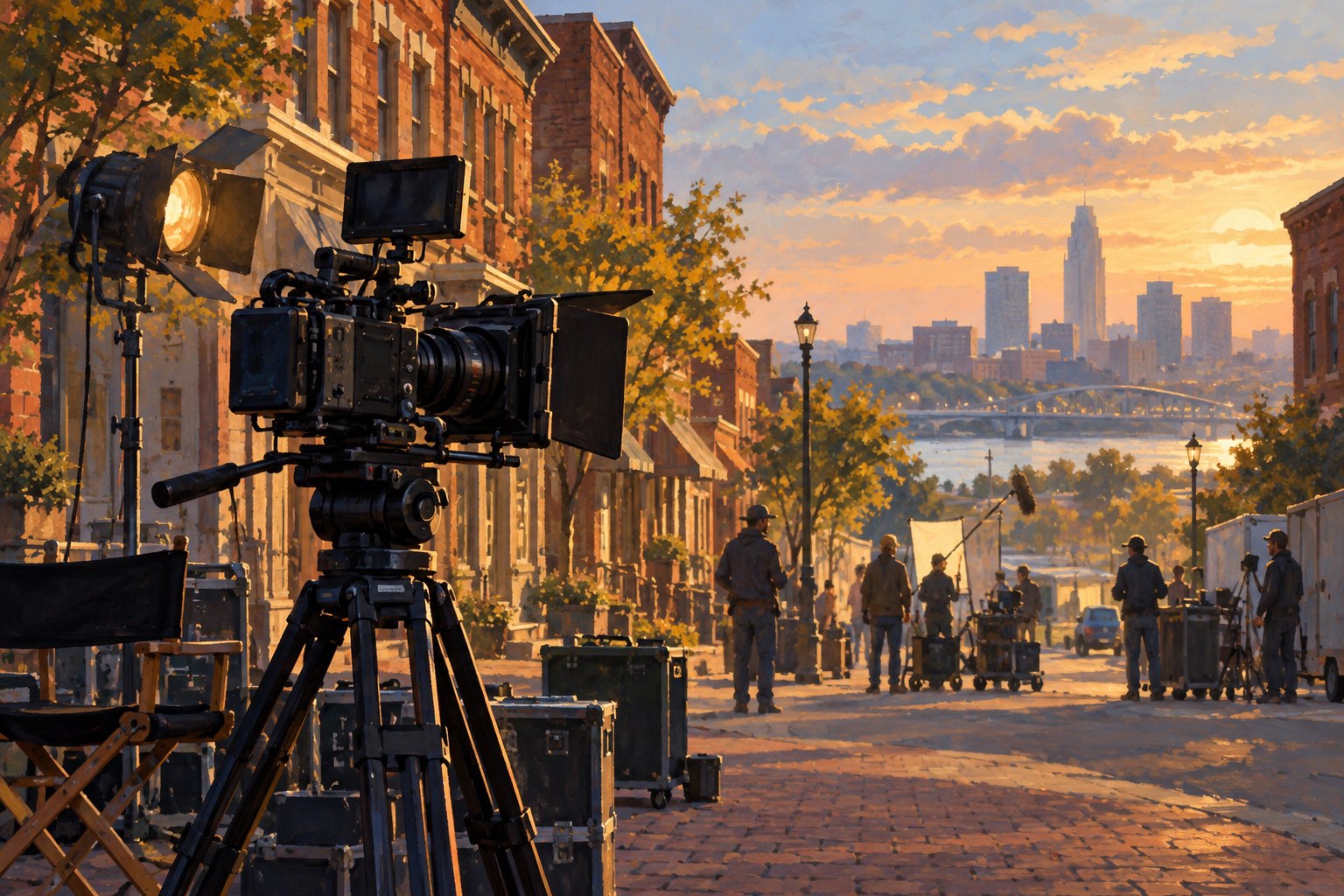
A movie featuring a Saturday Night Live alum is filming at multiple locations in Omaha, according to WOWT. For residents, that means the possibility of seeing familiar surroundings become part of a movie. For film fans, it raises an equally interesting question: what happens when an actual city becomes a character’s world?
The performer’s television connection is an immediate hook, but the location work deserves attention of its own. A recognizable face can draw viewers into a film; the places surrounding that face can make the story feel inhabited. The distinction matters because a production’s presence in Omaha and its eventual portrayal of Omaha are two different things.
This is spoiler-free production commentary. An assessment of the finished movie’s performances, dialogue, and character arcs requires the film itself; the filming news alone cannot support those judgments.
What the Omaha filming news establishes
The central reported facts are straightforward: the project is a movie, it features an SNL alum, and filming involves multiple Omaha locations. Those details establish a local production story. They do not, by themselves, tell us how much screen time the city will receive or whether the narrative identifies its setting as Omaha.
That last distinction is useful. A filming location is the physical place where material is recorded. A story’s setting is the place the audience understands the characters to inhabit. The two can coincide, but one does not automatically establish the other.
Similarly, multiple locations do not necessarily mean an expansive story. Several sites might supply different parts of a compact fictional environment. Until the completed scenes can be evaluated, the number of stops on a production schedule says more about where filming happens than about the movie’s dramatic scale.
The most revealing location detail is who feels at home
My strongest interest in the Omaha shoot is how its locations might express character perspective. The useful question is not simply whether a street looks attractive. It is whether the person walking down it belongs there, feels watched there, or wants to leave.
Consider a general filmmaking example, unrelated to any confirmed scene in this production. Two people can enter the same room and experience it differently. One knows where to sit and whom to acknowledge. The other pauses at the doorway. Before either speaks, their movement can establish confidence, discomfort, or an unequal relationship.
A location becomes dramatically valuable when the direction notices those differences. Framing one person comfortably within a busy space while isolating another near its edge can communicate social standing without explanatory dialogue. The setting supplies the conditions; the actors’ behavior gives them meaning.
That is the opportunity worth watching in the Omaha footage when it becomes available. Will the surroundings influence what characters do, or will the camera mainly use them as a backdrop? Both approaches can produce attractive images, but the former offers more material for character analysis.

The SNL connection creates expectations, not a verdict
An SNL credit can encourage audiences to anticipate comedy. It does not establish this movie’s genre, the performer’s role, or the tone of an individual scene. Those are separate questions, and treating the credit as an answer would narrow expectations before the work has a chance to define itself.
For an eventual performance review, I would look beyond whether a familiar actor delivers a funny moment. What does the character want during that moment? Does humor help them avoid embarrassment, win approval, or control a conversation? Does the other person react in a way that changes the scene?
Those questions connect performance to storytelling. A joke can succeed in isolation while doing little for a relationship. Conversely, a restrained reaction can reveal a character more sharply than a conspicuous punch line.
Our discussion of how framing and listening shape a filmed performance offers a related viewing approach: watch what happens around the person commanding attention. In this movie, the eventual interaction between the featured performer, fellow actors, and surrounding space will deserve that same care.
How to watch the Omaha locations when footage arrives
A trailer or scene excerpt will provide something the production headline cannot: evidence of how these places function inside the movie. Four questions can make that first look more useful than a hunt for recognizable buildings.
- Whose viewpoint organizes the space? Notice whether the camera introduces a location independently or lets viewers discover it alongside a character.
- Does the environment affect behavior? Noise, distance, visibility, and proximity can change how people communicate. Look for characters responding to their surroundings.
- Do different locations change the relationships? A person who dominates one setting may become hesitant in another. That shift can reveal more than a change of scenery.
- Does returning to a place mean something new? A repeated location can register changes in trust, power, or belonging even when its physical appearance stays the same.
These are viewing criteria, not predictions about scenes the production contains. Their value is that they connect the local filming story to choices viewers can actually assess.
Recognition and dramatic authenticity are different pleasures
Recognizing a place on screen can be enjoyable in itself. A local viewer may notice an architectural detail that someone elsewhere overlooks. That recognition adds a personal layer to the experience, but it does not necessarily explain what the scene accomplishes.
For me, a convincing screen environment needs to remain legible to someone who has never visited it. The audience should understand why a character is comfortable, exposed, trapped, or relieved through the filmmaking. Local familiarity can enrich that understanding without being a prerequisite.
This resembles the distinction explored in our commentary on judging adaptations through character and cinematic choices: recognizable material becomes meaningful through its treatment. Recording a real place gives filmmakers specificity to work with. How they select, frame, and connect its details determines the dramatic result.
What would make the Omaha shoot matter artistically?
The most promising possibility is a film in which place helps explain people. A character’s ease in one environment and unease in another can reveal the boundaries of their world. Returning to a familiar location after a relationship changes can make an ordinary space feel newly charged.
That is an interpretive standard for the eventual movie, rather than a claim about its achievements. Memorable dialogue, thematic conclusions, and hidden references need to be assessed in context; attaching them to filming news would invent a film instead of examining one.
For now, Omaha’s multiple filming locations give this production a concrete point of interest beyond its SNL connection. The artistic payoff will depend on whether those places become part of the characters’ experience—spaces that help us understand how they live, what they notice, and where they belong.
Original content by this site's editorial team. Published: October 12, 2026 at 17:45:30 PDT (Los Angeles time)