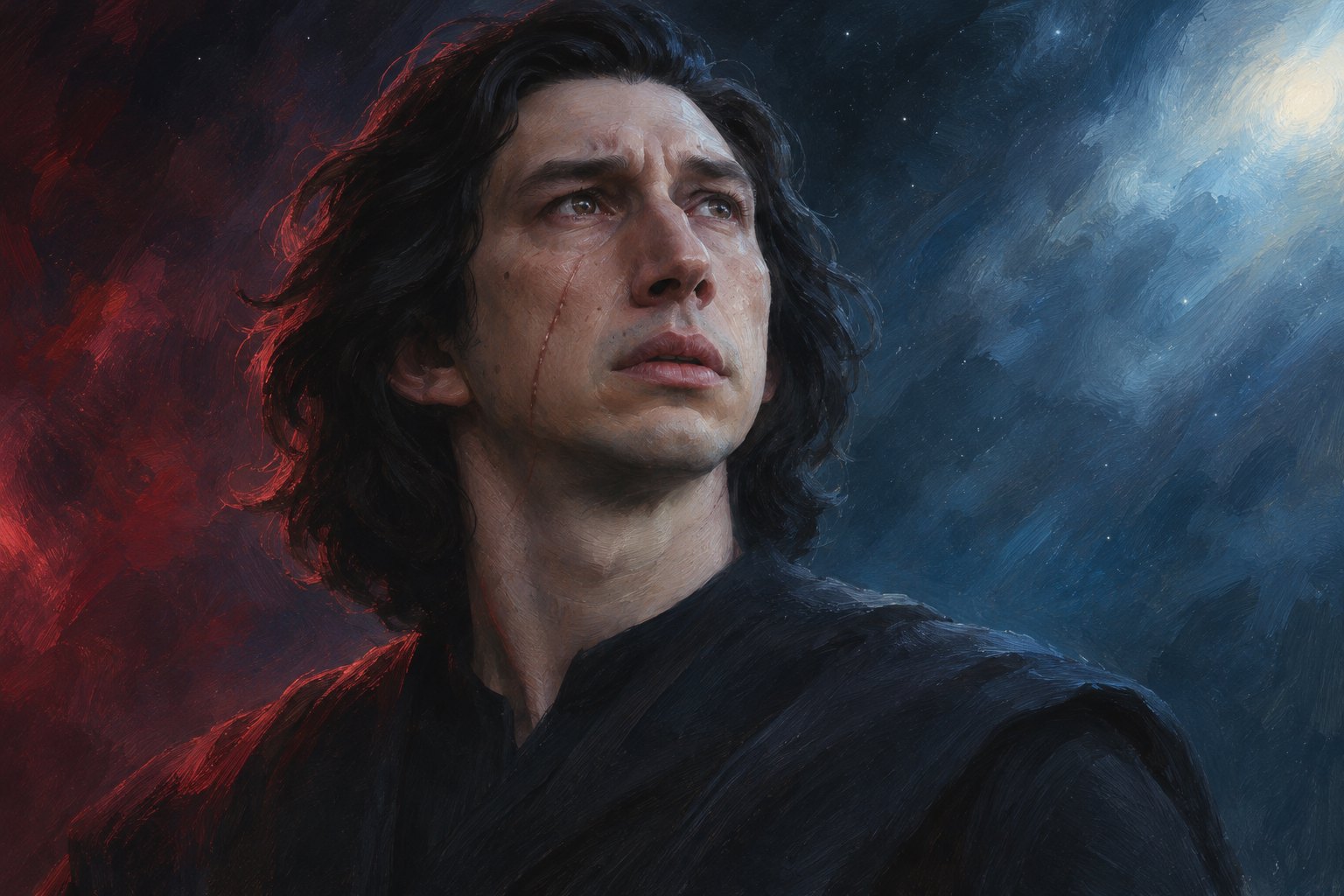
Adam Driver’s frustration over Disney shelving The Hunt for Ben Solo touches a weakness in his character’s Star Wars farewell. Variety reports that the decision felt “criminal” to the actor. That word conveys disappointment; it does not establish what the unmade film would have achieved. But the existing movies offer a compelling reason to understand his attachment: Ben Solo finally chooses a different way to live just before his story ends.
The creative opportunity lies in that narrow gap between transformation and death. What would it mean for someone who became Kylo Ren to face the world after rejecting him? The sequel trilogy gives us the decisive act of redemption. It leaves the sustained experience of accountability largely unexplored.
Major spoilers follow for The Force Awakens, The Last Jedi, and The Rise of Skywalker. This is a critical reassessment of Ben’s screen story, not a review of the unmade project or a claim about its plot.
Kylo Ren’s strength is how visibly he struggles to perform certainty
In The Force Awakens, Kylo’s menace depends partly on the distance between his presentation and his emotional condition. The mask, dark clothing, and commanding posture announce authority. Driver’s exposed face reveals someone working painfully hard to believe in it.
His confrontation with Han Solo makes that contradiction devastating. “I know what I have to do” sounds like the beginning of a decision to return home. Instead, Kylo kills his father. The scene makes the audience experience the possibility of reconciliation before destroying it.
From Kylo’s perspective, affection has become an obstacle to the identity he wants. He treats cruelty as a test that might finally silence his uncertainty. My reading of Driver’s performance is that the character wants the relief of conviction more than he understands the convictions themselves.
That makes him fascinating without making him innocent. His anguish cannot carry the moral weight of the person he kills. Any persuasive Ben Solo story would need to preserve that distinction: understanding someone’s pain does not cancel their responsibility for inflicting it.
The Last Jedi gives him a choice—and lets him choose badly
The Last Jedi develops this conflict by allowing Kylo and Rey to recognize something in each other without reaching the same moral destination. Their connection creates intimacy, but intimacy does not automatically produce trustworthiness.
Kylo kills Snoke and fights alongside Rey, yet he subsequently asks her to join him in ruling. Removing his master does not mean abandoning domination. That turn is the film’s sharpest contribution to his character: a liberation can become another power grab.
“Let the past die” is persuasive as an expression of exhaustion. It becomes troubling as a governing philosophy. Kylo wants release from inherited expectations, but he also wants authority over what comes next. He proposes freedom while assuming that Rey should accept his terms.
For Rey, refusing him is an act of judgment. She can perceive his loneliness without agreeing to organize her life around it. The scene gives her compassion a necessary boundary, and it makes their relationship more interesting than a simple promise that love will repair everything.
In my view, this is the strongest dramatic version of Kylo: emotionally legible, capable of surprising tenderness, and still answerable for choices that hurt other people. A continuation would lose much of its value if it reduced that contradiction to misunderstood goodness.
The Rise of Skywalker finds tenderness, then rushes past its implications
In The Rise of Skywalker, the sequence on Kef Bir brings several relationships to bear on Ben’s change of direction. Leia reaches out to him. Rey wounds him and then heals him. After Rey leaves, his encounter with the memory of Han leads him to discard his weapon.
The scene works because its emotional scale is smaller than the surrounding adventure. Driver no longer has to project command. His hesitation becomes the action. Where earlier scenes turn uncertainty into aggression, this one allows uncertainty to become an opening.
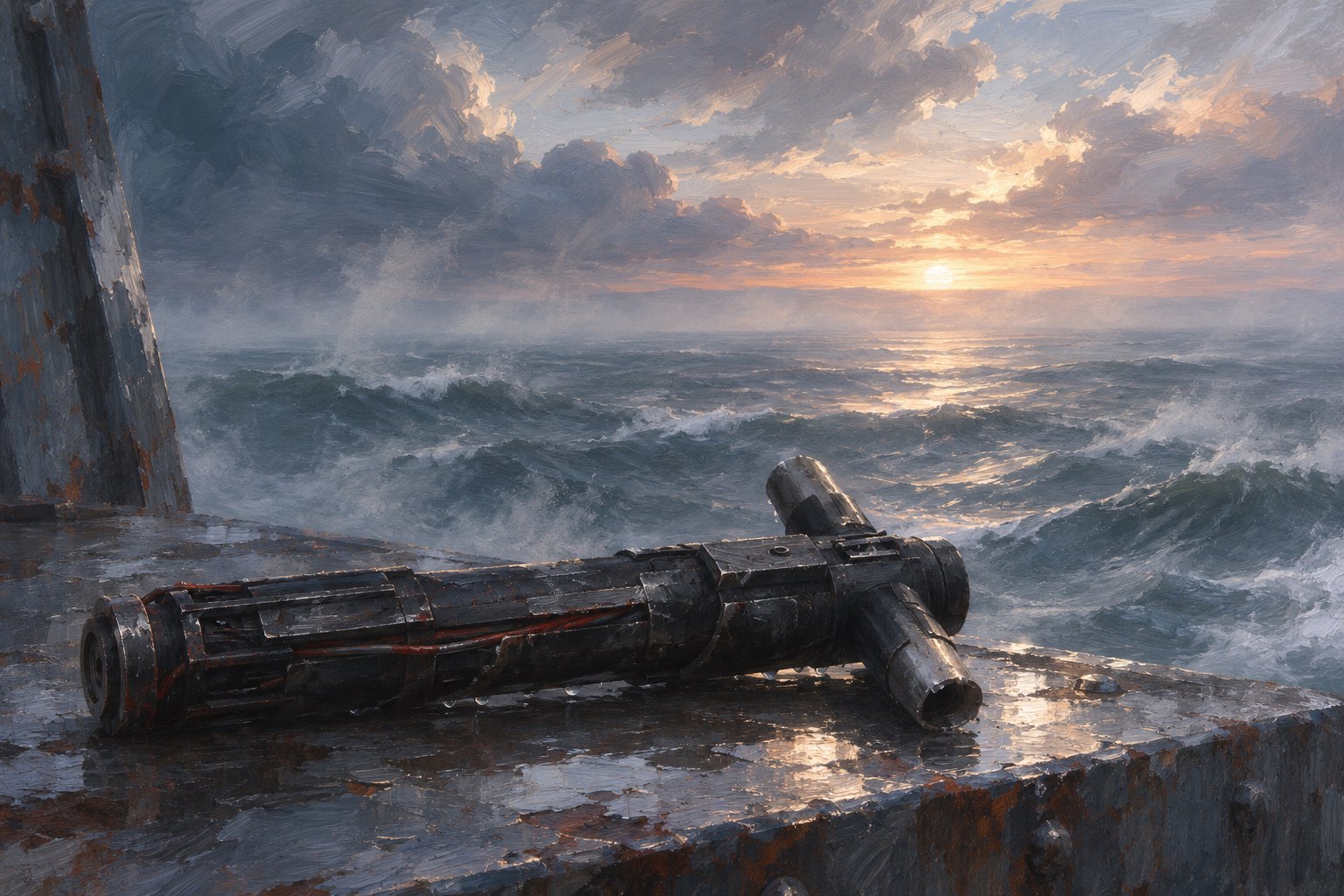
Han’s presence also concentrates the film’s moral perspective within a family relationship. A father can continue loving his son after a terrible betrayal. That love makes Ben’s return emotionally credible, but it cannot speak for everyone harmed by Kylo Ren. The movie’s intimacy is both the sequence’s strength and the boundary of what it resolves.
Later, Ben gives his life to restore Rey. The sacrifice is meaningful because he finally uses his power for her benefit without asking her to accept his vision of their future. The character who wanted her beside him on his terms ends by giving without securing anything in return.
As a closing gesture, that is moving. As the full conclusion to a complicated moral transformation, I find it compressed. The film supplies a powerful final choice while giving the changed person very little room to exist.
Why another Ben Solo film has an appeal beyond resurrection
The most compelling argument for more Ben Solo is the dramatic possibility of accountability. Sacrifice can reveal that someone has changed. Living among the consequences of earlier choices could test that change repeatedly.
That is an interpretation of the character’s potential, not a description of The Hunt for Ben Solo. Its title alone cannot establish how it would address the ending, which characters it would include, or what moral questions its story would pursue.
A hypothetical continuation would have difficult work to do. It would need to make its relationship to Ben’s death convincing, give other people room to distrust him, and preserve Rey’s independence. Forgiveness would become dramatically thin if everyone granted it simply because the audience had witnessed his final act.
The problem resembles the one explored in our analysis of what another Guardians film would need to preserve about Vol. 3’s goodbye: a return gains meaning when it respects the choices that made the departure matter.
Driver’s commitment can justify curiosity without guaranteeing a great movie. An unmade project remains unusually easy to idealize because audiences never encounter its compromises. The strongest case for it rests on the unfinished dramatic questions visible in the films we actually have.
The callbacks reveal a different way to inherit the past
The exchange with Han contains a particularly meaningful callback: “I know.” Those two words recall Han’s famous response to Leia in The Empire Strikes Back. Here, their emotional function changes. The familiar confidence becomes a father’s capacity to understand what his son struggles to say.
There is also a revealing visual inheritance when Ben wields the Skywalker lightsaber on Exegol. Earlier, Kylo tries to construct himself through an intimidating image of his grandfather. At the climax, an inherited weapon accompanies a choice to help someone else. The family legacy can support an ethical decision rather than dictate an identity.
These echoes help explain why viewers may experience his ending differently, a distinction central to our commentary on making room for personal responses to movies. The same farewell can feel emotionally complete and dramatically premature.
For me, Ben’s deeper significance is that becoming better does not require pretending the earlier self never existed. His final act matters because Kylo’s choices remain terrible. Driver makes the possibility of change tangible; the ending makes that possibility brief. The lasting appeal of another Ben Solo story is the chance to ask what change demands after the moment of recognition has passed.
Original content by this site's editorial team. Published: November 15, 2026 at 20:16:05 PST (Los Angeles time)