Aaron Guzikowski has been tapped to write a new Alien movie for 20th and Scott Free, according to Deadline. That is a meaningful development for a franchise whose most enduring scares depend on the decisions people make before they understand the danger. A creature can supply the threat. A screenplay has to give that threat someone worth fearing for.
The announcement establishes a writing assignment. It does not, by itself, establish the new film’s story, returning characters, place in the timeline, or release date. Those distinctions matter: there is a substantial distance between knowing who will write an Alien movie and knowing what kind of movie it will become.
My strongest hope for Guzikowski’s screenplay is that it finds a fresh human conflict as compelling as the original film’s struggle over trust. Looking back at Alien reveals why that ambition matters more than a familiar corridor or a recognizable silhouette.
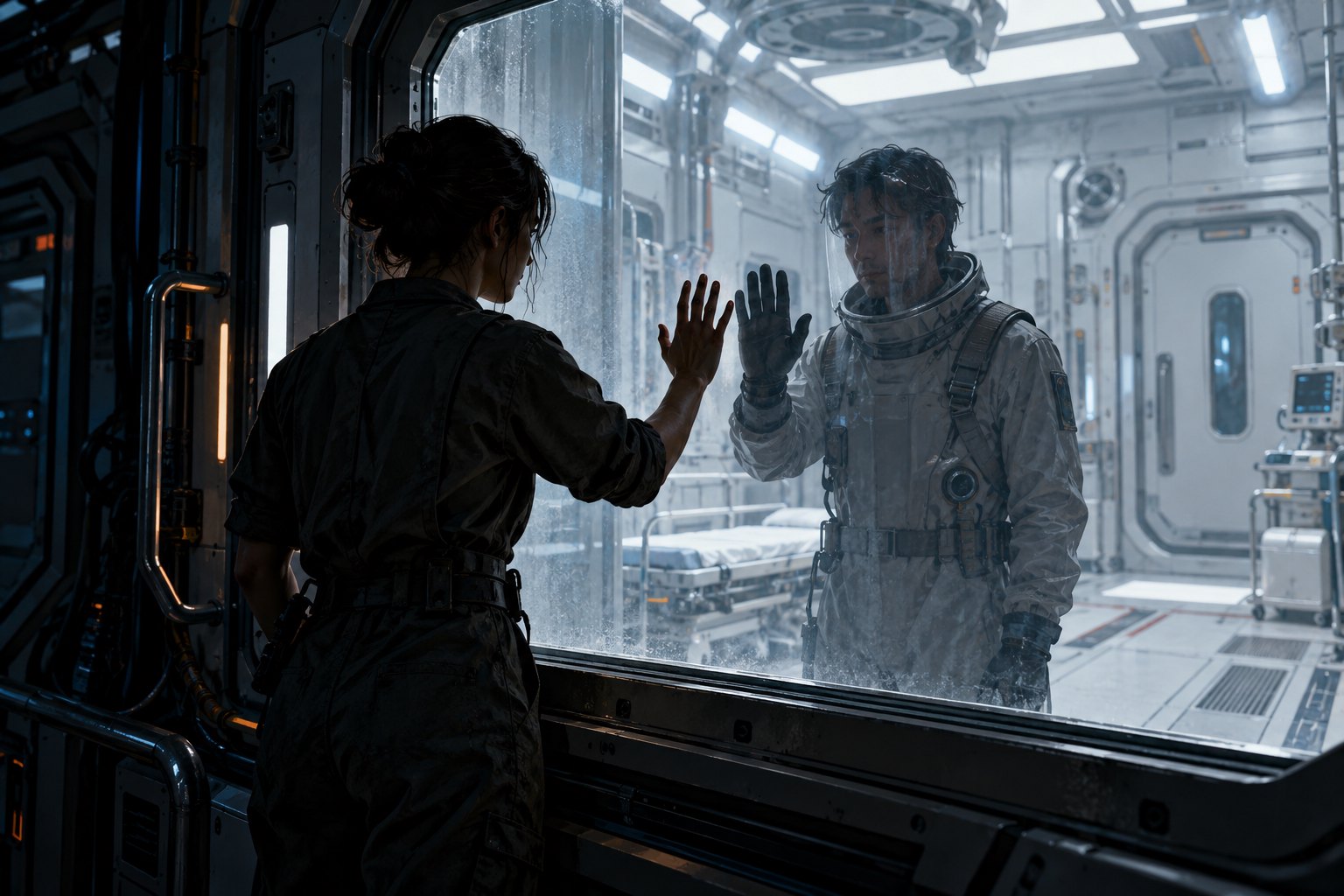
Spoiler warning: The following analysis discusses major revelations in the original Alien. It is a retrospective critical reading and a discussion of the new writing assignment, not a review of the forthcoming movie. The accompanying illustrations are conceptual images.
What the writing announcement actually tells us
Guzikowski’s involvement gives the project a specific creative responsibility to watch: the screenplay. It would be premature to turn that appointment into a verdict about tone, quality, or franchise direction. A writer’s name cannot tell audiences whether the eventual characters will feel distinctive or whether the suspense will hold.
What it can do is redirect attention toward the dramatic foundation. Before production design makes a ship convincing, the script must establish who works there, who holds authority, and what happens when those arrangements stop protecting anyone. In this series, those questions can be as frightening as the organism itself.
That distinction between an announcement and evidence of a finished film also informs our discussion of what casting news can tell viewers. Creative appointments provide a reason to pay attention; the work still has to earn the expectations attached to them.
Ripley makes survival a question of judgment
In Ridley Scott’s original Alien, Ripley’s resistance to bringing an exposed colleague aboard establishes something more interesting than immediate heroism. She is willing to make a decision that feels intolerable to the people on the other side of a door. Quarantine is an abstract safeguard until someone you know is asking you to abandon it.
From Ripley’s perspective, the problem is collective responsibility. The visible emergency cannot erase the danger to everyone else. From the returning crew’s perspective, delay means withholding help from a companion in distress. The scene works because those emotional positions are legible even though the risks are unequal.
My reading is that Ripley’s appeal begins with this uncomfortable competence. She does not need the audience’s approval at every moment. Her judgment creates friction, and that friction makes her feel like a person doing a difficult job rather than a protagonist announcing her importance.
For Guzikowski, the useful lesson is not to reproduce another quarantine confrontation. It is to create decisions with competing human pressures. Suspense becomes richer when a viewer can understand why someone makes a dangerous choice without believing that choice was wise.
Ash turns expertise into something frightening
Ash’s intervention allows the danger aboard, and the later revelation of his artificial nature and hidden priorities changes the meaning of his conduct. His apparent professional detachment becomes much harder to separate from the mission he serves.
His description of the creature as the “perfect organism” is particularly revealing. The phrase sounds like scientific admiration, but its dramatic force comes from what that admiration excludes. Perfection is being measured without concern for the people facing destruction.
Through Ash, the film makes knowledge unsettling. Expertise does not automatically carry an obligation to protect others. Someone can understand the situation better than the frightened people around him while using that understanding toward an incompatible goal.
This gives the original a second source of suspense. The audience must worry about the creature and about whether apparently useful information comes from someone whose interests align with the crew’s. A calm explanation can become threatening without a raised voice or sudden movement.
A new screenplay could explore that uncertainty through entirely different relationships. The important element is the gap between what a character knows, what they disclose, and whom their decisions benefit. Repeating Ash’s specific twist would be less interesting than finding another credible way for trust to become dangerous.
“Crew expendable” makes the horror personal
The instruction “Crew expendable” compresses the original film’s institutional cruelty into two words. For the people aboard the Nostromo, survival is everything. For the interests directing the mission, their lives can be treated as an acceptable cost.
What makes that revelation effective, in my view, is its change of scale. The crew’s immediate struggle remains physical and intimate, but the reason they are vulnerable extends beyond the room they occupy. The threat is also embedded in a decision made elsewhere, by an authority they cannot meaningfully confront.
This is where the film’s character perspective becomes essential. An organization’s objective can sound orderly from a distance. Seen through someone expected to die for it, that same objective becomes obscene. The screenplay makes the consequences of an impersonal priority impossible to keep impersonal.
The coming film does not need to repeat that wording to preserve its disturbing insight. It needs people with specific attachments and limits, so that any demand for their sacrifice registers as a violation rather than a routine plot development.
What would make Guzikowski’s Alien feel necessary?
My first criterion would be characters whose disagreements reveal distinct values. Fear alone cannot distinguish an ensemble. Different ideas about duty, loyalty, self-preservation, and responsibility can make even a quiet conversation feel unstable.
Second, consequences should grow out of those differences. If a character conceals information, the concealment should follow from a recognizable motive. If someone takes a risk for another person, the relationship should make that risk emotionally intelligible. The strongest horror lets viewers trace catastrophe through choices without reducing everyone to foolishness.
Third, the film should allow bodily danger to change how characters understand themselves. That is a useful connection to our character-focused analysis of bodily vulnerability in Clayface: physical horror gains emotional weight when it threatens a person’s agency as well as their safety.
These are critical hopes, not predictions about Guzikowski’s draft. They offer a more useful standard than counting familiar objects or anticipating a particular returning character.
The deeper horror is being denied a say
For me, the original Alien remains powerful because its threats converge on a loss of agency. Ripley’s judgment is overridden. Ash’s knowledge serves priorities the crew does not share. The company’s directive assigns human lives a value without consulting the people living them.
That convergence gives the creature’s violence a larger emotional meaning. The nightmare is not simply encountering something lethal. It is discovering that the arrangements meant to organize your working life have helped place you within its reach.
Guzikowski’s appointment is therefore an invitation to watch how a new Alien story defines its people. A compelling screenplay will give them more than ways to die. It will give them reasons to disagree, bonds worth protecting, and choices whose consequences hurt. That is how a new encounter with a familiar monster can still feel frighteningly personal.
Original content by this site's editorial team. Published: October 24, 2026 at 03:10:26 PDT (Los Angeles time)