A new Alien movie is in the works with writer Aaron Guzikowski, according to The Hollywood Reporter. That is a meaningful development for a franchise whose name immediately promises danger, isolation, and uneasy encounters with the unfamiliar. But the most interesting question for this project is a human one: whose experience will make that danger matter?
A writer’s involvement gives audiences something concrete to discuss without establishing how the finished movie will play. The strongest reason to watch this project’s development is the opportunity to build a story in which survival decisions expose character, rather than simply move people toward the next attack.
This is a critical preview, not a review of the new film. The discussion below offers an editorial argument about its storytelling possibilities. It does not describe an announced plot, quote unreleased dialogue, or assess unseen performances.
What the Aaron Guzikowski news establishes
The essential reported information is straightforward: a new Alien feature is being developed with Guzikowski as its writer. Development is a creative stage, not proof of a completed movie. The announcement alone cannot establish the quality of the screenplay, the effectiveness of its scares, or the emotional force of its ending.
It also should not become permission to fill gaps with imagined scenes. A familiar franchise makes that temptation especially strong. Viewers can readily picture a corridor, an emergency, and a desperate escape, then start discussing those expectations as though they were a synopsis.
For now, the useful distinction is between the reported project and the standards by which it might eventually be judged. Guzikowski’s name belongs to the first category. The character choices discussed here belong to the second.
Give the audience someone whose judgment matters
My strongest preference for a new Alien story is a protagonist with a recognizable way of making decisions. Bravery is too broad a description. A person might trust procedure, rely on technical expertise, defer to a colleague, or prioritize someone they love. Each tendency creates a different relationship with danger.
That matters because suspense becomes personal when a reasonable habit stops working. Someone who has survived by following instructions faces a more interesting crisis when obedience becomes questionable. Someone accustomed to solving problems alone has something to lose when survival requires dependence.
These are possibilities, not predictions about Guzikowski’s screenplay. They illustrate what a character-centered approach could accomplish: make the audience understand a choice before discovering its consequences. We do not need to agree with every decision. We need enough access to the person making it that the decision feels lived rather than assigned.
Competence helps, too. Horror does not require people to abandon common sense. A capable person confronting incomplete information can be more frightening than a careless person ignoring an obvious warning. The first situation lets us recognize our own limits.
Make trust a problem with consequences
An ensemble becomes dramatically useful when its members have different obligations. Two people can recognize the same danger and still disagree about what responsibility requires. Protecting the group and helping an individual may both be defensible aims, even when circumstances make them incompatible.
For an Alien movie, that offers a richer source of tension than constant hostility. If every exchange begins with suspicion, betrayal has little room to change anything. A working relationship needs some history of usefulness, affection, or mutual reliance before its failure can hurt.
The screenplay could establish that through ordinary behavior: who listens, who explains a technical problem without condescension, who notices another person struggling. Such moments need not interrupt the suspense. They give it an emotional foundation.
A closed door then means more than an obstacle. It can represent protection to the person operating it and abandonment to the person outside. The dramatic value lies in allowing both perspectives to register without pretending every decision has an equally acceptable outcome.
Let bodily horror remain somebody’s experience
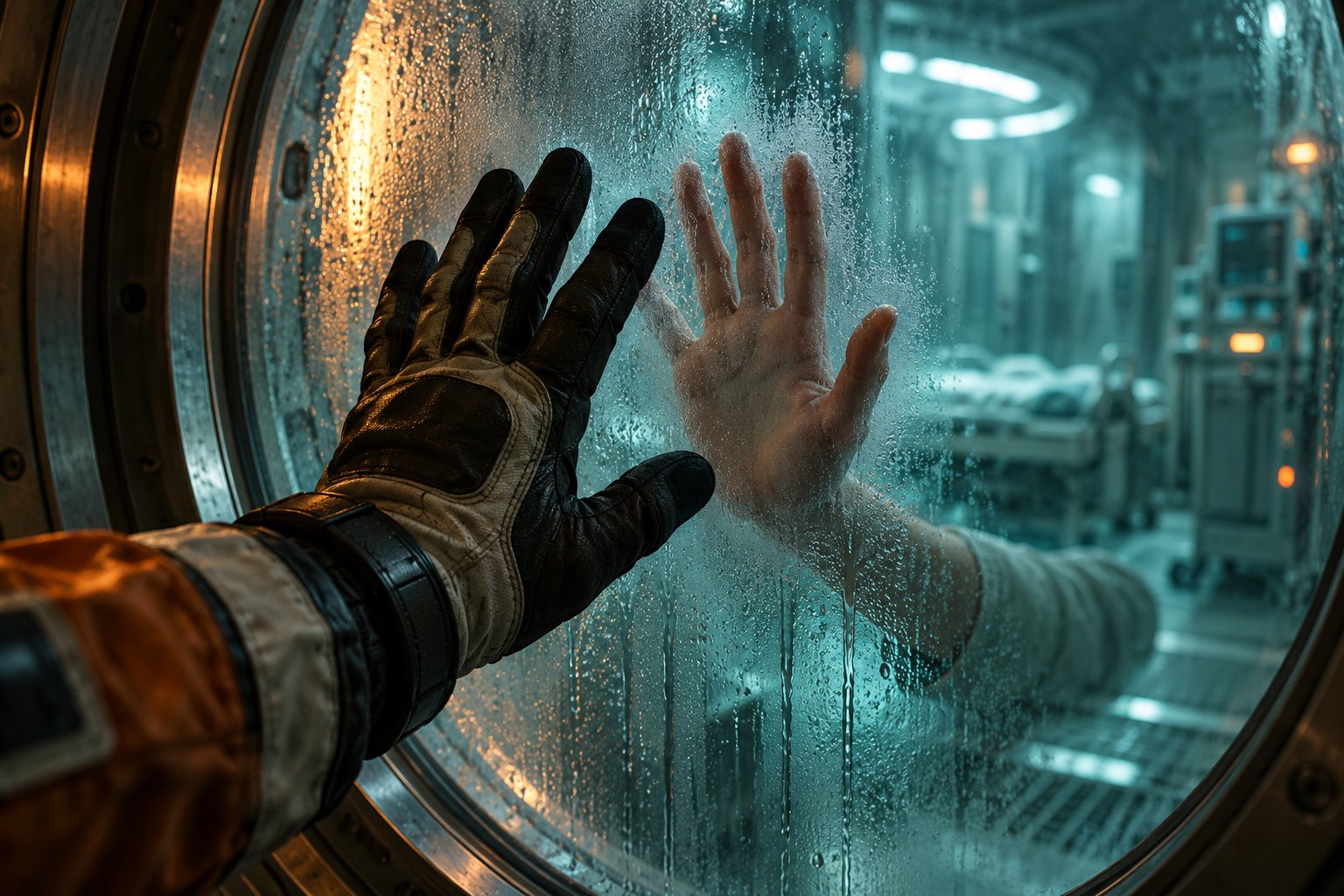
Physical vulnerability offers another important test. A frightening image can produce an immediate reaction, but its lasting effect depends on whether the person experiencing it remains present in the storytelling. Pain should change more than the appearance of a body.
It can change how someone moves, accepts help, understands privacy, or interprets another person’s attention. Concern may begin to feel like surveillance. Assistance may become difficult to distinguish from control. Those shifts allow horror to continue between overt shocks.
Our discussion of identity and bodily change in Clayface considers a related critical question: what happens when a person’s relationship with their body becomes inseparable from how others treat them? For a prospective Alien story, the useful connection is the importance of preserving subjectivity.
My preference would be for the film to stay attentive to that experience even when the spectacle becomes overwhelming. A character should remain someone with wants, judgments, and relationships, not become merely the location of an effect.
Reveal information when it changes a decision
Mystery presents a different challenge. A franchise audience arrives ready to identify clues and connect details. That can be pleasurable, but recognition is not automatically dramatic momentum. Information earns its place most convincingly when it changes what somebody must do.
A discovery might make a trusted plan untenable, expose an unequal distribution of risk, or force a character to reconsider whom they believe. In each case, explanation produces action. Without that connection, even an elaborate revelation can feel detached from the people on screen.
This is also why emotional stakes matter to a twist. As explored in our commentary on the relationship between revelation and emotional stakes in The Cycle, surprise becomes more meaningful when it changes our understanding of a person.
For Guzikowski’s Alien project, the promising possibility is not simply a new answer to an old question. It is a discovery that makes a character’s next choice harder—and makes the audience feel the cost of choosing.
The deeper opportunity: survival without certainty
The most compelling interpretation available at this stage concerns what survival demands from people. Being frightened is involuntary. Deciding whose fear to acknowledge, whose knowledge to trust, and whose safety to protect involves values. A strong screenplay can bring those values into conflict without reducing everyone to heroes and obstacles.
That is the human challenge behind the development news. A new Alien movie can offer menace and still leave little emotional residue if its characters are interchangeable. Give them distinct obligations and credible judgments, however, and even a moment of hesitation can become unbearable.
Guzikowski’s involvement is a reason to follow the project, not a verdict on its eventual success. The standard worth keeping is clear: when danger forces a choice, we should understand who is choosing, what they believe, and what they may never recover afterward.
Original content by this site's editorial team. Published: October 23, 2026 at 16:30:38 PDT (Los Angeles time)