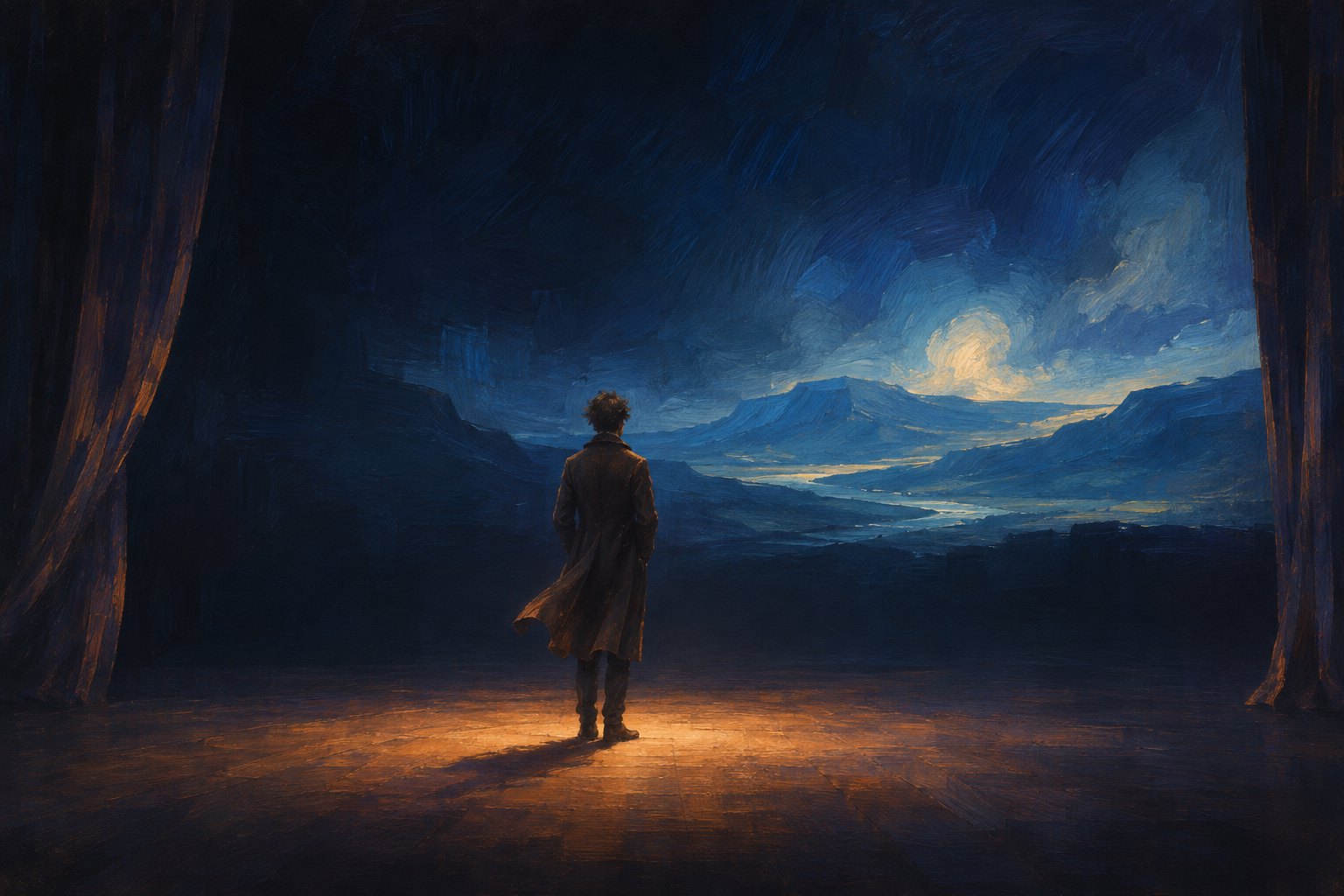
Patrick Wang’s A. Rimbaud builds its biographical world around an unusually demanding proposition: one visible actor must sustain a life populated by other people. Blake Draper plays Arthur Rimbaud, while musical instruments give the people around him an audible presence. The ambition lies in that relationship between a visible body and an unseen social world. It makes the familiar question of who an artist was inseparable from how that artist experienced others.
JoySauce describes the film as Wang’s most ambitious undertaking. That is an evaluative claim, but the director’s account supports a concrete explanation: he wanted a filmmaking language capable of changing as his subject changed. In his conversation with Shivam Pota, Wang connects the project to Rimbaud’s appetite for knowledge and his own willingness to keep abandoning established approaches. [Patrick Wang’s JoySauce interview](https://joysauce.com/a-rimbaud-is-patrick-wangs-most-ambitious-film-yet/)
Scope and spoiler note: This is an analysis of documented filmmaking choices and reported sequences, rather than a firsthand screening verdict. It discusses the film’s broad biographical trajectory and two poetry sequences. No unverified dialogue is presented as a quotation from the movie.
Rimbaud as a person who keeps moving beyond himself
The central interpretive challenge is how to understand Rimbaud without letting the word poet explain everything. Wang’s interview offers a useful starting point: his interest extends to the subject’s continuing curiosity about practical knowledge later in life. Artistic creation becomes one expression of an appetite that can take different forms.
Seen from the character’s perspective, that approach changes the dramatic question. Instead of asking only whether Rimbaud will produce something great, we can ask what he expects his next undertaking to provide. Recognition, discovery, independence, and escape are different desires. A biography becomes more interesting when it leaves room for them to conflict.
This distinction also protects the character from hindsight. Audiences arrive knowing that a celebrated writer deserves attention; the person living that life does not experience every decision as preparation for literary history. My reading of Wang’s stated approach is that it makes room for this mismatch. A person’s immediate needs can matter even when they lead away from the achievements that later audiences treasure.
Paul Verlaine becomes someone Rimbaud must listen to
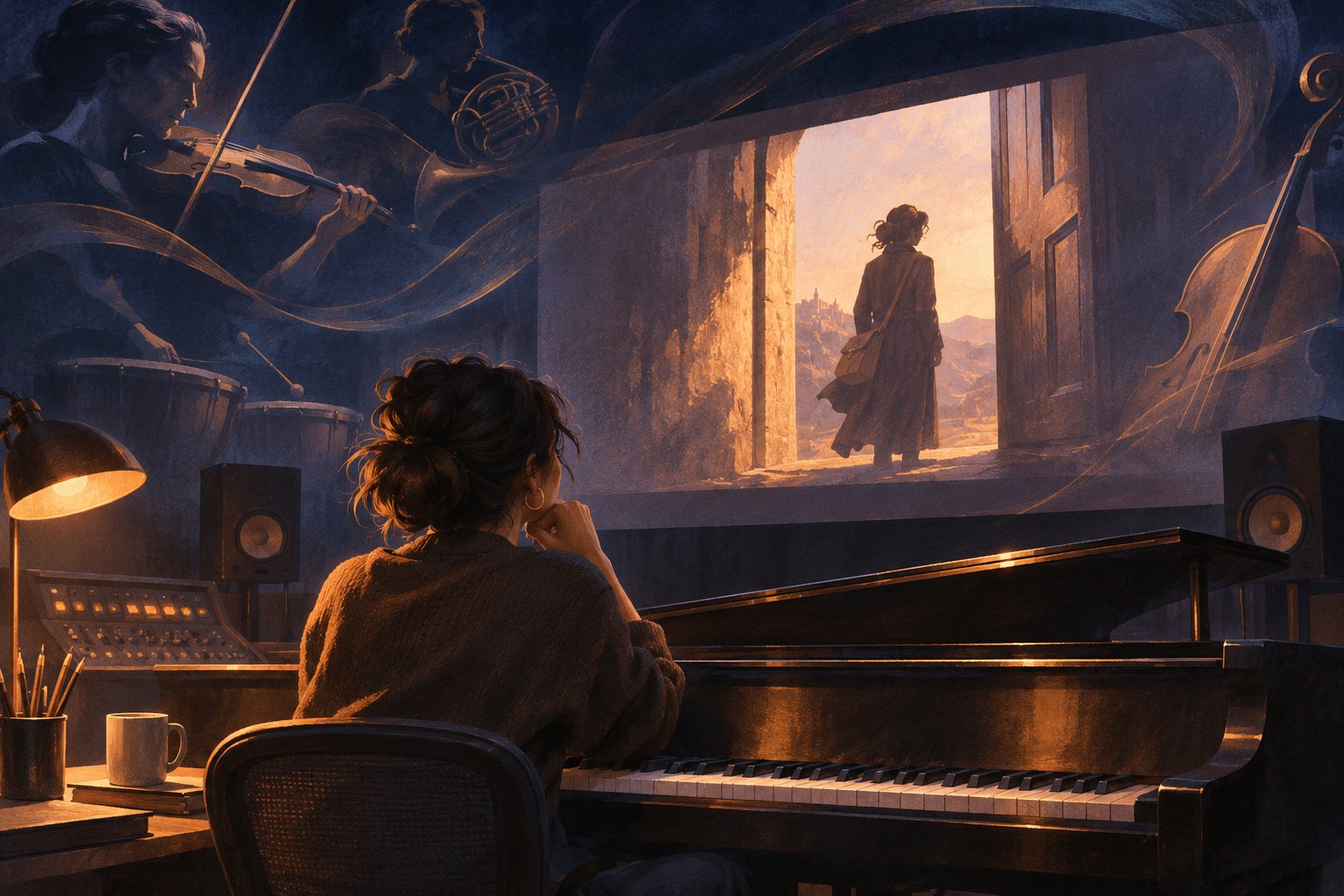
The musical casting makes that question of perspective especially tangible. Composer Dan Schlosberg and violist Matthew Lipman have described developing the viola’s role as Paul Verlaine, with instrumental phrasing responding to dramatic situations. Their account emphasizes articulation and the rhythms of speech, including emotional changes within an exchange. [The musicians’ account of A. Rimbaud](https://theviolinchannel.com/roxy-cinema-new-york-presents-a-rimbaud-a-film-featuring-musical-instruments-as-characters/)
The interpretive consequence is substantial. A musical response cannot always be reduced to a single sentence. It can convey hesitation, resistance, or insistence while leaving its precise meaning unsettled. Rimbaud’s understanding of another person therefore becomes something the audience must assess, rather than simply accept.
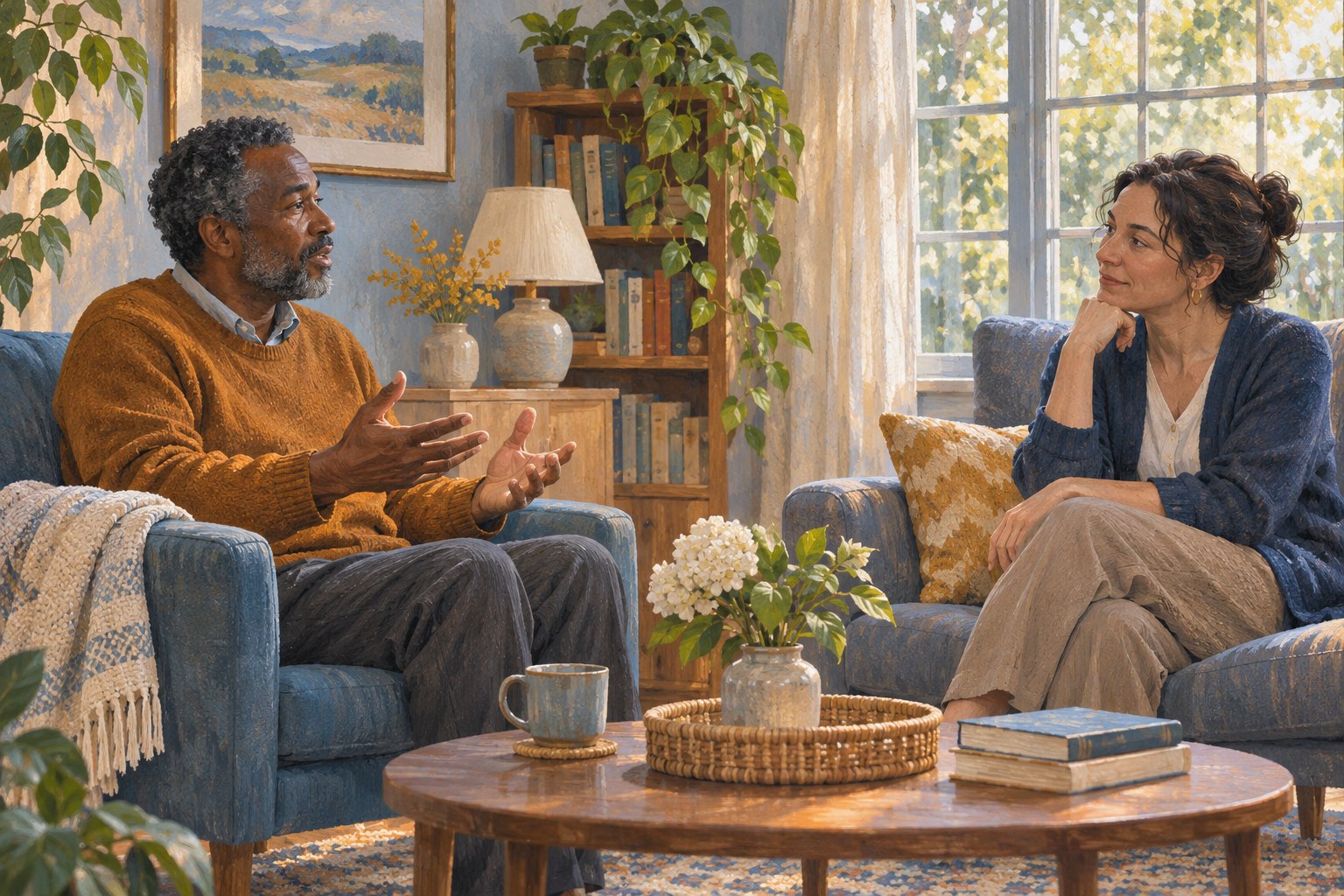
There is also a productive imbalance here. Draper’s character has a face, a body, and verbal language; his interlocutors have another means of expression. That arrangement invites us to notice who controls an encounter. Does Rimbaud allow the response to change his behavior? Does he listen, or merely wait for the opportunity to speak again? These are useful character questions precisely because they do not require translating every musical phrase into words.
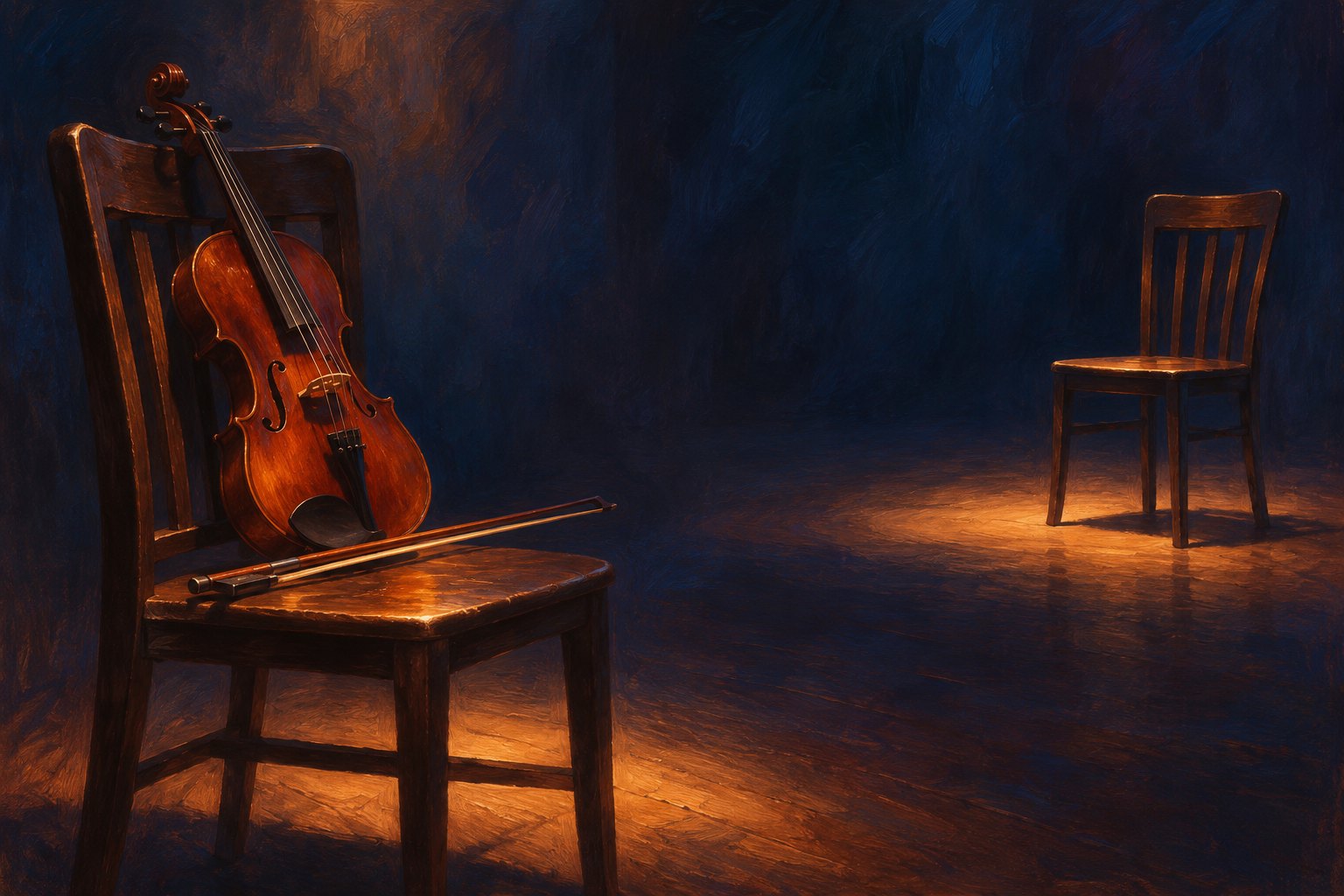
The artwork is symbolic, rather than a reconstruction of the film’s production design. Its separation between chairs illustrates the central problem: sharing a space, or even a conversation, does not guarantee mutual understanding.
What the poetry sequences make visible
Kenji Fujishima’s account describes a sequence in which Draper moves along a long table containing pages associated with A Season in Hell, while changes in lighting accompany the recitation. He also identifies a presentation of The Drunken Boat using artificial sea imagery and close-ups. These are documented sequences, although their moment-to-moment effectiveness requires viewing the film itself. [Fujishima’s account of the film’s poetry sequences](https://bookandfilmglobe.com/film/run-dont-walk-to-see-a-one-man-three-hour-biopic-of-french-poet-arthur-rimbaud-really/)
The table sequence offers a particularly suggestive relationship between writing and movement. Pages occupy physical space. The performer must move among them. That arrangement allows composition to be understood as an encounter with material: language has to be approached, voiced, and passed through. The poet’s body becomes part of how the writing reaches an audience.
Similarly, an openly artificial sea can direct attention toward the act of imagining. A naturalistic ocean might encourage us to admire a location. A visibly constructed one asks us to consider how a voice, an image, and a listener collaborate to make a world. That is a formal possibility, not proof that every viewer will find the result persuasive.
The distinction resembles the attention to framing and sequence in our guide to creating emotional continuity through purposeful filmmaking: an image gains meaning through its relationship to the experience surrounding it.
A spare image can contain considerable physical space
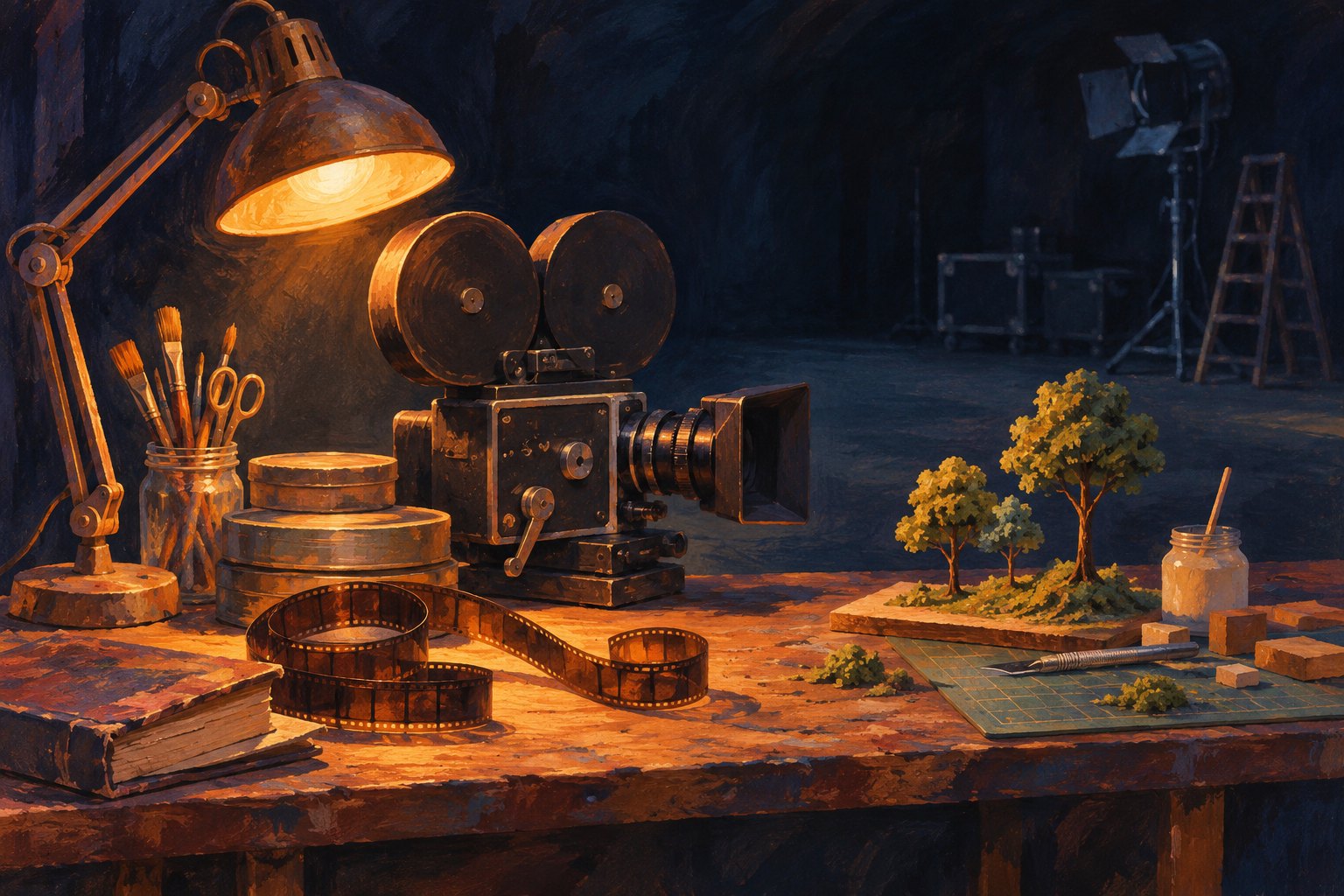
Wang has also corrected the impression that the production simply occupied a small black-box theater. In the JoySauce interview, he describes a 15,000-square-foot Winnipeg soundstage whose depth accommodated larger movements and effects achieved largely through practical means.
That detail matters because visual spareness and physical confinement are different things. An uncluttered frame can leave a performer enormous distances to cross. It can make an approach seem tentative or a departure feel consequential. Empty space has dramatic value when it changes our sense of a person’s relation to the world.
For a character associated with restless curiosity, such space offers an especially apt expressive resource. The useful question is whether each change of scale reveals a changed desire. Technical ingenuity becomes character analysis when it helps us understand why the same person experiences one environment as possibility and another as limitation.
Ambition deserves attention, and still needs judgment
The film’s design places substantial demands on both performer and audience. A single visible character can concentrate attention, but it can also make access to other perspectives harder. Musical exchanges may enrich emotional ambiguity while withholding the verbal clarity some viewers need. Those are real artistic tradeoffs, rather than defects that can be diagnosed from a premise alone.
Our discussion of evaluating a film beyond its public recognition makes a related distinction: the reason to investigate a work is not automatically the reason to admire it. Calling A. Rimbaud ambitious identifies the scale of its wager. It does not settle whether that wager succeeds.
The deeper question: who remains when the label changes?
The most compelling interpretation suggested by this approach concerns the limits of artistic identity. If Rimbaud matters only while producing poetry, the rest of his existence becomes an inconvenient appendix. If curiosity is the connecting thread, changes of vocation can remain part of the same human inquiry without needing to look consistent or admirable.
That possibility gives Wang’s experiment its strongest conceptual foundation. One body remains before us while the means of understanding it keep changing. The challenge is to keep attending to that person after familiar explanations stop working. A biographical film can honor an artist’s work while allowing the human being to exceed it.
Original content by this site's editorial team. Published: November 16, 2026 at 19:09:21 PST (Los Angeles time)