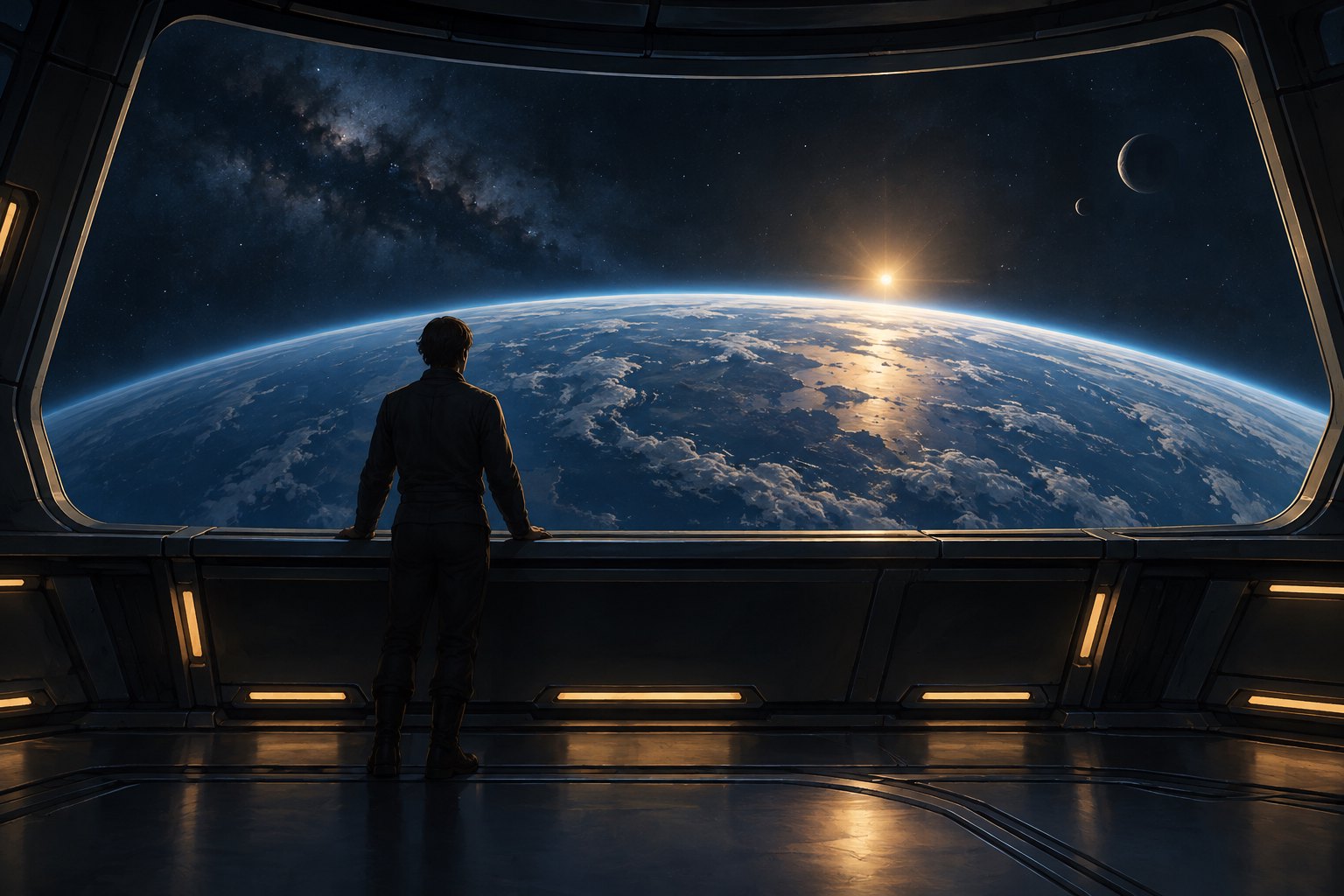
The new Star Trek movie’s directors are discussing a darker tone and a “sort of different” timeline, according to TrekMovie’s reporting. Those two ideas raise separate questions: how the film will feel, and how its story will connect to an established fictional history. Neither, by itself, tells us whether its characters will have something compelling to do.
The more interesting possibility is that these choices could work together. A less familiar continuity might leave audiences uncertain about what happens next, while a darker approach could make the crew’s decisions feel consequential. My concern is whether that uncertainty will deepen Star Trek’s belief in cooperation or simply surround it with more threatening scenery.
This is spoiler-free commentary on the reported creative direction, not a review of the finished movie. Specific character arcs, scenes, and dialogue cannot be assessed from these remarks.
What the tone and timeline descriptions actually establish
The reporting’s central points are limited but clear: the directors are discussing darkness as part of their approach, and the timeline is being described in qualified terms. The phrase “sort of different” deserves particular care. It does not, on its own, establish a complete continuity reset, a specific historical setting, or a particular mechanism for changing events.
Similarly, a darker tone does not establish an age rating, a body count, or a tragic ending. Darkness can come from uncertainty, institutional failure, personal guilt, or the inability to protect everyone. It can also be largely visual. Until there is firmer evidence about the story, treating any one of those possibilities as the filmmakers’ confirmed plan would be premature.
For viewers trying to understand the announcement, the useful distinction is between a creative intention and its execution. These remarks describe an approach. Whether that approach produces suspense, emotional depth, or merely a severe atmosphere remains an open critical question.
Darkness becomes meaningful through a character’s choices
My measure of a darker Star Trek would be the pressure it places on judgment. A threatening universe is dramatically useful when it forces someone to reconsider what they believe, what they owe other people, and how much uncertainty they can tolerate before acting.
Consider command as a hypothetical example, rather than a prediction about this film. A leader deciding under incomplete information can be sympathetic and dangerously mistaken at the same time. The audience should understand the attraction of a decisive response while recognizing its possible cost. That tension gives an actor something richer to play than permanent resolve.
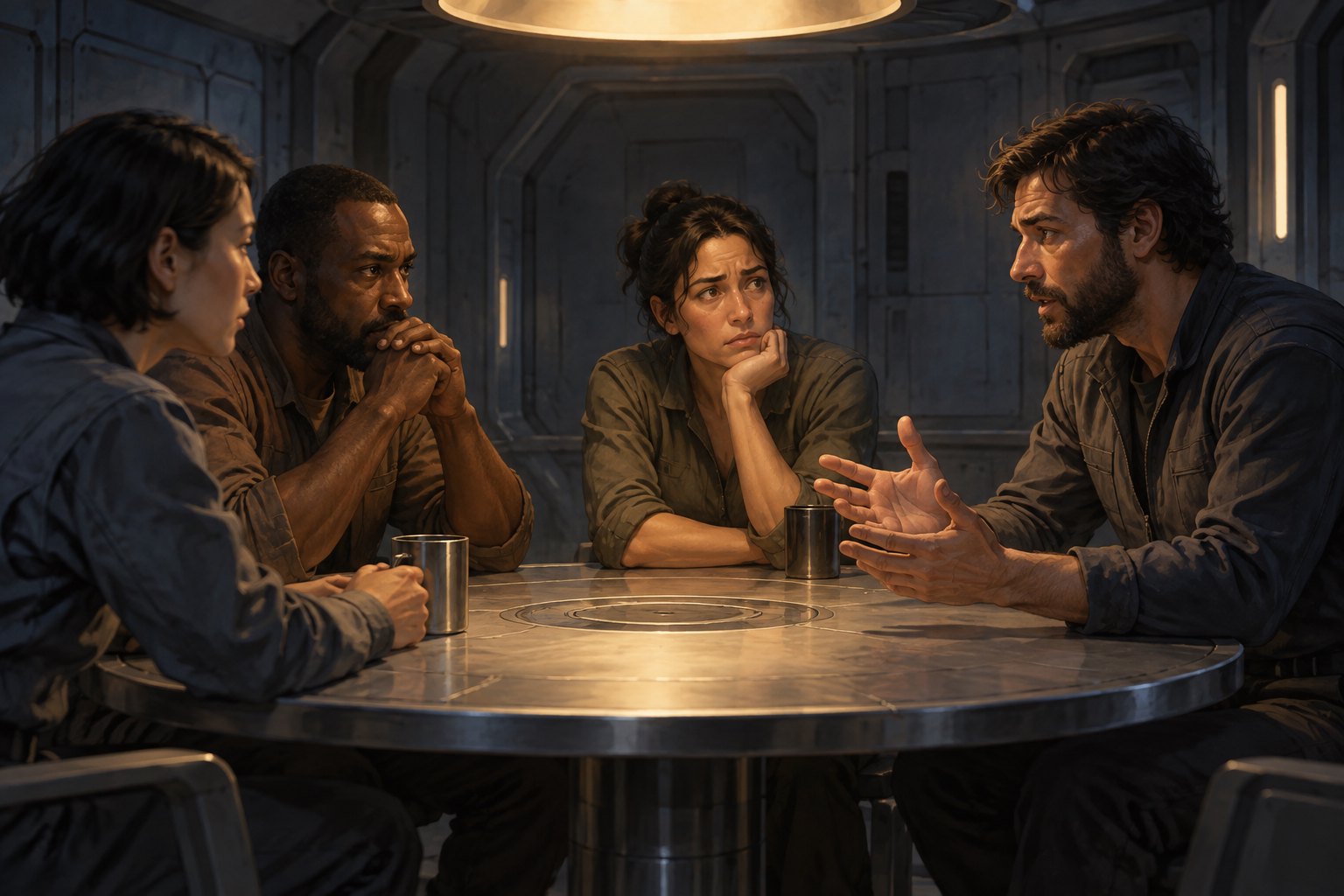
The perspective of someone receiving an order matters just as much. Does that person understand the reasoning behind it? Can they object? Will disagreement change the decision, or merely identify who is destined to be proven wrong? A crew becomes interesting when its members contribute different kinds of knowledge and bear different kinds of risk.
This is also the question behind our analysis of whose perspective should shape Aegon’s Conquest: when a story centers powerful people, the viewpoint of those affected by their decisions determines its moral depth. A starship offers an especially concentrated setting for that problem because colleagues must keep working together after an argument ends.
A different timeline needs consequences the audience can feel
Continuity can supply useful dramatic knowledge. Viewers who recognize a setting arrive with expectations about institutions, relationships, and possible outcomes. Changing that framework can remove the comfort of knowing where a story must eventually lead.
But unfamiliarity alone is a thin reward. An altered history earns its place when it changes what a character believes is possible. A different past could affect whom someone trusts, what they fear, or which sacrifices they consider acceptable. Those are possibilities inherent in the storytelling device, not established details of this project.
The practical test is whether a newcomer can understand the emotional stakes without consulting a chronology. A longtime fan might appreciate why a particular divergence matters, but the scene still needs an immediate human question: why does this person hesitate, and what will happen if they choose incorrectly?
There is a related challenge in our discussion of how continuing stories can preserve character growth. New circumstances should create fresh pressure while allowing experience to remain meaningful. For a franchise exploring a different timeline, the equivalent challenge is making change feel purposeful rather than interchangeable.
Optimism should influence how the conflict is resolved
For me, Star Trek’s appeal includes the possibility that people can build something better together. That does not require easy victories or universally trustworthy institutions. It requires the story to take understanding, restraint, and shared effort seriously as ways of acting.
A darker movie could strengthen that appeal by making those choices difficult. Listening becomes dramatic when there is little time. Restraint becomes costly when retaliation promises immediate relief. Trust becomes consequential when a character has a credible reason to withhold it.
The crucial issue is causality. If cooperation helps resolve the central conflict, the film has made an argument through action. If the crew speaks warmly about cooperation while success depends entirely on one exceptional person disregarding everyone else, the story has made a different argument, whatever its final speech says.
I would also look for room to recover from mistakes. A character who changes course after hearing another perspective can embody growth more convincingly than someone whose every instinct is vindicated. Darkness has limited emotional range if it only confirms that suspicion was sensible all along.
Humor and wonder can make danger more persuasive
A serious approach still needs variation. Small gestures of friendship, professional satisfaction, or curiosity establish what these people value about their lives. Without that texture, escalating peril can become strangely weightless: the audience understands that survival matters without feeling what survival preserves.
Humor would be most useful when it reveals a relationship. Who can tease whom? Who uses a joke to conceal anxiety? Who notices when a usually talkative colleague goes quiet? Such details can communicate pressure without repeatedly announcing it.
Wonder serves a similar purpose. An unfamiliar environment can inspire curiosity before becoming a problem to solve. Giving characters time to observe would help preserve the exploratory impulse that makes this setting distinctive. The directors’ darker direction could accommodate that pleasure; the reported description does not settle the balance either way.
The deeper test is what survives the pressure
The timeline discussion naturally invites speculation about connections and departures. The more revealing question is what the eventual story will ask its characters to carry forward. Their principles should have practical consequences, especially when following them becomes inconvenient.
My view is that a darker Star Trek has substantial dramatic potential if its severity produces more demanding choices. A changed continuity could support that ambition by weakening the audience’s certainty about outcomes. Both ideas become valuable when they expose character.
The strongest result would leave viewers understanding why these people still choose to explore, listen, and work together after discovering how difficult those commitments can be. That would give the darkness a purpose—and give the future something worth reaching for.
Original content by this site's editorial team. Published: October 1, 2026 at 07:12:42 PDT (Los Angeles time)