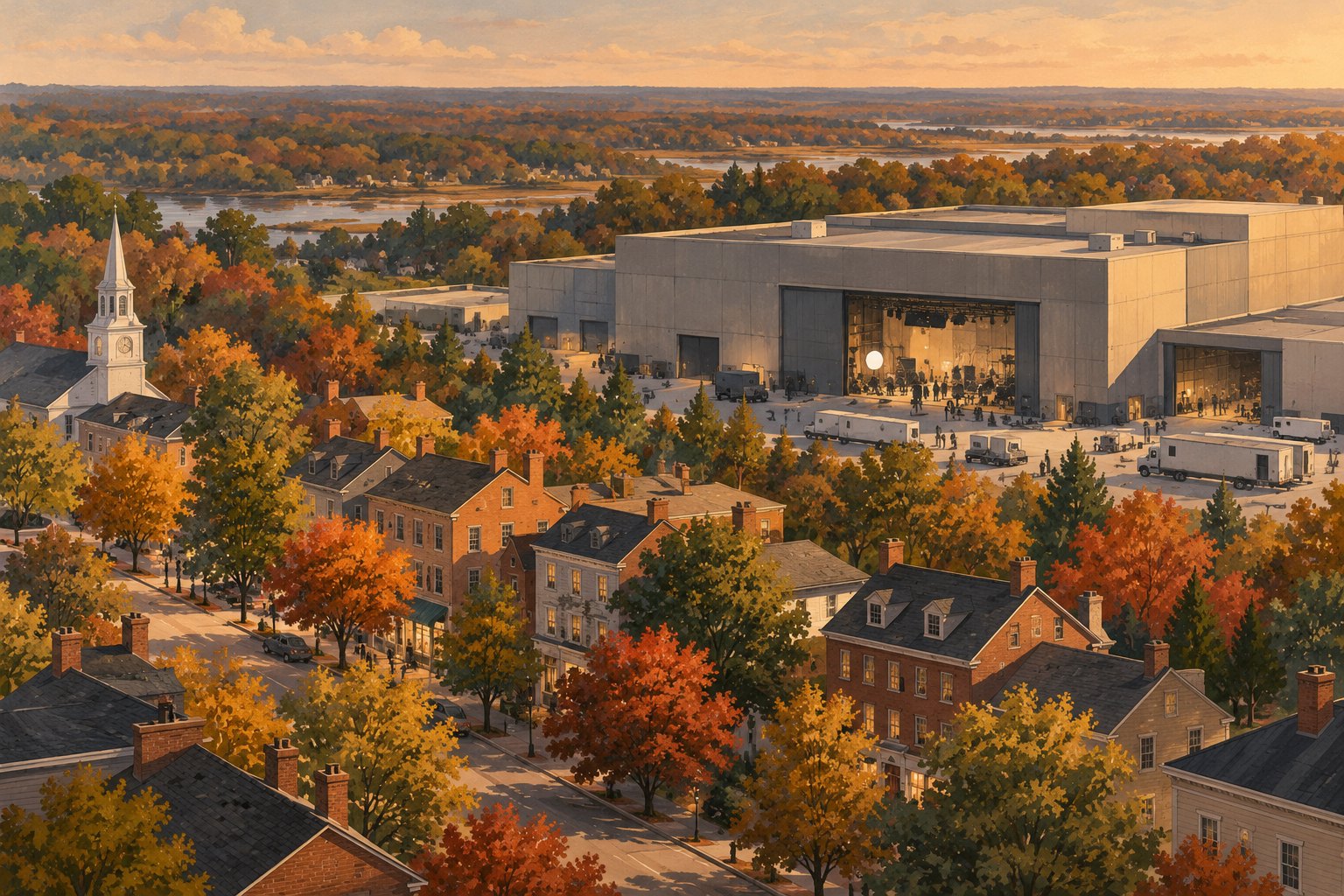
A small South Jersey town could get a $450 million film and television production studio—a prospect that puts a substantial development ambition alongside the everyday life of a modest community. For movie fans, the immediate attraction is easy to understand: a new place where films and television shows might take shape. For residents, the more consequential question is what a working studio would contribute to the place around it.
The essential qualification is could. The reported possibility should not be read as a confirmed opening, a guaranteed production schedule, or a promise that recognizable stars will soon arrive. The price tag describes the scale attached to the prospect; it does not, by itself, establish financing, construction progress, or future demand.
Our view is that this is a film-industry story worth following because production infrastructure can influence how screen stories get made. Its eventual value, however, would depend on the people using it, the work it attracts, and its relationship with the surrounding community.
What the $450 Million Figure Does—and Does Not—Tell Us
A large dollar figure makes a studio proposal immediately legible as a major undertaking. It is much less useful as a measure of filmmaking capacity. Without a verified breakdown, readers should not assume how much would go toward land, buildings, equipment, supporting facilities, or other expenses.
Nor does a development cost tell us what kinds of productions would find a home there. A television series returning to standing sets has different requirements from a feature that needs a short period of controlled interior shooting. A facility’s usefulness depends on its design, operating arrangements, availability, and fit with a production’s needs.
That distinction matters when following this South Jersey prospect. An impressive investment figure and a dependable production base are different milestones. The former can generate attention; the latter requires practical evidence that filmmakers can work there effectively.
Why a Soundstage Matters to the Finished Film
For viewers, studio infrastructure can seem remote from the things that make a movie memorable: an actor’s hesitation, an unsettling room, a conversation that changes meaning when the camera moves. Yet the physical conditions of production help make those choices possible.
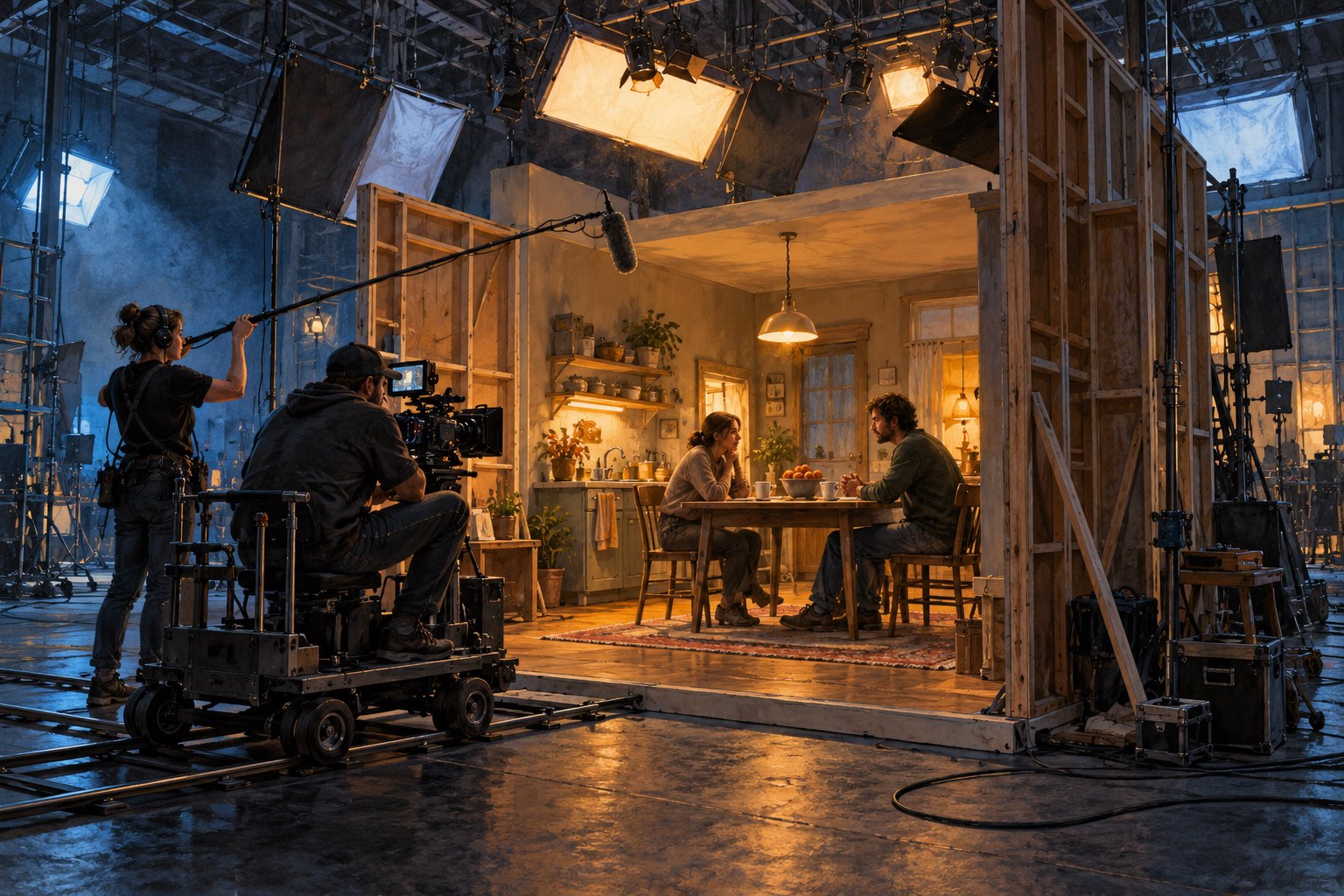
Consider a hypothetical scene between two estranged siblings at a kitchen table. A director might want the camera to move slowly from a shared composition into separate close-ups. Removable scenery can provide room for that movement. Controlled lighting can preserve the same late-afternoon atmosphere across multiple takes. A suitable recording environment can help capture a quiet delivery.
These are general examples, not announced features of the South Jersey project. They explain why the question of studio capacity belongs in film commentary: production space can support the careful work through which character becomes visible.
Equipment and space still need artistic purpose. A beautifully lit room cannot supply an actor’s understanding of a character. The performance-centered questions explored in our commentary on the filmmaking expectations surrounding Compassionate Release apply here as well: production resources become meaningful through the choices made with them.
The Town’s Perspective Belongs at the Center
A studio announcement invites people to imagine premieres and celebrity sightings. Residents would have more immediate interests: access to work, changes in traffic, demands on local services, and the way a large operation fits into existing daily routines.
None of those effects should be assumed in advance. Their scale would depend on a project’s location, design, schedule, and operation. Responsible discussion should leave room for both enthusiasm and specific questions without inventing either a community consensus or a local controversy.
Employment deserves particular precision. Construction work, permanent facility positions, and temporary production jobs are different categories. Any future employment claims would be more useful if they explained duration, qualifications, and whether the figures described direct hires or broader estimates.
For someone hoping to enter the industry, an accessible hiring process or a credible training opportunity could matter more than a famous production name. Such arrangements would need to be established; they should not be treated as automatic benefits of having a studio nearby.
A Filming Address Is Different From a Local Film Culture
A production facility could bring work to South Jersey without making South Jersey the subject of what appears on screen. A stage is valuable partly because it can become somewhere else. An interior built locally might represent a home, office, or fictional setting with no visible connection to its actual address.
That flexibility is useful, but it raises a separate cultural question: could local storytellers gain meaningful access to the resources around them? The presence of a large facility does not establish affordable access for independent filmmakers, collaboration with regional artists, or opportunities for smaller projects.
Those possibilities would be worth watching if the proposal advances. Our discussion of how a St. Louis food film can express neighborhood identity considers the other side of regional filmmaking: a place becomes culturally visible when its people and experiences shape the story.
The strongest outcome, in our judgment, would leave room for both kinds of activity: productions that need an effective workplace and filmmakers whose relationship with the region informs what they create.
What Would Make the Proposal More Concrete?
Readers following the South Jersey studio prospect can look for developments that clarify its practical status. These are questions for future reporting, rather than claims that particular milestones have already been reached:
- Project scope: What facilities are actually proposed, and what does the stated cost cover?
- Approvals and financing: What has been formally secured, and what remains conditional?
- Construction and operation: Is there a documented schedule, and who would operate the finished facility?
- Production commitments: Have prospective customers made concrete commitments, or expressed preliminary interest?
- Community access: How would residents learn about jobs, business opportunities, and decisions affecting the town?
Each answer would resolve a different uncertainty. A construction milestone would clarify physical progress. An operating agreement would clarify responsibility. A production commitment would provide evidence of intended use. Treating these as separate developments makes the story easier to assess.
The Real Test Would Be the Work
The appeal of a $450 million film and television studio in a small South Jersey town is the possibility of sustained creative work taking root there. That possibility deserves attention without being converted into a finished success story.
For audiences, the eventual payoff would be found in the films and shows: convincing performances, expressive settings, and stories given the conditions they need. For the town, it would be found in the everyday relationship between the facility and its neighbors.
Our judgment is cautiously interested. The prospect is substantial; its significance remains to be demonstrated. The most revealing future image would be an ordinary working day—crews practicing their craft, productions using the space, and a community able to identify what the investment has made possible.
Original content by this site's editorial team. Published: October 31, 2026 at 22:29:13 PDT (Los Angeles time)